


Secondary sourceSculpture18th century
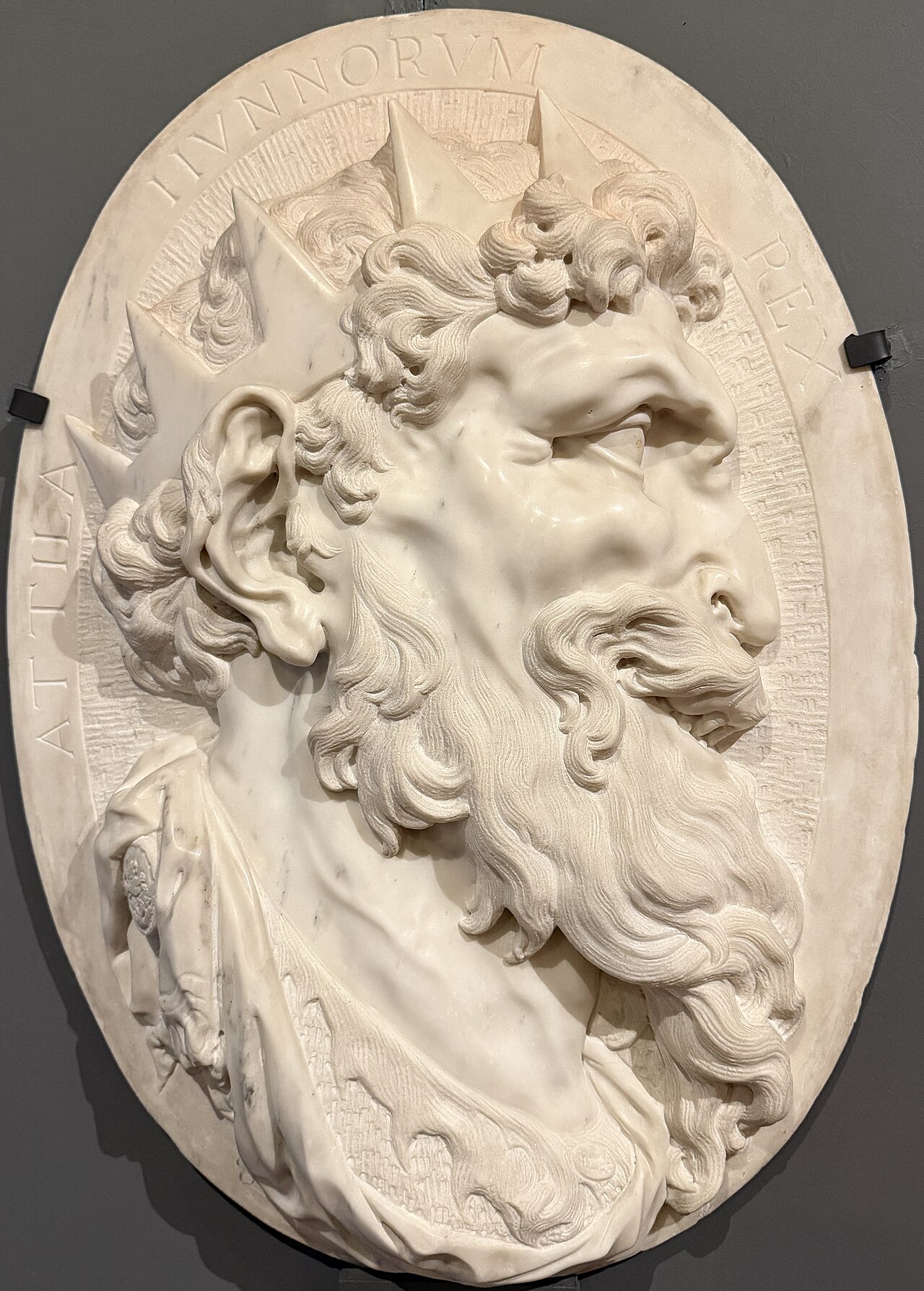
Attila (Marble Relief)
Giovanni Bonazza · 18th century
A Baroque marble relief by Giovanni Bonazza showing Attila with exaggerated, fierce features, from a Padua convent tradition that blamed him for the city's destruction.
A deliberately monstrous depiction of Attila tied to Padua's legend of destruction at his hands.
About this source
What it is
This oval white marble relief was carved in the 18th century by Giovanni Bonazza (1654-1736). It shows a bearded, crowned man in profile with strongly exaggerated, fierce features, inscribed 'ATTILA HVNNORVM REX.' It came from the Convent of San Giovanni di Verdara and is now in the Civic Museums of Padua.
Why it matters
Padua's local tradition blamed Attila for the city's destruction, and this relief was deliberately carved to look demonic and aggressive. Paired with another figure, the work was meant to send a moralizing message about barbarism being overcome by the authority of the Church.
Look closer
- Why did the sculptor choose to distort Attila's features?
- What message was the relief meant to send to viewers in the convent?
- How does this image compare to other imagined portraits of Attila from different centuries?
This sculpture is part of the curated material that grounds the AI version of Attila the Hun on Humy.ai — when students ask about related events, the AI can quote it and cite it.
More Attila the Hun sources
Meet the AI Attila the Hun →
Ready when you are
Start chatting with Attila the Hun now.
20 messages free · No credit card · Available in 50+ languages.