


Secondary sourcePainting19th-20th century (according to the curator's note)
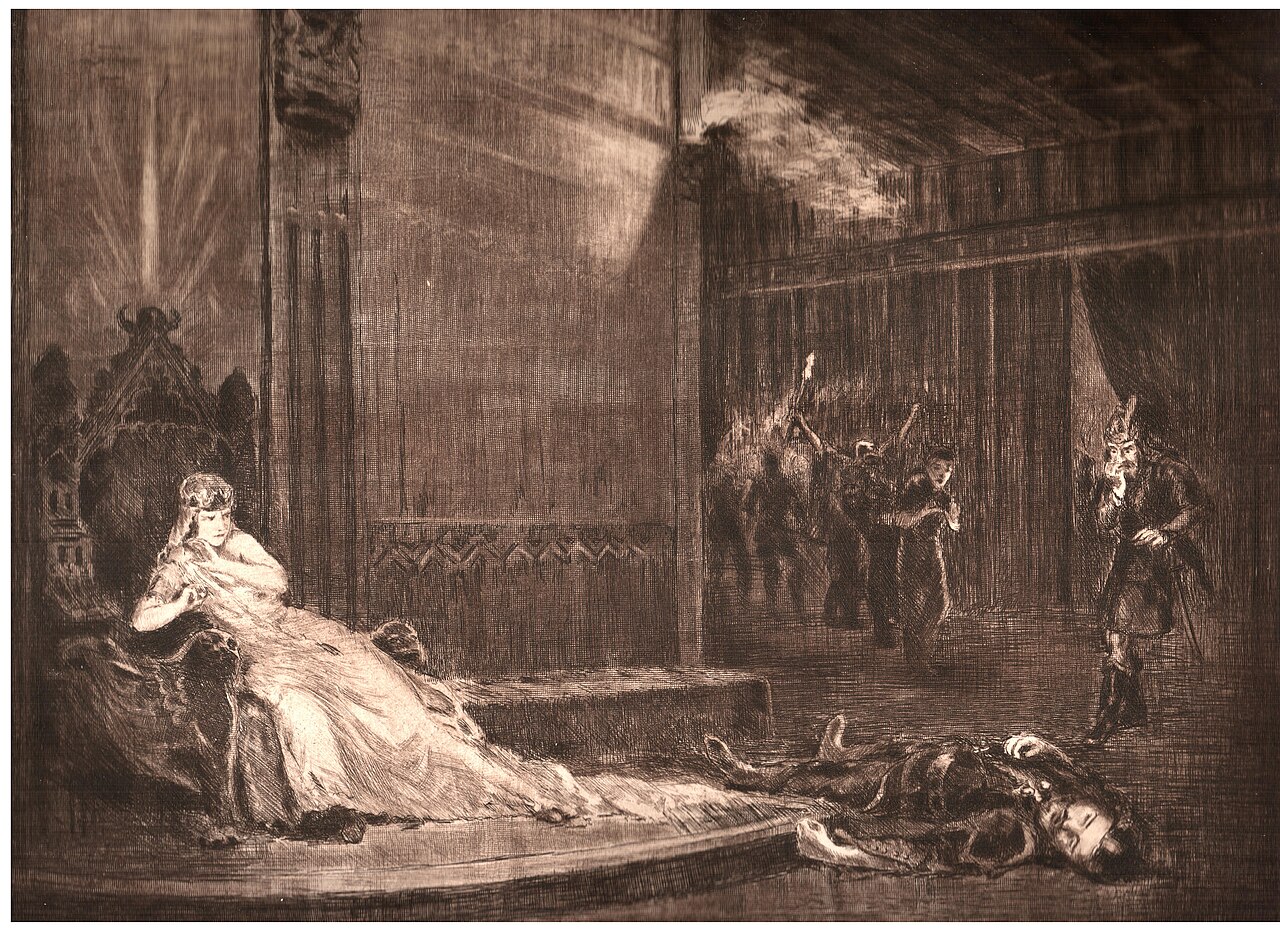
Great King Attila Murdered
Edvi Illes Odon · 19th-20th century (according to the curator's note)
A sepia etching by Edvi Illes Odon showing an imagined scene of Attila's death after his wedding. It is a later artist's interpretation of a legendary event.
Shows a later artist's imagined version of Attila's death, not an eyewitness record of it.
About this source
What it is
This is a sepia etching titled Great King Attila Murdered, by the Hungarian artist Edvi Illes Odon (1877-1946). The Commons record gives the event as Attila's death in 453, after his wedding ceremony. The image shows a dim hall with a woman in a long gown reclining on a couch at left, a dead bearded man on the floor at lower right, and armed men with torches in the background near a figure in a fur hat at right.
Why it matters
The picture was made many centuries after Attila died, so it reflects how later artists imagined his end rather than recording it. The scene of a murdered ruler in a dark hall shows how Attila became a figure of legend, used to express drama and fear. It says more about the artist and the tastes of his time than about what happened in the 5th century.
Look closer
- Who seems to be in control of the scene, and how does the artist place the figures to show that?
- What details of the hall and the lighting make the scene feel dangerous or secret?
- What does the image leave out about the reasons for the killing and the people involved?
This painting is part of the curated material that grounds the AI version of Attila the Hun on Humy.ai — when students ask about related events, the AI can quote it and cite it.
More Attila the Hun sources
Meet the AI Attila the Hun →
Ready when you are
Start chatting with Attila the Hun now.
20 messages free · No credit card · Available in 50+ languages.