


Secondary sourceBookc. 1282-1285
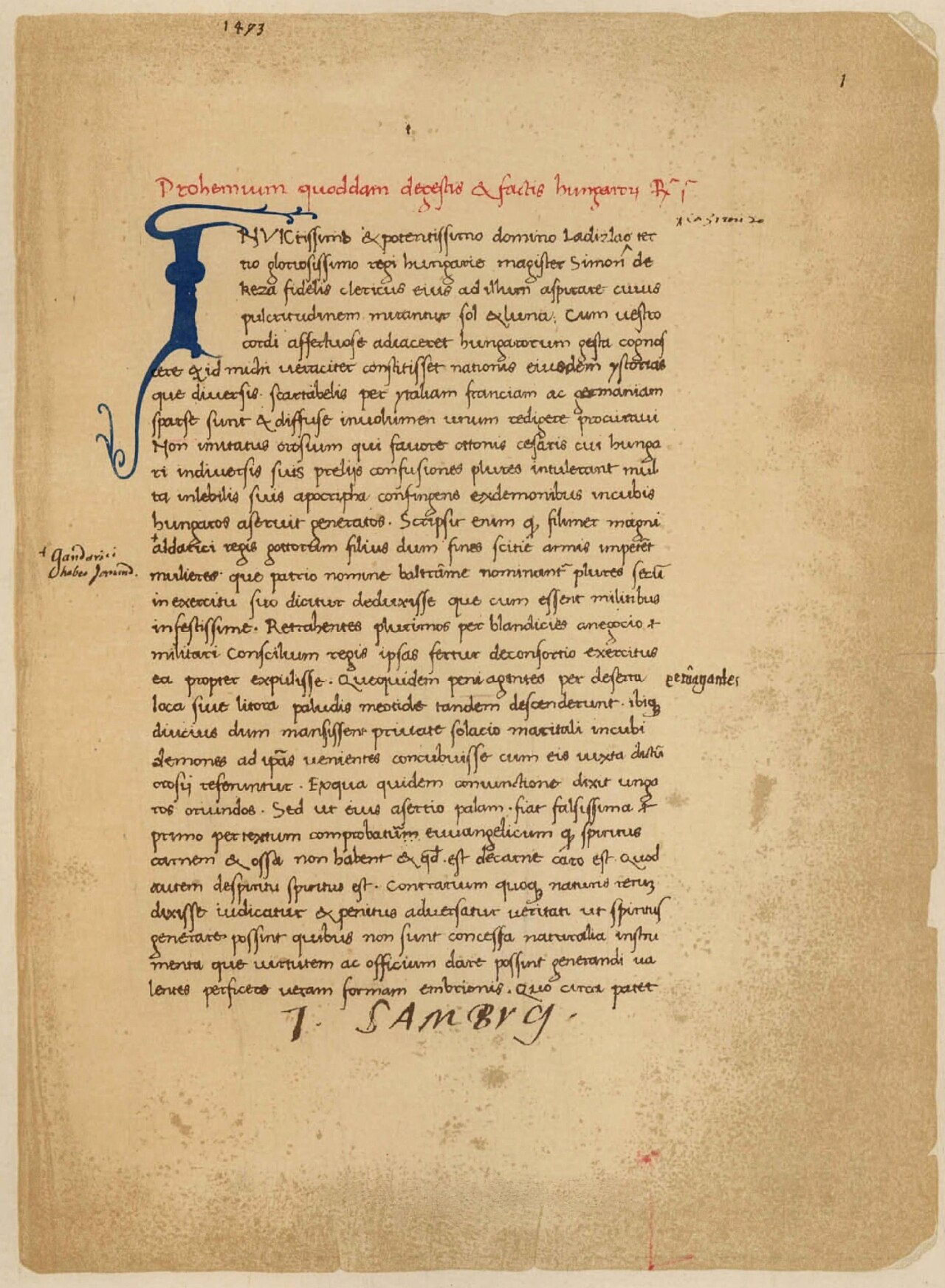
Gesta Hunnorum et Hungarorum
Simon of Kéza · c. 1282-1285
A medieval Hungarian chronicle that casts Attila as the glorious ancestor-king of the Hungarians.
Reinvents Attila as the legendary ancestor-king of the Hungarians, showing his medieval rehabilitation.
About this source
What it is
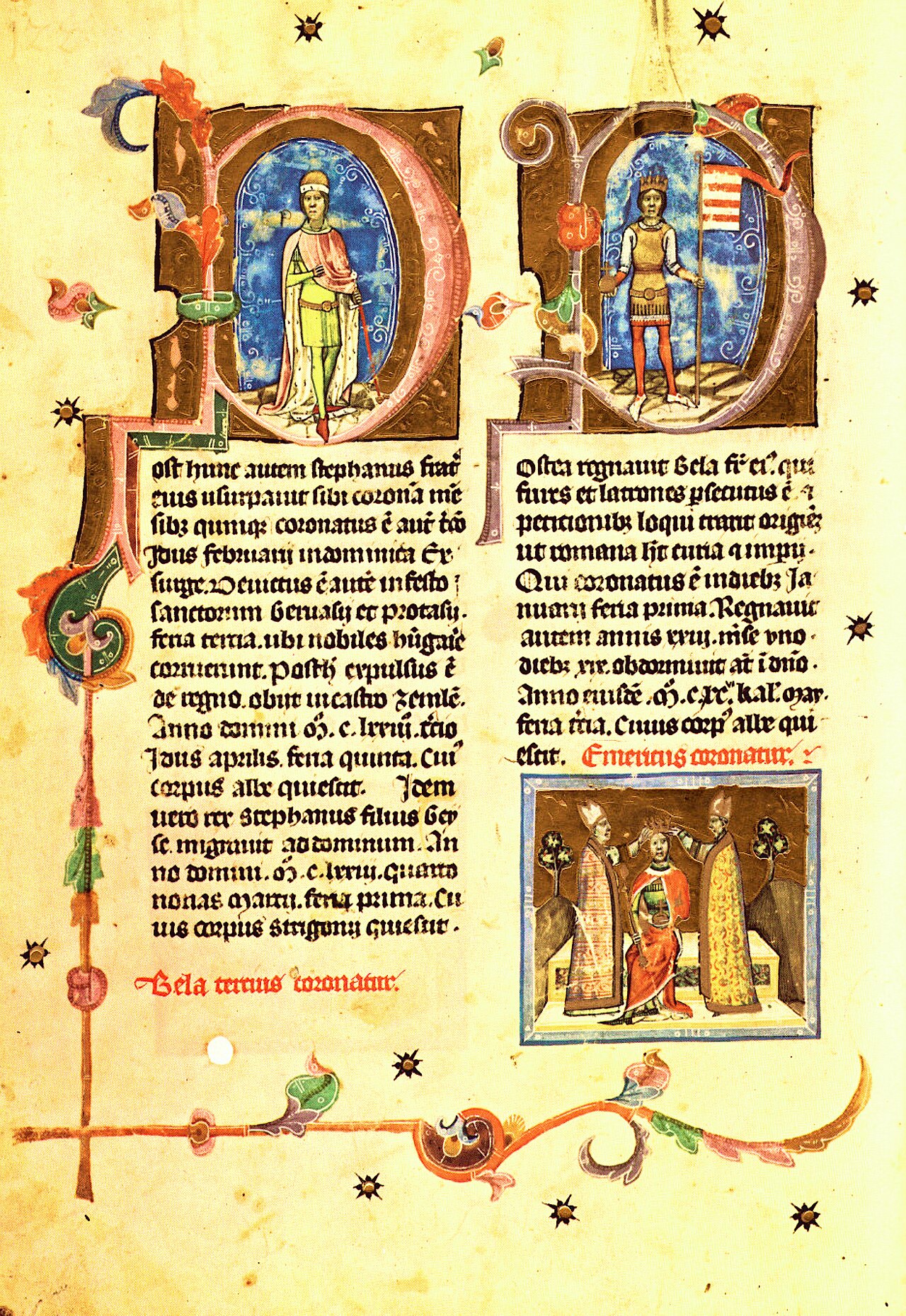
The Gesta Hunnorum et Hungarorum ('Deeds of the Huns and Hungarians') is a Latin chronicle written mainly by Simon of Kéza, a court cleric, around 1282–1285. It combines legendary material about the Huns with a history of the Kingdom of Hungary, drawing on German, Italian, French and Hungarian sources.
Why it matters
The chronicle invents a line of descent connecting the Huns and the Hungarians, making Attila an ancestor-king of the Hungarian people rather than a foreign invader. This shows how, centuries after his death, Attila could be rehabilitated and claimed as a national founder, serving the political needs of a medieval kingdom and its king, Ladislaus IV, whom Simon served.
Look closer
- Why might a medieval court writer want to connect his king's people to a famous ancient ruler?
- What does this tell you about how national identity can be built using historical figures?
- What is left out when a chronicle turns a historical figure into a legendary ancestor?
This book is part of the curated material that grounds the AI version of Attila the Hun on Humy.ai — when students ask about related events, the AI can quote it and cite it.
More Attila the Hun sources
Meet the AI Attila the Hun →

Ready when you are
Start chatting with Attila the Hun now.
20 messages free · No credit card · Available in 50+ languages.