


Secondary sourcePainting1604
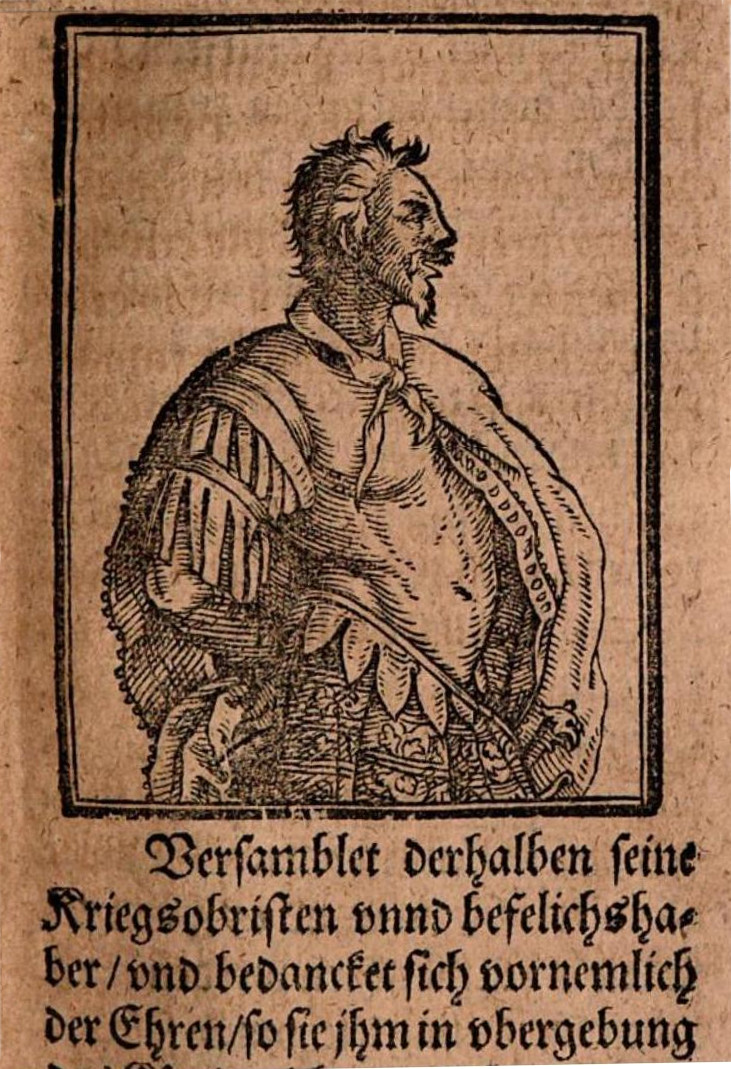
Attila illustration, Wilhelm Dilich's Ungarische Chronica
Wilhelm Dilich · 1604
A 1604 woodcut illustration of Attila, made by Wilhelm Dilich for a Hungarian chronicle. It is a later image connected to Attila as its subject.
Shows Attila as a subject in an early modern chronicle, so it reveals how historians and artists of the 1600s pictured the Hunnic ruler for their readers.
About this source
What it is
This is a woodcut illustration of Attila, from the Ungarische Chronica by Wilhelm Dilich, dated 1604. It is set in a rectangular border and shows a bearded man with wild, tufted hair, facing right. He wears a cloak with decorative trim and a loose collar. Below the image is a German Fraktur caption, which is partly cut off in the image. The record notes that it was made centuries after Attila's death, so it is a secondary source and not a contemporary portrait.
Why it matters
Early modern chronicles were books that gathered stories about a nation's past, and illustrations like this one helped readers picture famous figures from long ago. Dilich's book shows that Attila was part of how Hungarian history was told in the early 17th century. The image reflects the ideas and artistic choices of its maker and his readers rather than the appearance of Attila himself.
Look closer
- What features of the figure's hair, cloak and collar seem chosen to make him look wild or noble?
- What does the German caption suggest about who the book was written for?
- What does this illustration leave out, and how might a reader have checked whether it is accurate?
This painting is part of the curated material that grounds the AI version of Attila the Hun on Humy.ai — when students ask about related events, the AI can quote it and cite it.
More Attila the Hun sources
Meet the AI Attila the Hun →
Ready when you are
Start chatting with Attila the Hun now.
20 messages free · No credit card · Available in 50+ languages.