


Secondary sourceArtifactc. 1490-1500
Renaissance Plaquette Showing Attila
c. 1490-1500
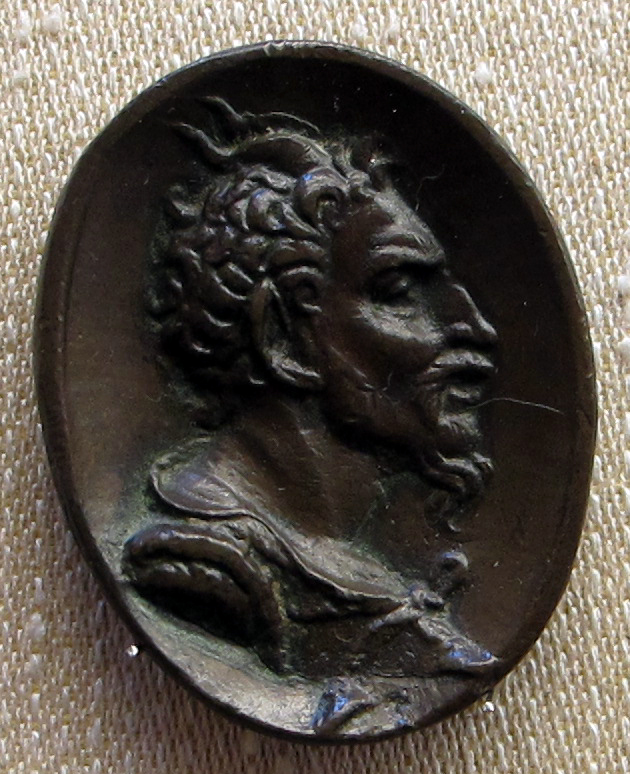
A dark bronze plaquette in low relief showing Attila in profile, made around 1490-1500. It is a later Renaissance image of a figure from the 5th century.
Shows how Renaissance artists imagined Attila in a small bronze relief, centuries after his death.
About this source
What it is
This is a small oval bronze plaquette in low relief, catalogued in Wikimedia Commons as a Renaissance plaquette. It shows a bearded man in profile facing right, with curly hair and a shoulder covered by a cloak or armor edge, against a plain background. The Commons page dates it to about 1490-1500. The artist is not named in the facts available.
Why it matters
Plaquettes were small reliefs that Renaissance collectors and scholars often kept and studied. Their subjects were often drawn from classical or historical figures, which shows how Attila was included in the revival of interest in ancient and historical subjects. The piece tells us how Renaissance makers imagined a ruler who had lived about a thousand years earlier.
Look closer
- What details of the face, hair and clothing suggest a particular idea of a powerful man?
- Why might a Renaissance maker choose a profile view for a small relief?
- What can we not learn about Attila from a portrait made so long after his death?
This artifact is part of the curated material that grounds the AI version of Attila the Hun on Humy.ai — when students ask about related events, the AI can quote it and cite it.
More Attila the Hun sources
Meet the AI Attila the Hun →
Ready when you are
Start chatting with Attila the Hun now.
20 messages free · No credit card · Available in 50+ languages.