


Secondary sourcePainting
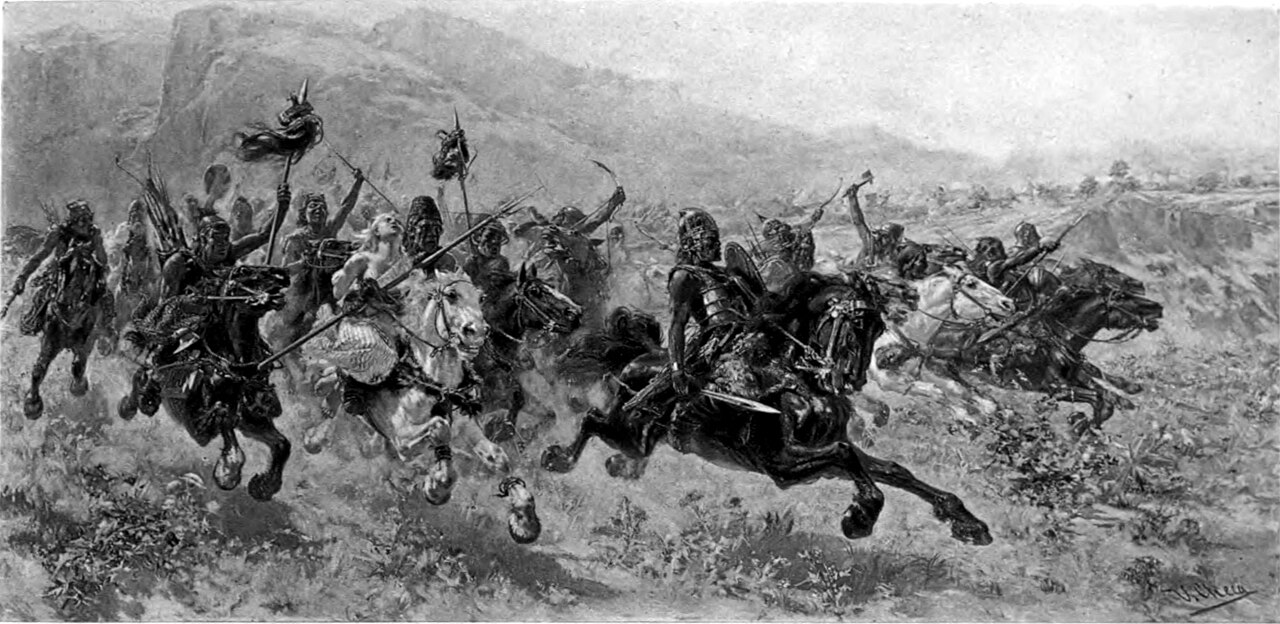
Attila, the Scourge of God
Ulpiano Checa
A 19th-century engraving imagining Attila's mounted warriors charging into battle, typical of popular images of him as a barbarian conqueror.
This engraving captures the enduring, dramatized popular image of Attila as a fearsome conqueror long after his death.
About this source
What it is
This black-and-white engraving by Ulpiano Checa shows mounted warriors charging across open grassland, wearing helmets and armor and carrying spears and standards. It illustrated a popular publication about great historical figures, under the heading 'Attila, the Scourge of God'.
Why it matters
Created centuries after Attila's death, this image reflects the 19th-century popular imagination of Attila as a terrifying barbarian leader, a nickname ('Scourge of God') that was already attached to him in later tradition. It shows how later European culture dramatized and mythologized Attila rather than depicting him accurately.
Look closer
- What makes this scene feel dramatic or frightening, and how does the artist achieve that?
- Why do you think Attila earned the nickname 'Scourge of God' in later tradition?
- What is missing from this image that a real historical account might include?
This painting is part of the curated material that grounds the AI version of Attila the Hun on Humy.ai — when students ask about related events, the AI can quote it and cite it.
More Attila the Hun sources
Meet the AI Attila the Hun →
Ready when you are
Start chatting with Attila the Hun now.
20 messages free · No credit card · Available in 50+ languages.