


Secondary sourcePaintingc. 1789
Attila the Hun (drawing)
c. 1789
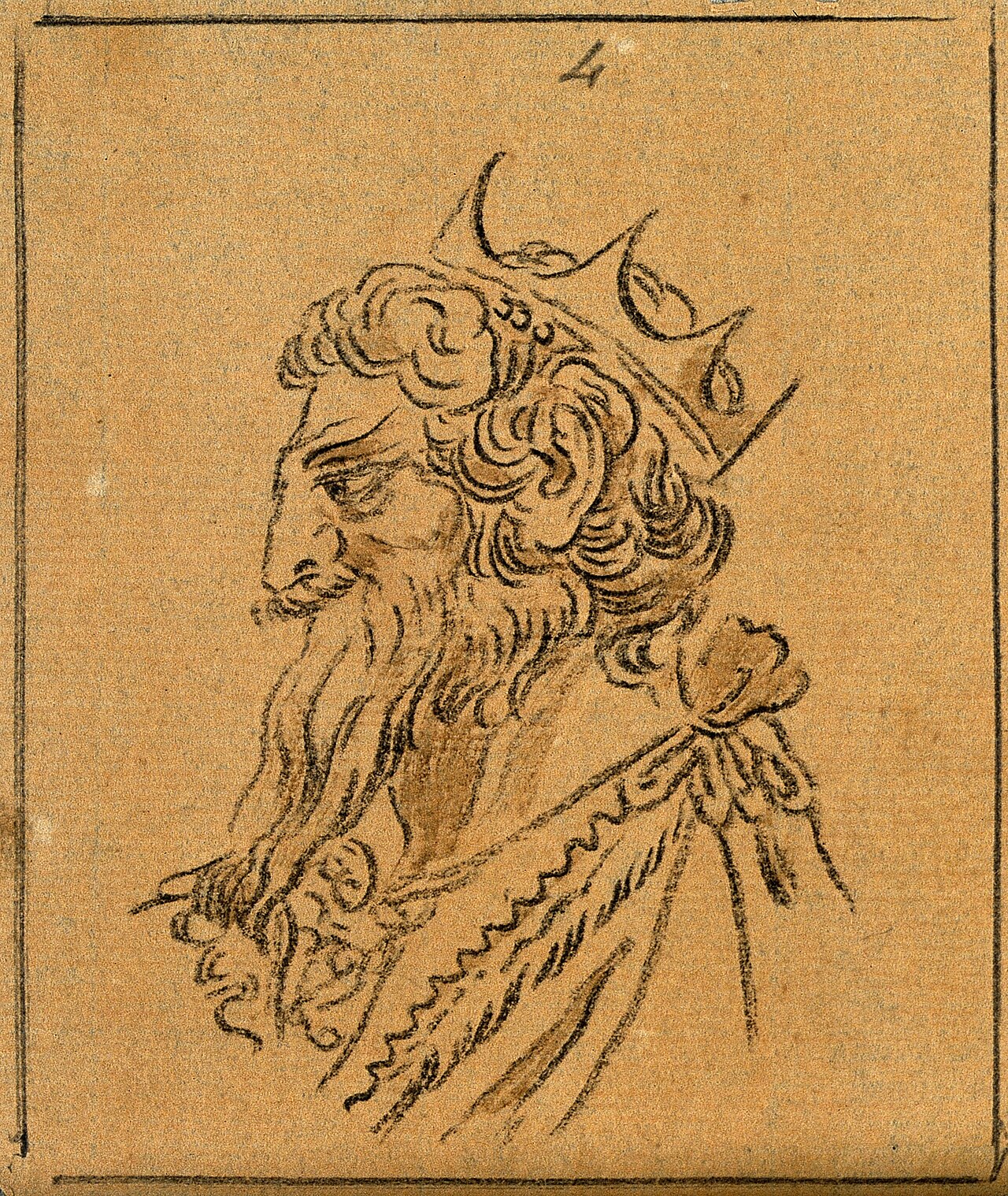
A pen and ink sketch of Attila made around 1789, held in the Iconographic Collections. It is part of a physiognomy collection linked to Johann Caspar Lavater.
Shows how a late 18th-century collection of faces and character imagined Attila's appearance.
About this source
What it is
This is a pen and brown ink sketch on tan paper, dated around 1789. It shows the profile of a bearded man with curly hair, wearing a crown or helmet topped with a crescent and a cloak with a ruffled edge. A small numeral 4 appears at the top. The record is in the Iconographic Collections, and its keywords link the drawing to Attila, to Johann Caspar Lavater and to Thomas Holloway.
Why it matters
The drawing was made several centuries after Attila's death, so it is an imagined portrait. Lavater was known for physiognomy, the idea that a person's face reveals character. A drawing made for such a collection shows how readers of the late 18th century expected a famous warrior's face to look fierce and foreign.
Look closer
- What features in the face and dress seem meant to show Attila as foreign or dangerous?
- Why would a collection about faces and character include a ruler who died in the 5th century?
- What does the sketch leave out that a written source about Attila would include?
This painting is part of the curated material that grounds the AI version of Attila the Hun on Humy.ai — when students ask about related events, the AI can quote it and cite it.
More Attila the Hun sources
Meet the AI Attila the Hun →
Ready when you are
Start chatting with Attila the Hun now.
20 messages free · No credit card · Available in 50+ languages.