


Secondary sourcePainting1870
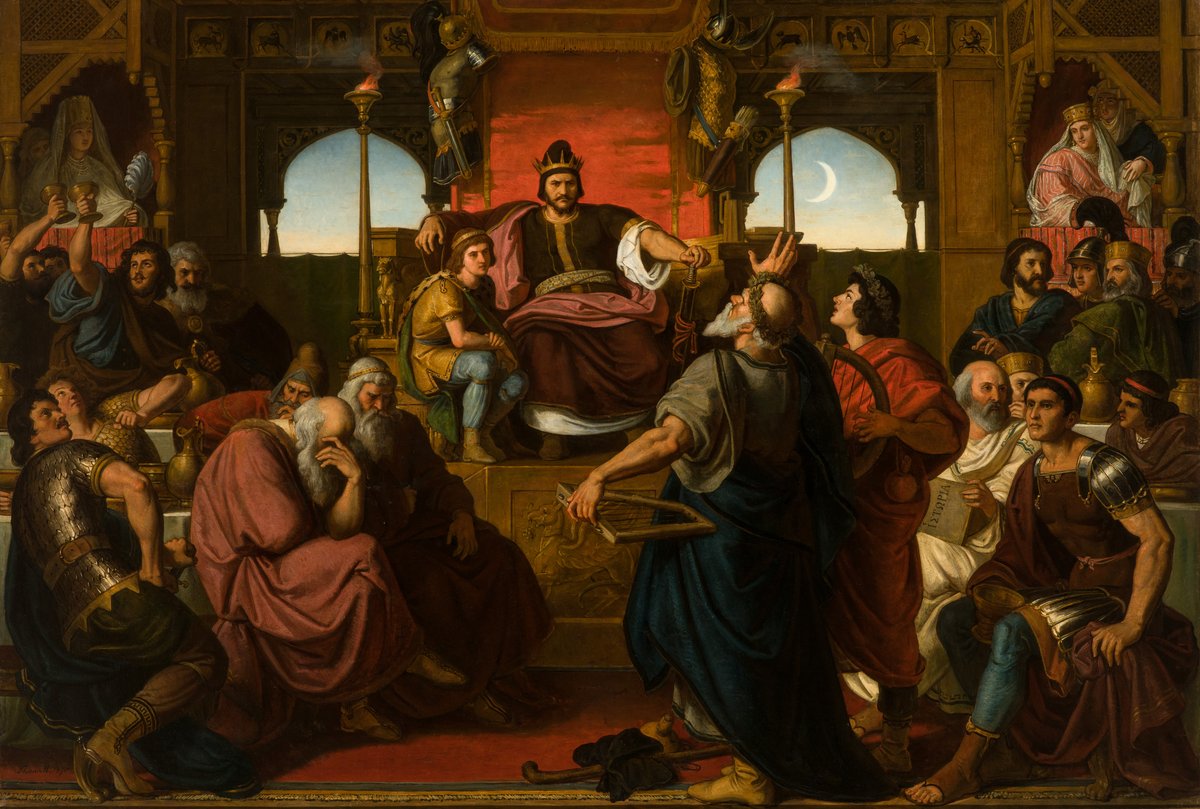
The Feast of Attila
Mór Than · 1870
A 19th-century Hungarian painting imagining a banquet of Attila based on an ancient eyewitness account of his court.
This 19th-century painting reimagines a historical description of Attila's own banquet to glorify him for a national audience.
About this source
What it is
This painting by Mór Than, completed in 1870, shows an imagined feast hosted by Attila. It depicts a bearded crowned king on a throne, surrounded by armored and robed guests, with a musician raising a hand toward him. It is held in the Hungarian National Gallery, Budapest.
Why it matters
The painting draws on the description left by the Roman diplomat Priscus, who attended one of Attila's banquets and recorded that Attila alone used a plain wooden cup while his guests drank from gold and silver vessels. Than reimagined this scene for a 19th-century Hungarian audience eager to connect their national history to the legendary Hunnic ruler.
Why it matters
Look closer
- What details in the painting suggest wealth and power, and how does Attila's own cup contrast with this?
- Why might a 19th-century Hungarian artist choose to paint this scene?
- What was the painter imagining versus what Priscus actually recorded?
This painting is part of the curated material that grounds the AI version of Attila the Hun on Humy.ai — when students ask about related events, the AI can quote it and cite it.
More Attila the Hun sources
Meet the AI Attila the Hun →
Ready when you are
Start chatting with Attila the Hun now.
20 messages free · No credit card · Available in 50+ languages.