


Secondary sourceSculpture1893
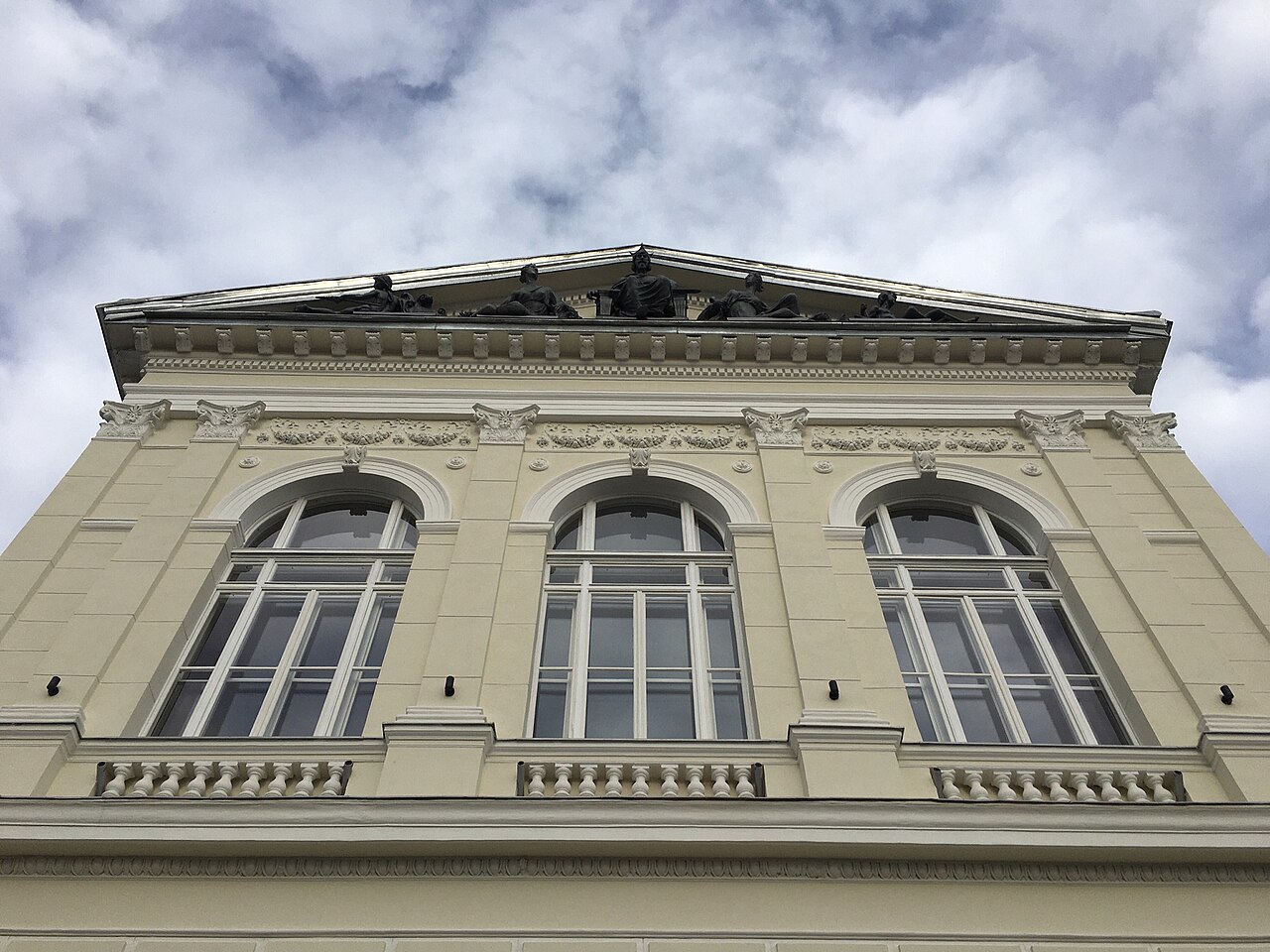
Attila Statue Group on the Marosvásárhely Museum Facade
József Róna · 1893
A nineteenth-century sculpture group by József Róna on the facade of a museum in Marosvásárhely, with Attila as its central figure.
Places Attila at the center of a public monument that presents him as an ancestor in the Hungarian national story.
About this source
What it is
This is a group of statues by József Róna, made in 1893 for the facade of the Székely Industrial Museum in Marosvásárhely, now the Natural Sciences Museum. Attila is the central figure. Beside him sit two women, one representing Hungary and the other Transylvania, meant as an allegory of union and of the kinship between the Huns and the Székely people. At the edge, a young man represents modern industry and a girl represents Székely home industry. The photograph shows the statues in dark bronze along the roofline of a cream neoclassical building.
Why it matters
The group was made in the late nineteenth century, when Hungarian writers and artists often looked to the Huns as ancestors of the Hungarians. Putting Attila on a public building linked the nation's past to its present. The sculpture reflects the ideas of its own time, not the actual life of Attila in the fifth century.
Look closer
- Who is placed in the center, and what do the figures beside him seem to stand for?
- Why might a museum building in the 1890s be decorated with figures from the Hun period?
- What does the sculpture leave out about the Huns and about the other peoples of the region?
This sculpture is part of the curated material that grounds the AI version of Attila the Hun on Humy.ai — when students ask about related events, the AI can quote it and cite it.
More Attila the Hun sources
Meet the AI Attila the Hun →
Ready when you are
Start chatting with Attila the Hun now.
20 messages free · No credit card · Available in 50+ languages.