


Secondary sourceBookbefore 973 AD
Waltharius
Ekkehard I · before 973 AD
A Latin epic poem about hostages escaping the court of Attila, reflecting medieval memory of his hostage diplomacy.
Reflects medieval memory of Attila's practice of taking hostages from western kingdoms.
About this source
What it is
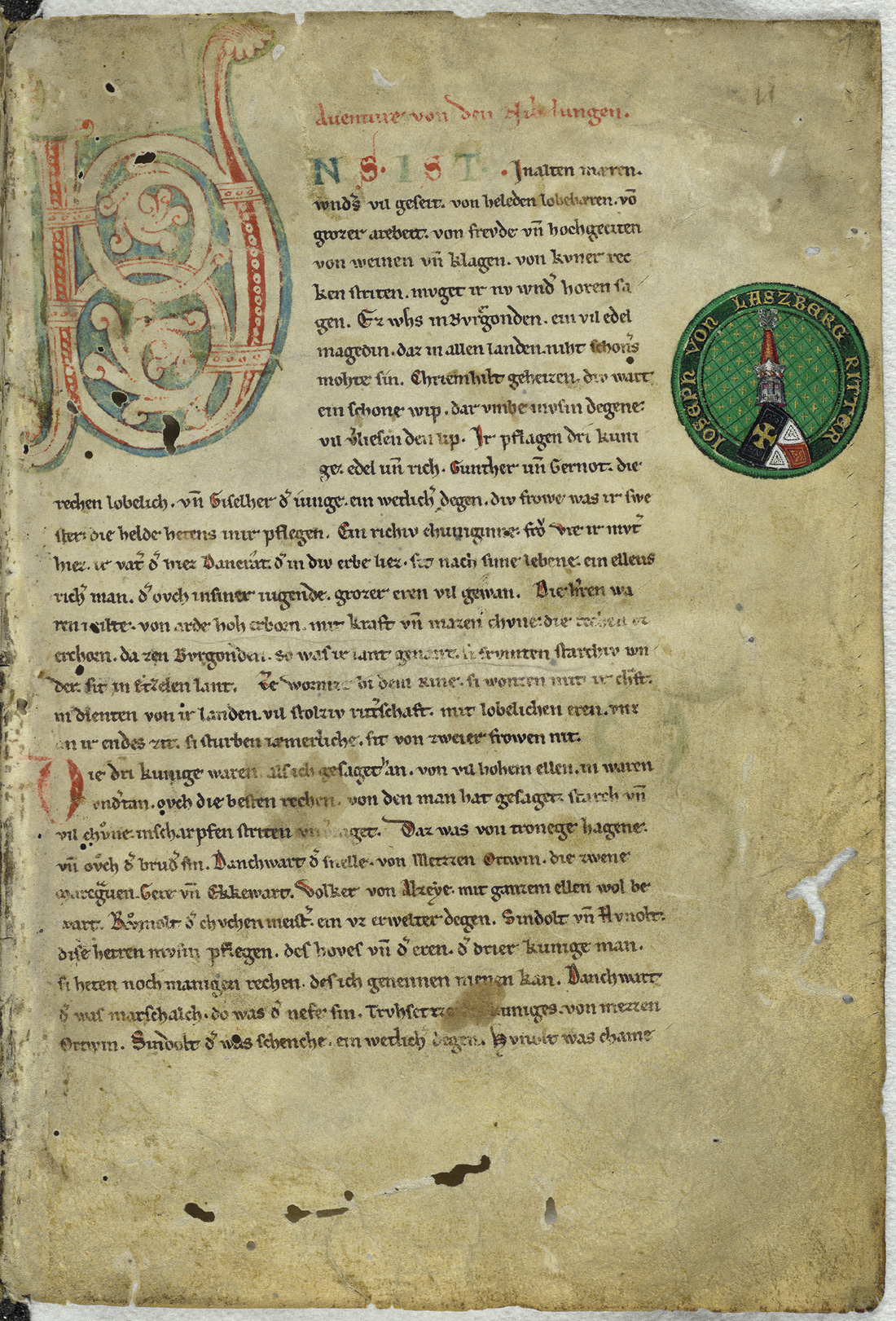
Waltharius is a Latin epic poem of 1456 verses, written in the dactylic hexameter of classical epic. It is attributed to Ekkehard I, a monk of St Gall who died in 973, and was dedicated by his pupil Geraldus to Erchanbald, bishop of Strasbourg. It is based on older Germanic legend.
Why it matters
The story tells of young hostages — including Waltharius, son of a western prince — held at the court of Attila after western rulers paid tribute and gave hostages to avoid war. The hostages escape with treasure and are later pursued by former companions. Though written centuries after Attila's death, the poem reflects a real historical memory: Attila's practice of taking royal hostages as part of his diplomacy with Rome and the western kingdoms.
Look closer
- What does the hostage-taking in this story suggest about how Attila kept power over neighbouring kingdoms?
- Why might a monk centuries later still be interested in stories about Attila's court?
- How does turning history into an adventure story change what we remember about the past?
This book is part of the curated material that grounds the AI version of Attila the Hun on Humy.ai — when students ask about related events, the AI can quote it and cite it.
More Attila the Hun sources
Meet the AI Attila the Hun →

Ready when you are
Start chatting with Attila the Hun now.
20 messages free · No credit card · Available in 50+ languages.