


Primary sourceArtifact381
Pietroasa Treasure
Visigoths · 381
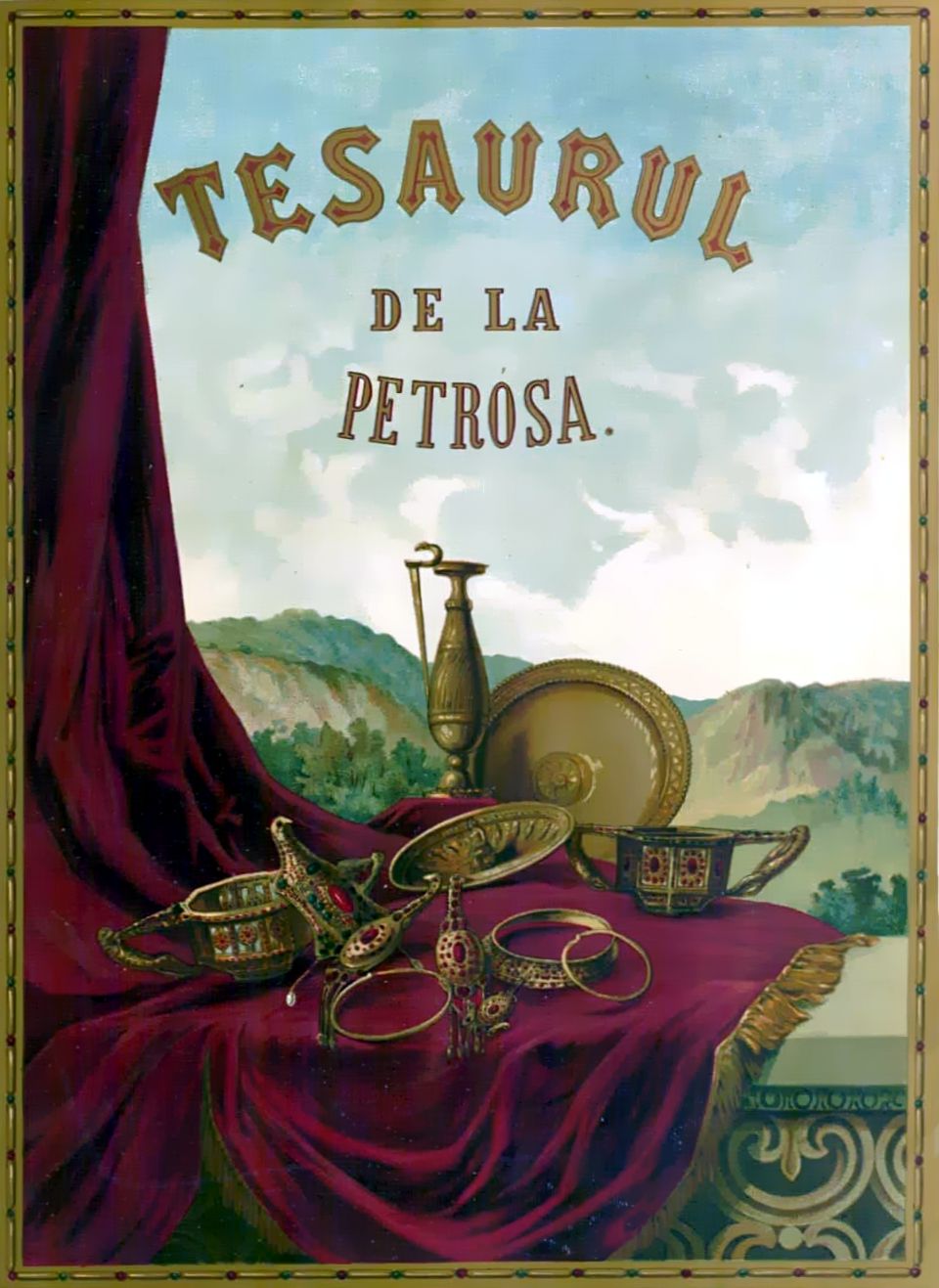
A hoard of Gothic gold objects from the late fourth century, showing the splendor of Germanic elites who lived under Hunnic power.
Shows the Gothic elites who lived under Hunnic power during Attila's time, giving context to his empire's reach.
About this source
What it is
The Pietroasele Treasure is a hoard of gold objects, including fibulae, a dish, a cup and a ring with a runic inscription, made by Goths around the late fourth century. Only twelve of the original pieces survive, kept today at the National Museum of Romanian History in Bucharest.
Why it matters
The treasure belonged to Gothic elites who lived alongside and under the power of the Huns during Attila's era. Its mixed artistic styles, Han Chinese, Hellenistic, Sasanian and Germanic, show how many cultures mixed in the lands Attila's empire touched. It reminds students that the Hunnic world included many different peoples with their own rich traditions.
Look closer
- What different artistic influences can you spot in the objects shown?
- Why might gold objects like these have been buried and hidden?
- What does this treasure tell you about who lived in this region besides the Huns?
This artifact is part of the curated material that grounds the AI version of Attila the Hun on Humy.ai — when students ask about related events, the AI can quote it and cite it.
More Attila the Hun sources
Meet the AI Attila the Hun →
Ready when you are
Start chatting with Attila the Hun now.
20 messages free · No credit card · Available in 50+ languages.