


Secondary sourceSculpture18th century
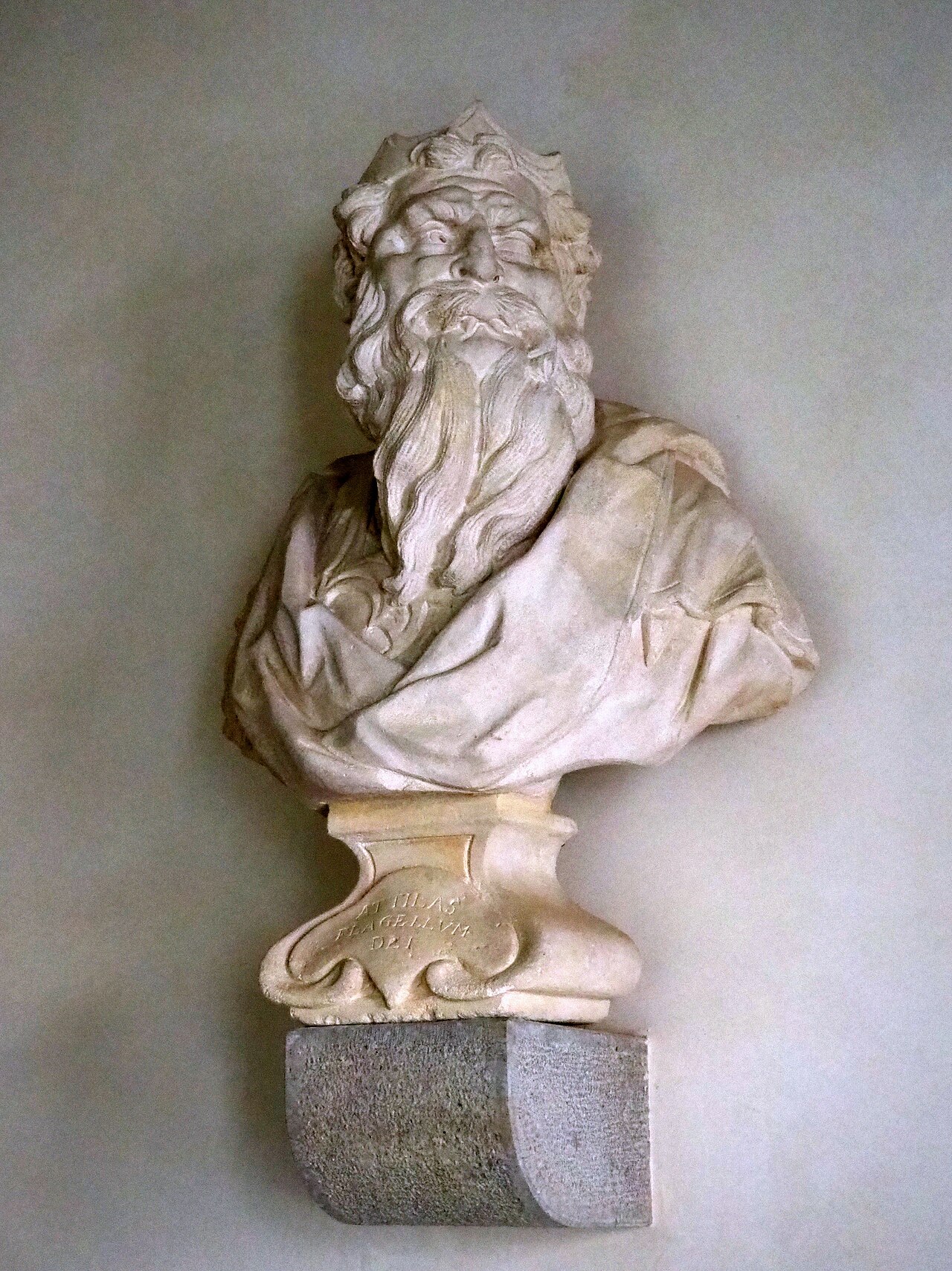
Bust of Attila (Giovanni Bonazza)
Giovanni Bonazza · 18th century
A marble bust of Attila by Giovanni Bonazza, shown in the atrium of the Palazzo Roncale in Rovigo. It is an 18th-century imagined likeness of the Hunnic king.
Shows how an 18th-century Italian sculptor pictured Attila as a crowned barbarian king.
About this source
What it is
This is a white marble bust of a bearded, crowned figure with long flowing beard and wavy hair, draped in a cloak. It stands on a carved pedestal with an inscription. The sculptor was Giovanni Bonazza, and the bust stands in the atrium of the Palazzo Roncale in Rovigo, Italy. The catalogue record names it as a bust of the barbarian king Attila. Its Baroque style dates it to the 18th century.
Why it matters
The bust was carved long after Attila's death, so it shows how 18th-century Italians imagined him. Calling him a barbarian king reflects how Roman-era and later European writers often described the Huns as outsiders. A palace display like this one used the figure to show learning and the taste of its owners.
Look closer
- What features does the sculptor use to make Attila look regal or powerful?
- Why would a palace owner choose to display a bust of a fifth-century enemy of Rome?
- What does the bust leave out about the people Attila ruled?
This sculpture is part of the curated material that grounds the AI version of Attila the Hun on Humy.ai — when students ask about related events, the AI can quote it and cite it.
More Attila the Hun sources
Meet the AI Attila the Hun →
Ready when you are
Start chatting with Attila the Hun now.
20 messages free · No credit card · Available in 50+ languages.