


Secondary sourceDocument1905
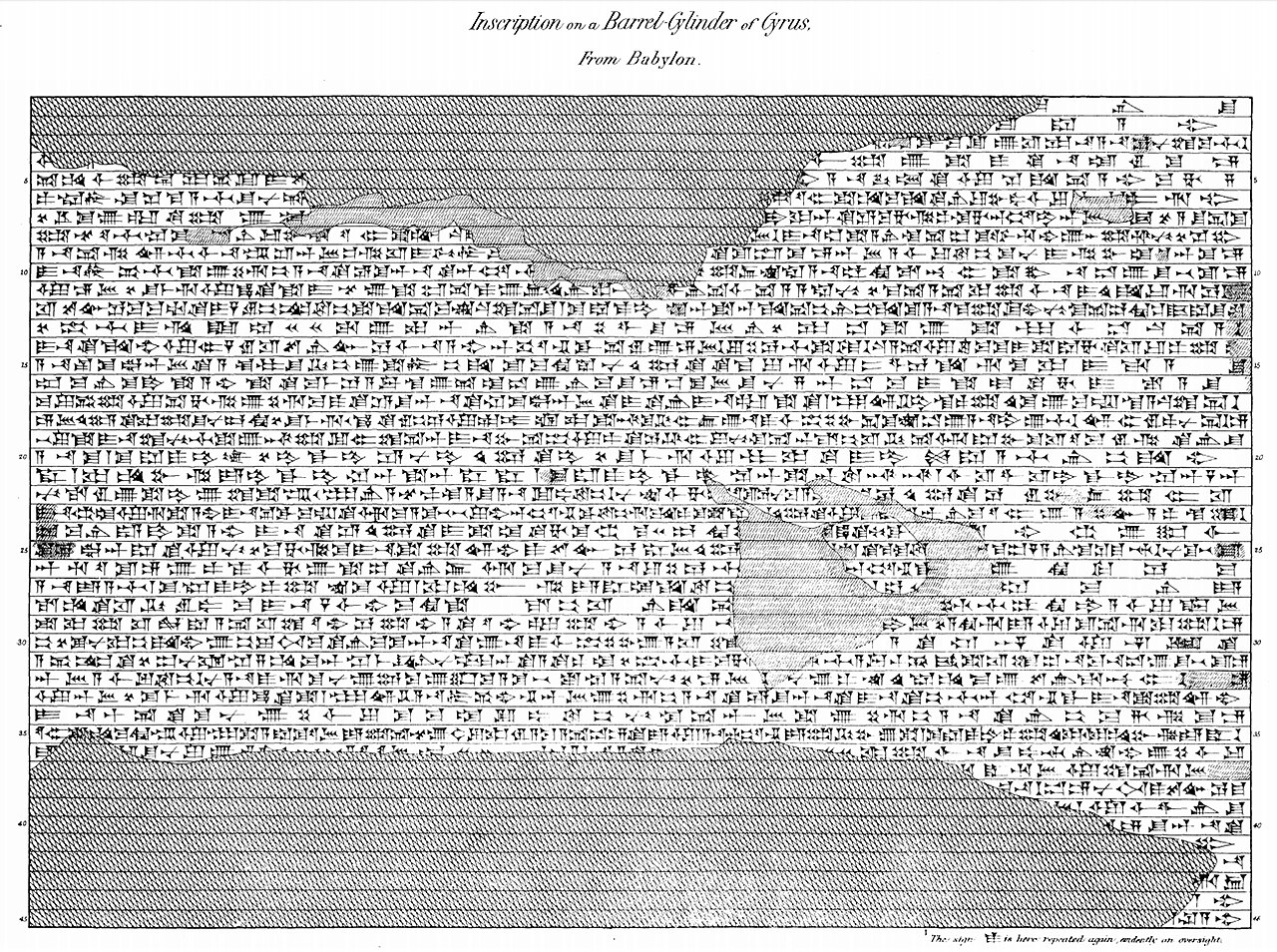
Barrel Cylinder of Cyrus, Transcription by Theophilus Pinches
Theophilus Goldridge Pinches · 1905
A 1905 scholarly transcription of the cuneiform text on the Cyrus Cylinder, a clay document linked to Cyrus the Great.
A scholarly copy of the inscription traditionally connected to Cyrus's own proclamation after taking Babylon.
About this source
What it is
This is an engraved plate from 1905 showing a transcription of the cuneiform inscription found on a clay barrel cylinder from Babylon, associated with Cyrus the Great. It was prepared by the scholar Theophilus Pinches, who copied the ancient signs into a readable plate.
Why it matters
The original cylinder is one of the most famous records connected to Cyrus's conquest of Babylon. This 1905 transcription made the ancient text accessible to scholars long before modern photography and digital imaging. It reflects how 19th- and 20th-century experts worked to recover and understand ancient inscriptions.
Look closer
- Why would a scholar need to make a transcription instead of just showing a photograph?
- What does the damage noted on the original clay tell you about how fragile ancient records can be?
- Whose voice are we really reading — Cyrus's, or the scholar interpreting his words centuries later?
This document is part of the curated material that grounds the AI version of Cyrus the Great on Humy.ai — when students ask about related events, the AI can quote it and cite it.
More Cyrus the Great sources
Meet the AI Cyrus the Great →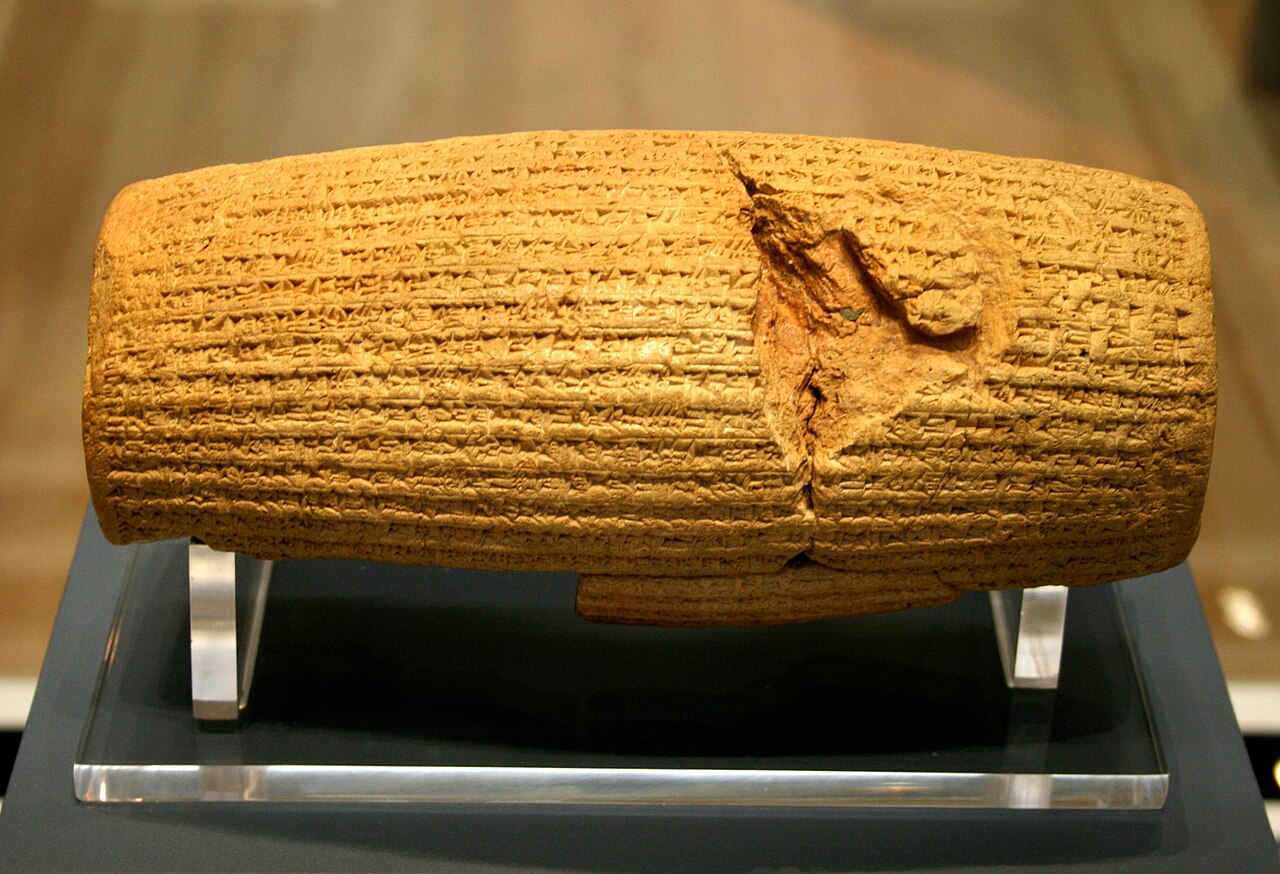

Ready when you are
Start chatting with Cyrus the Great now.
20 messages free · No credit card · Available in 50+ languages.