


Primary sourcePainting1843
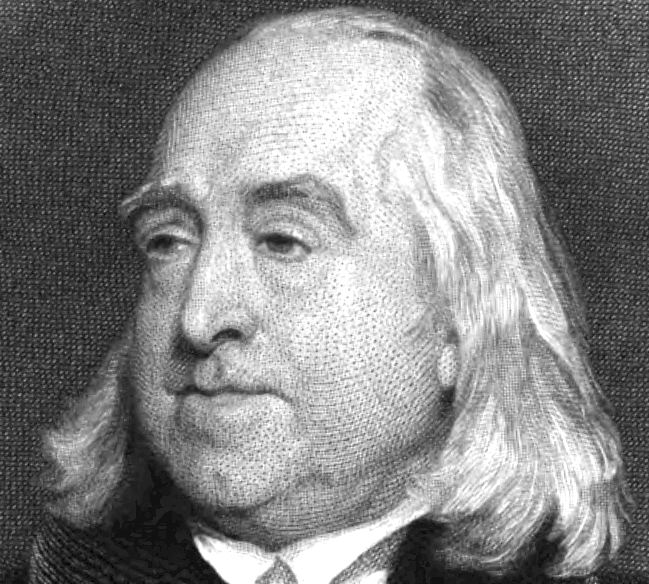
Bentham engraving after Pickersgill (moiré test image)
H. W. Pickersgill · 1843
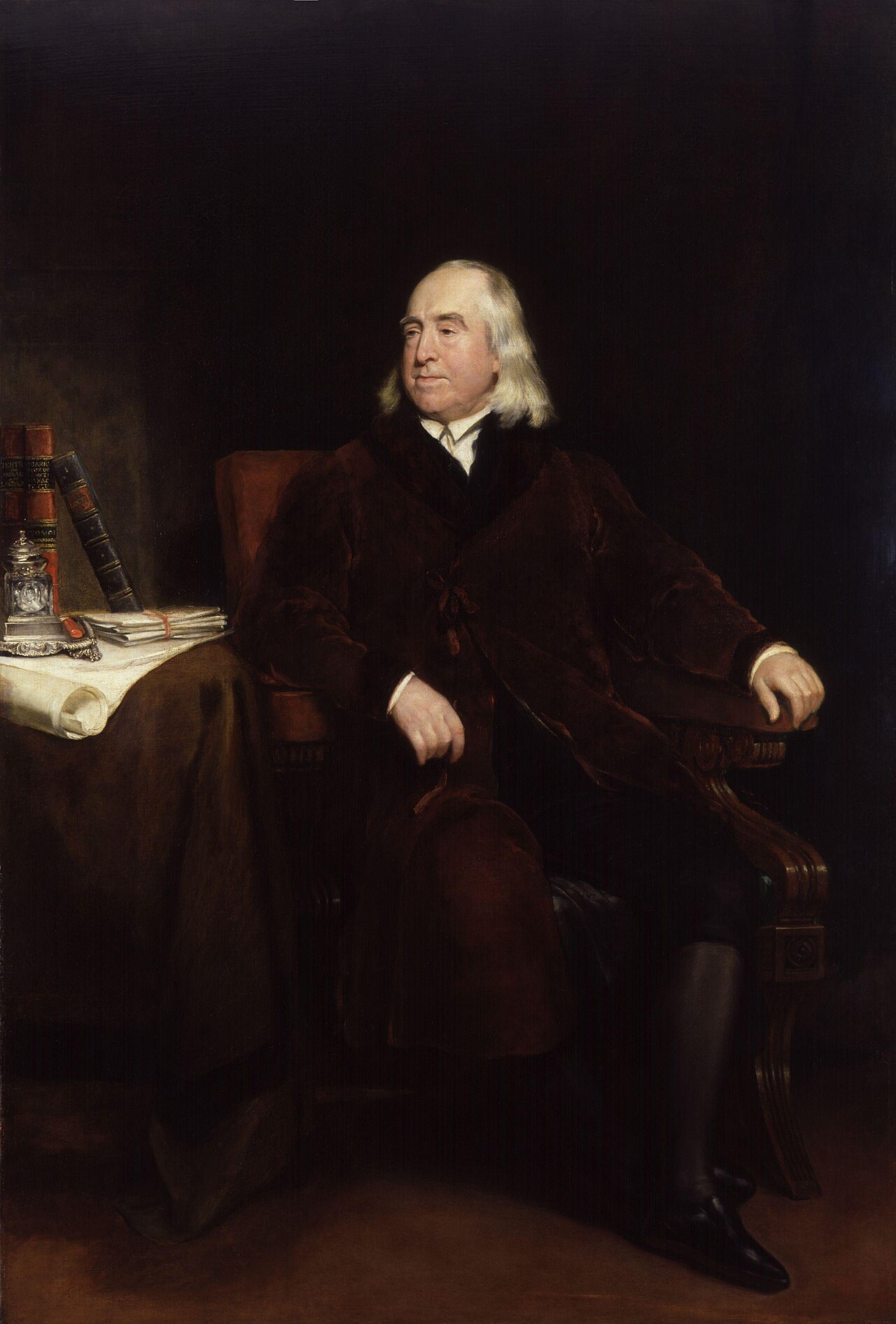
A test image of an engraved portrait of Bentham after H. W. Pickersgill, made to show how to correct moiré patterns. It is not suited to studying his appearance.
This engraving depicts Bentham, so it shows how he was portrayed in his lifetime, though this copy is a technical test file.
About this source
What it is
This is a digital test image of an 1843 engraving of Bentham, made after a work by H. W. Pickersgill. It is used by image processors to show ways of correcting a coloured moiré pattern, which is a wavy distortion. The picture shows an older man with a high forehead, receding hairline and long light hair, in a dark coat with a white collar.
Why it matters
Portrait engravings like this one were widely copied in the 1800s and helped shape how the public pictured famous thinkers. This particular file, however, was prepared for technical purposes, so its wavy pattern hides fine detail.
Look closer
- What does the portrait show about how Bentham was presented to the public?
- How does the moiré pattern change what you can see in the face?
- Why might a test image be a poor source for judging a person's appearance?
This painting is part of the curated material that grounds the AI version of Jeremy Bentham on Humy.ai — when students ask about related events, the AI can quote it and cite it.
More Jeremy Bentham sources
Meet the AI Jeremy Bentham →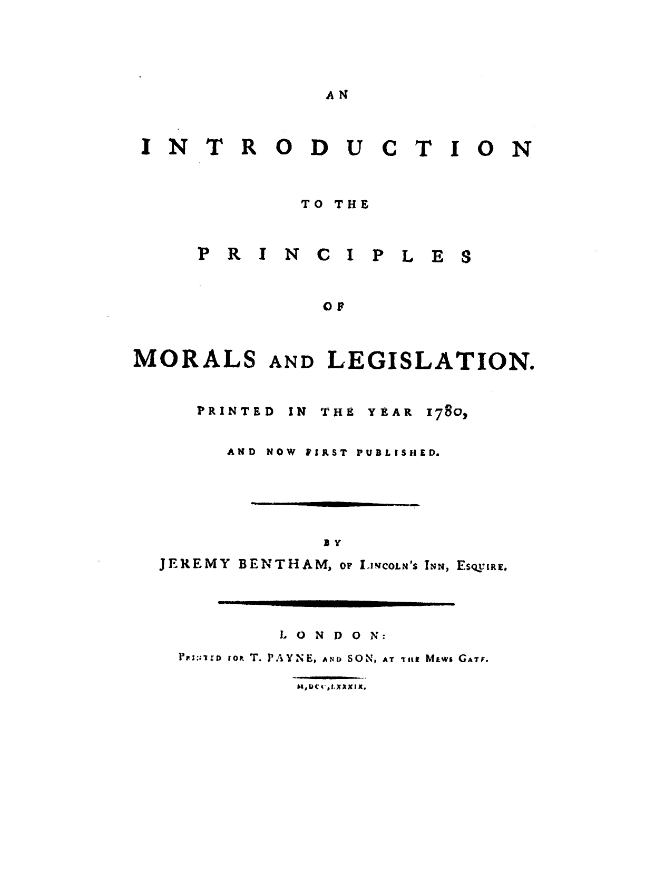 Book
Primary source
An Introduction to the Principles of Morals and Legislation
Jeremy Bentham · 1789 (printed 1780)
 Book
Primary source
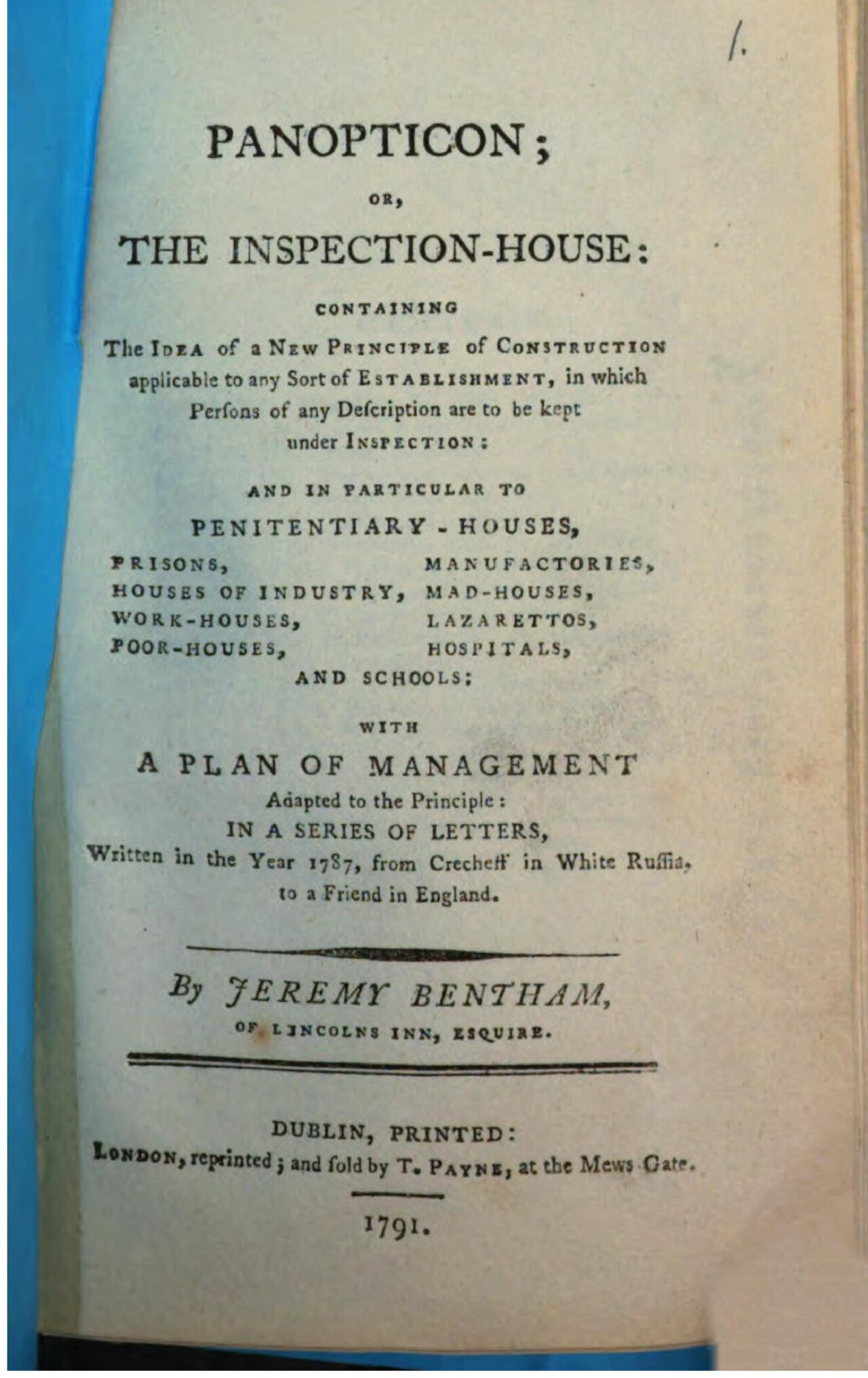
Panopticon; or, The Inspection-House
Jeremy Bentham · 1791 (letters written 1787)
 Artifact
Primary source
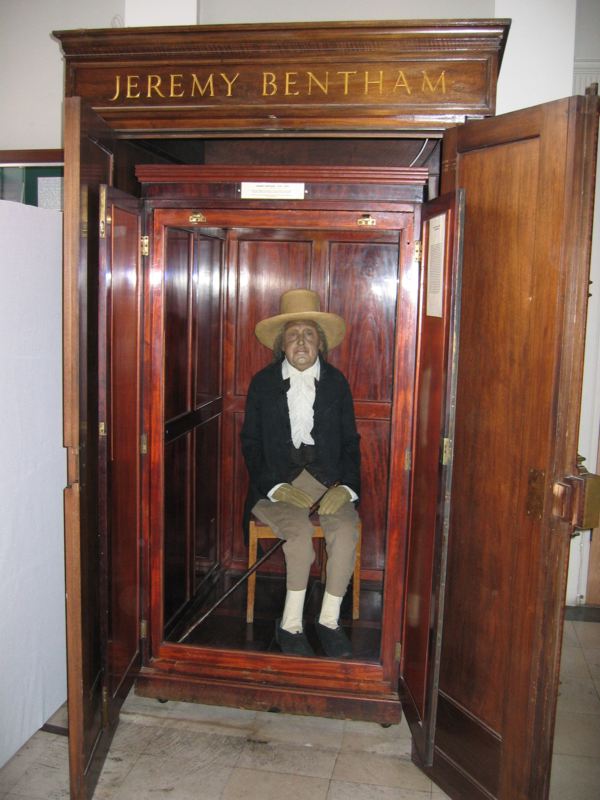
Auto-icon of Jeremy Bentham
Thomas Southwood Smith · 1832
 Book
Primary source
A Fragment on Government
Jeremy Bentham · 1776
 Painting
Primary source
Jeremy Bentham
Henry William Pickersgill · c. 1829
Ready when you are
Start chatting with Jeremy Bentham now.
20 messages free · No credit card · Available in 50+ languages.