


Secondary sourcePainting1676
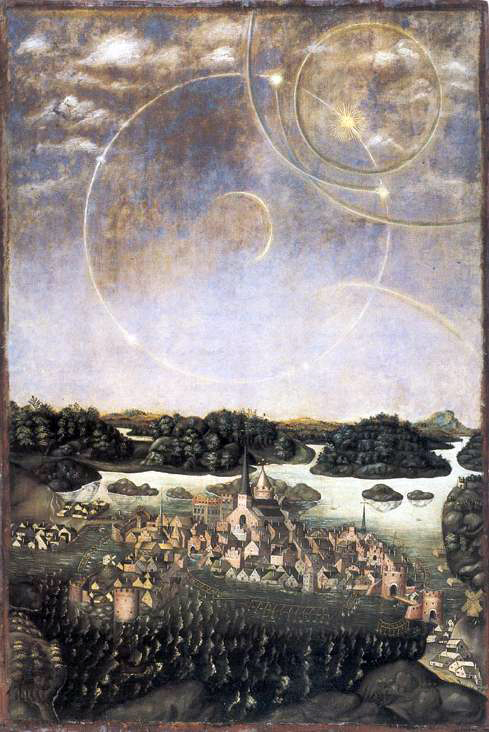
Blodbadsplanschen
Dionysius Padt-Brugge · 1676
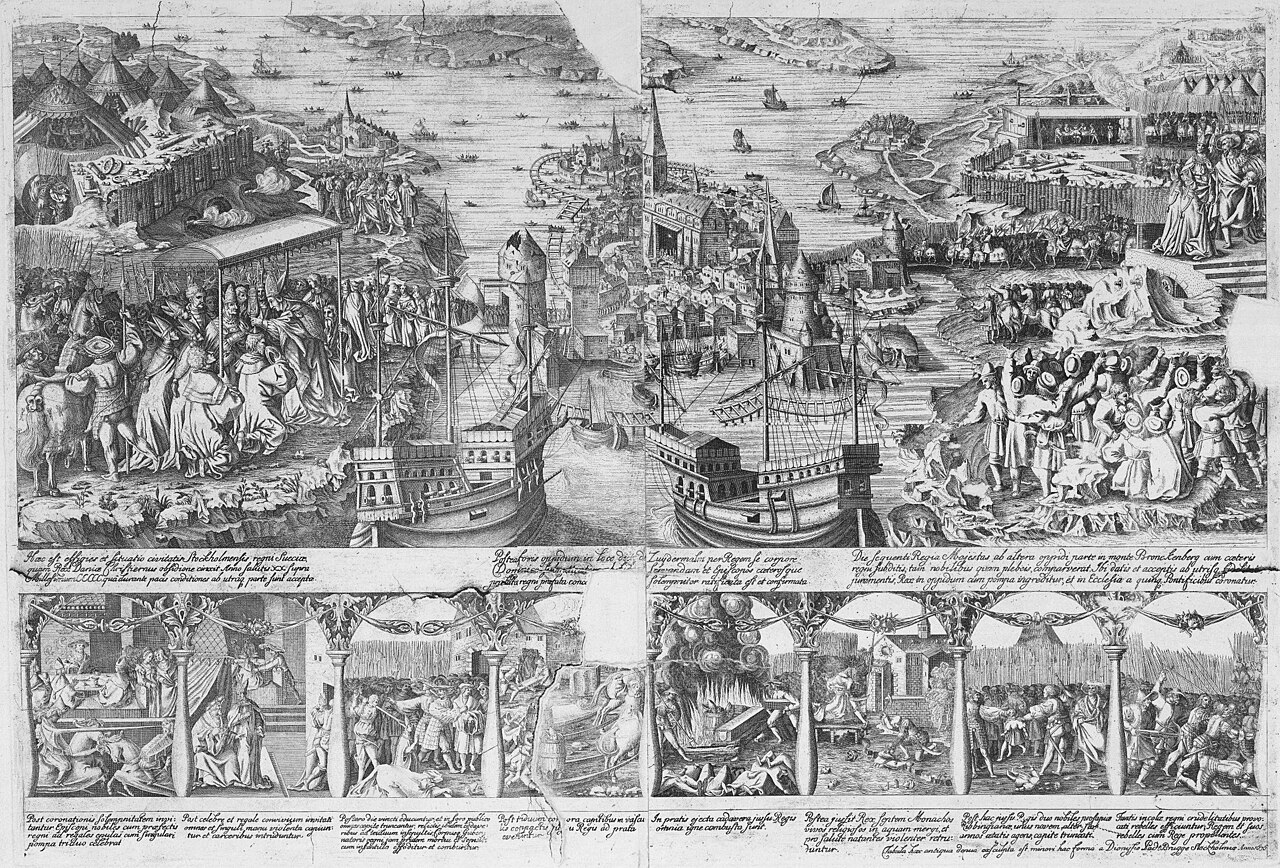
A 1676 engraving copying a lost 1524 propaganda woodcut that depicted the Stockholm Bloodbath, used to justify revolt against King Christian II.
This propaganda image, originally made for Gustav's regime, publicised his father's execution to justify his revolt.
About this source
What it is
This copper engraving from 1676 by Dionysius Padt-Brugge copies a lost woodcut made in 1524. The original image was created as propaganda for the new regime of Gustav Vasa, showing scenes from the Stockholm Bloodbath.
Why it matters
The Stockholm Bloodbath, in which Gustav's father was executed, became a key justification for his revolt against King Christian II of Denmark. Spreading images like this helped the new king shape public memory of the violence and present his rebellion as rightful. It shows how rulers used printed images, not just words, to control how history was remembered.
Look closer
- Why might a new ruler want people to see images of violence committed by his predecessor?
- What does the existence of this image, made over a century after the event it depicts, tell you about how such stories were kept alive?
- What is shown in the image, and what might be left out or exaggerated?
This painting is part of the curated material that grounds the AI version of Gustav Vasa on Humy.ai — when students ask about related events, the AI can quote it and cite it.
More Gustav Vasa sources
Browse all 97 →
Ready when you are
Start chatting with Gustav Vasa now.
20 messages free · No credit card · Available in 50+ languages.