


Primary sourceArtifactYongle period (1402-1424)
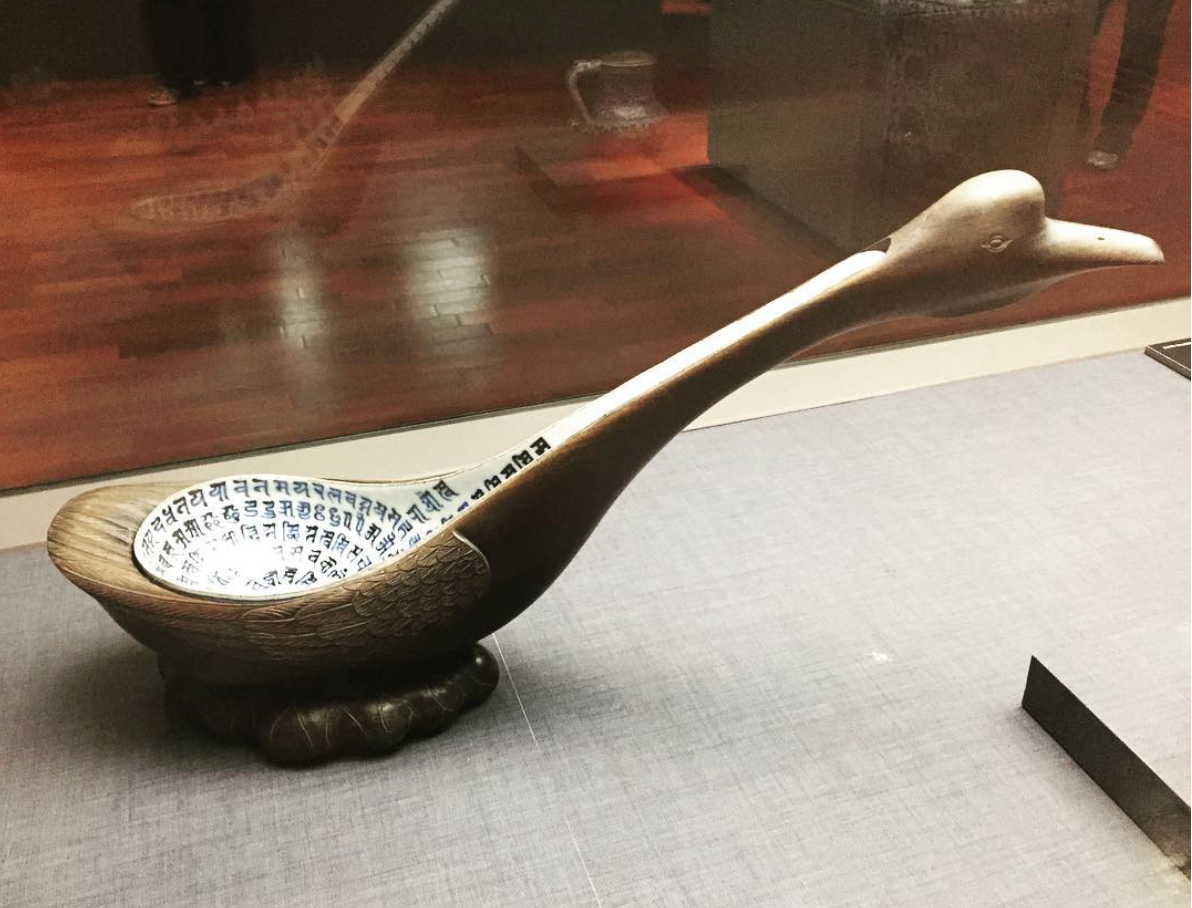
Blue-and-White Sanskrit Lotus Ladle
Yongle period (1402-1424)
A porcelain ladle with blue-and-white Sanskrit lotus decoration made during the Yongle emperor's reign, held by the National Palace Museum.
This ladle is an example of the fine porcelain produced in the imperial workshops during Yongle's reign.
About this source
What it is
This is a porcelain ladle made during the Yongle period of the Ming dynasty. The bowl of the ladle is decorated in blue and white with Sanskrit characters and lotus motifs. It is kept today in the National Palace Museum.
Why it matters
Objects like this ladle show how the imperial workshops of the Yongle emperor produced fine porcelain decorated with Buddhist religious script, reflecting the mix of court luxury and religious practice at the time.
Look closer
- Why might a ladle be decorated with sacred script rather than left plain?
- What does the quality of the craftsmanship suggest about who used this object?
- What does this object not tell us about who actually used it or how?
This artifact is part of the curated material that grounds the AI version of Yongle Emperor on Humy.ai — when students ask about related events, the AI can quote it and cite it.
More Yongle Emperor sources
Meet the AI Yongle Emperor →
Ready when you are
Start chatting with Yongle Emperor now.
20 messages free · No credit card · Available in 50+ languages.