


Primary sourceDocument888 AD
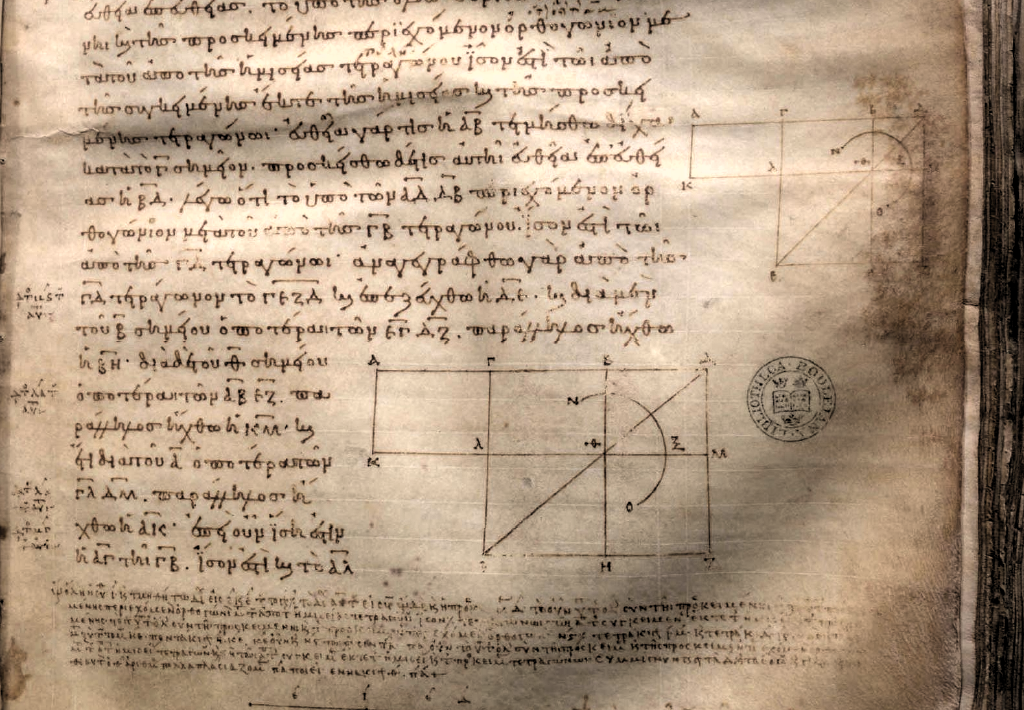
Bodleian Euclid Manuscript, 888 AD
Stephen the Clerk · 888 AD
The oldest surviving near-complete Greek manuscript of Euclid's Elements, copied by a Byzantine scribe in 888 AD.
This Byzantine copy of Euclid's Elements shows how his text physically survived to reach later generations.
About this source
What it is
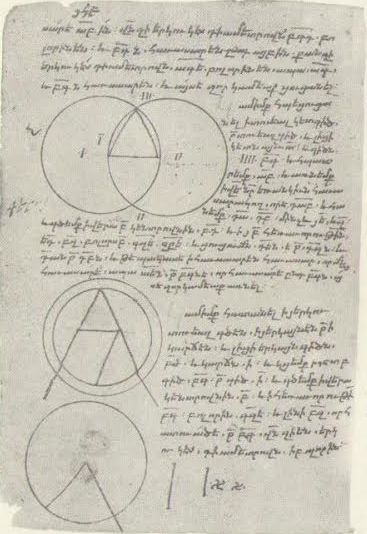
This manuscript of Euclid's Elements was copied by the scribe Stephen the Clerk for the scholar Arethas of Patrae in 888 AD. It is now held at the Bodleian Library in Oxford and is the oldest surviving near-complete Greek copy of Euclid's text.
Why it matters
Because none of Euclid's original writing survives, manuscripts like this one are how his work actually reached later readers. It shows the careful copying work of Byzantine scholars like Arethas, who preserved ancient Greek learning more than a thousand years after Euclid lived, allowing the Elements to eventually reach the modern world.
Look closer
- Why is a copy made 1,200 years after Euclid lived still considered such an important historical source?
- What do the diagrams on the page suggest about how geometry was taught and learned?
- What role did the scribe Stephen the Clerk and his patron Arethas play in preserving this text?
This document is part of the curated material that grounds the AI version of Euclid on Humy.ai — when students ask about related events, the AI can quote it and cite it.
More Euclid sources
Browse all 73 →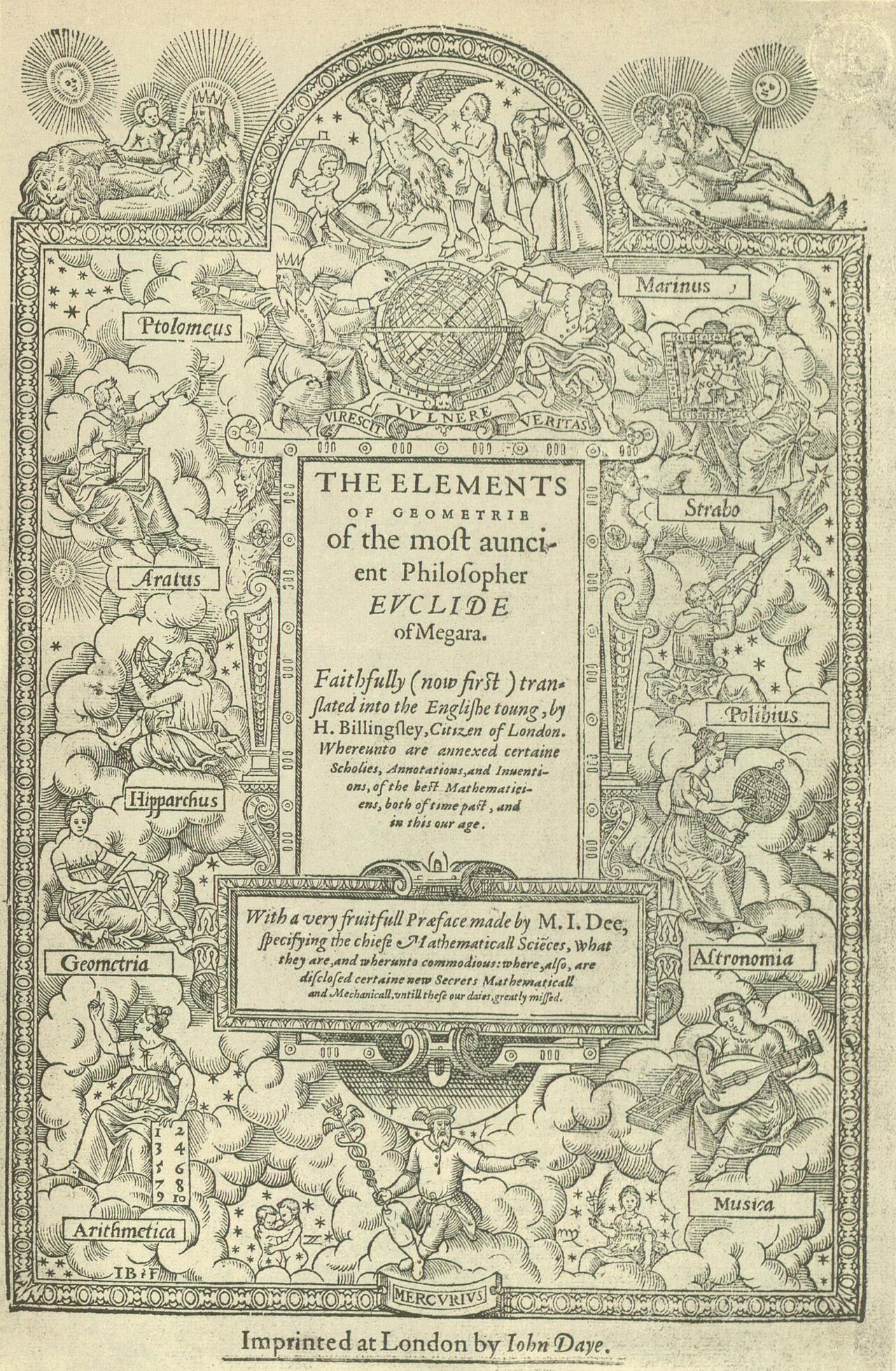 Book
Secondary source
Elements
Euclid · c. 300 BC
 Document
Primary source
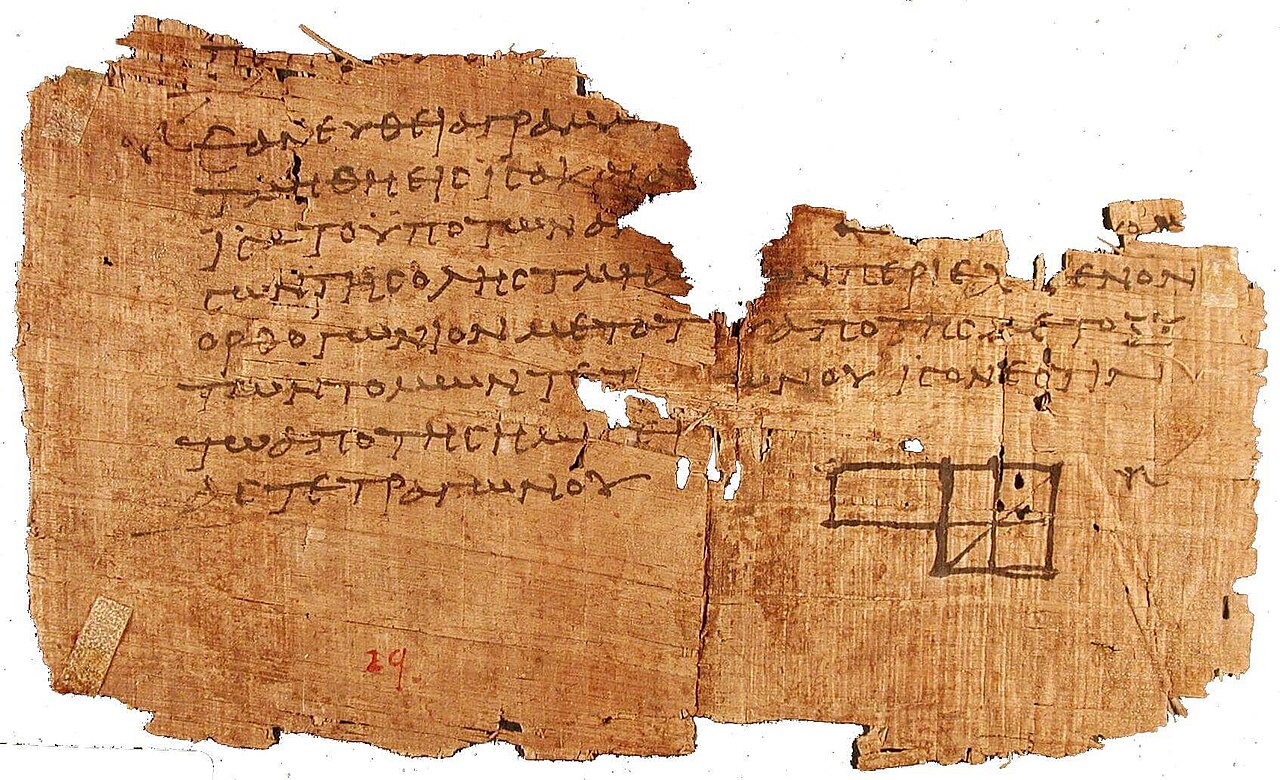
Papyrus Oxyrhynchus 29
Euclid · c. 75-125 AD
Secondary source
Commentary on the First Book of Euclid's Elements
Proclus · 5th century AD
 Book
Secondary source
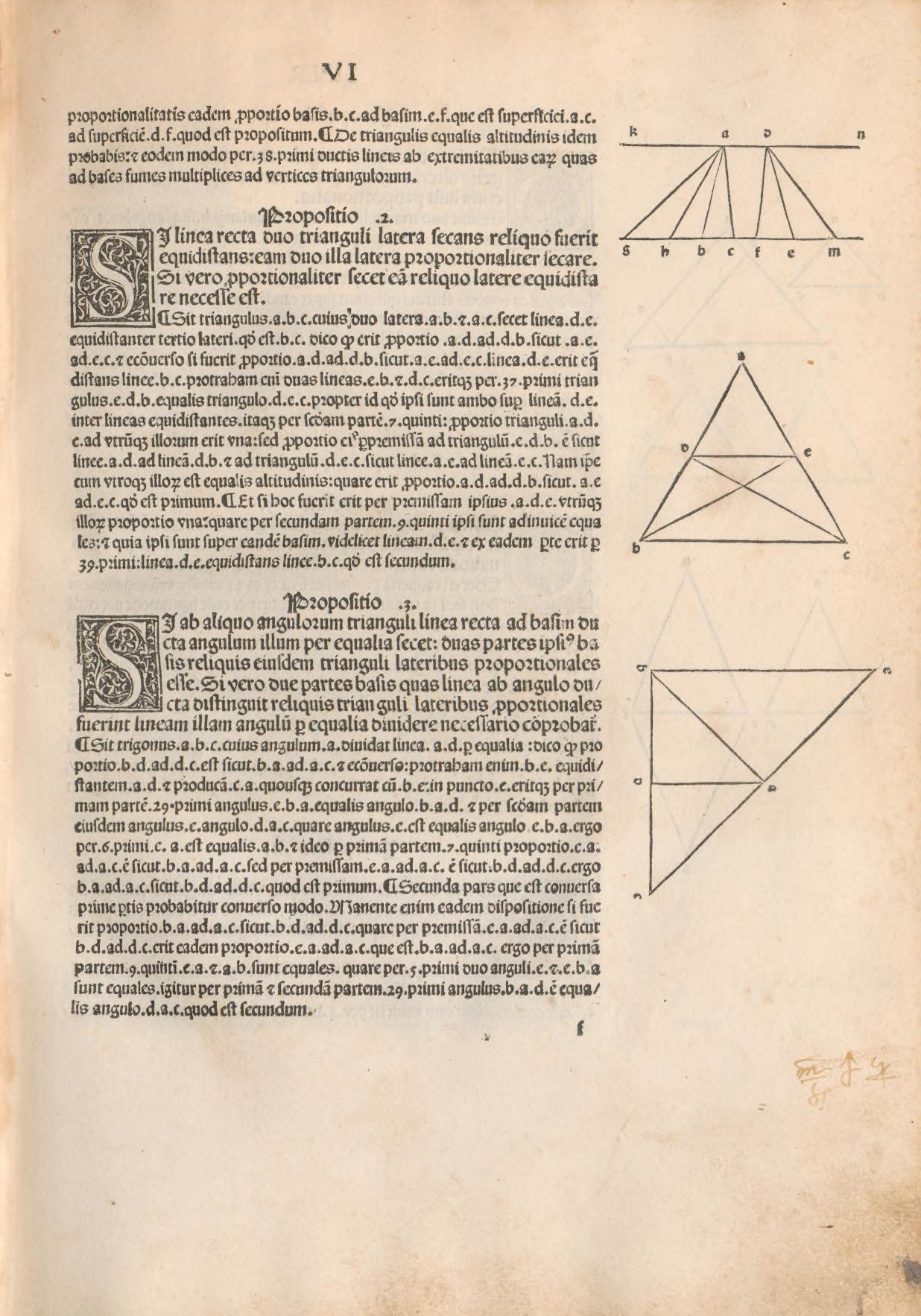
Euclid's Elements, Ratdolt Edition 1482
Erhard Ratdolt · 1482
Free account
Read every Euclid source
Sign up free →
Ready when you are
Start chatting with Euclid now.
20 messages free · No credit card · Available in 50+ languages.