


Primary sourceDocumentc. 75-125 AD
Papyrus Oxyrhynchus 29
Euclid · c. 75-125 AD
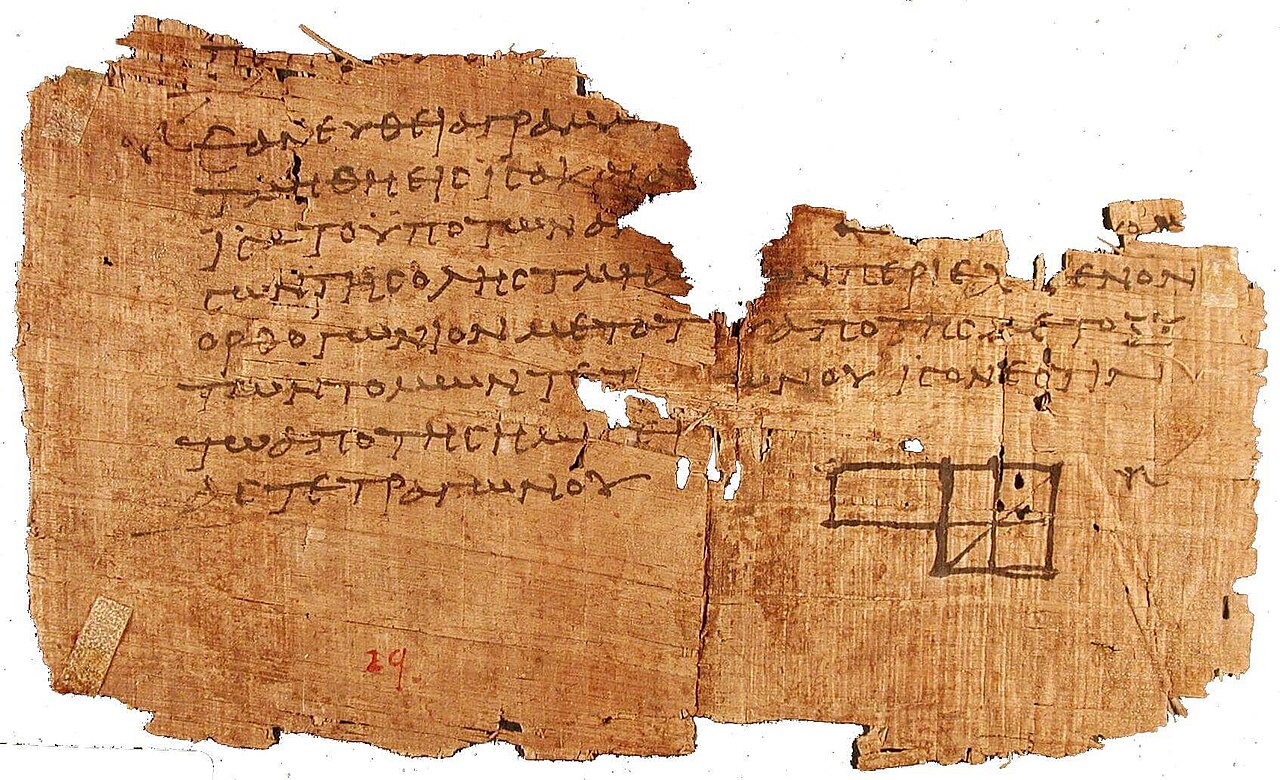
A fragment of Book 2 of Euclid's Elements written on papyrus around 100 AD, one of the oldest surviving physical copies of his text.
This fragment preserves part of Euclid's own text, copied roughly four centuries after he wrote it.
About this source
What it is
This small papyrus fragment, found at Oxyrhynchus in Egypt and now held at the University of Pennsylvania, preserves part of Book 2 of Euclid's Elements, written in Greek uncial letters with a small geometric diagram. It dates from roughly 75-125 AD.
Why it matters
This is one of the earliest physical copies of Euclid's text to survive, created centuries after Euclid himself but close enough to show how his work was actually copied and studied in Roman Egypt. The diagram alongside the text shows that readers were expected to follow the geometry visually as well as through words.
Look closer
- What does the damage to the papyrus tell you about how fragile ancient documents are?
- Why might a diagram have been included next to the written proposition?
- What does this fragment NOT tell us about Euclid, since it was copied centuries after he lived?
This document is part of the curated material that grounds the AI version of Euclid on Humy.ai — when students ask about related events, the AI can quote it and cite it.
More Euclid sources
Browse all 73 →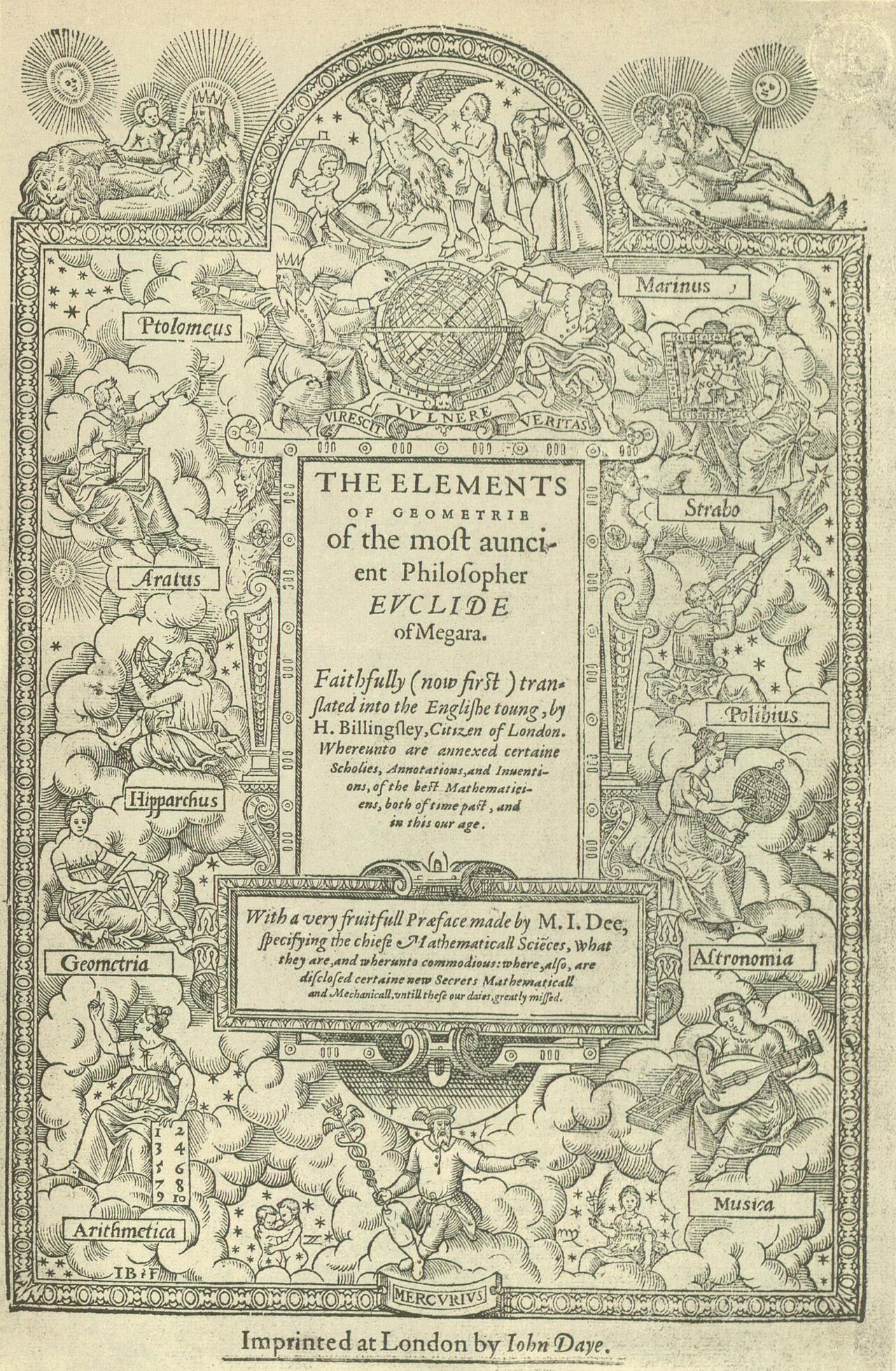 Book
Secondary source
Elements
Euclid · c. 300 BC
Secondary source
Commentary on the First Book of Euclid's Elements
Proclus · 5th century AD
 Document
Primary source
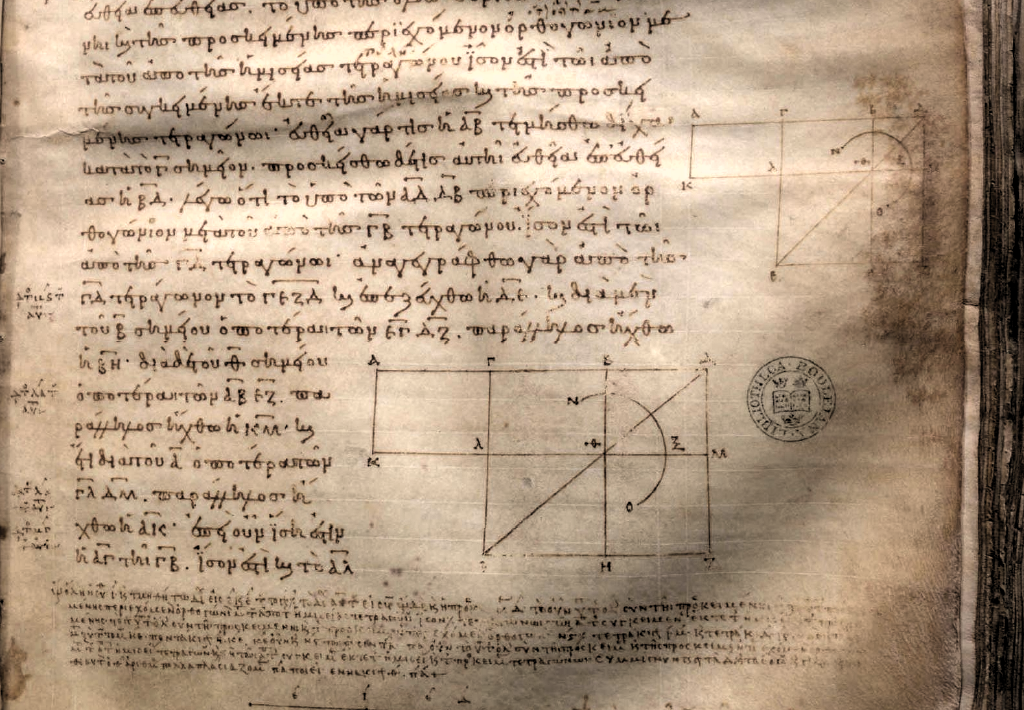
Bodleian Euclid Manuscript, 888 AD
Stephen the Clerk · 888 AD
 Book
Secondary source
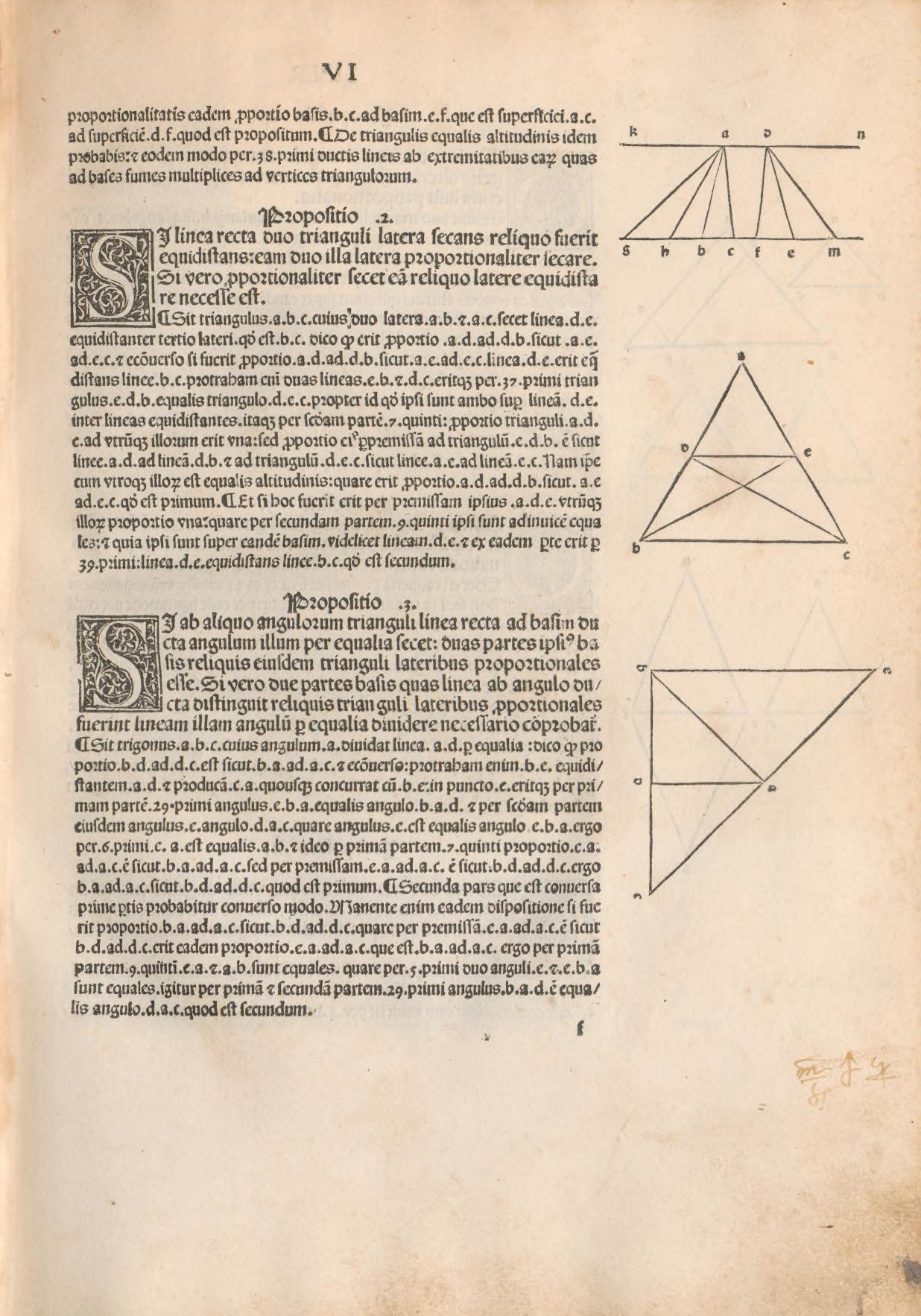
Euclid's Elements, Ratdolt Edition 1482
Erhard Ratdolt · 1482
Free account
Read every Euclid source
Sign up free →
Ready when you are
Start chatting with Euclid now.
20 messages free · No credit card · Available in 50+ languages.