


Secondary sourceBook1911
Bushidō Seika Miyamoto Musashi
立川文庫 · 1911
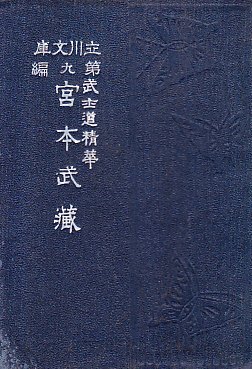
A 1911 Japanese pocket book from the Tatsukawa Bunko series celebrating Musashi as a bushidō hero, showing his popularity in print culture.
This popular 1911 pocket book shows Musashi's image as a bushidō hero in early 20th-century mass publishing.
About this source
What it is
This is the cover of a 1911 pocket book from the Tatsukawa Bunko publishing series, titled "Bushidō Seika Miyamoto Musashi" (The Essence of Bushidō: Miyamoto Musashi). It is a cloth-bound volume with the title printed vertically in Japanese.
Why it matters
By the early 1900s, Musashi's story had become part of mass popular publishing in Japan. This cheap, widely distributed pocket book shows how his legend was packaged as an example of bushidō, the samurai code, for ordinary readers before later famous retellings of his life appeared.
Look closer
- What does the title tell you about how the publisher wanted readers to see Musashi?
- Why might a pocket-sized, mass-produced book have reached more people than earlier records?
- How might popular books like this shape what people believe about a historical figure?
This book is part of the curated material that grounds the AI version of Musashi Miyamoto on Humy.ai — when students ask about related events, the AI can quote it and cite it.
More Musashi Miyamoto sources
Meet the AI Musashi Miyamoto →

Ready when you are
Start chatting with Musashi Miyamoto now.
20 messages free · No credit card · Available in 50+ languages.