


Secondary sourceSculpture1674-1677
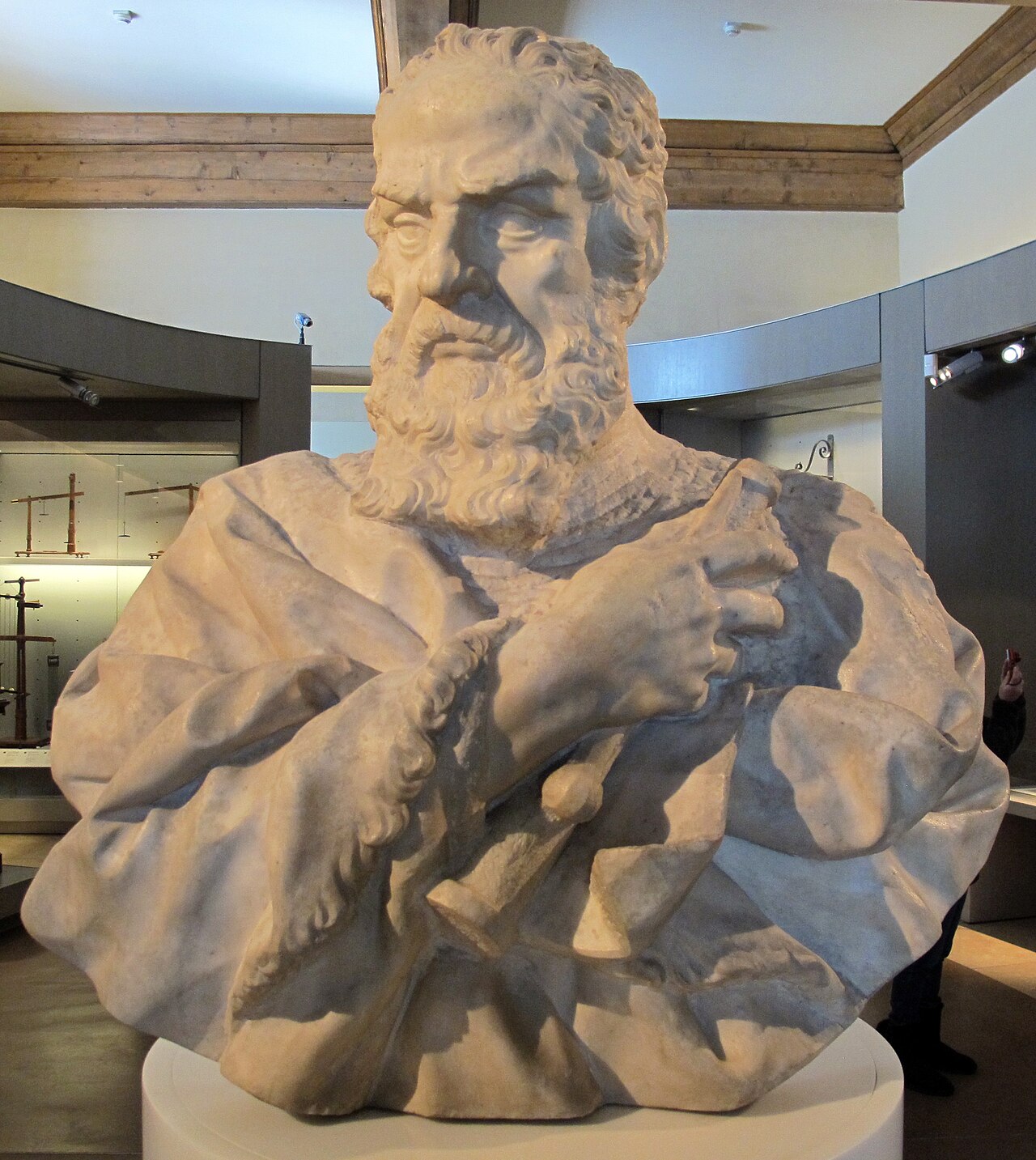
Bust of Galileo Galilei by Carlo Marcellini
Carlo Marcellini · 1674-1677
A photograph of a marble bust of Galileo made decades after his death, showing him older and bearded with an instrument in hand.
A posthumous marble bust commemorating Galileo as a scientist, made decades after his death.
About this source
What it is
This photograph shows a white marble bust of Galileo Galilei, carved by Carlo Marcellini between 1674 and 1677, decades after Galileo's death. The bust depicts a bearded older man holding a compass or instrument, with a cloth draped over one arm.
Why it matters
Sculptures like this helped build Galileo's lasting image as a scientist and thinker, long after his death and his trial by the Catholic Church. The compass hints at his work in measurement and astronomy.
Look closer
- What does the instrument in his hand suggest about how the sculptor wanted Galileo to be remembered?
- Why might artists and patrons want to commemorate Galileo decades after his death?
- What does this bust leave out about Galileo's life and conflicts?
This sculpture is part of the curated material that grounds the AI version of Galileo Galilei on Humy.ai — when students ask about related events, the AI can quote it and cite it.
More Galileo Galilei sources
Meet the AI Galileo Galilei →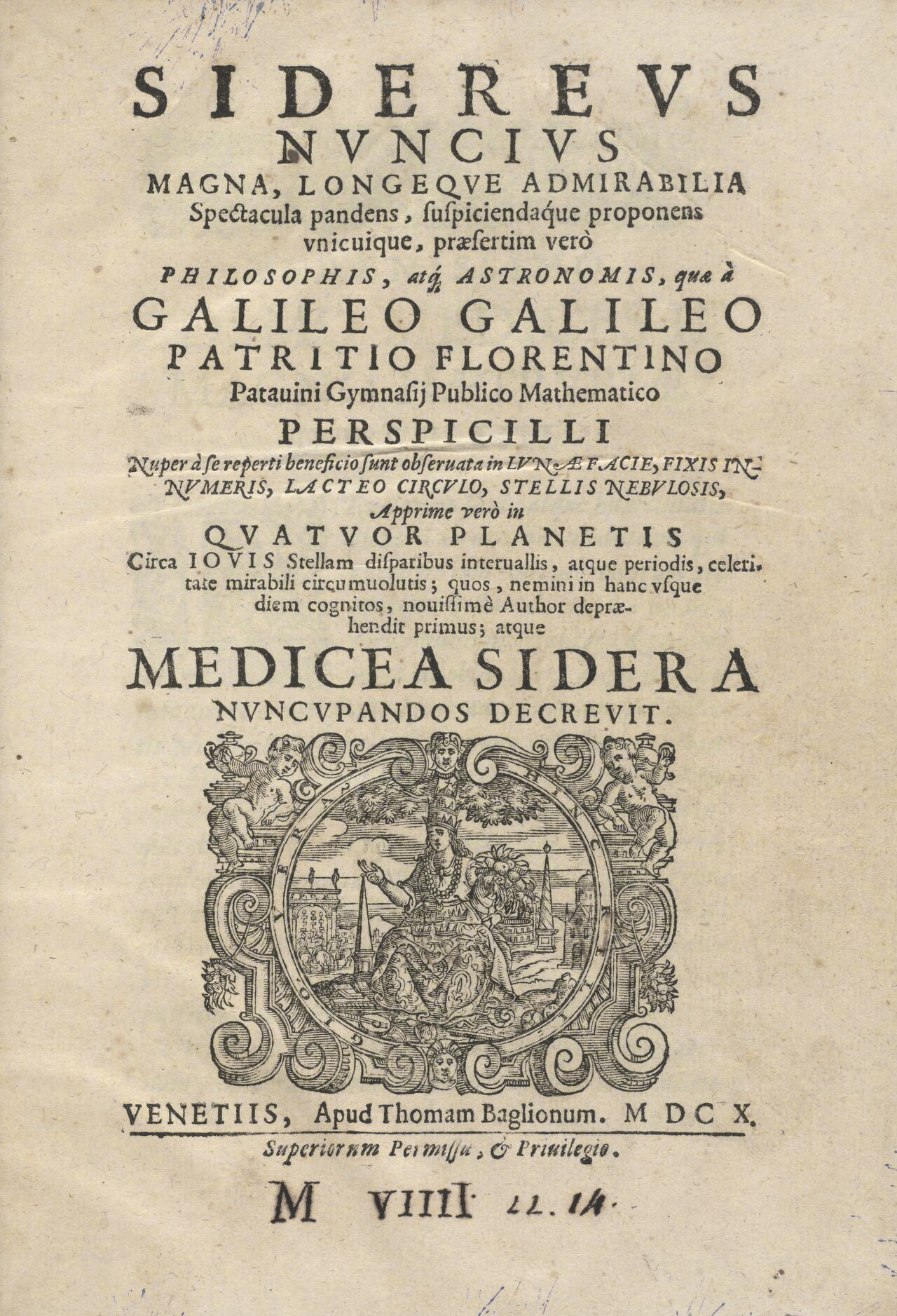 Book
Primary source
Sidereus Nuncius
Galileo Galilei · 1610
 Painting
Primary source
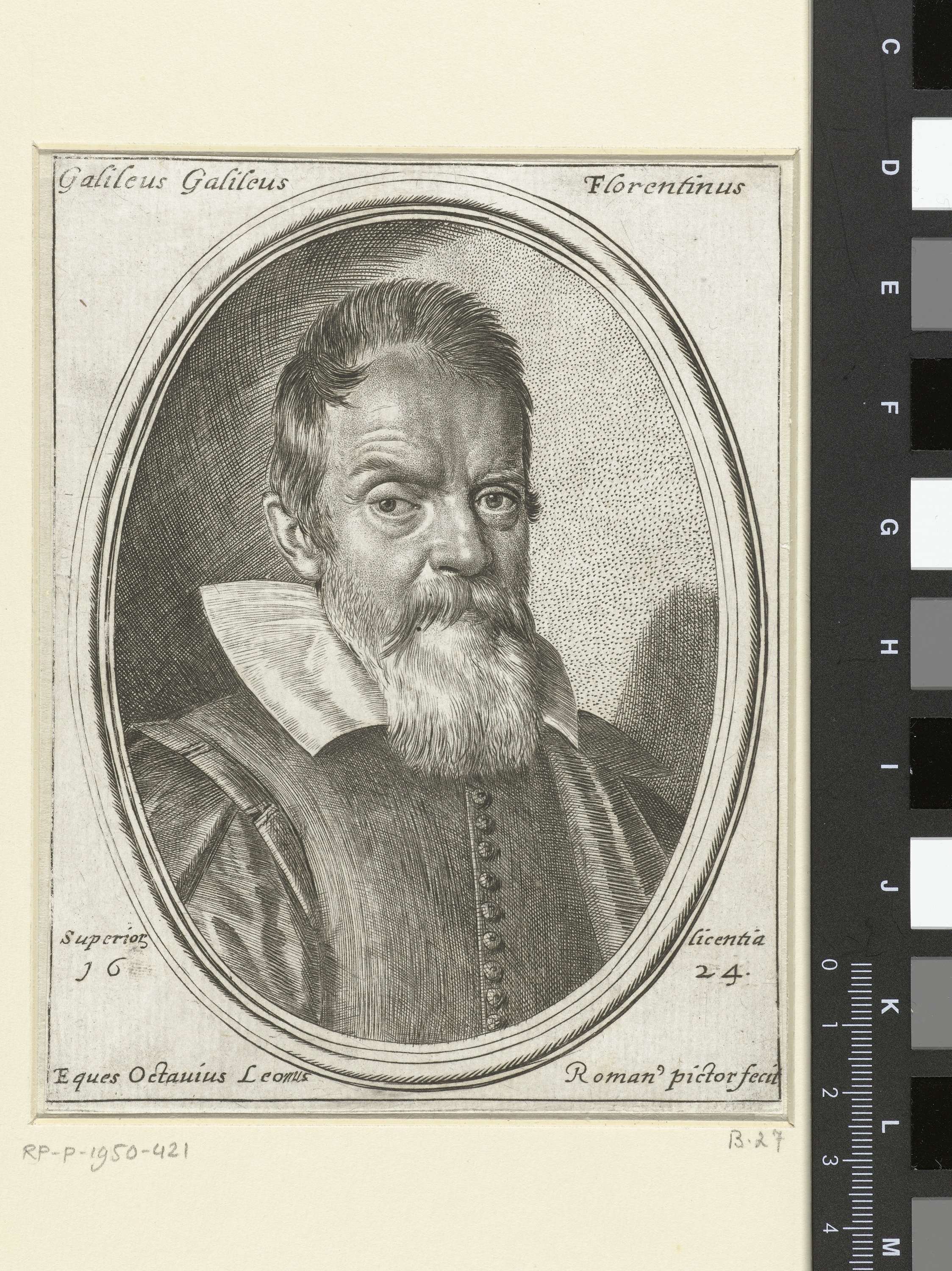
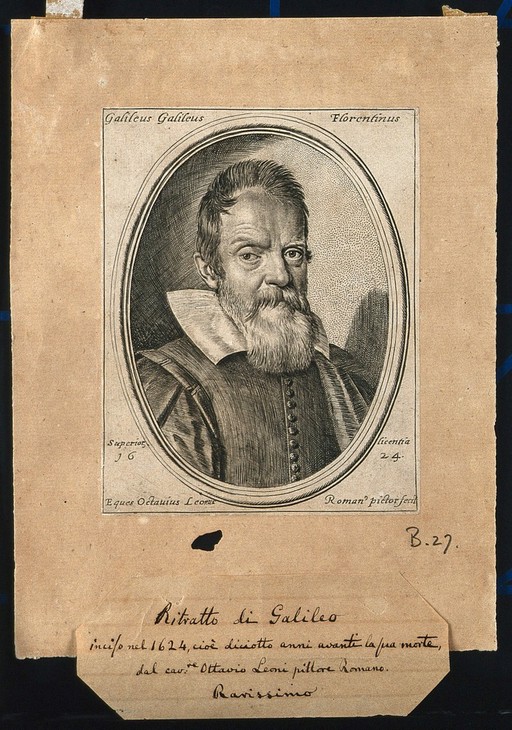
Portrait of Galileo Galilei (1624 print)
1624
 Painting
Primary source
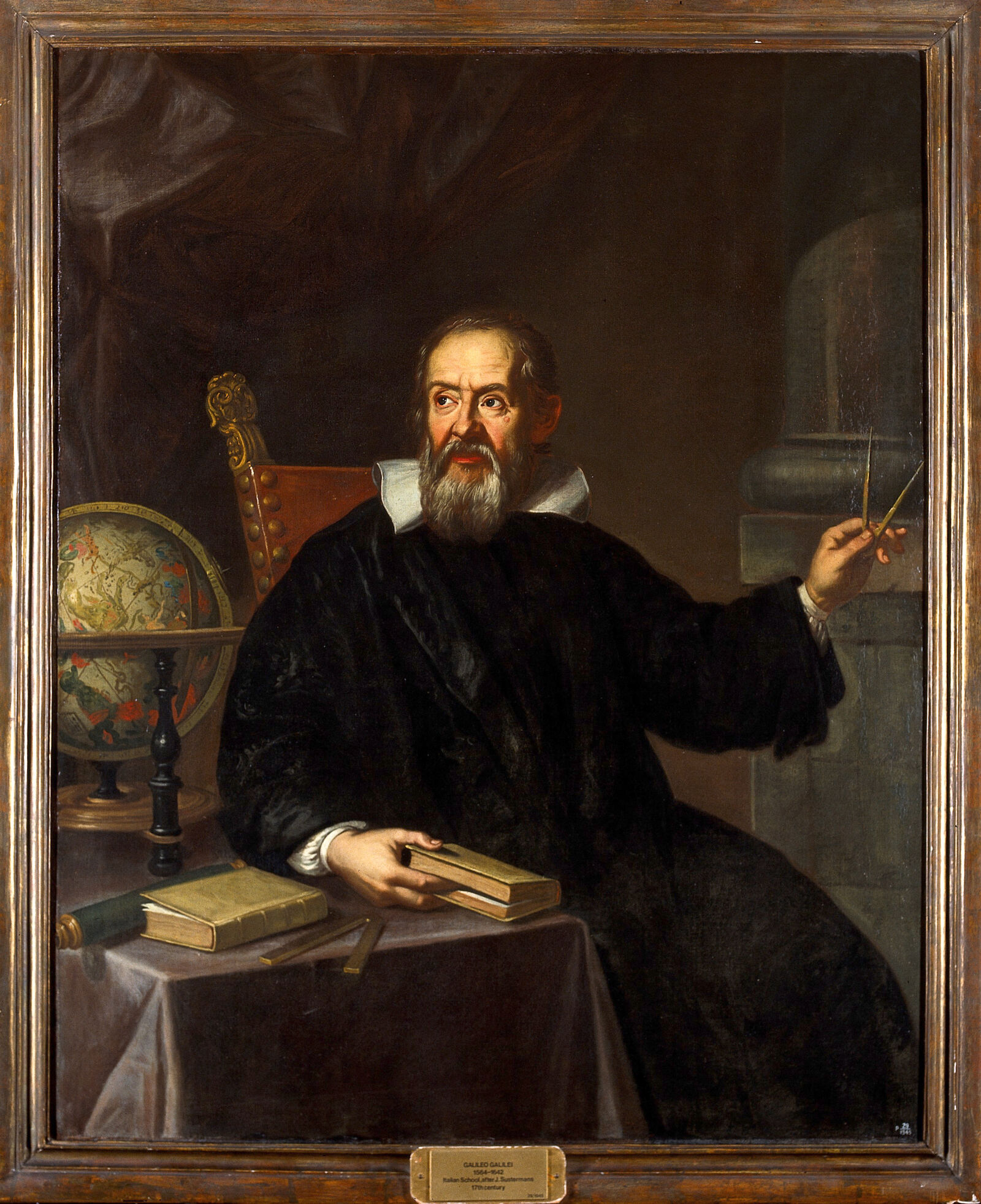
Oil Portrait of Galileo in His Study
Unknown Italian painter · 18th century (?)
 Painting
Primary source
Galileo Galilei, line engraving by Ottavio Leoni
Ottavio Leoni · 1624
 Book
Primary source
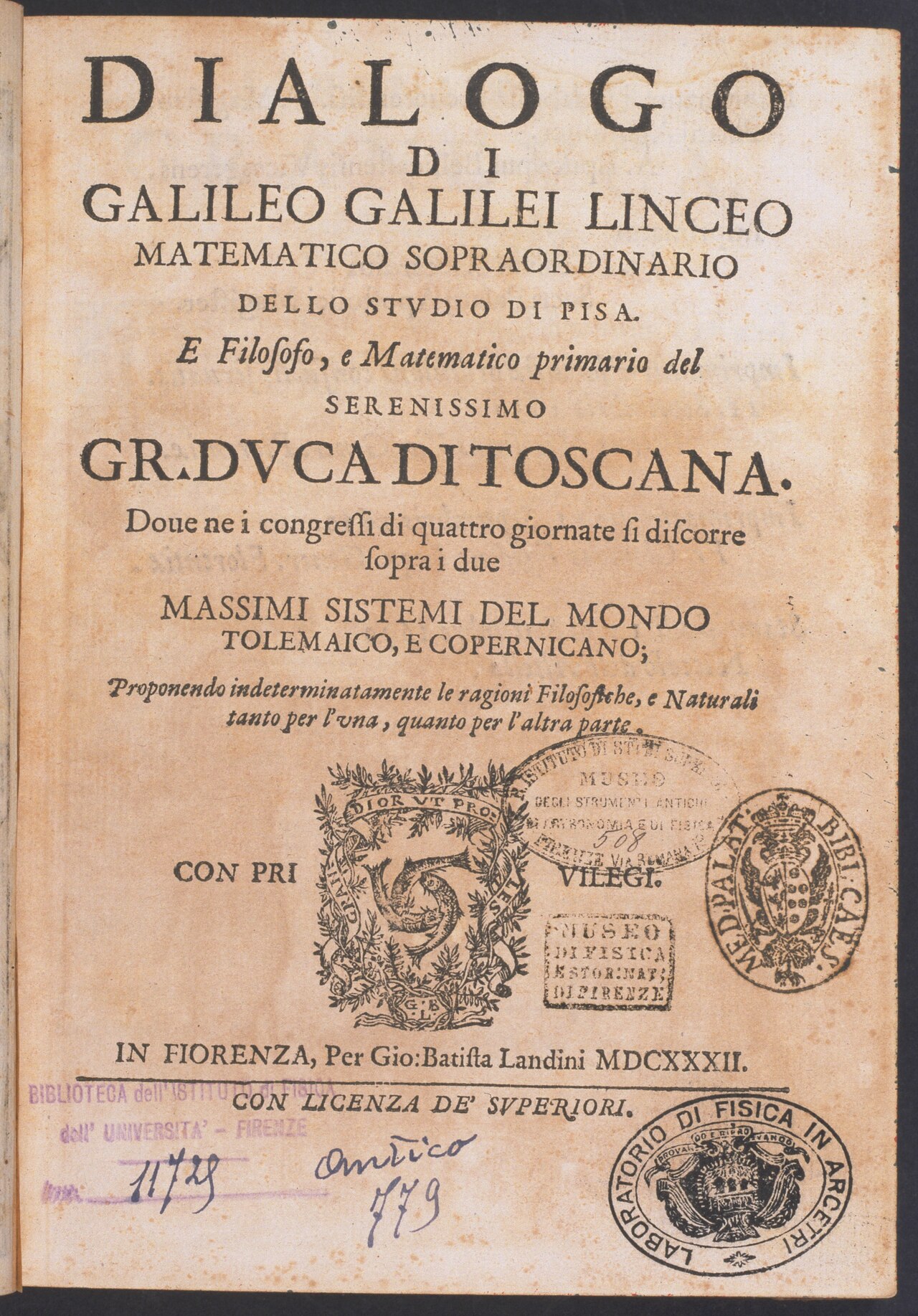
Dialogue Concerning the Two Chief World Systems
Galileo Galilei · 1632
Ready when you are
Start chatting with Galileo Galilei now.
20 messages free · No credit card · Available in 50+ languages.