


Secondary sourceSculpturec. 1735
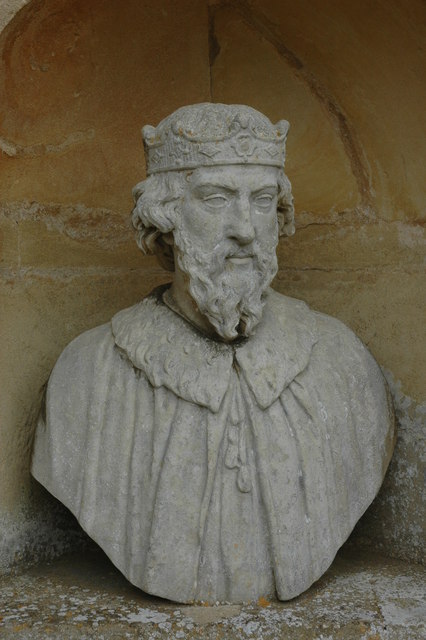
Bust of King Alfred, Temple of British Worthies
Michael Rysbrack · c. 1735
A stone bust of Alfred placed in an 18th-century garden monument honoring famous figures seen as champions of English liberty.
This bust shows how 18th-century Whig politics reshaped Alfred's image as a symbol of English liberty.
About this source
What it is
This stone bust of King Alfred was created by the sculptor Michael Rysbrack around 1735 and placed in the Temple of British Worthies, part of the landscape gardens at Stowe House, designed by William Kent. It is held by the National Trust at Stowe.
Why it matters
Alfred's bust was included among a group of historical figures celebrated as champions of English liberty by the Whig political movement of the 18th century. The inscription praised him as a founder of English freedom, showing how Alfred's image was used centuries after his death to support contemporary political ideas rather than simply to record history.
Look closer
- Why might 18th-century politicians want to connect themselves to a king who lived nearly 900 years earlier?
- What does placing Alfred among other "British Worthies" suggest about how people wanted him remembered?
- Since no one alive in the 1730s had seen Alfred, how might the sculptor have decided what he should look like?
This sculpture is part of the curated material that grounds the AI version of Alfred the Great on Humy.ai — when students ask about related events, the AI can quote it and cite it.
More Alfred the Great sources
Meet the AI Alfred the Great →
Ready when you are
Start chatting with Alfred the Great now.
20 messages free · No credit card · Available in 50+ languages.