


Secondary sourcePaintingbetween 1636 and 1647
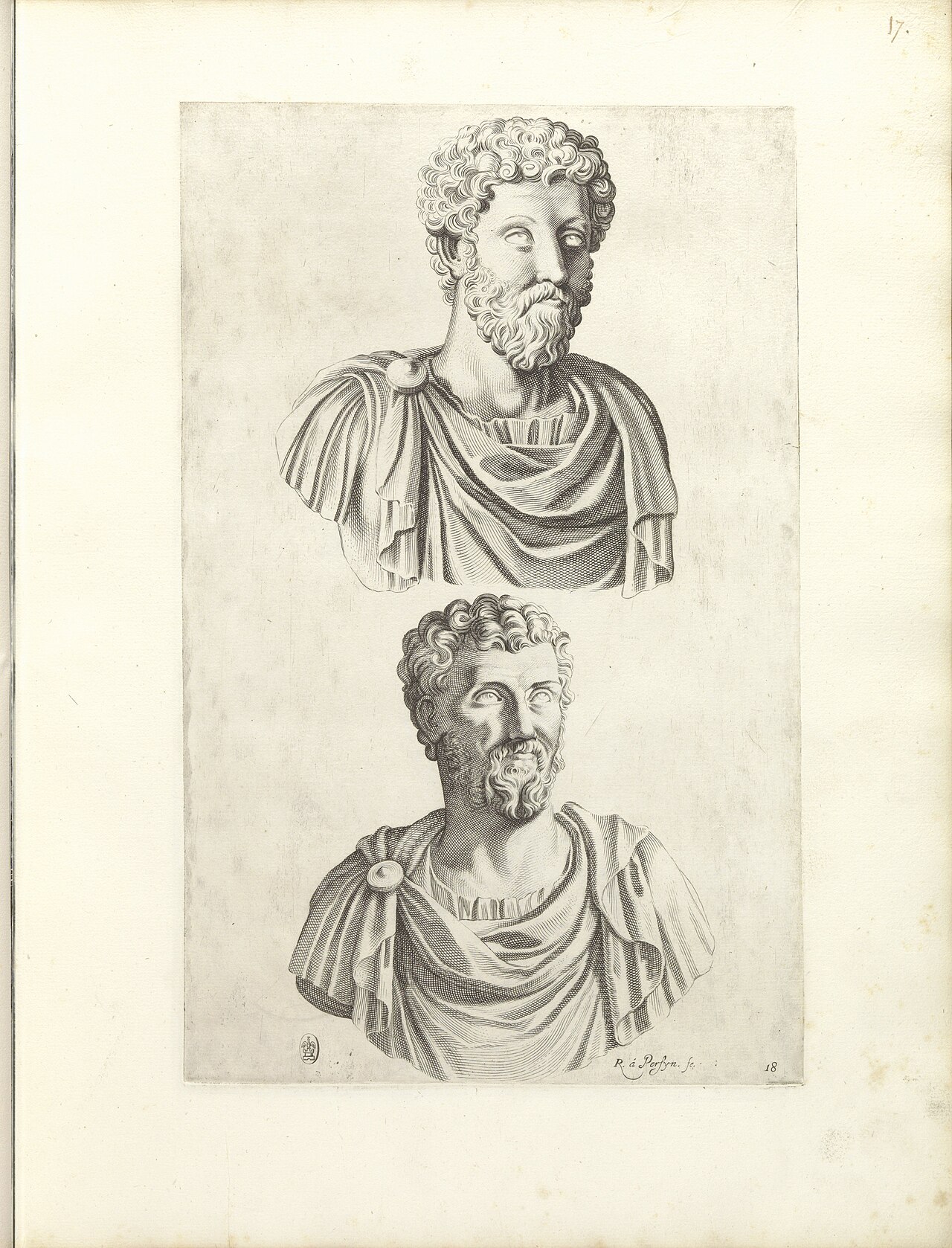
Busts of Marcus Aurelius and Septimius Severus, Giustiniani gallery print
Reinier van Persijn · between 1636 and 1647
An engraved plate of two Roman marble busts, one of Marcus Aurelius and one of Septimius Severus. It records a sculpture collection in Rome.
Shows how a seventeenth-century Roman collection presented Marcus Aurelius's bust alongside another emperor.
About this source
What it is
This is an engraved print of two Roman marble busts stacked vertically on a pale background. The upper bust shows a bearded man with curly hair in a toga-like garment. The lower bust shows a curly-haired man with a short beard and a cloak fastened at the shoulder. The Rijksmuseum record identifies the busts as Marcus Aurelius and Septimius Severus. Plate number 18 is at the lower right, and the shield of Vincenzo Giustiniani is at the lower left. The print was made by Reinier van Persijn in Rome, dated 1636 to 1647. It is one plate from an album of prints after sculptures in the Galleria Giustiniani in Rome.
Why it matters
In the seventeenth century, wealthy collectors such as the Marquis Vincenzo Giustiniani gathered ancient sculpture. Prints like this one spread images of those collections to people who could not visit Rome. The album shows that Marcus Aurelius was still valued as a classical figure, and that his bust was displayed next to those of other emperors. The print tells us about the collectors and engravers who shaped how the ancient world was seen.
Look closer
- How does the printmaker show that the busts are marble, and what details are shown in the hair and clothing?
- Why would a collector include a family shield on a print of his sculptures?
- What does the print not show, such as the original location of the busts or whether they are ancient or restored?
This painting is part of the curated material that grounds the AI version of Marcus Aurelius on Humy.ai — when students ask about related events, the AI can quote it and cite it.
More Marcus Aurelius sources
Meet the AI Marcus Aurelius →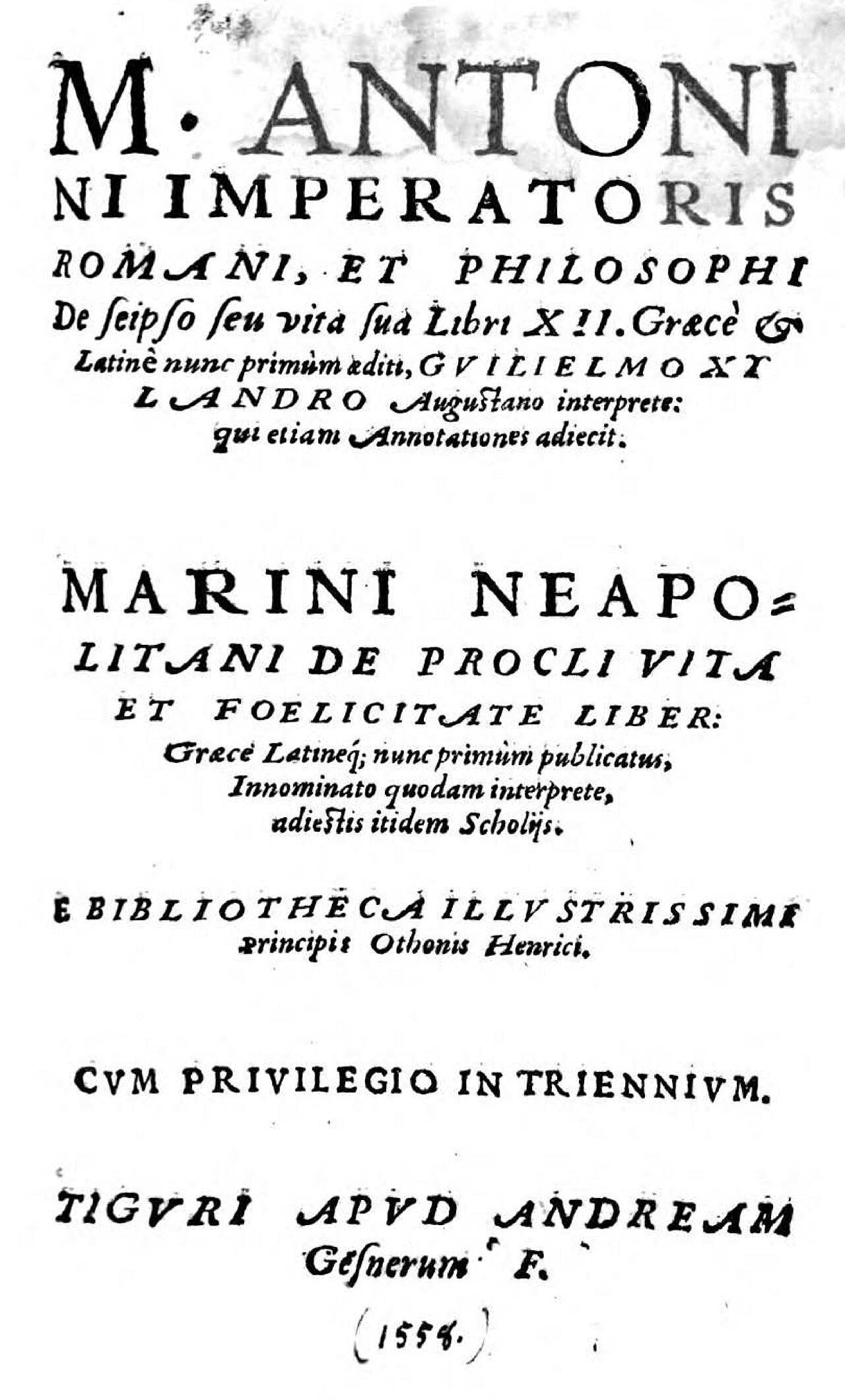 Book
Primary source
Meditations
Marcus Aurelius · c. 170-180 AD (this edition printed 1558)
 Sculpture
Primary source
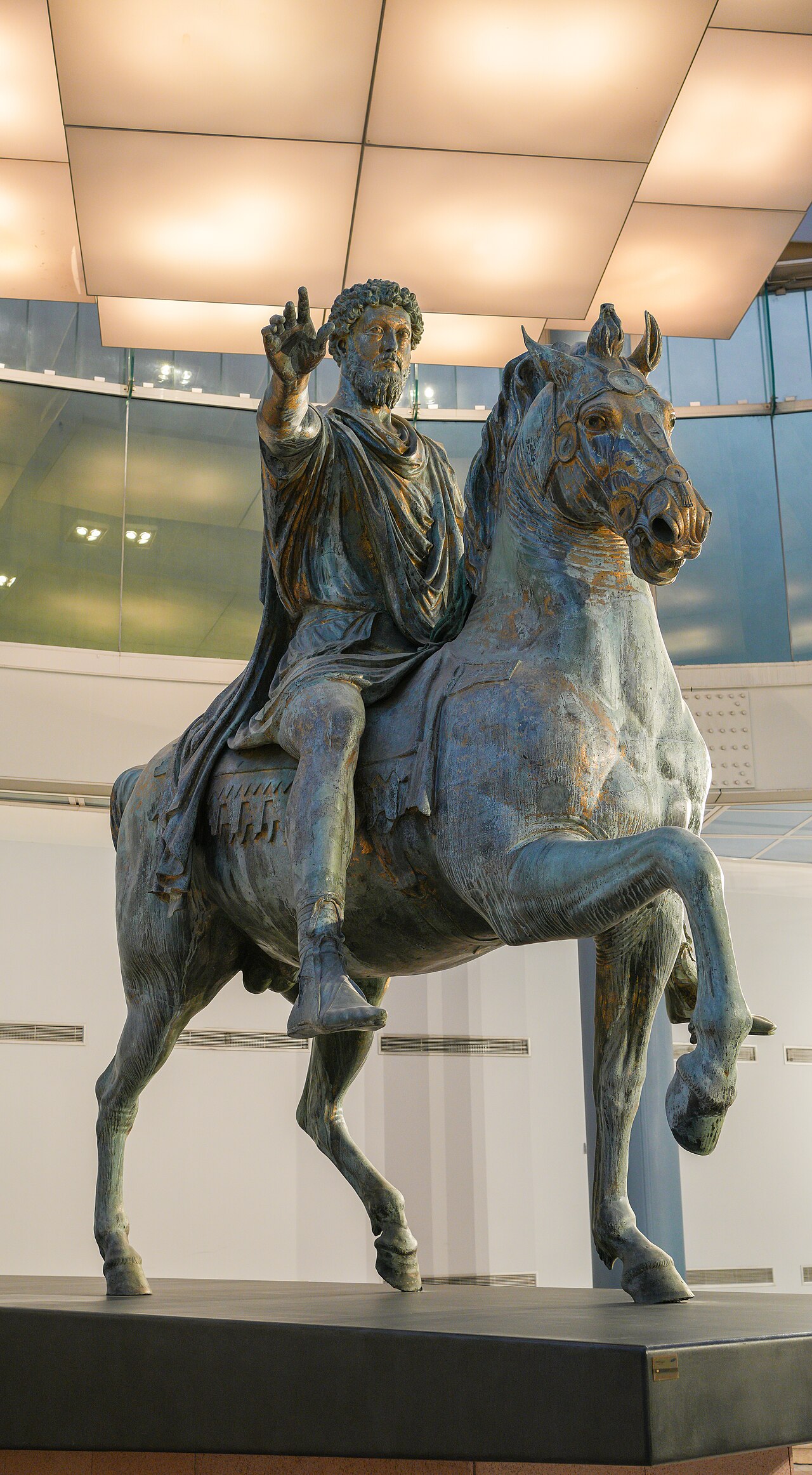
Equestrian Statue of Marcus Aurelius
c. 173 AD
 Artifact
Secondary source
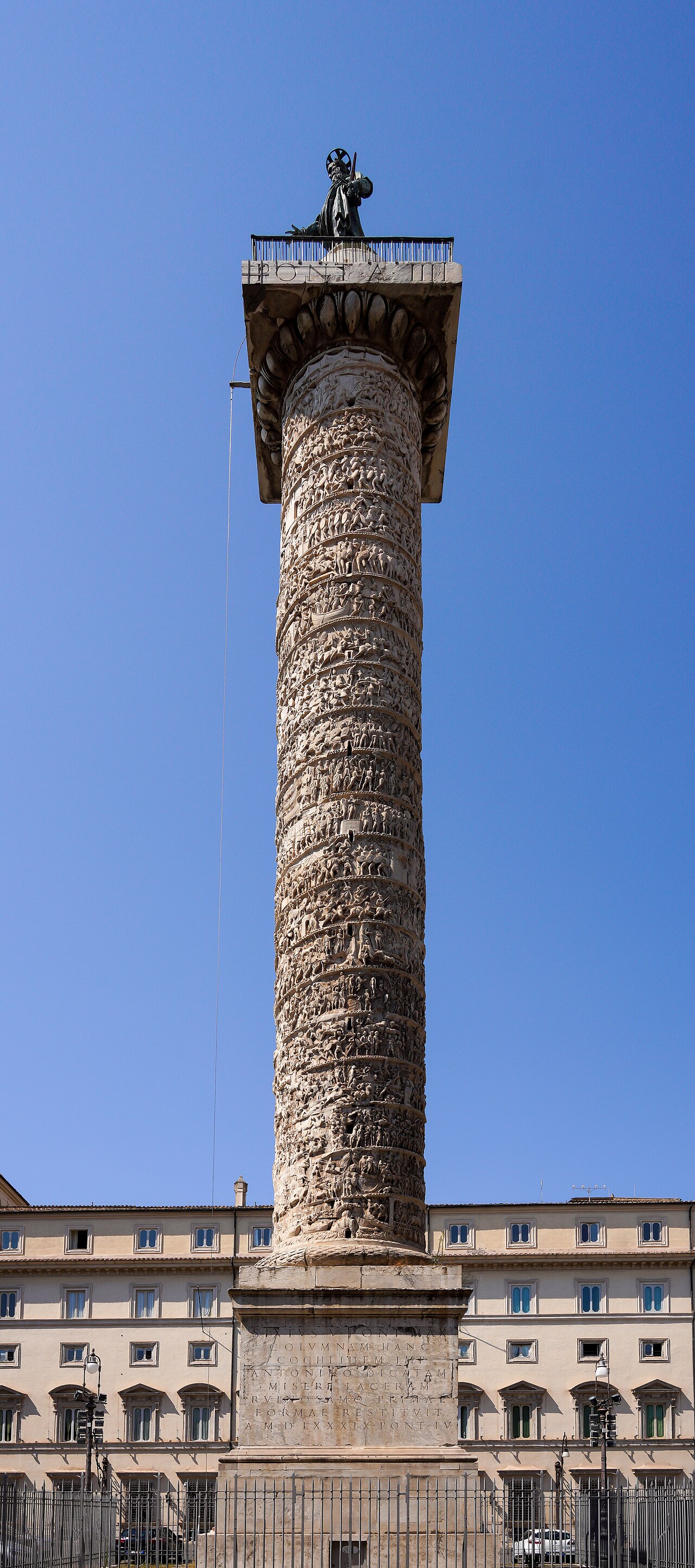
Column of Marcus Aurelius
completed c. 193 AD
Secondary source
Marcus Antoninus (Historia Augusta)
Scriptores Historiae Augustae · probably 4th century AD
 Sculpture
Primary source
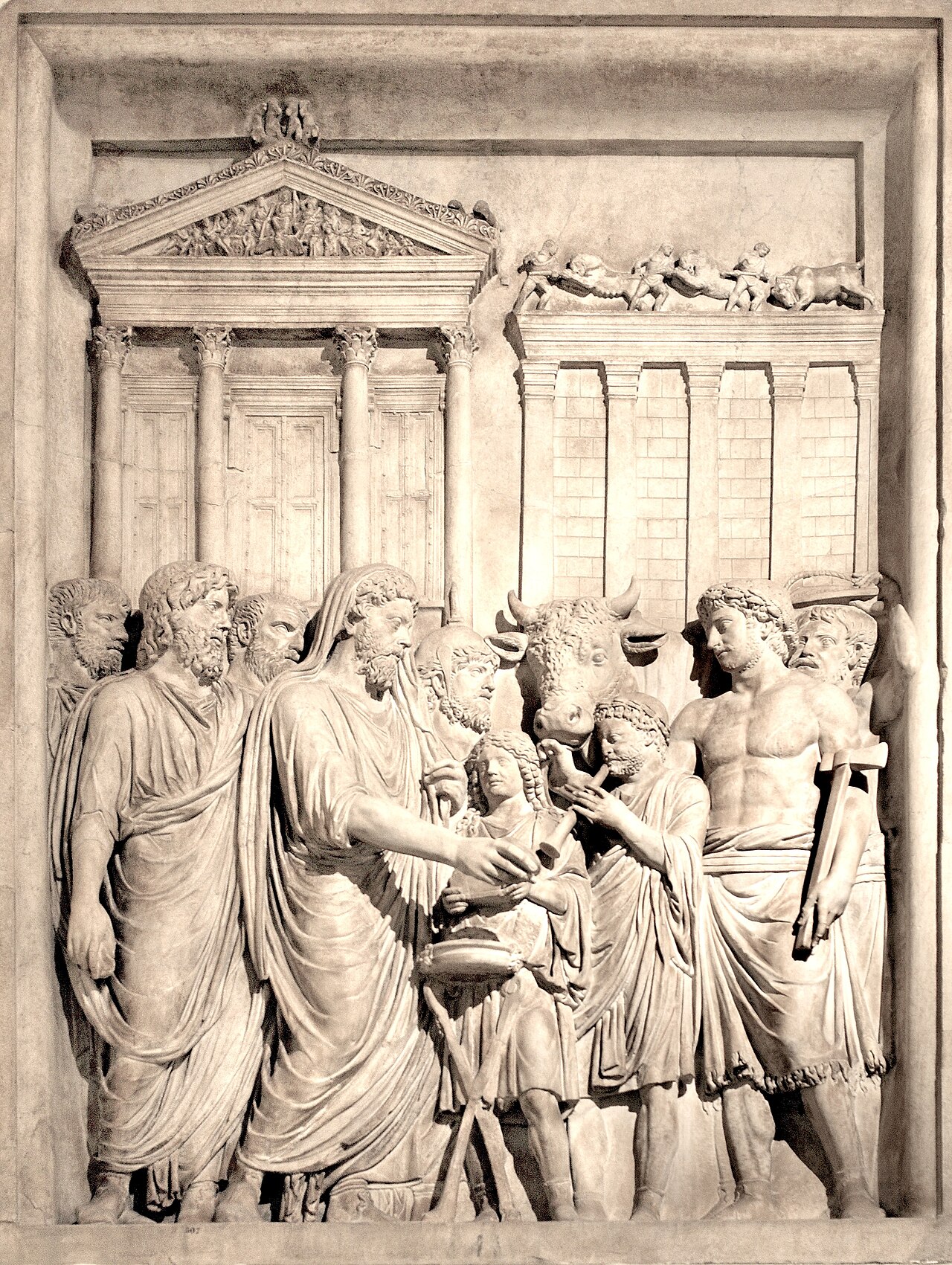
Panel Relief of Marcus Aurelius Sacrificing
Ready when you are
Start chatting with Marcus Aurelius now.
20 messages free · No credit card · Available in 50+ languages.