


Secondary sourcePainting1593-99
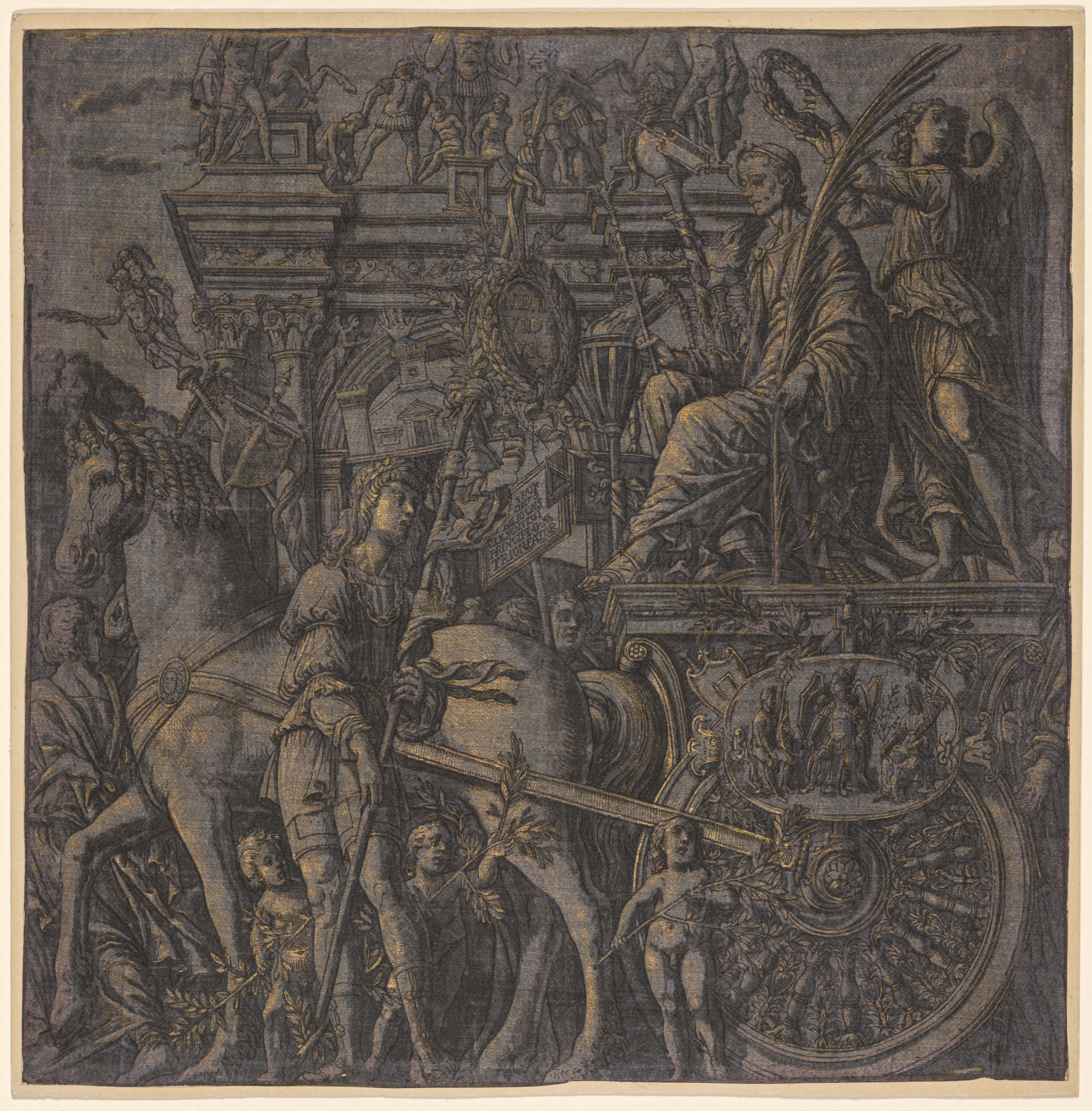
Caesar Triumphant
Andrea Andreani · 1593-99
A set of chiaroscuro woodcuts reproducing Mantegna's famous painted series showing Caesar's triumphal procession after defeating Gaul.
A later print imagining Caesar's triumphal procession, showing how Renaissance patrons used his image as a symbol of glory.
About this source
What it is
This woodcut print was made by Andrea Andreani between 1593 and 1599, commissioned by Duke Vincenzo Gonzaga. It reproduces The Triumph of Julius Caesar, a painting series by Andrea Mantegna made about a century earlier. It is held by the Cleveland Museum of Art.
Why it matters
The scenes imagine the triumphal procession held after Caesar's victory over Gaul, a parade sanctioned by the Roman Senate and described in ancient texts. The print shows how Renaissance and later artists imagined Roman history long after the events, turning Caesar into a symbol of glory and power that rulers like the Gonzaga family wanted to associate themselves with. The print even advertises Mantegna's original paintings on its frontispiece.
Look closer
- Why would a duke commission prints of a Roman general's triumph a century after the original painting?
- What parts of the procession seem exaggerated or idealized?
- How does this image differ from what ancient written accounts describe?
This painting is part of the curated material that grounds the AI version of Julius Caesar on Humy.ai — when students ask about related events, the AI can quote it and cite it.
More Julius Caesar sources
Meet the AI Julius Caesar →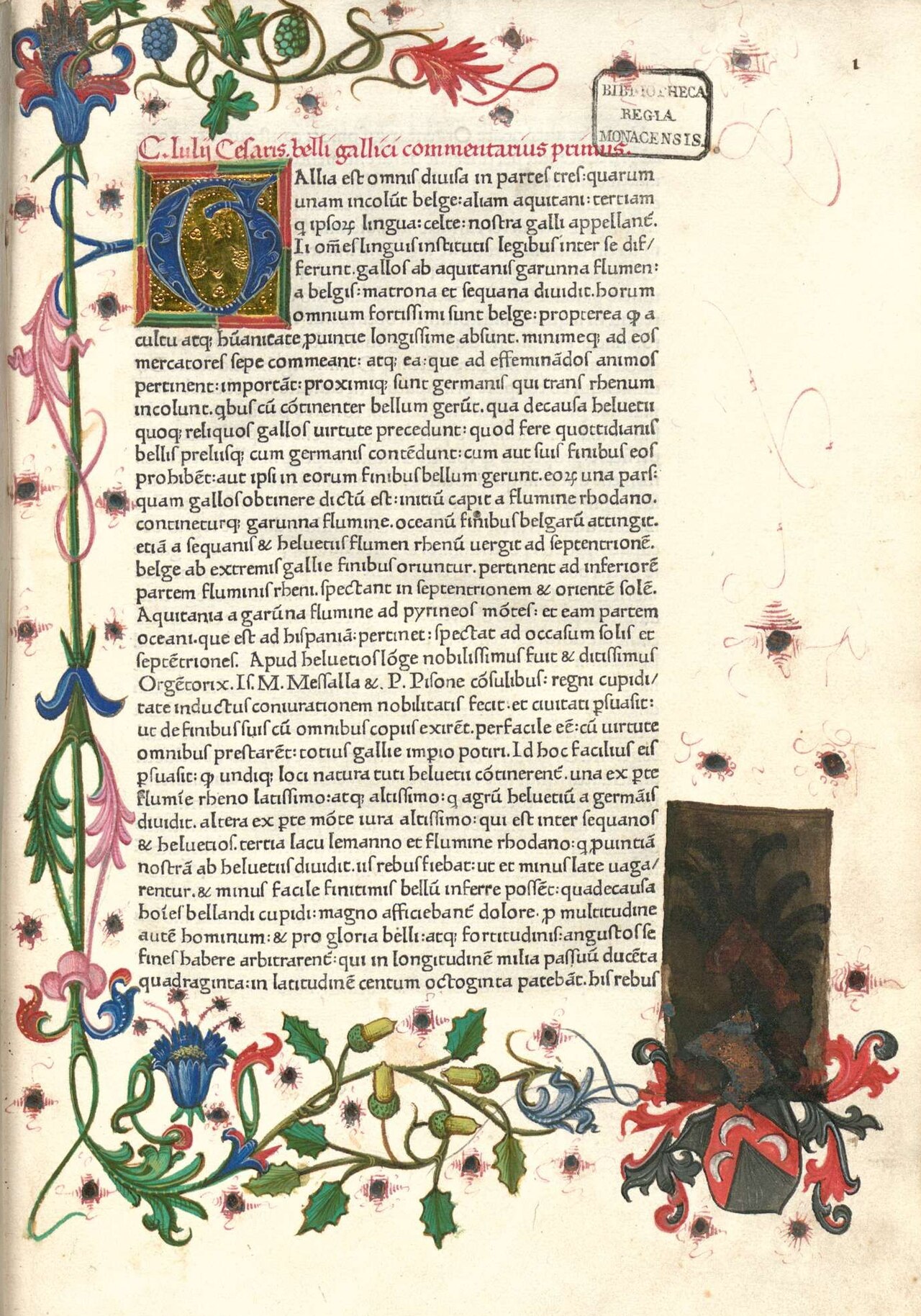 Book
Primary source
Commentarii de Bello Gallico
Julius Caesar · c. 58-50 BCE (this copy 1469)
 Painting
Secondary source
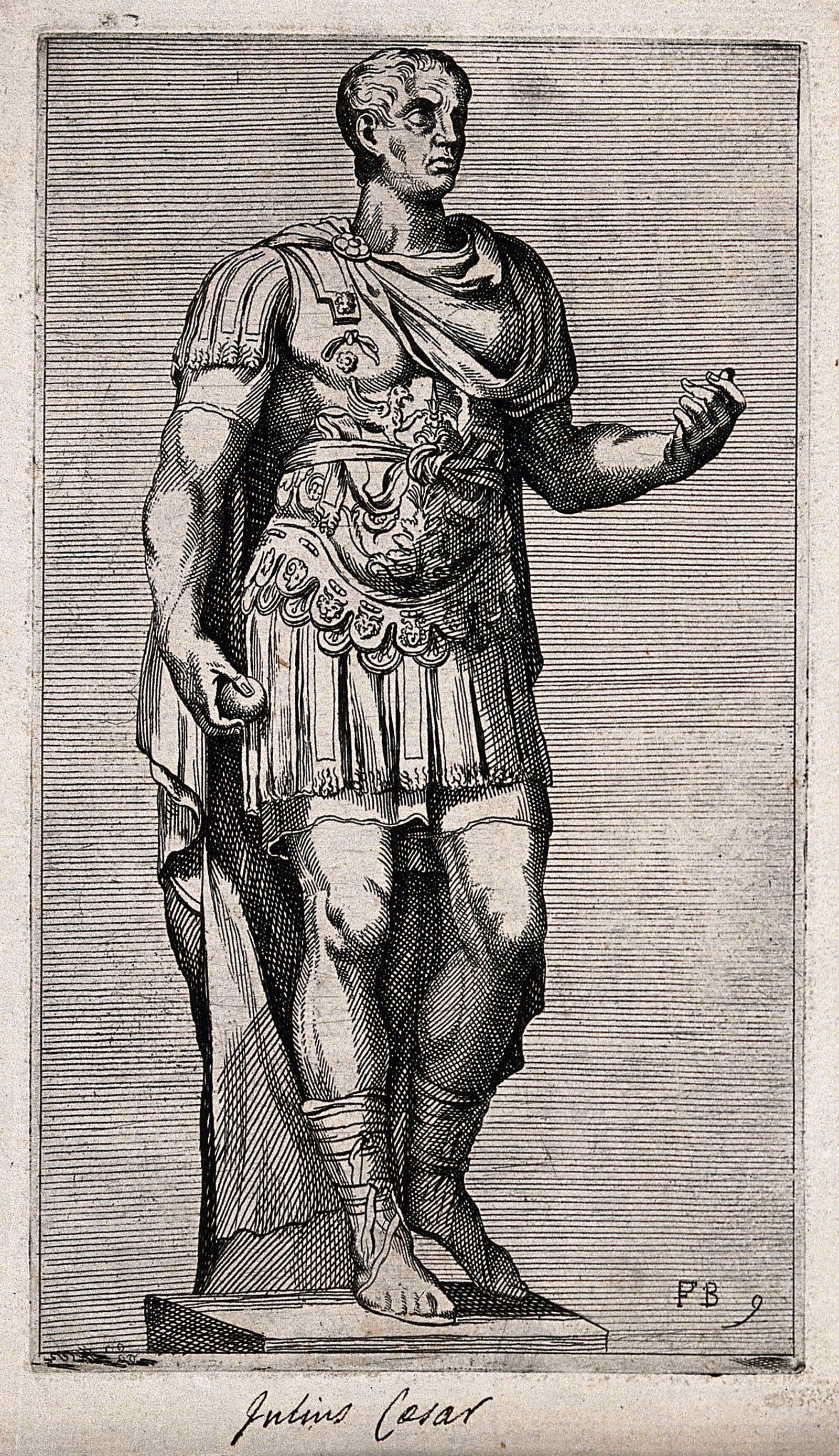
Etched Portrait of Julius Caesar
F. Perrier
 Painting
Secondary source
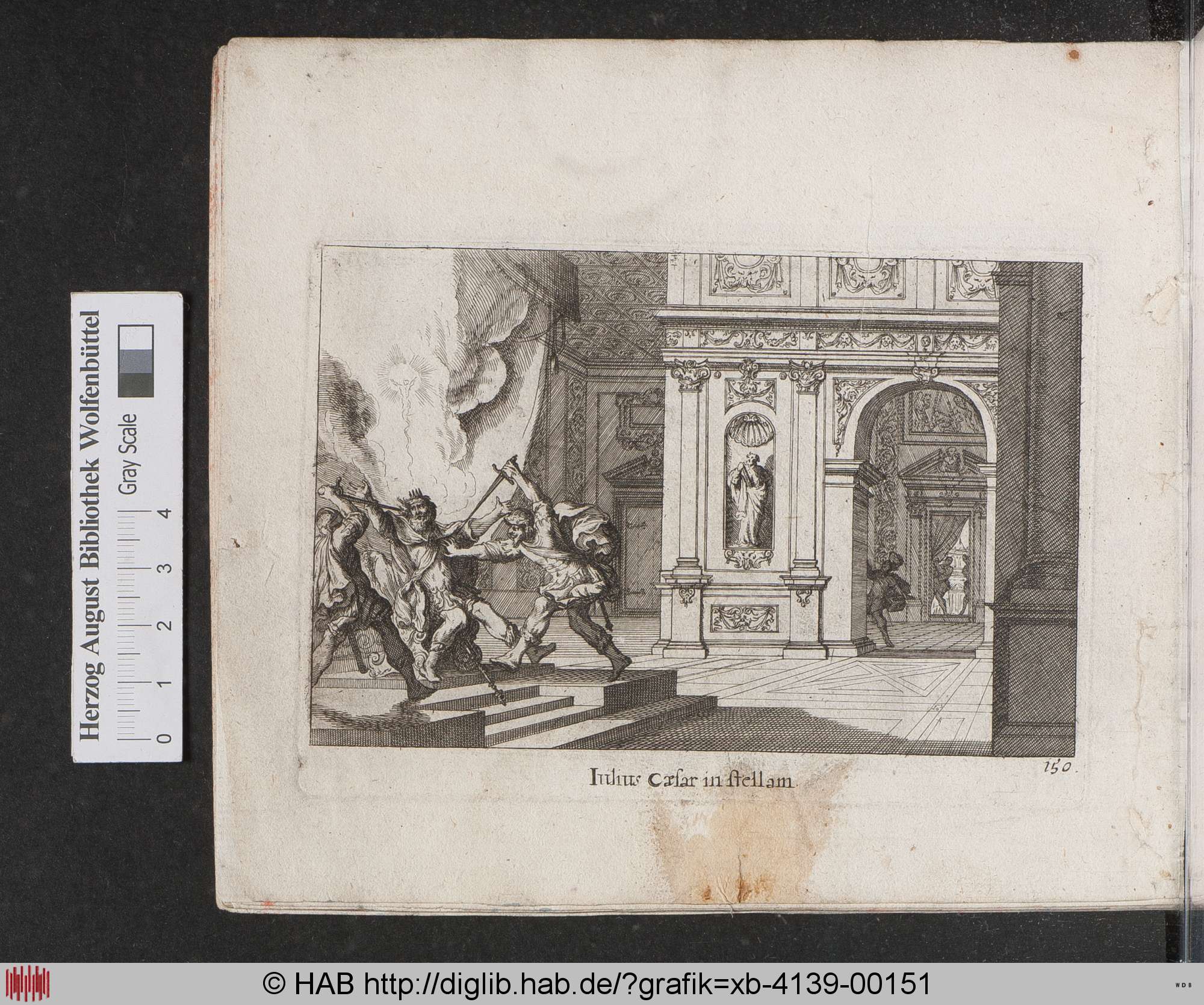
Murder of Julius Caesar in the Senate
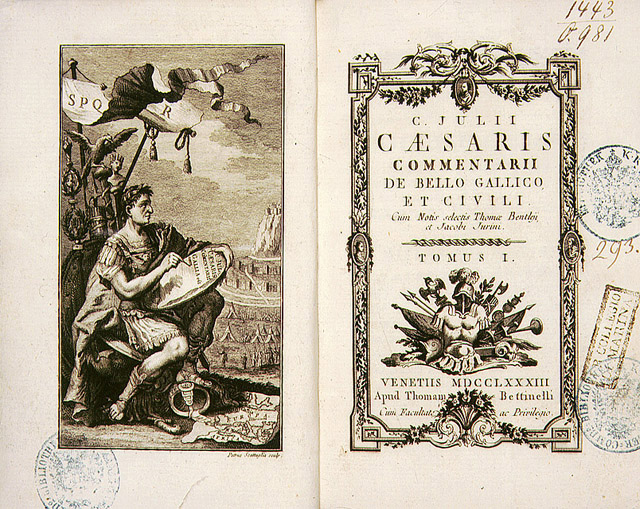 Book
Primary source
Commentarii de Bello Civili
Julius Caesar · 49-48 BCE
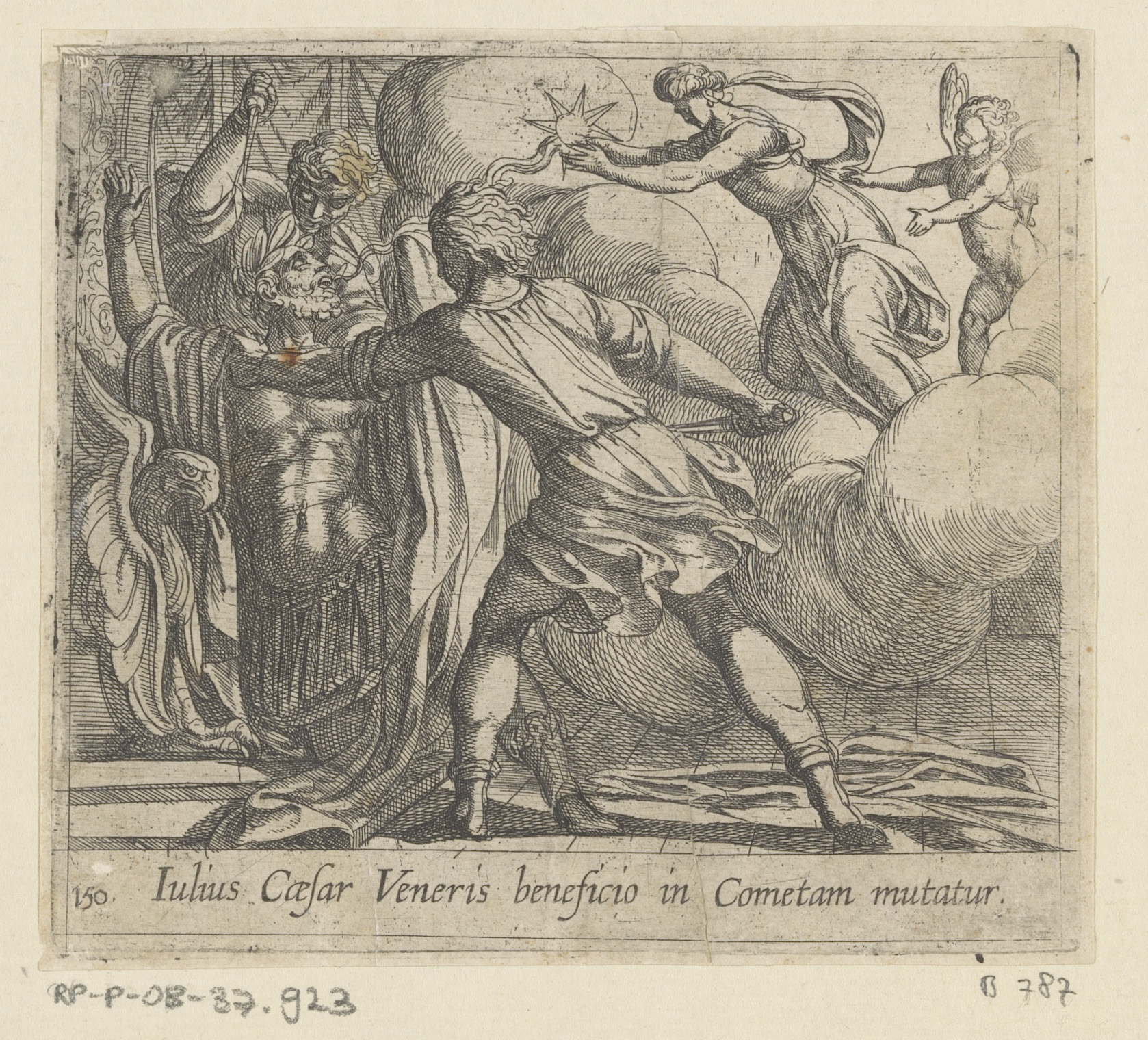 Painting
Secondary source
The Murder of Julius Caesar
1606
Ready when you are
Start chatting with Julius Caesar now.
20 messages free · No credit card · Available in 50+ languages.