


Primary sourceArtifact170-185 AD
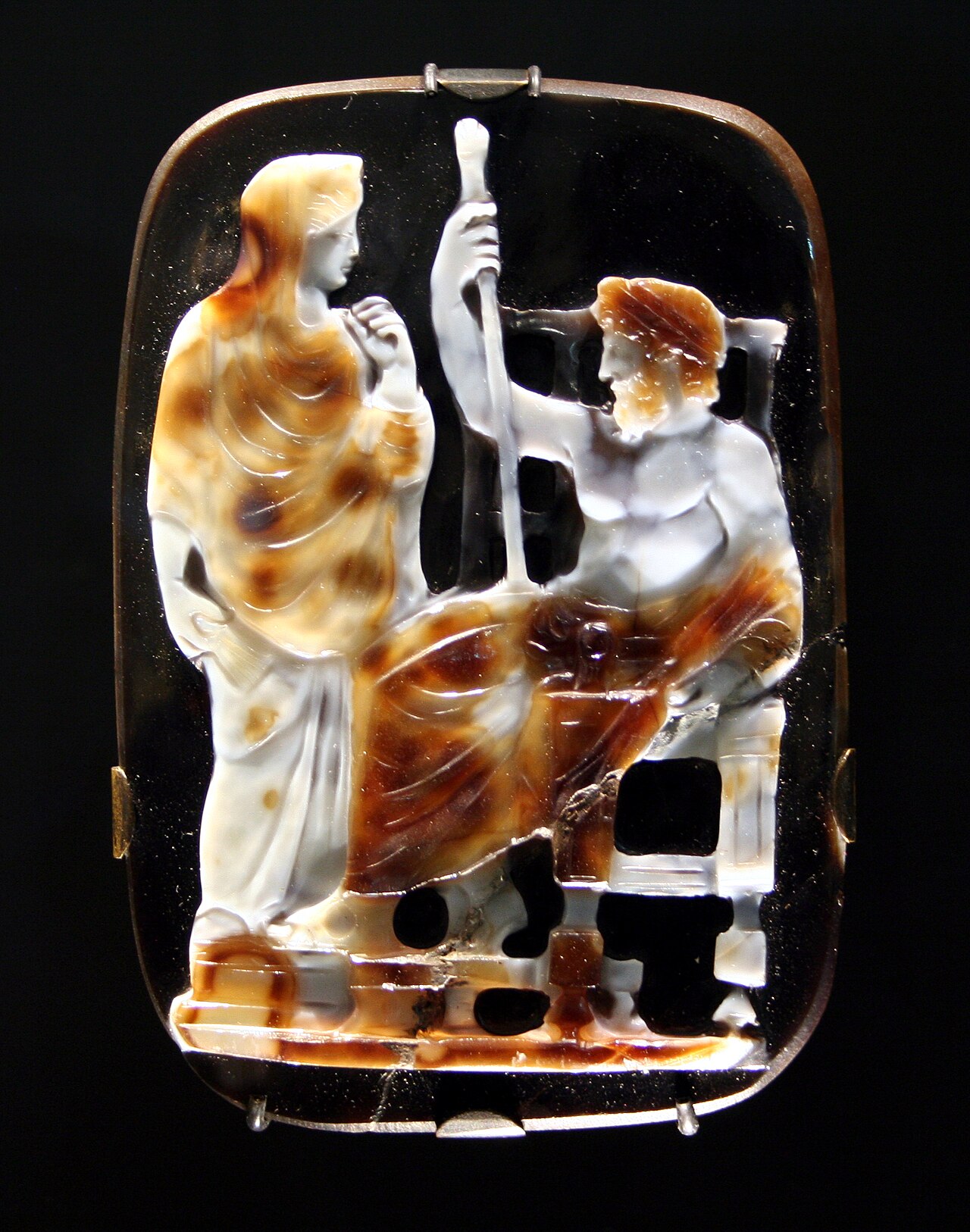
Cameo with Marcus Aurelius and Faustina Minor as Jupiter and Juno
170-185 AD
A carved sardonyx cameo showing Marcus Aurelius and his wife Faustina the Younger depicted as the gods Jupiter and Juno.
Shows Marcus Aurelius and his wife Faustina depicted as gods, revealing the imperial propaganda side of his rule.
About this source
What it is
This sardonyx cameo, made between about 170 and 185 AD, shows a bearded seated man holding a scepter beside a standing veiled woman. They represent Marcus Aurelius and his wife Faustina Minor, portrayed as the gods Jupiter and Juno. It is held in the Landesmuseum Württemberg in Stuttgart.
Why it matters
This luxury object shows a different side of Marcus Aurelius than his reputation as a philosopher. Portraying the imperial couple as gods was a way of emphasizing their divine authority and dynastic power, a common strategy in Roman imperial propaganda.
Look closer
- Why might an emperor and empress want to be shown as gods rather than as themselves?
- What details in the carving tell you which figure represents which god?
- How does this image compare with what you know of Marcus Aurelius as a Stoic philosopher?
This artifact is part of the curated material that grounds the AI version of Marcus Aurelius on Humy.ai — when students ask about related events, the AI can quote it and cite it.
More Marcus Aurelius sources
Meet the AI Marcus Aurelius →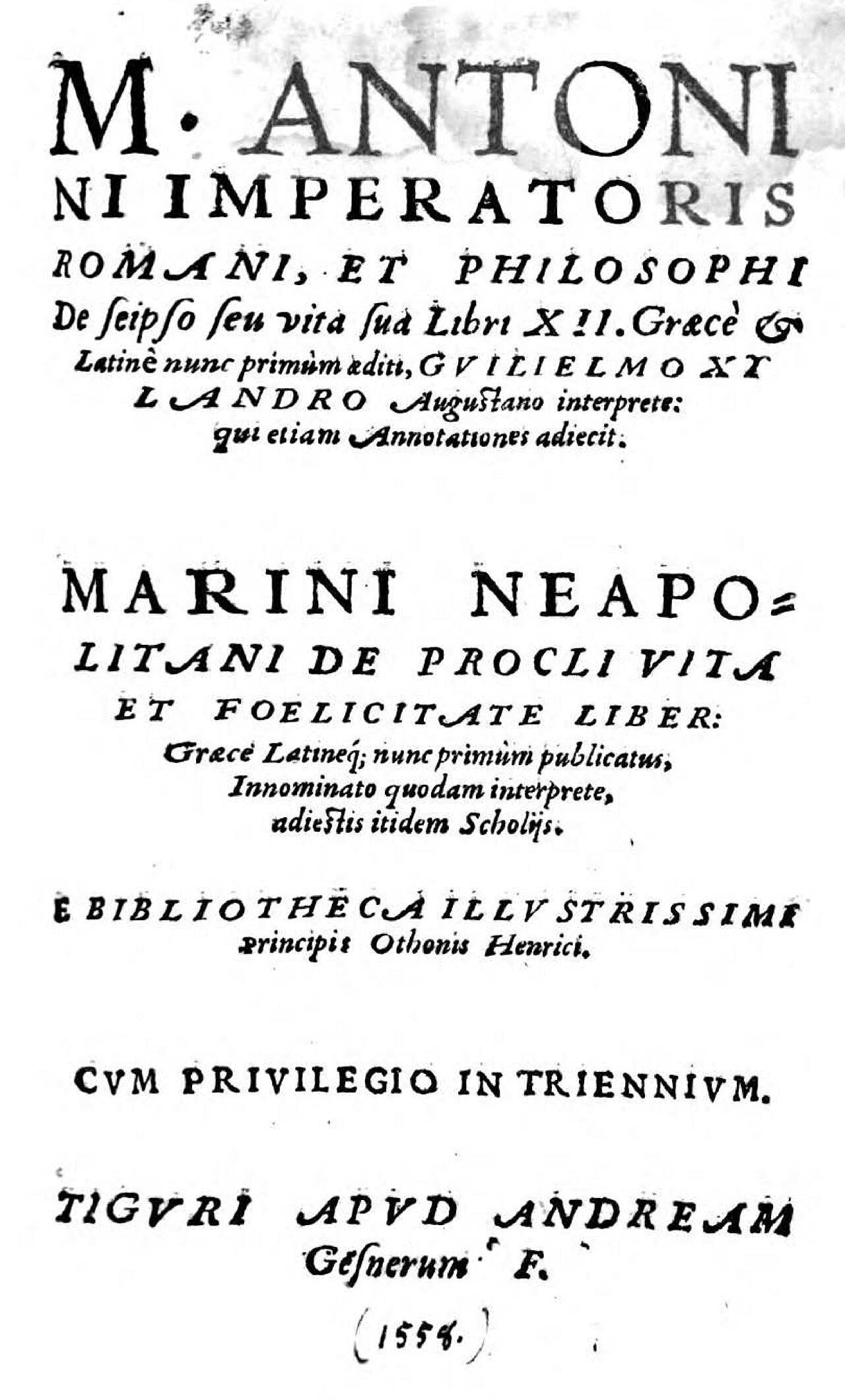 Book
Primary source
Meditations
Marcus Aurelius · c. 170-180 AD (this edition printed 1558)
 Sculpture
Primary source
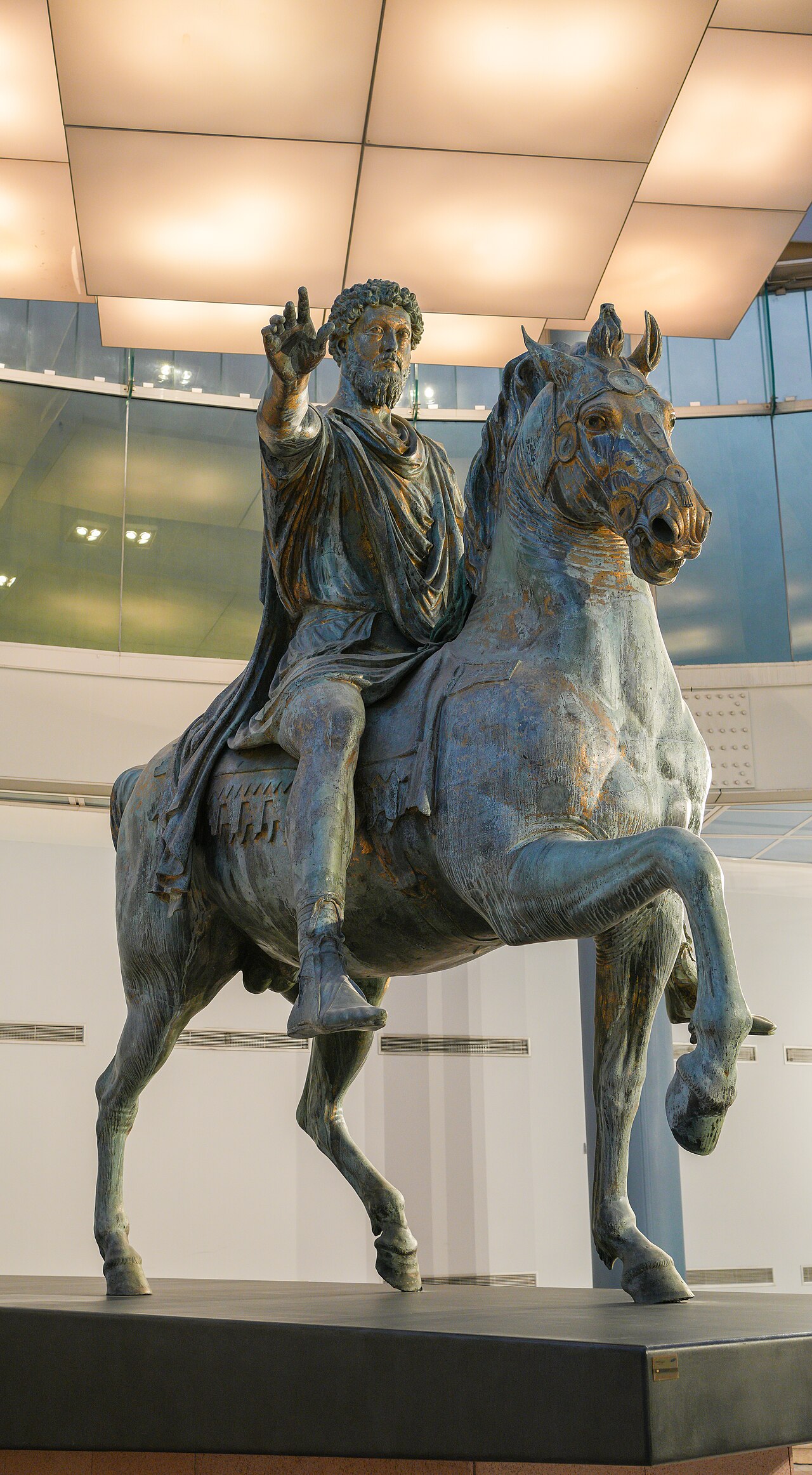
Equestrian Statue of Marcus Aurelius
c. 173 AD
 Artifact
Secondary source
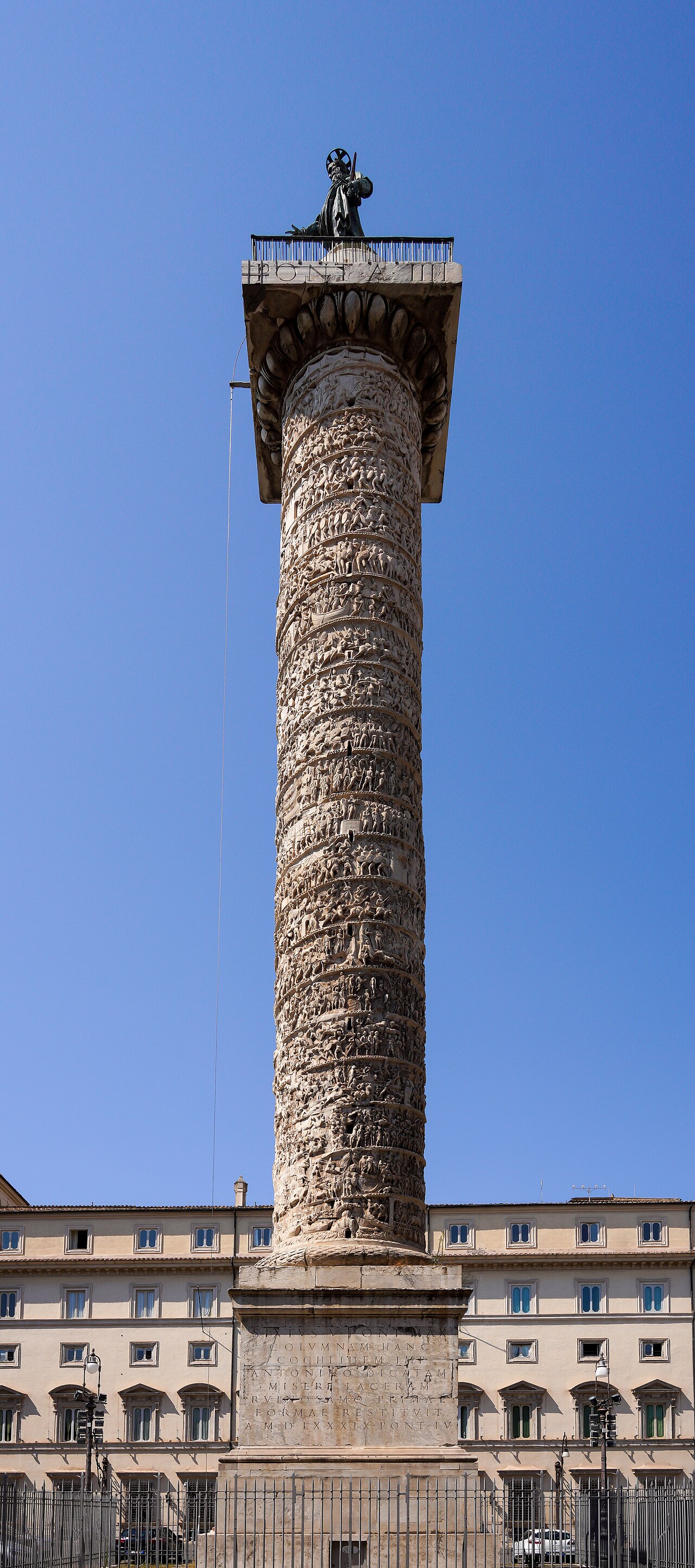
Column of Marcus Aurelius
completed c. 193 AD
Secondary source
Marcus Antoninus (Historia Augusta)
Scriptores Historiae Augustae · probably 4th century AD
 Sculpture
Primary source
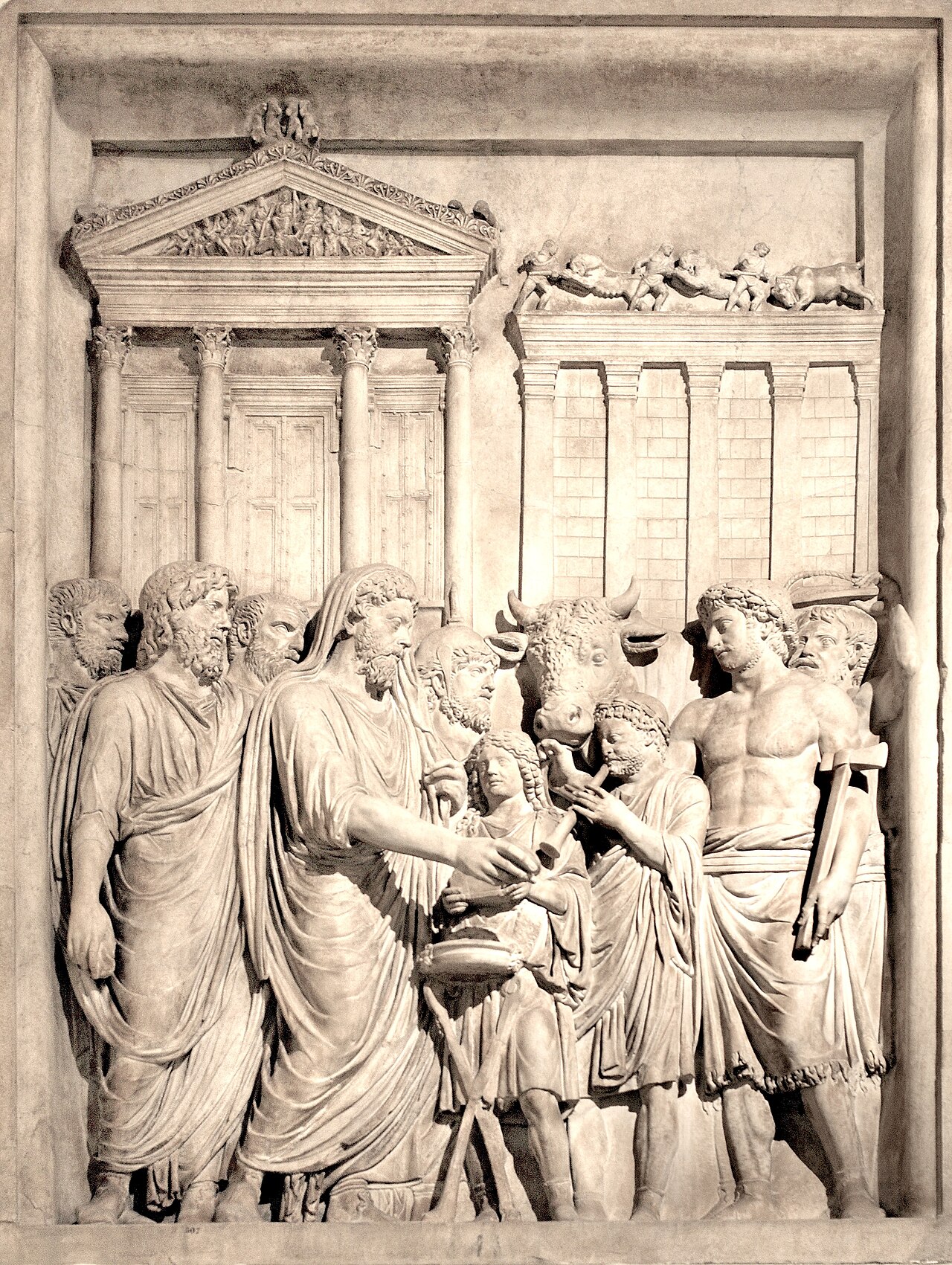
Panel Relief of Marcus Aurelius Sacrificing
Ready when you are
Start chatting with Marcus Aurelius now.
20 messages free · No credit card · Available in 50+ languages.