


Primary sourceArtifact1953
Chandigarh
Le Corbusier · 1953
The planned Indian city whose master plan Le Corbusier designed after independence, the only city plan of his fully realised.
Chandigarh is the only city whose master plan Le Corbusier fully realised, applying his urbanist ideas at full scale.
About this source
What it is
Chandigarh is a city in northwestern India, built as a shared capital for Punjab and Haryana after Indian independence and partition in 1947. Its master plan was prepared by Le Corbusier, after earlier planners Albert Mayer and Matthew Nowicki left the project; most of its government buildings and housing were designed by a team led by him.
Why it matters
Chandigarh was built because Lahore, the old capital of Punjab, became part of Pakistan after partition, leaving the Indian state without an administrative centre. Prime Minister Jawaharlal Nehru wanted the new city to symbolise independent India's modernity. It is one of the few fully master-planned cities to combine monumental architecture and functioning urban life, and its Capitol Complex is a UNESCO World Heritage Site.
Look closer
- Why would a brand-new country want to build a brand-new capital city rather than reuse an old one?
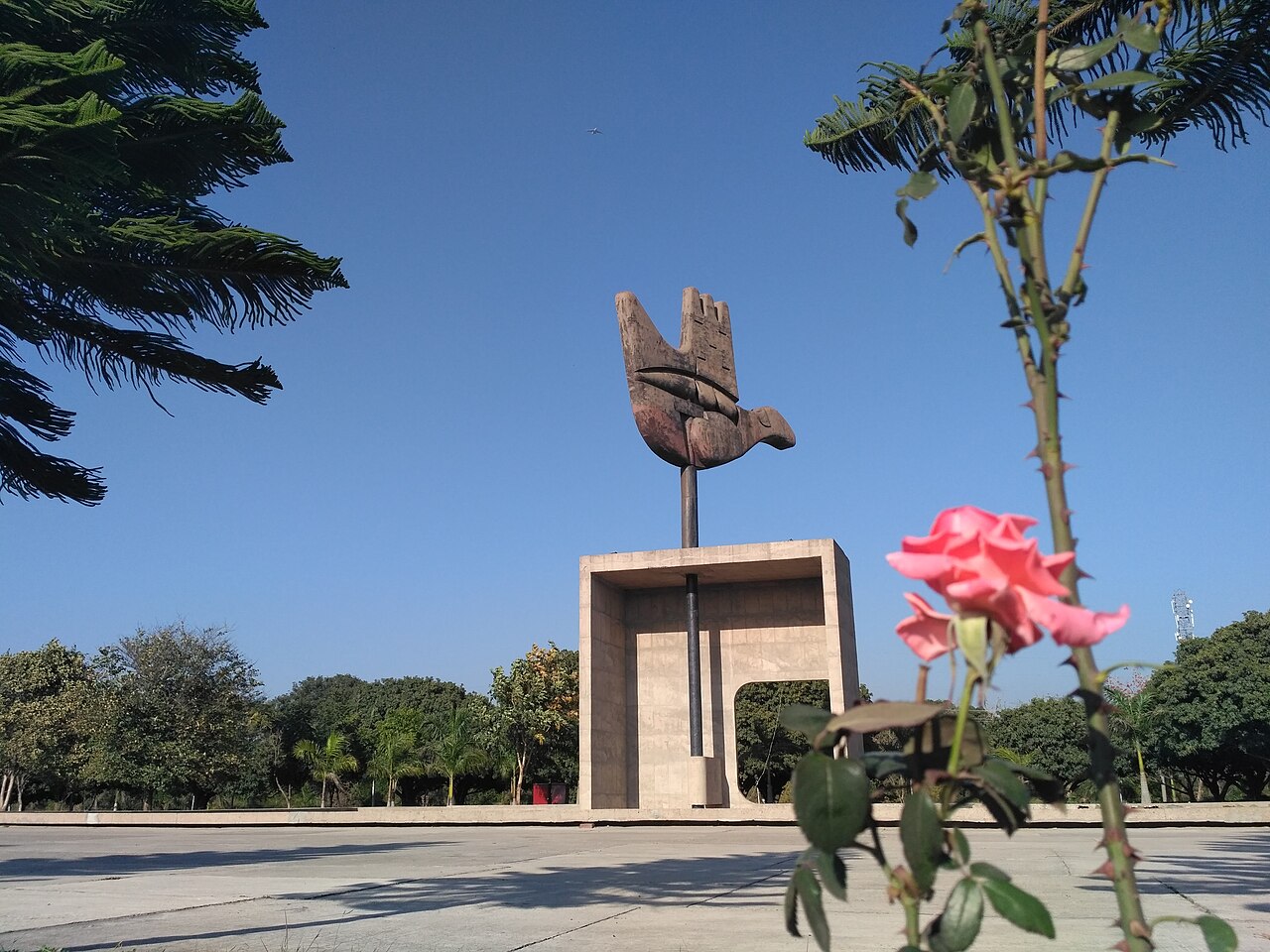
- What does the sculpture of an open hand, shown here, seem to express?
- What problems might arise when one foreign architect designs an entire city for people from a different culture?
This artifact is part of the curated material that grounds the AI version of Le Corbusier on Humy.ai — when students ask about related events, the AI can quote it and cite it.
More Le Corbusier sources
Browse all 88 →Primary source
Toward an Architecture
Le Corbusier · 1923
 Artifact
Primary source
Notre-Dame du Haut
Le Corbusier · 1955
 Artifact
Primary source
Chandigarh Capitol Complex
Le Corbusier · 1953
 Artifact
Primary source
Dom-ino House
Le Corbusier · 1914-1915
Free account
Read every Le Corbusier source
Sign up free →
Ready when you are
Start chatting with Le Corbusier now.
20 messages free · No credit card · Available in 50+ languages.