


Primary sourceBook1777
Chemische Abhandlung von der Luft und dem Feuer
Carl Wilhelm Scheele · 1777
Carl Wilhelm Scheele's 1777 treatise describing his independent discovery of 'fire air,' relevant to the debate over who discovered oxygen before Lavoisier named it.
Scheele's independent discovery of 'fire air' provides essential context for assessing Lavoisier's claims about oxygen.
About this source
What it is
This is a chemical treatise written by Swedish chemist Carl Wilhelm Scheele, published in 1777, discussing air and fire. In it, Scheele describes his experiments showing that air is necessary for combustion and identifies what he called 'fire air.'
Why it matters
Scheele's work is central to the historical debate over who first discovered oxygen. He conducted experiments independently and around the same time as Lavoisier and the English chemist Joseph Priestley, but it was Lavoisier who named the gas 'oxygen' and explained its role in combustion within a new theoretical framework. Comparing Scheele's treatise to Lavoisier's work shows how scientific discovery often involves multiple people working on similar problems, and how credit and naming can shape whose contributions are remembered.
Look closer
- What does Scheele's own account suggest about how he approached his experiments?
- Why might it matter who named a discovery, rather than only who first observed it?
- What questions would you want to ask to compare Scheele's and Lavoisier's methods?
This book is part of the curated material that grounds the AI version of Antoine Lavoisier on Humy.ai — when students ask about related events, the AI can quote it and cite it.
More Antoine Lavoisier sources
Meet the AI Antoine Lavoisier →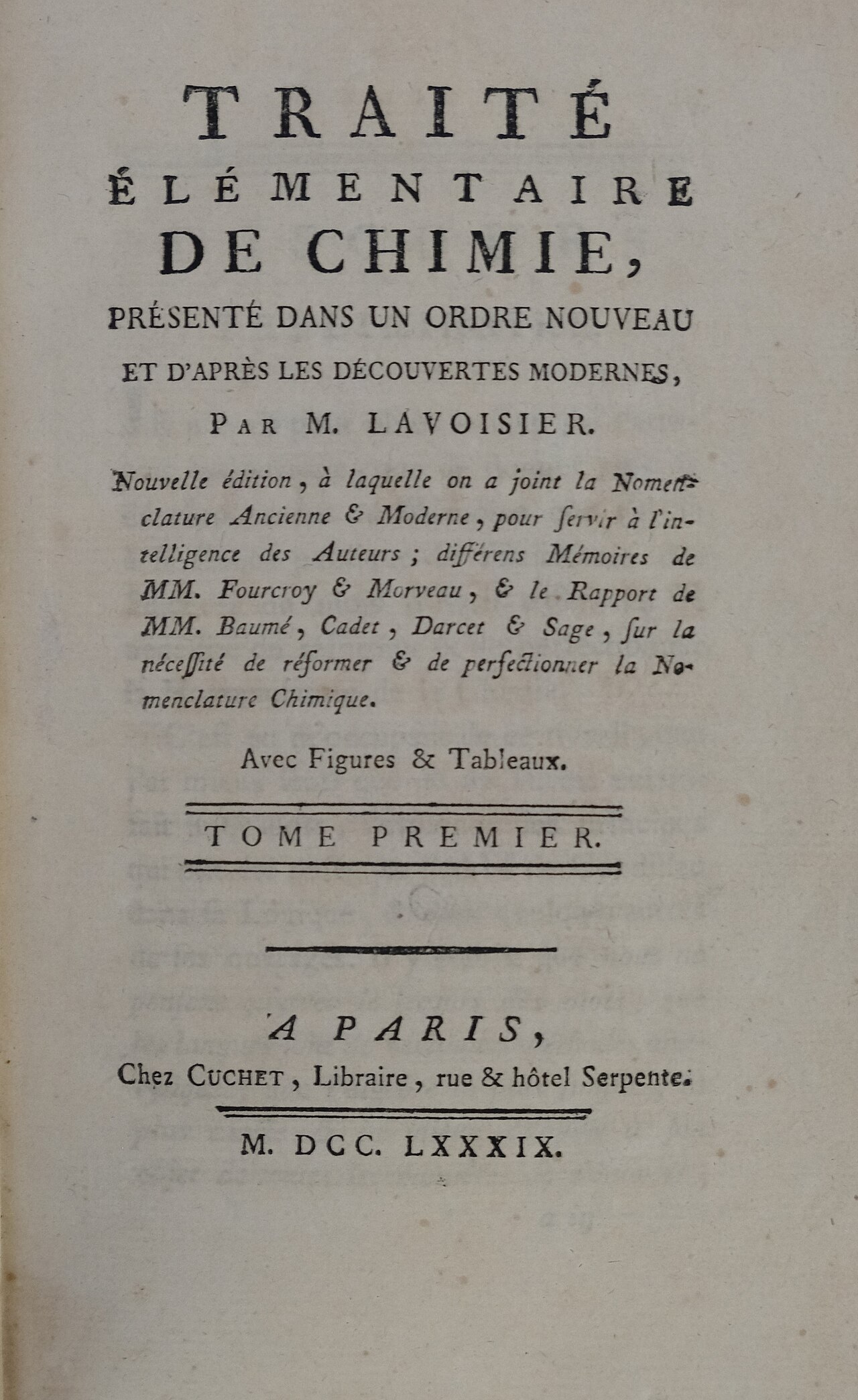 Book
Primary source
Traité Élémentaire de Chimie
Antoine Lavoisier · 1789
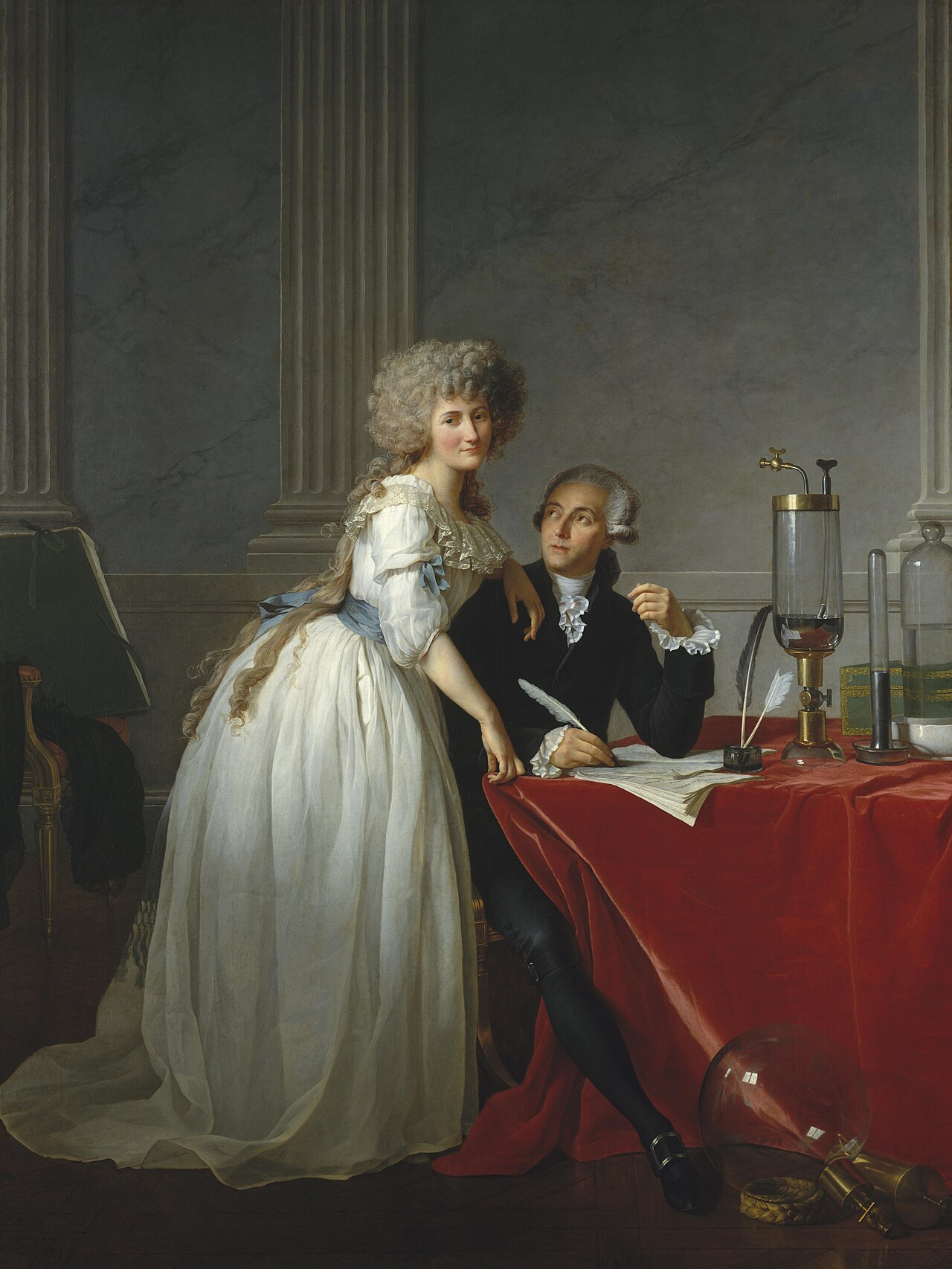 Painting
Primary source
Portrait of Antoine-Laurent Lavoisier and his wife
Jacques-Louis David · 1788
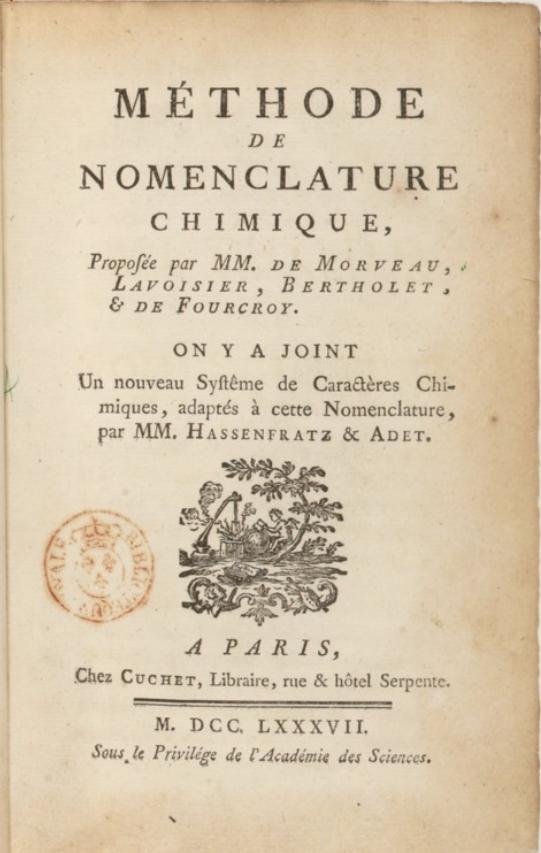 Book
Primary source
Méthode de nomenclature chimique
Antoine Lavoisier, Louis-Bernard Guyton de Morveau, Claude-Louis Berthollet, Antoine François de Fourcroy · 1787
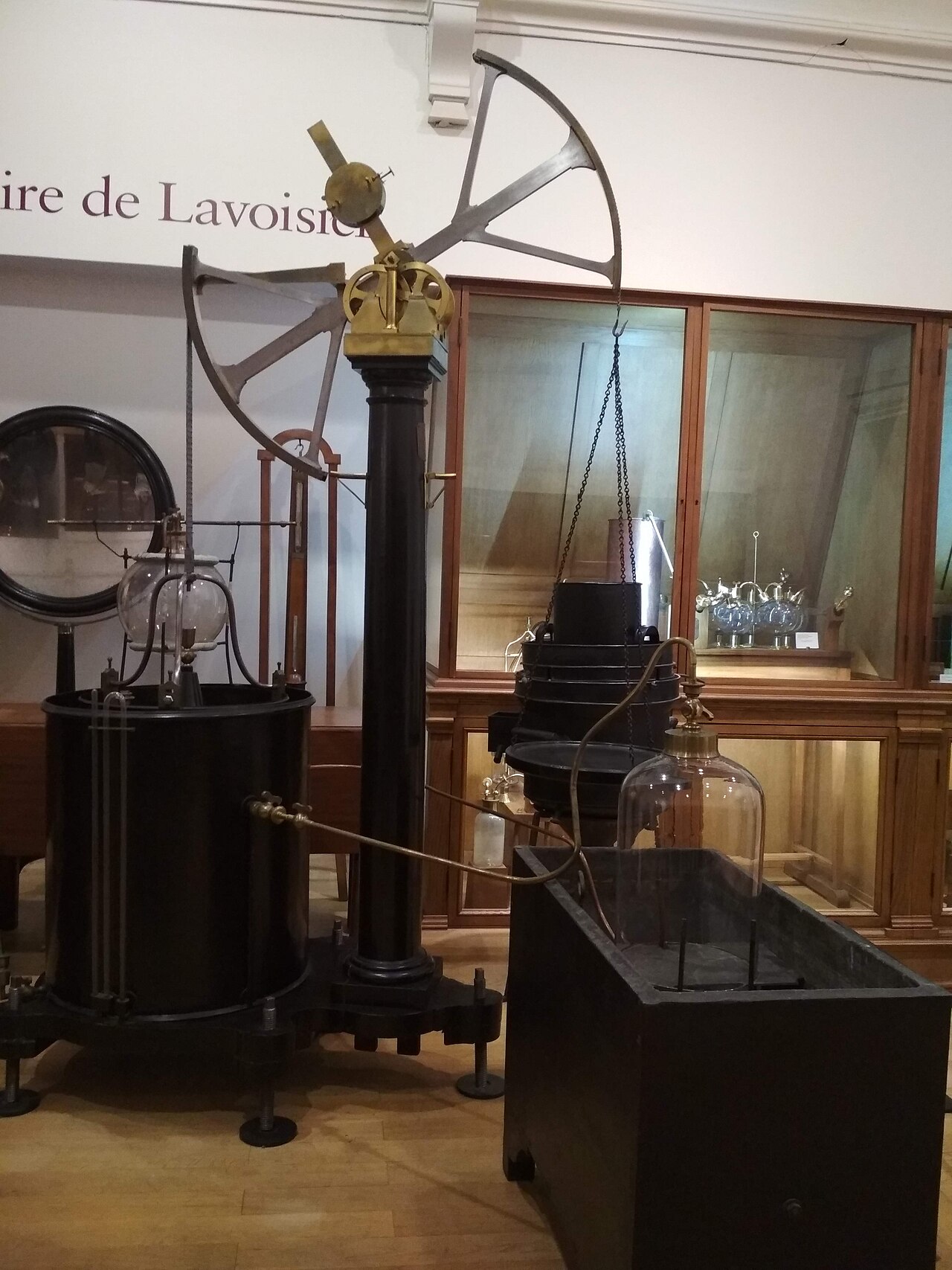 Artifact
Primary source
Lavoisier's ice calorimeter
Antoine Lavoisier and Pierre-Simon Laplace · c. 1782-1783
 Artifact
Primary source
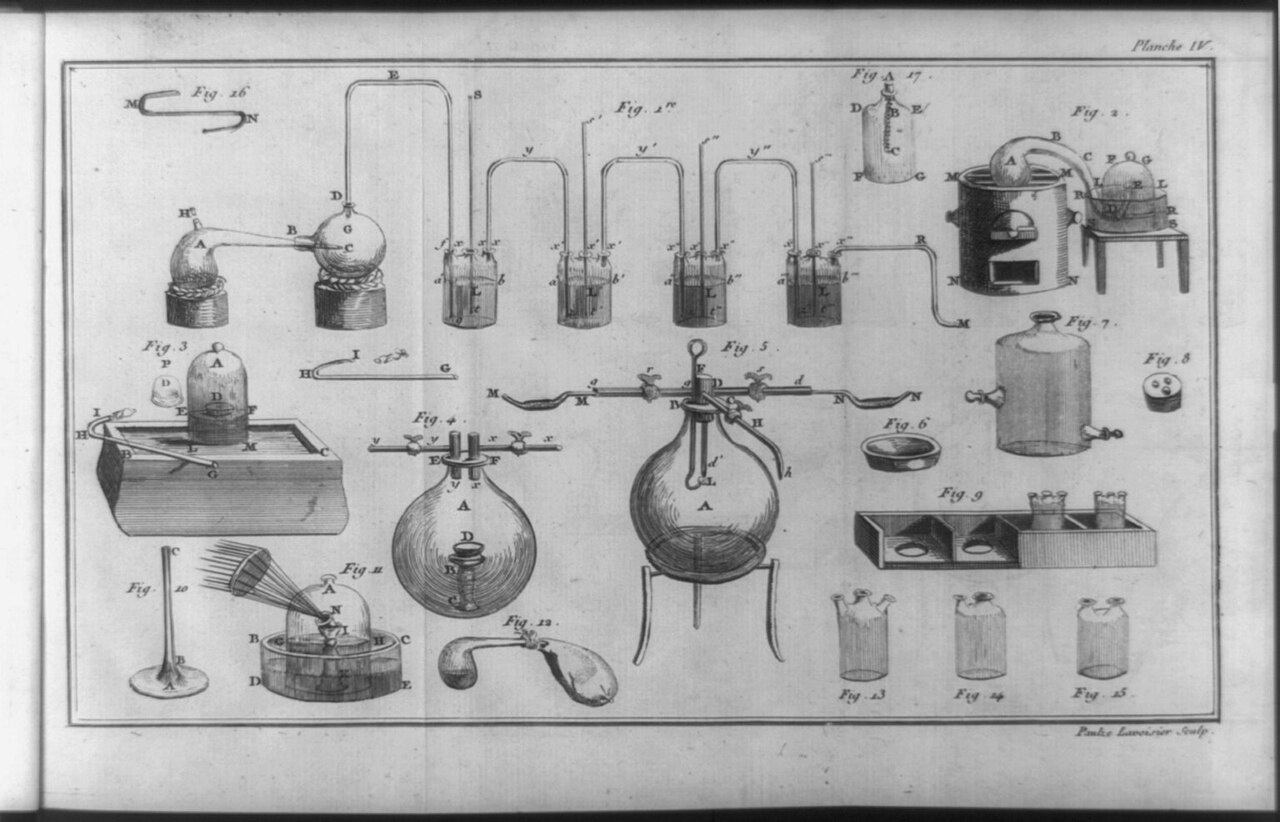
Scientific Apparatus Used by Lavoisier in Studying Chemical Reactions
Marie-Anne Paulze Lavoisier
Ready when you are
Start chatting with Antoine Lavoisier now.
20 messages free · No credit card · Available in 50+ languages.