


Secondary sourceDocument1442-1448
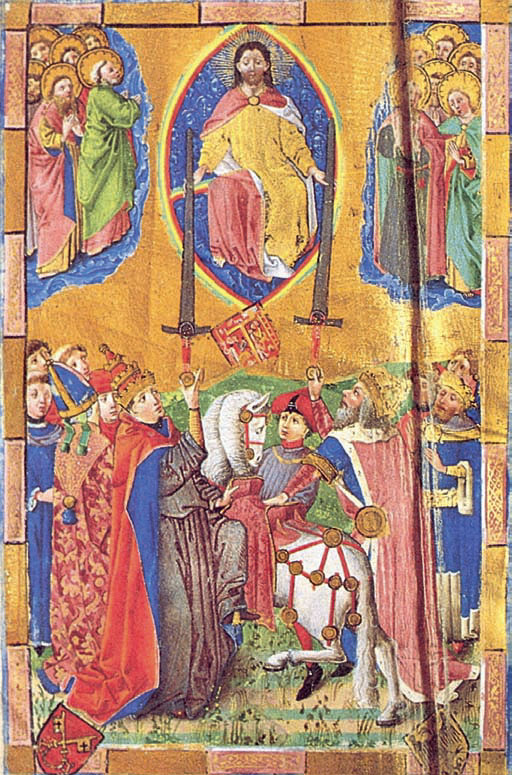
Christ Giving Two Swords to Pope and Emperor
Hans Bornemann · 1442-1448
An illustration from a 1442 German law book showing Christ granting spiritual and temporal power to the pope and emperor.
This legal manuscript shows Jesus as the source of authority granted to both pope and emperor.
About this source
What it is
This manuscript illustration, made by Hans Bornemann between 1442 and 1448, appears in a German legal text known as the Sachsenspiegel. It shows Christ seated in a mandorla holding two swords, which extend down to a kneeling pope and an emperor.
Why it matters
The image illustrates the medieval idea of the "two swords," the belief that spiritual authority (the pope) and worldly authority (the emperor) both come from God through Christ. This shows how religious imagery was used to justify political power structures in medieval Europe, connecting Christ, the papacy, and imperial rule.
Look closer
- Why does Christ sit above both figures, holding the swords that reach down to them?
- What does the positioning of the pope and emperor suggest about their relative status?
- Why might a law book include a religious image like this?
This document is part of the curated material that grounds the AI version of Jesus Christ on Humy.ai — when students ask about related events, the AI can quote it and cite it.
More Jesus Christ sources
Meet the AI Jesus Christ →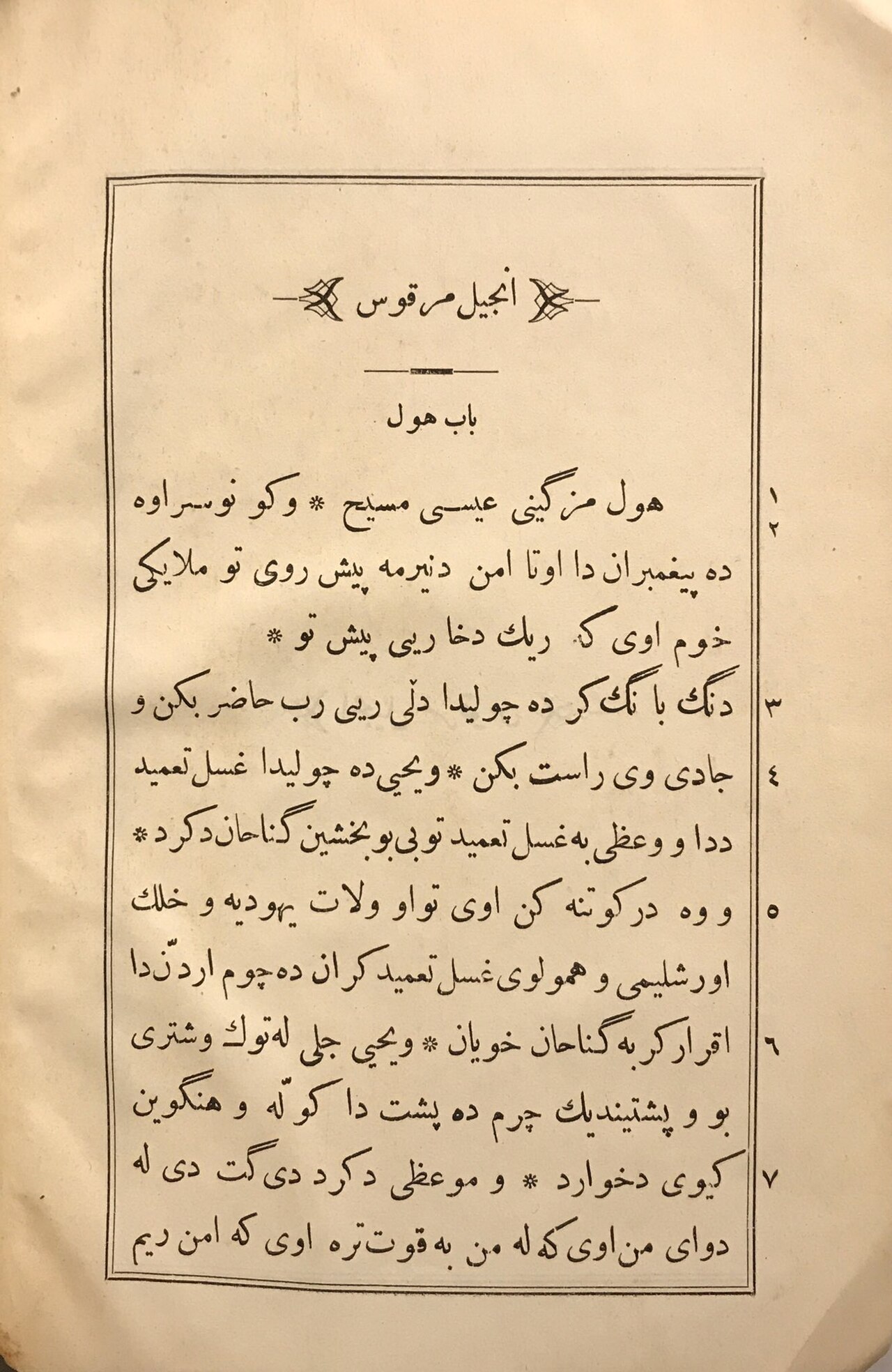 Book
Secondary source
Gospel of Mark
Mark the Evangelist · c. AD 66-75
 Artifact
Secondary source
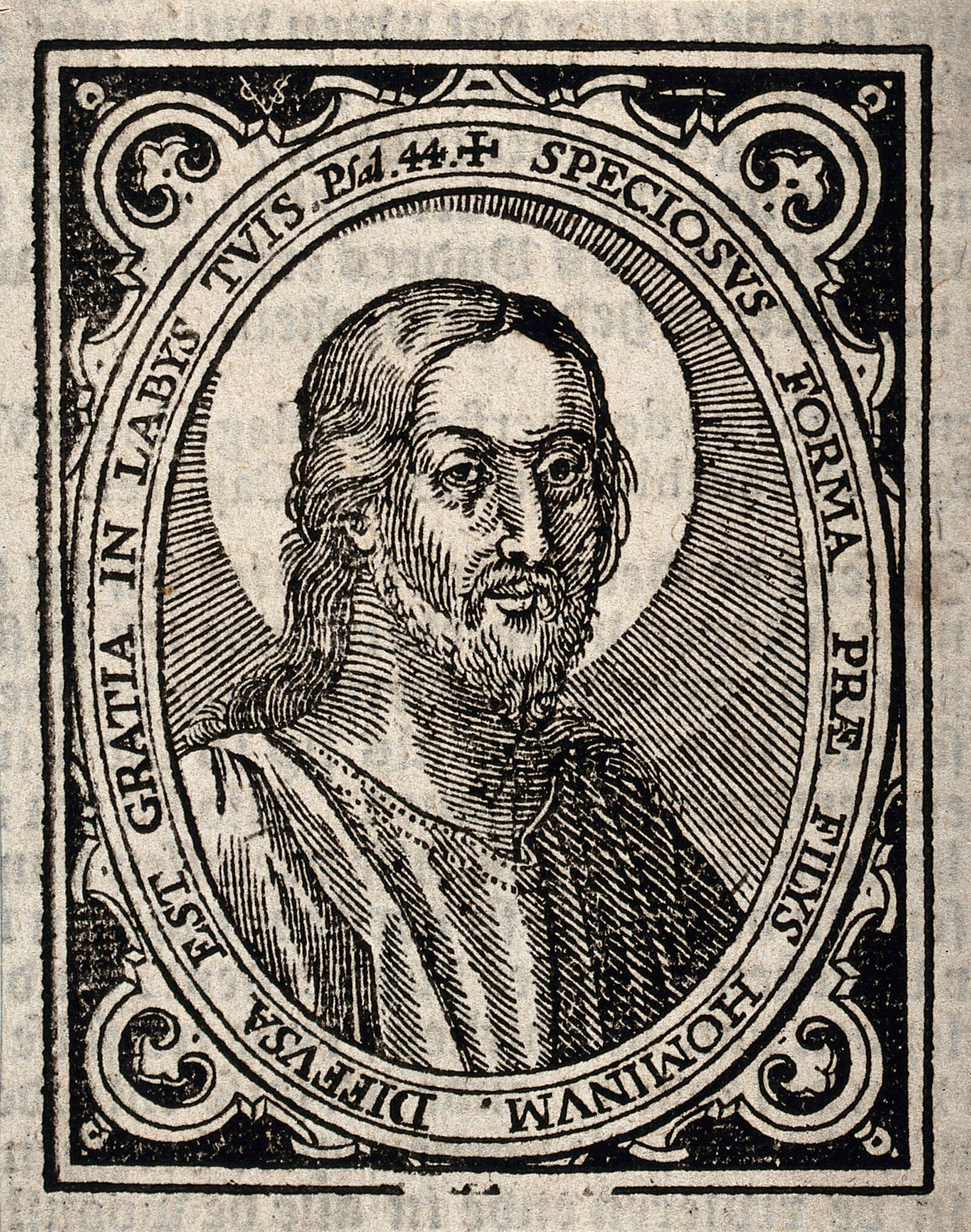
Jesus Christ, woodcut by Christoffel van Sichem III
Christoffel van Sichem III · c. 1645
 Book
Secondary source
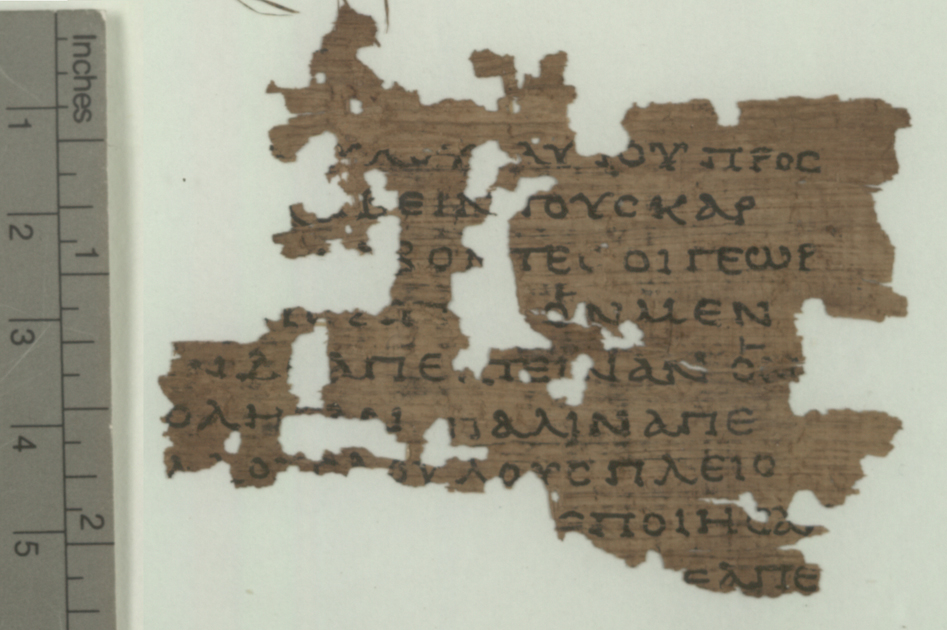
Gospel of Matthew
Matthew the Apostle · late 1st century AD
 Painting
Secondary source
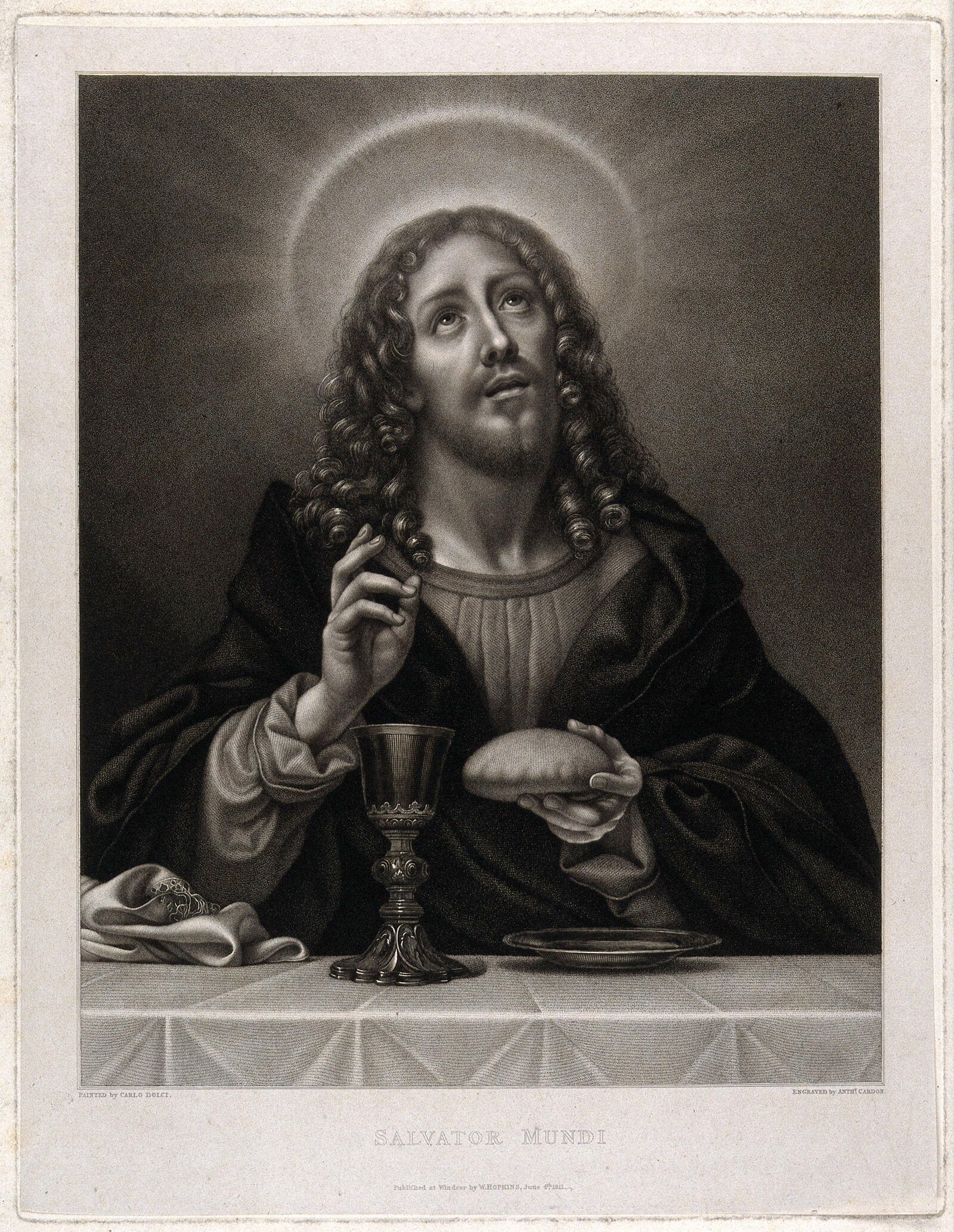
Jesus Christ blessing the Host
Carlo Dolci (painting); Anth. Cardon (engraving) · 4 June 1811
 Painting
Secondary source
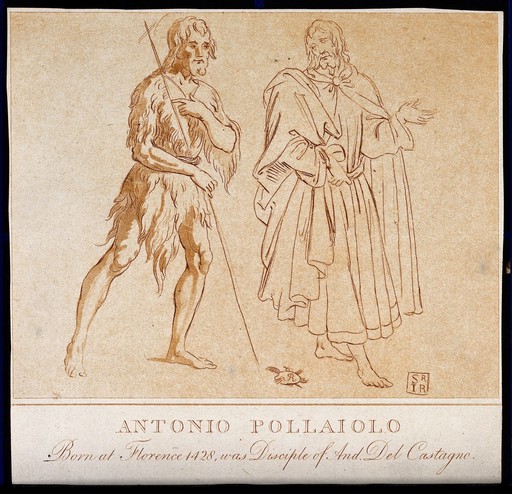
John the Baptist Meets Jesus Christ
Antonio Pollaiuolo
Ready when you are
Start chatting with Jesus Christ now.
20 messages free · No credit card · Available in 50+ languages.