


Secondary sourceDocument16th century
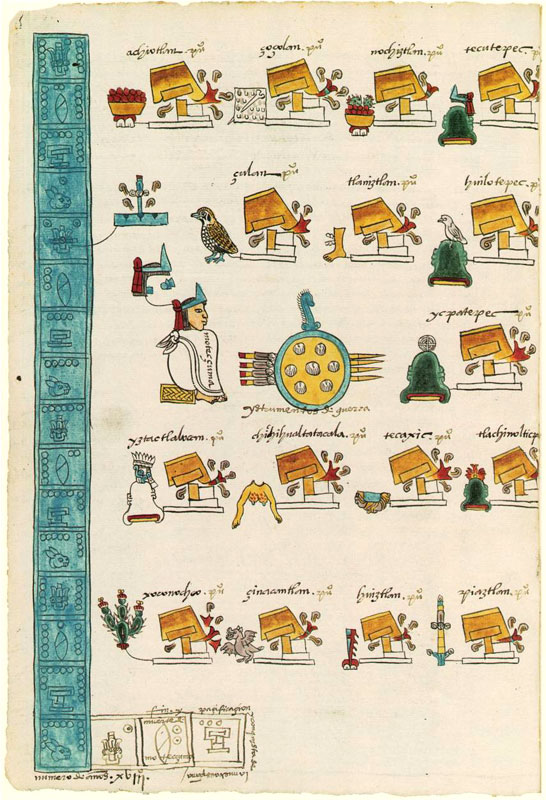
Codex Mendoza, Folio 15v
Unknown author · 16th century
A painted page from a 16th-century Aztec manuscript recording Moctezuma II's rule and the towns he conquered.
This page records Moctezuma II's name glyph, seat of rule, and the towns conquered during his reign.
About this source
What it is
This is one page (folio 15v) of the Codex Mendoza, a pictorial manuscript made in the 16th century by unknown indigenous artists. It uses place-sign glyphs and short labels to record conquests during Moctezuma II's reign as tlatoani of Tenochtitlan.
Why it matters
The Codex Mendoza is one of the clearest surviving records made by the Mexica themselves (through colonial-era artists) of how imperial expansion was tracked and remembered. This page shows Moctezuma's seat of rule and a long list of conquered towns, revealing how central conquest and tribute were to his power.
Look closer
- What do the hilltop glyphs represent, and why are there so many of them on one page?
- Why might the Mexica have recorded conquests in picture form rather than only in writing?
- What does this page not tell you about the people living in the conquered towns?
This document is part of the curated material that grounds the AI version of Montezuma II on Humy.ai — when students ask about related events, the AI can quote it and cite it.
More Montezuma II sources
Meet the AI Montezuma II →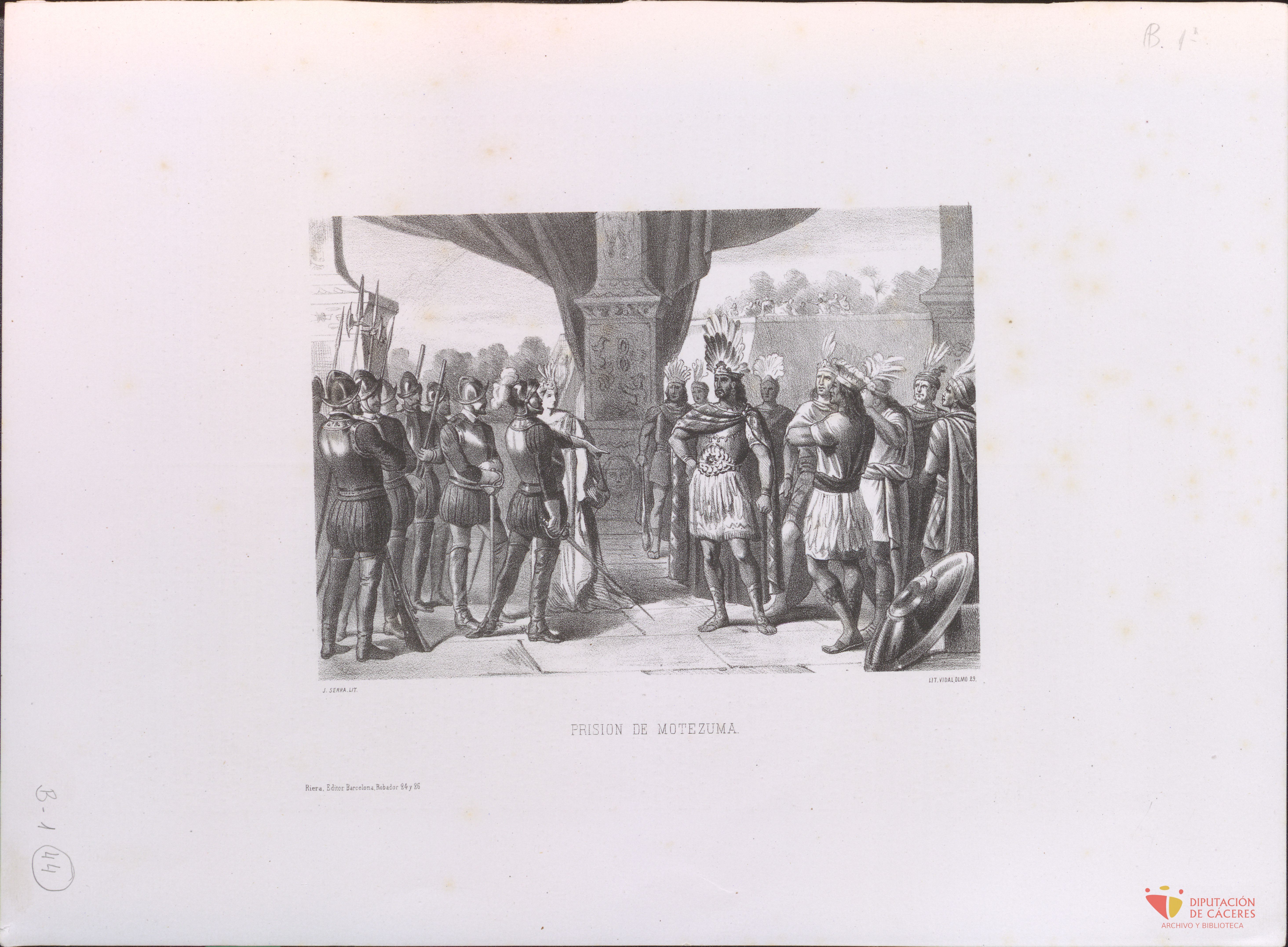 Painting
Secondary source
Prisión del emperador Moctezuma
Rafael del Castillo de la Cuesta · 1880
 Book
Secondary source
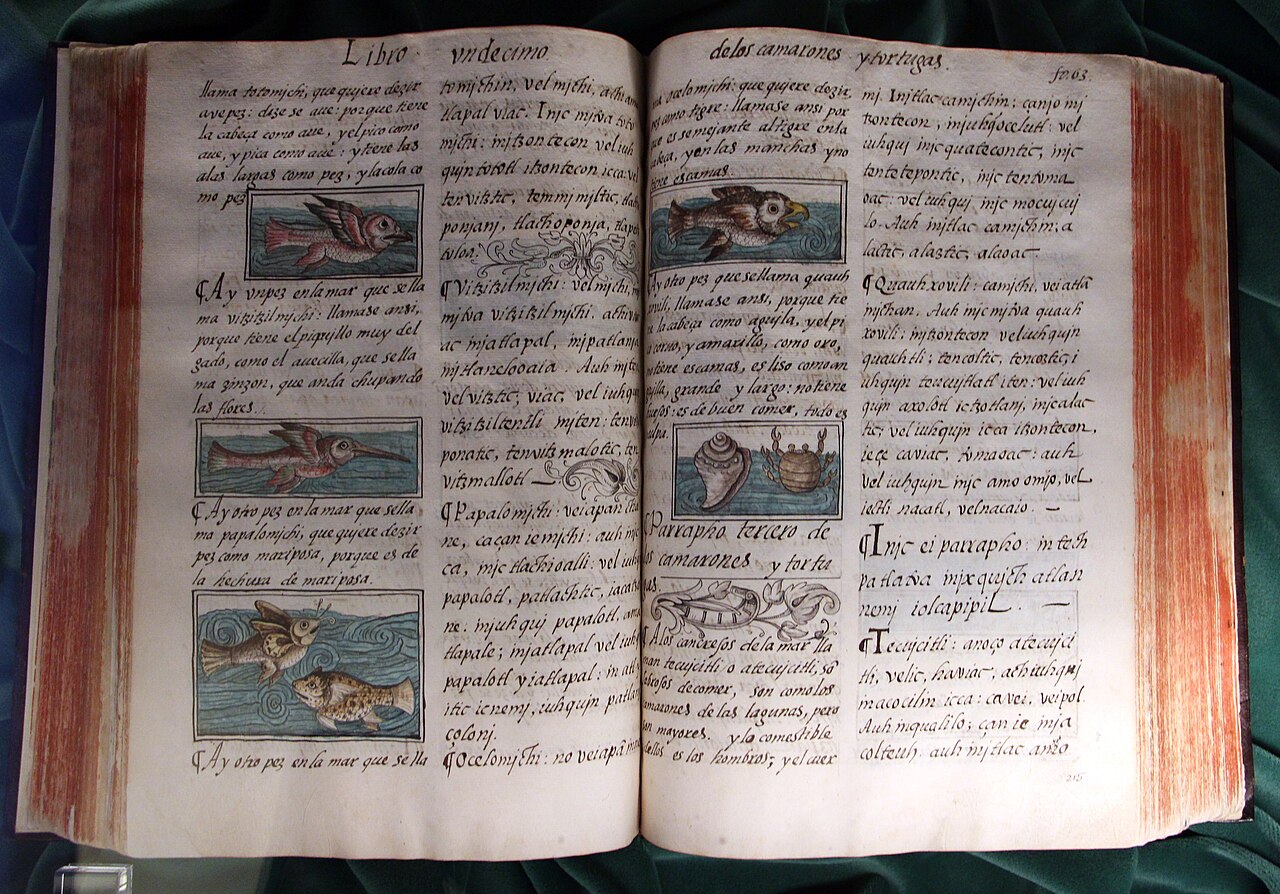
Florentine Codex
Bernardino de Sahagún with Nahua collaborators · 1569
 Painting
Secondary source
Hernán Cortés takes Moctezuma prisoner
Louis Auguste Turgis · 1895
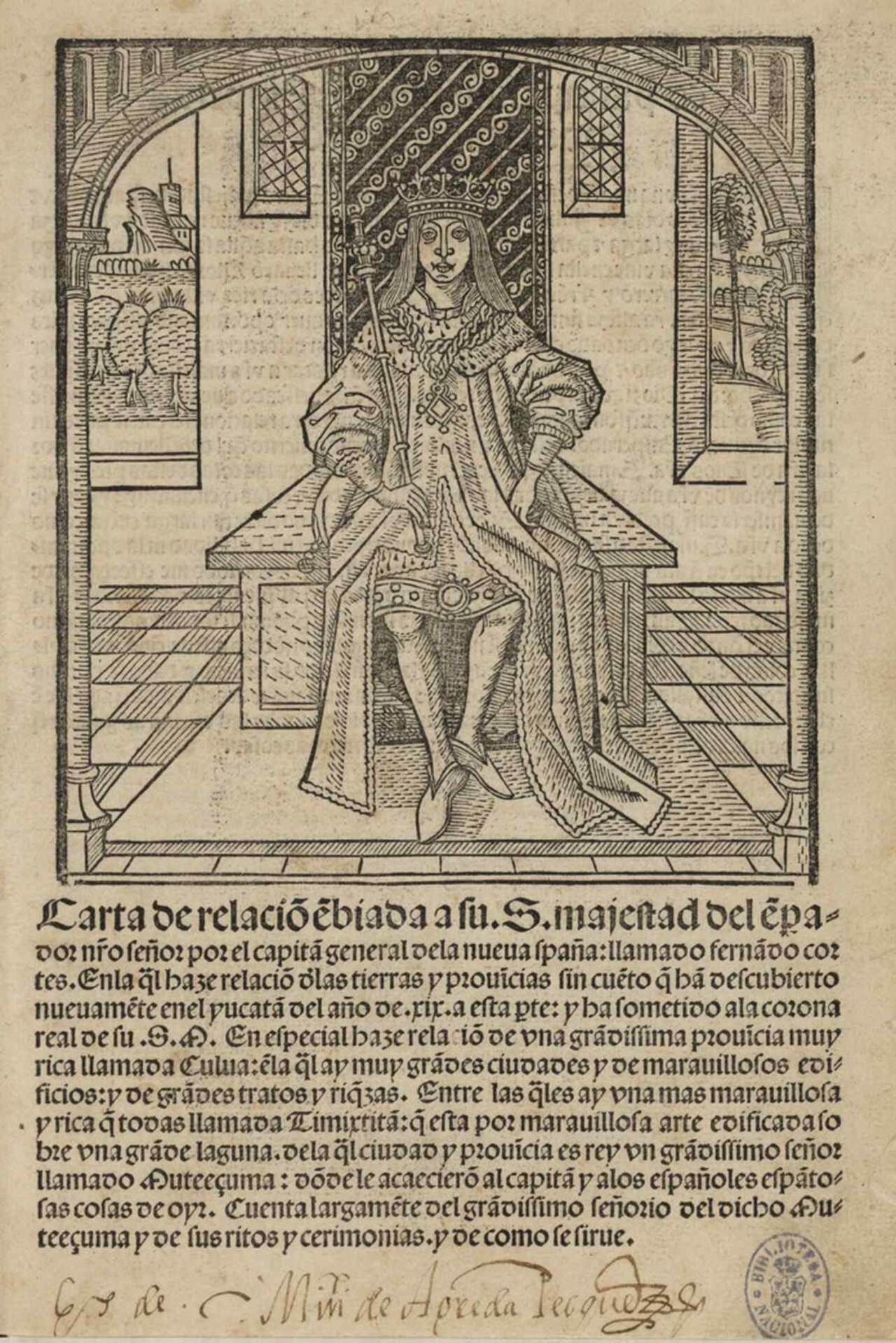 Letter
Primary source
Second Letter to Charles V
Hernán Cortés · 1520 (printed 1522)
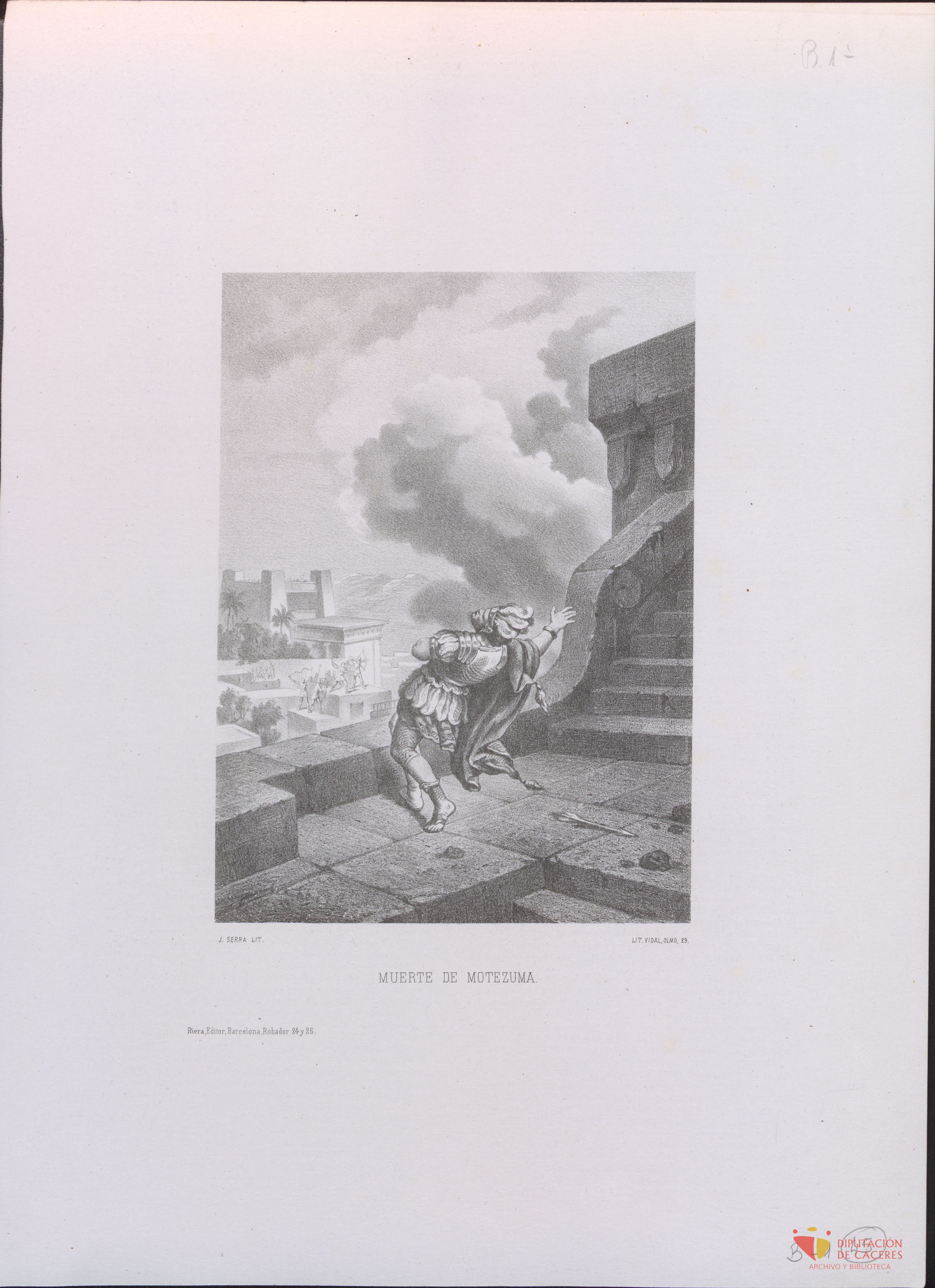 Painting
Secondary source
Recreation of Moctezuma's Death
Rafael del Castillo de la Cuesta · 1880
Ready when you are
Start chatting with Montezuma II now.
20 messages free · No credit card · Available in 50+ languages.