
Portrait of Montezuma II

AI Historical Figure

Montezuma II

Aztec emperor during the Spanish conquest of Mexico.

Chat with Montezuma II via text or voice — in 42 languages, drawing on a curated biography and 88 historical sources. Available 24/7.

Start chatting with Montezuma II20 messages free · No credit card
Lived
c. 1466–1520
From
Mexico
Known for
Rulers & royaltyPolitics & government
Montezuma II

Montezuma II

Online · responds in seconds

Hello — I'm Montezuma II. Aztec emperor during the Spanish conquest of Mexico. What would you like to ask me?

20 messages free · No credit card · Powered by Humy.ai

Live preview · Switch between 42 languages above · Send a message to continue in the app

Multilingual

Talk to Montezuma II in 42 languages

Ask Montezuma II questions in any language below, and the rest of Humy's app speaks it too. Pick yours to open the chat in that language.

Also in German (Austria), German (Switzerland), English (UK), English (Australia), English (Canada).

The sources behind this AI

88 sources · 43 paintings · 13 artifacts · 9 documents · 8 books · 8 sculptures · 5 photographs · 2 letters

Montezuma II doesn’t improvise from thin air. The AI is grounded in 88 curated historical sources students can inspect. Open any of them to see what informs the conversation.

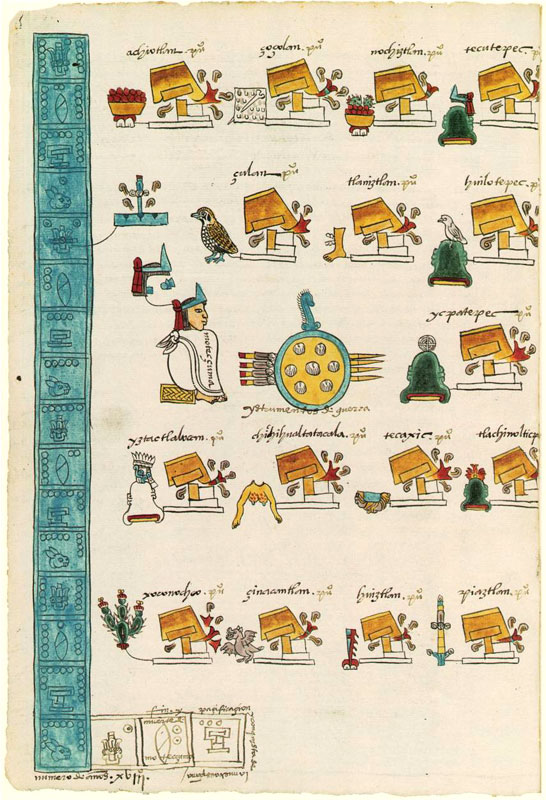
A painted page from a colonial Mexican manuscript with a blue-green border column of glyphs on the left. Rows of hilltop place-sign glyphs with Nahuatl labels and small pictorial symbols such as a seated figure, a bird, a shield with arrows, and plants, arranged on pale paper with a footer of writing at the bottom.Document

Secondary source

Codex Mendoza, Folio 15v

Unknown author · 16th century

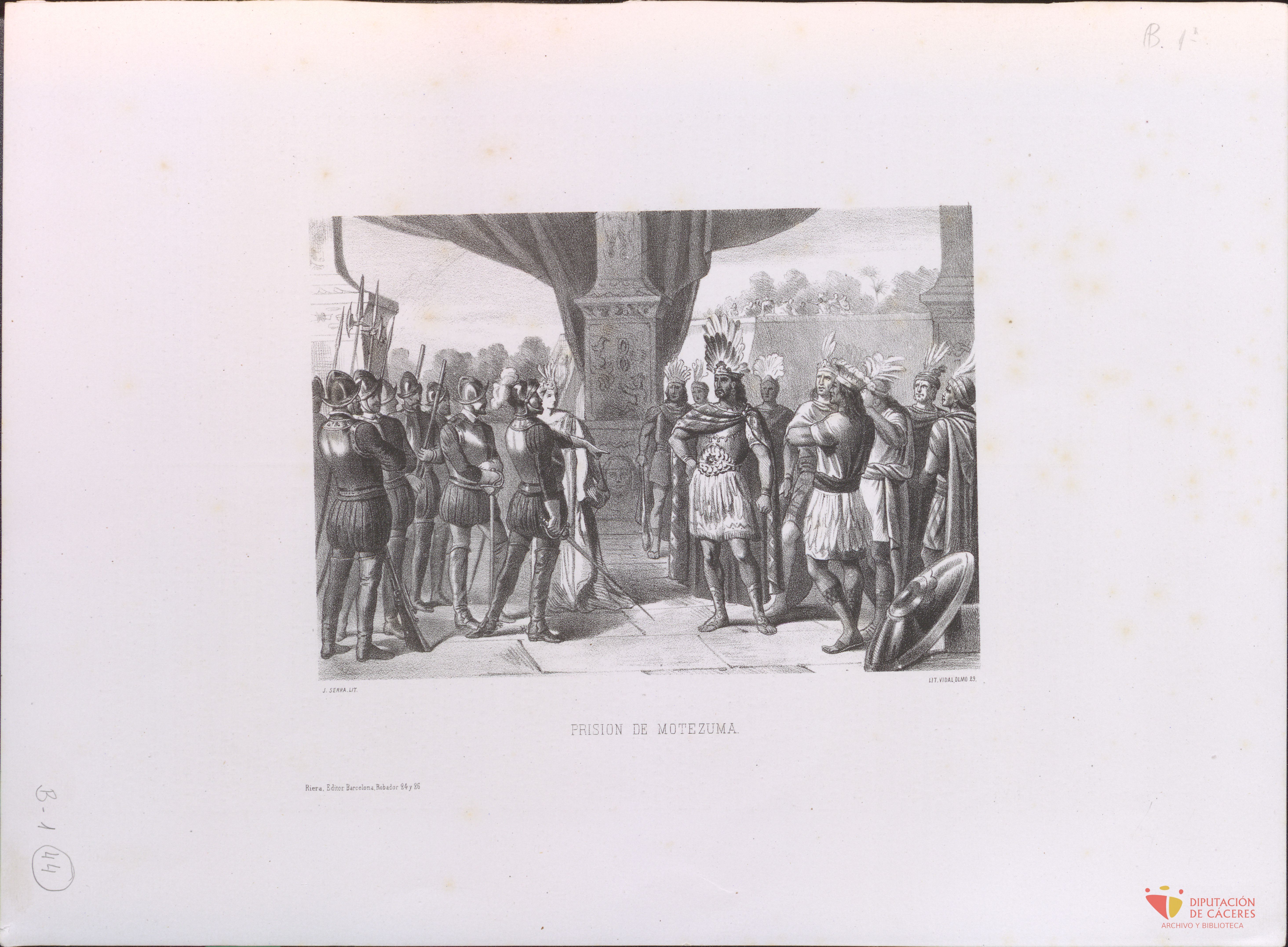
Black-and-white lithograph titled 'Prision de Motezuma' showing Spanish armored soldiers with helmets and halberds on the left facing a group of Aztec-style figures in feathered headdresses on the right, including a central man in a feathered crown and cloak. A large draped canopy and stone columns frame the scene; a shield lies in the lower right. Printed credits read 'J. Serra lit.', 'Lit. Vidal, Olmo 29' and 'Riera, Editor Barcelona'.Painting

Secondary source

Prisión del emperador Moctezuma

Rafael del Castillo de la Cuesta · 1880

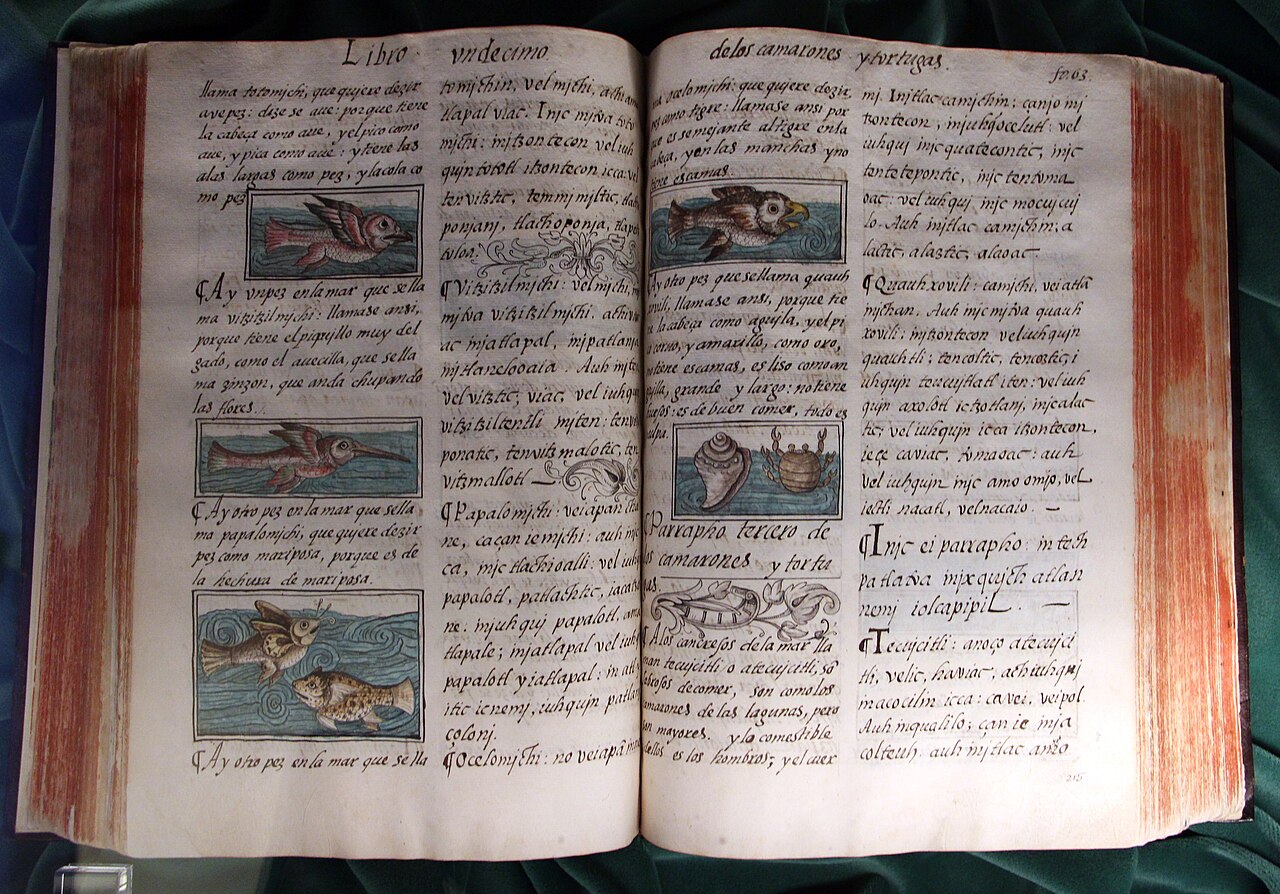
Open bound manuscript on a green cloth, showing two pages of handwritten text in columns with small painted illustrations of fish, a shell, a crab, and shrimp. Page headed 'Libro undecimo'.Book

Secondary source

Florentine Codex

Bernardino de Sahagún with Nahua collaborators · 1569

Painting showing Hernán Cortés seizing Moctezuma, a later imagined depiction of the event.Painting

Secondary source

Hernán Cortés takes Moctezuma prisoner

Louis Auguste Turgis · 1895

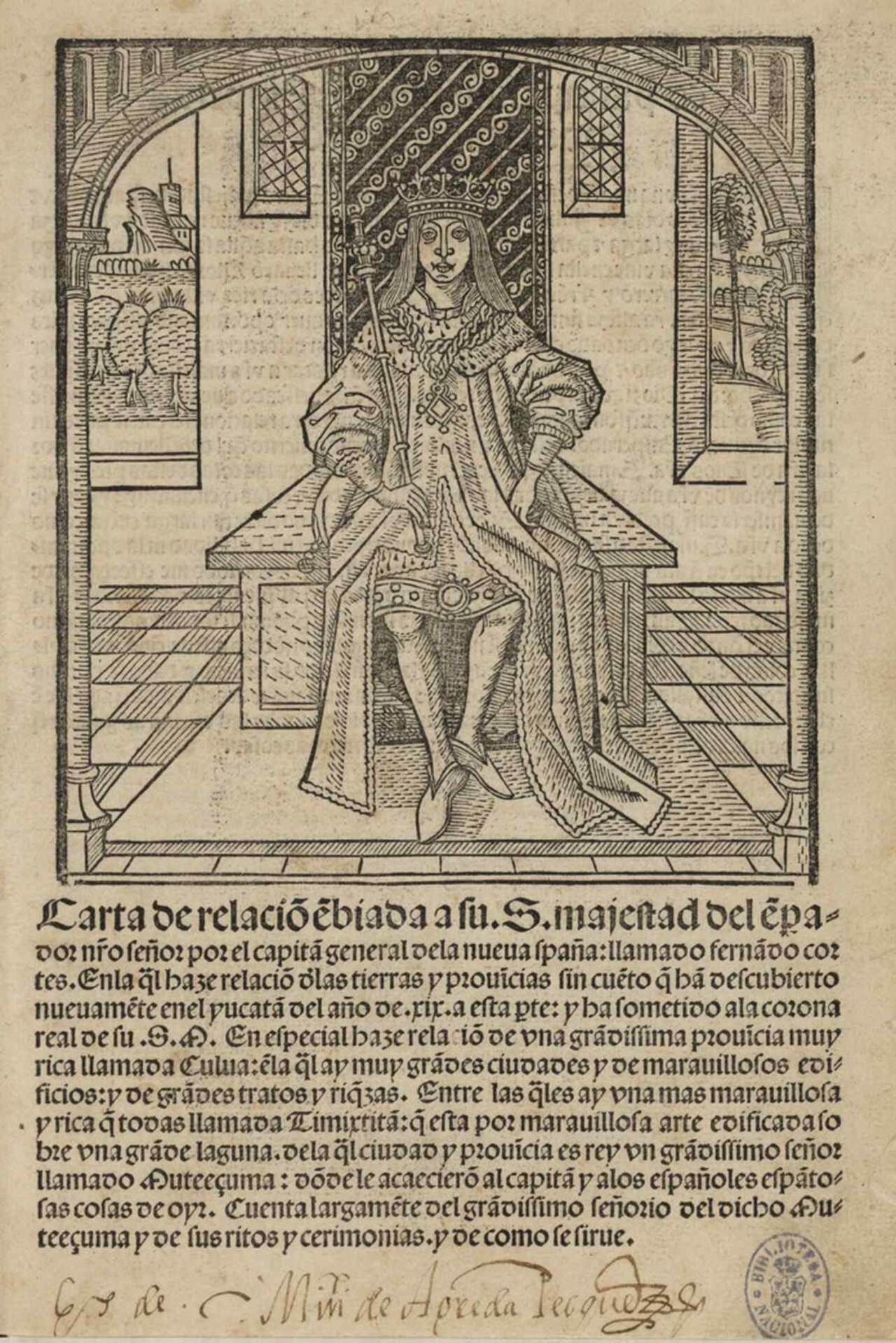
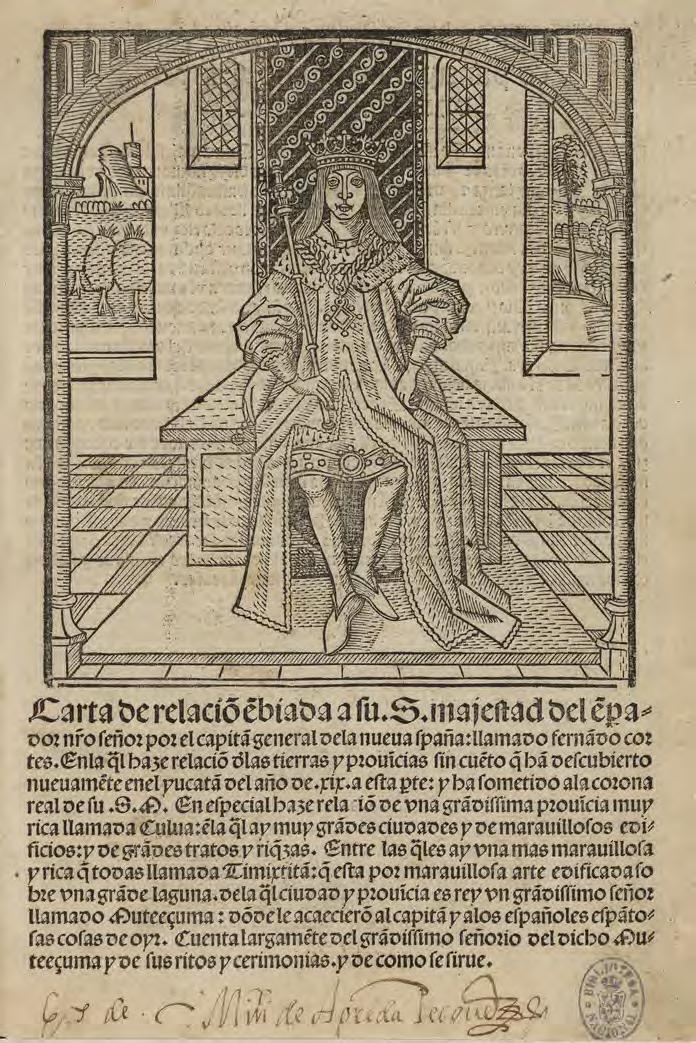
Woodcut title page of a 1522 Spanish printed letter. A seated, crowned figure holds a scepter in an arched room with checkered floor, flanked by a city scene and a landscape. Below is black-letter Spanish text beginning 'Carta de relación enviada a su S. majestad del emperador nuestro señor por el capitán general de la nueva España, llamado Fernando Cortés', with a handwritten signature at the bottom.Letter

Primary source

Second Letter to Charles V

Hernán Cortés · 1520 (printed 1522)

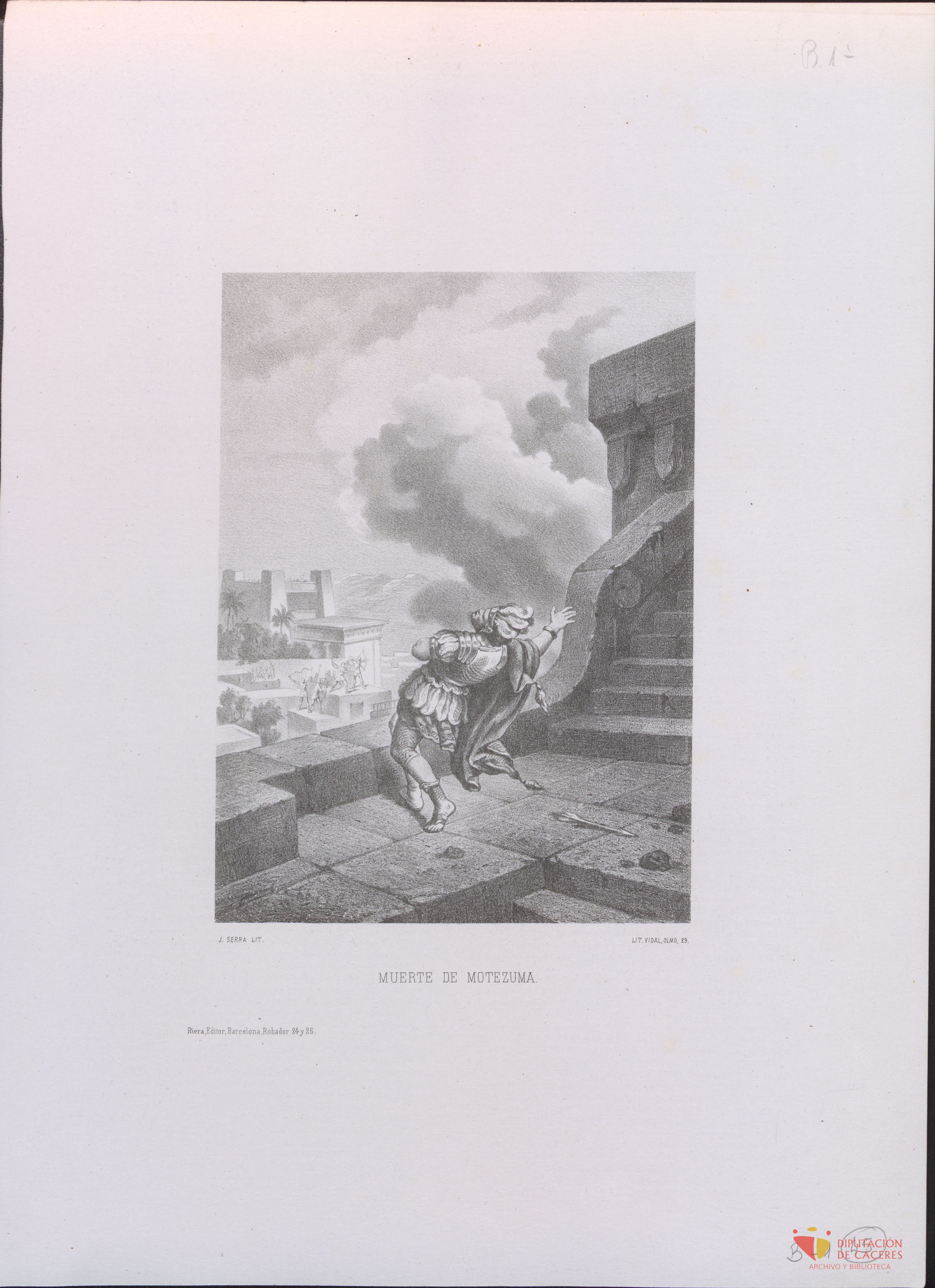
Black-and-white lithograph titled 'Muerte de Motezuma' showing two figures on a stone terrace of a stepped temple. One figure in a cloak reaches out toward a tall stone wall, while a smaller figure crouches beside him. Smoke rises behind, and a city with towers and palm trees lies in the distance. An arrow lies on the stones.Painting

Secondary source

Recreation of Moctezuma's Death

Rafael del Castillo de la Cuesta · 1880

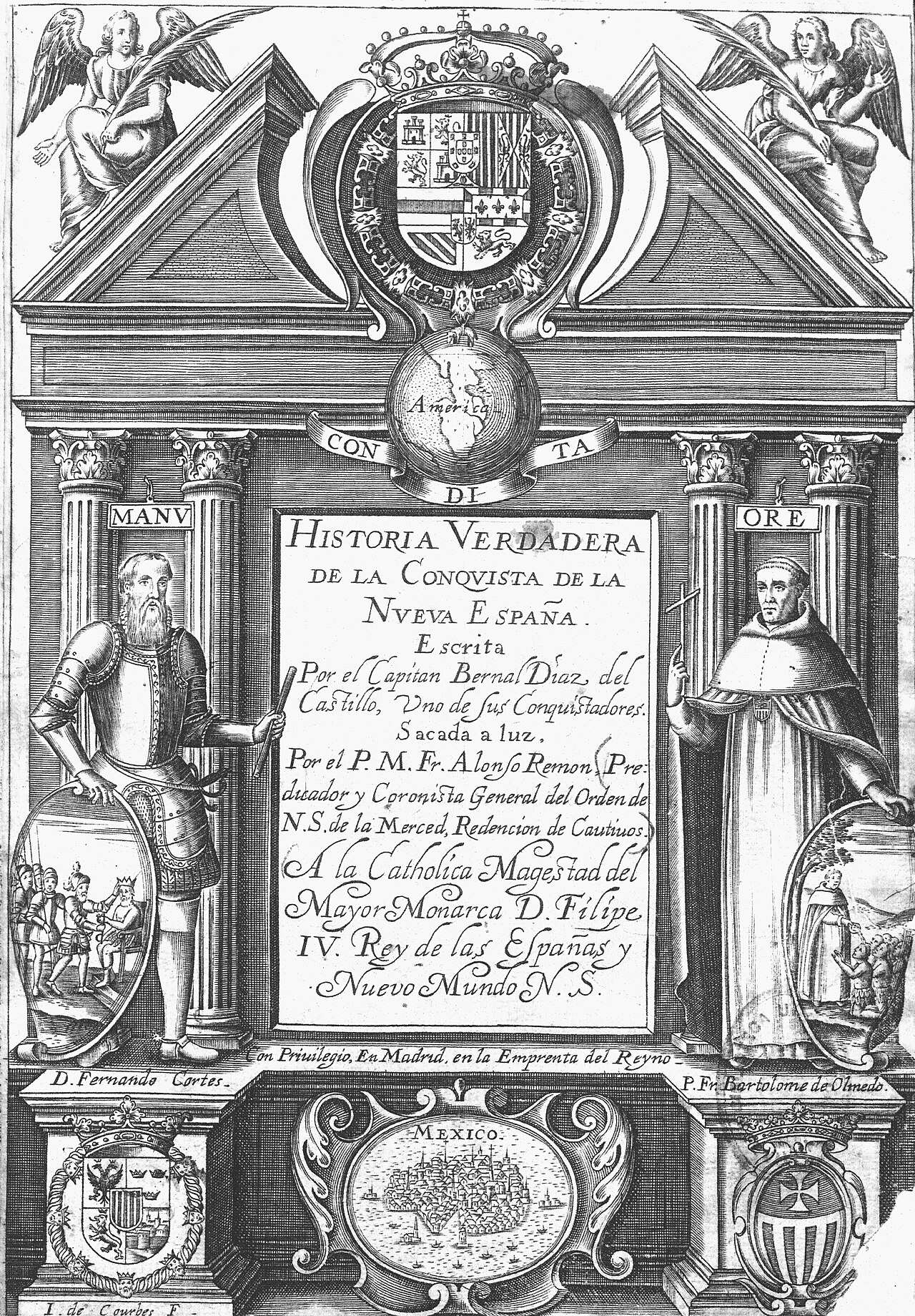
Engraved title page of the 1632 Madrid edition of Historia verdadera de la conquista de la Nueva España. Central text panel lists Bernal Díaz del Castillo and Fray Alonso Remón. Flanked by armored Hernán Cortés and a robed friar with a cross, a crest at top, and a Mexico City view at bottom.Book

Primary source

Historia verdadera de la conquista de la Nueva España

Bernal Díaz del Castillo · 1568

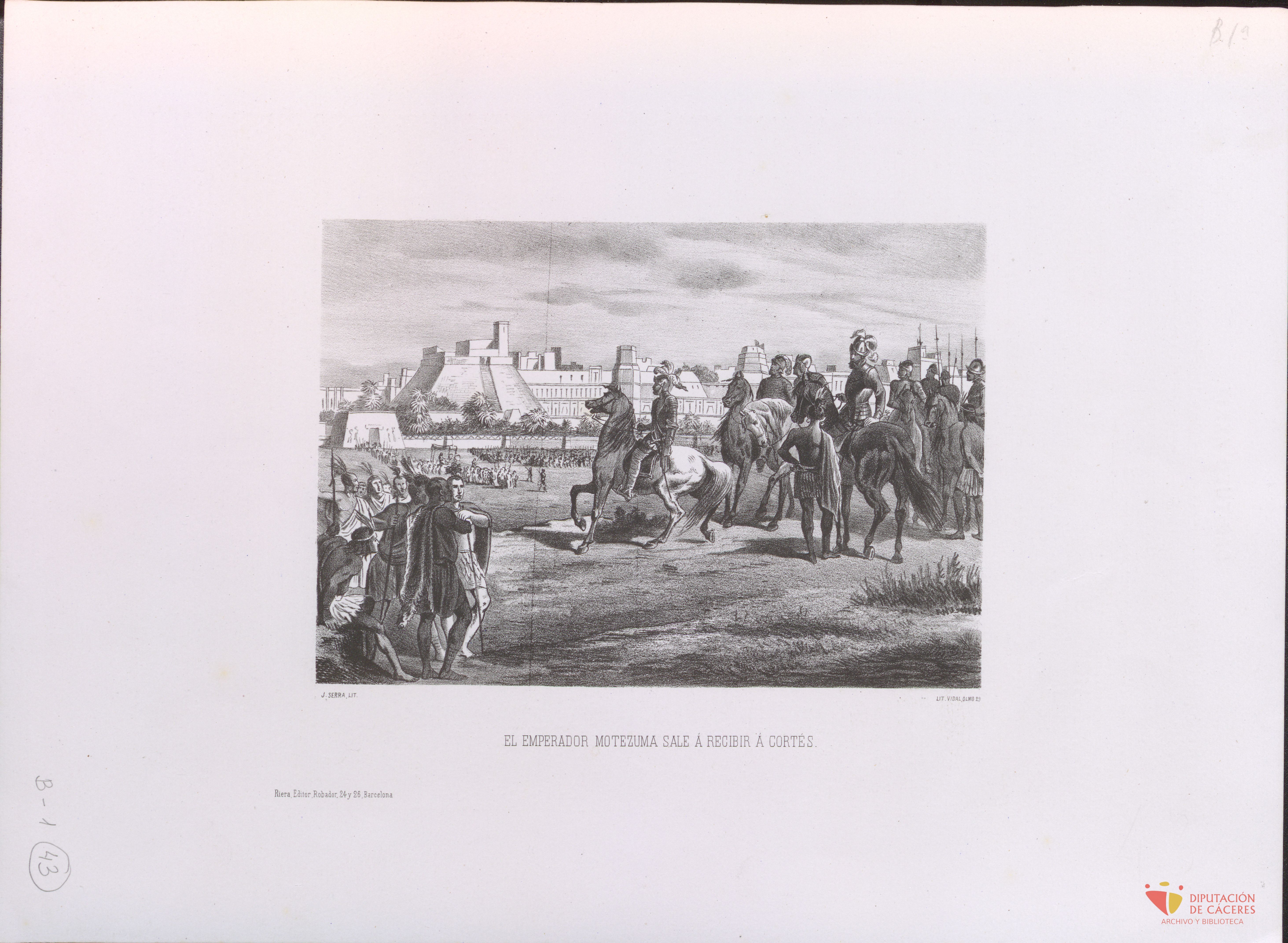
Black-and-white lithograph titled 'El emperador Motezuma sale á recibir á Cortés' showing mounted Spanish conquistadors in plumed helmets and armor on horseback at right, and Indigenous men with spears and shields at left, before a stepped pyramid and palace-like buildings under a cloudy sky. Printed credit reads Riera Editor, Barcelona, and J. Serra, Lit.Painting

Secondary source

Moctezuma Receives Cortés in Tenochtitlan

Rafael del Castillo de la Cuesta · 1880

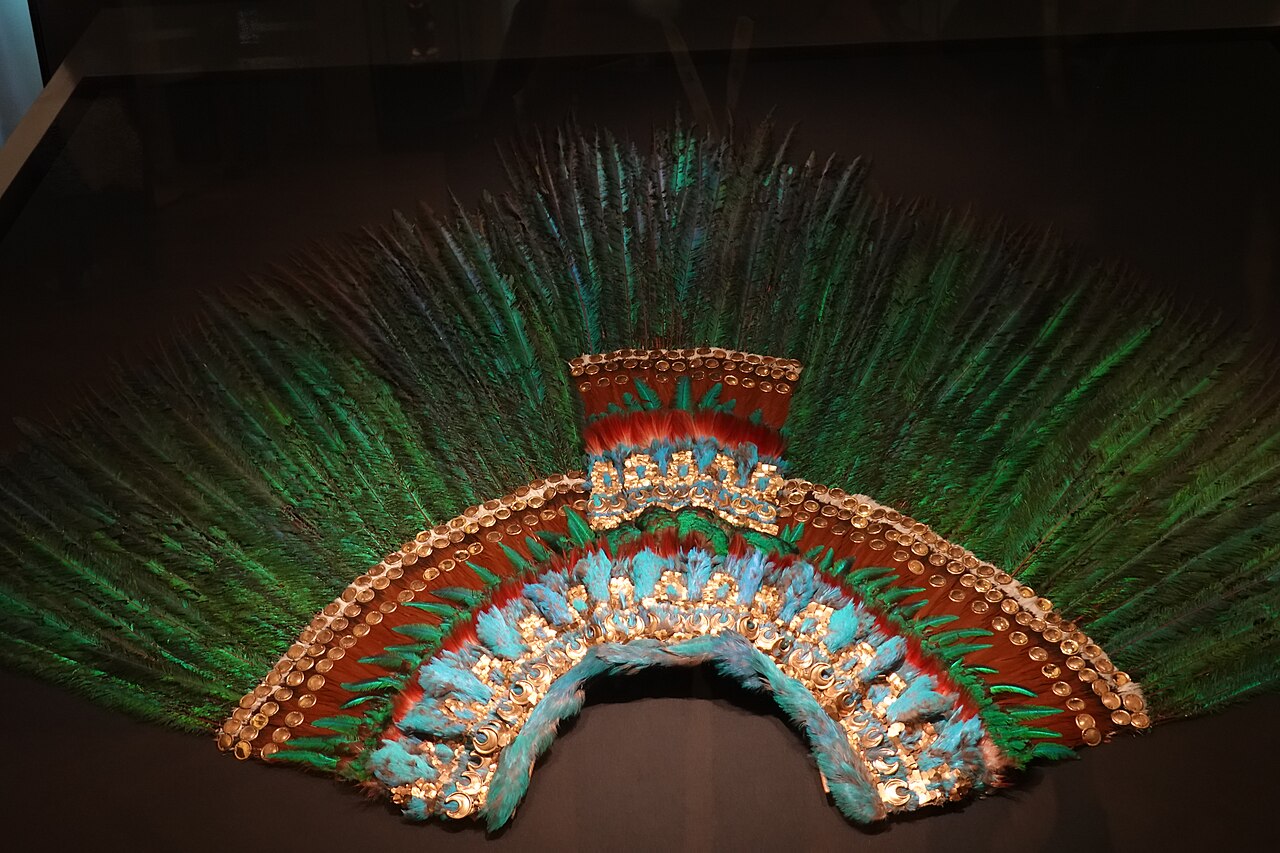
A feather headdress fan displayed in a glass case. Green quetzal-like feathers spread in a wide arc behind a central fan of red-brown backing covered with gold discs, with turquoise-blue feathers and gold ornaments along the lower curve.Artifact

Secondary source

Montezuma's Headdress

Unknown Mexica artisan · c. 16th century

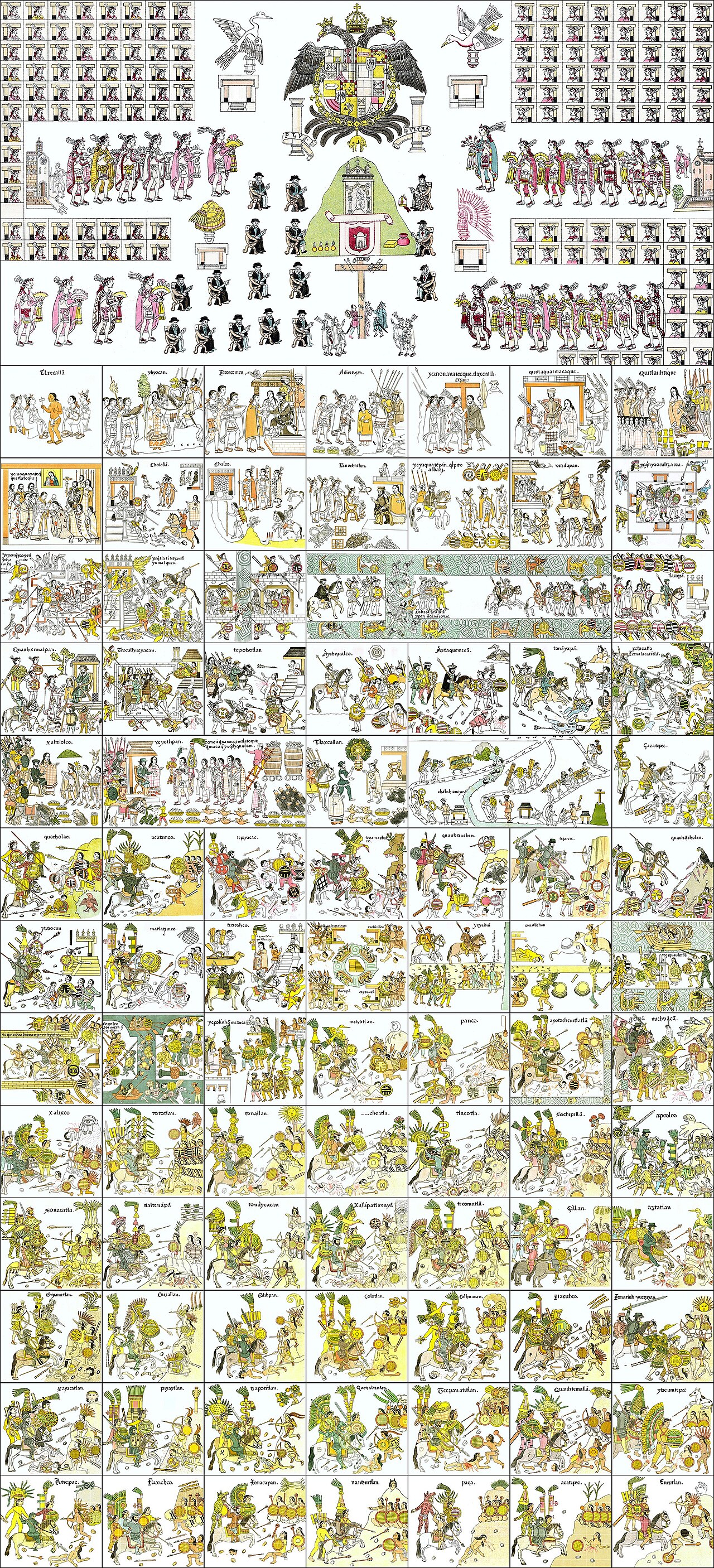
Full reconstruction of the Lienzo de Tlaxcala, a colonial-era painted cloth with a grid of colored panels showing Spanish and indigenous figures, a coat of arms at top center, mounted warriors, and town glyphs with labels.Painting

Secondary source

Lienzo de Tlaxcala

Unknown Tlaxcalan artists · 1552 (lost original); reconstruction 2010 from 1892 lithographs

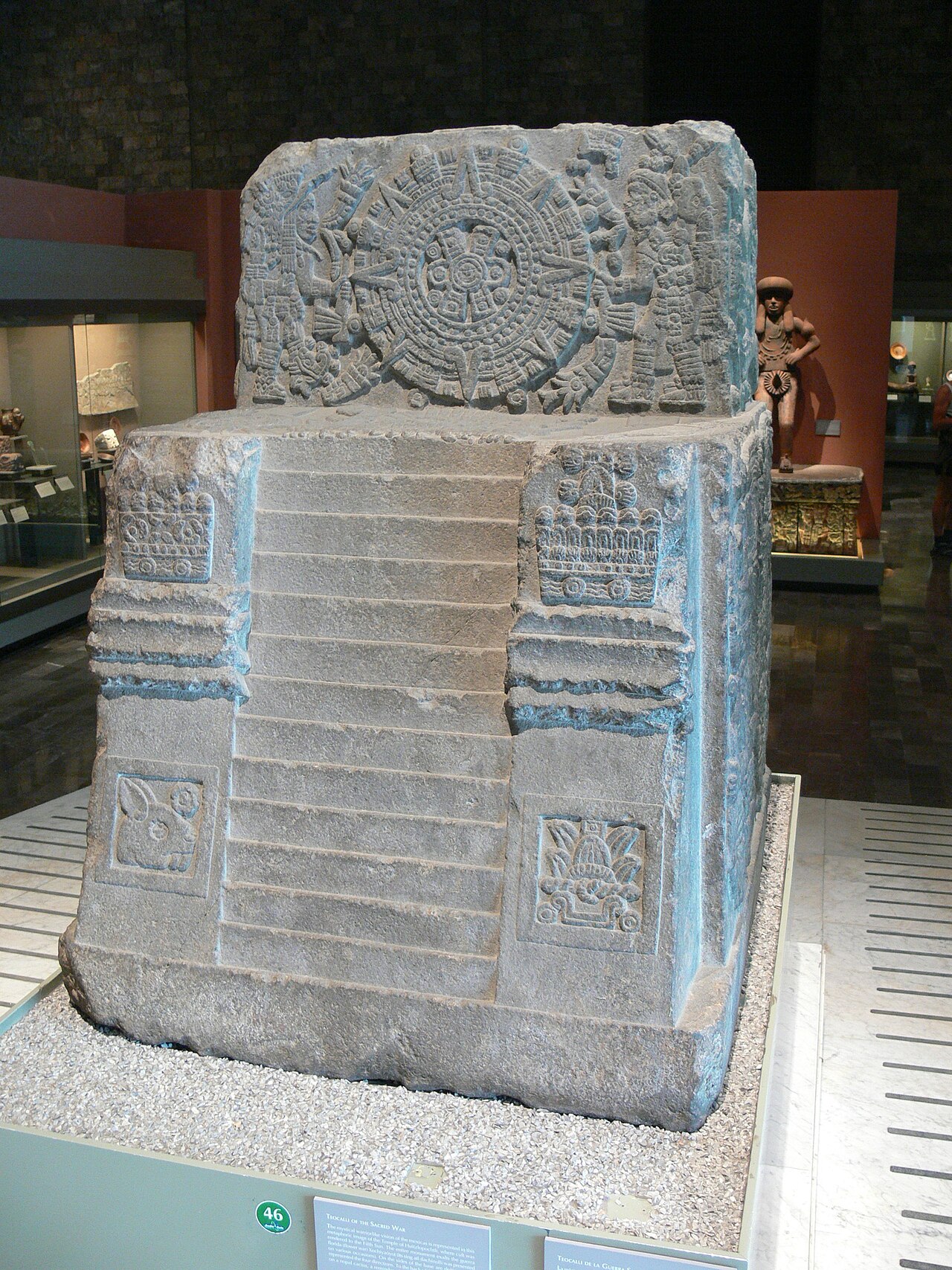
Photo of a large dark grey volcanic stone sculpture in a museum. It is a stepped temple-shaped block with a central staircase, carved side panels, and a carved circular calendar-like relief on the upper back slab. A reddish statue stands in the background.Sculpture

Primary source

Teocalli of the Sacred War

Mexica sculptors · c. 1507

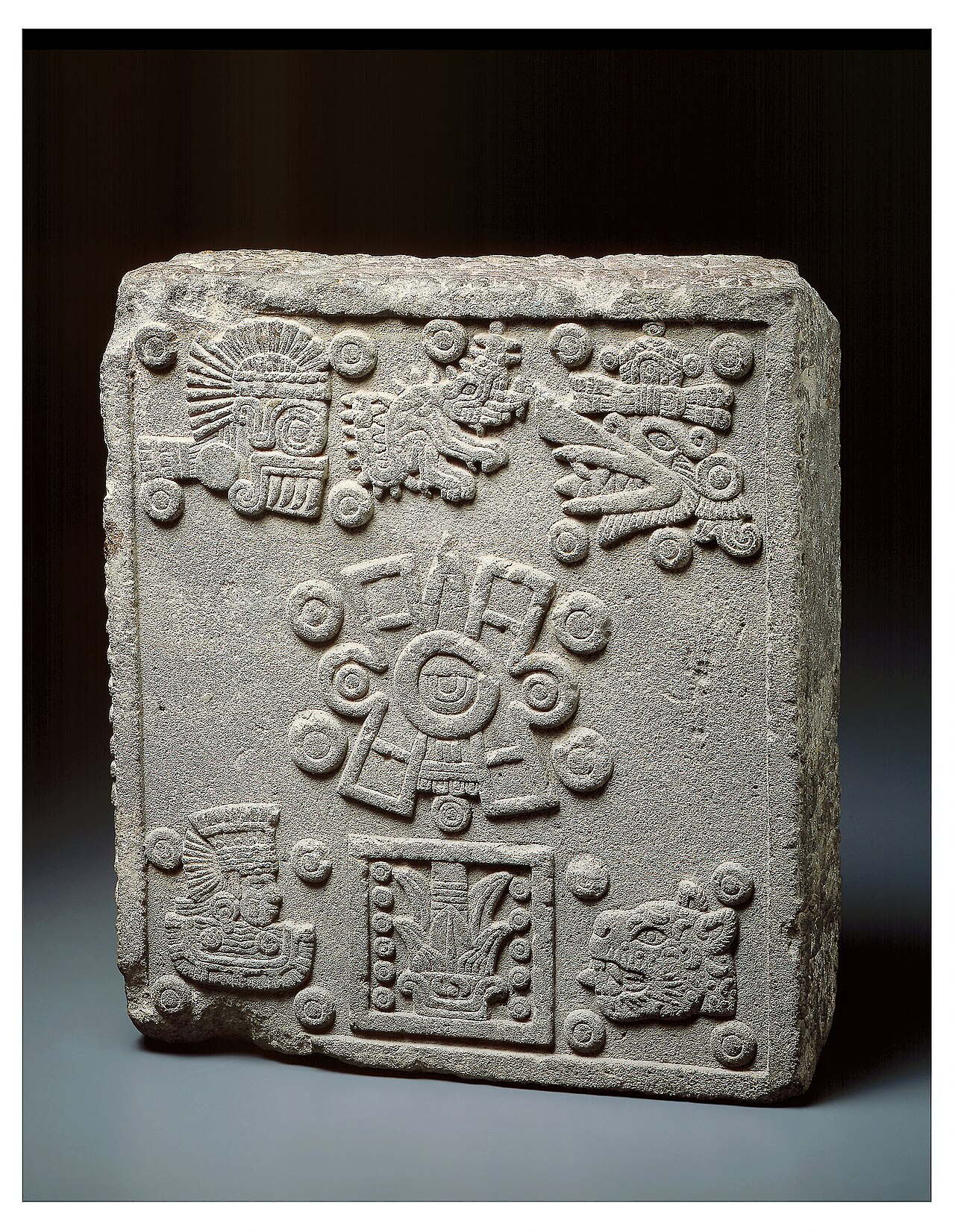
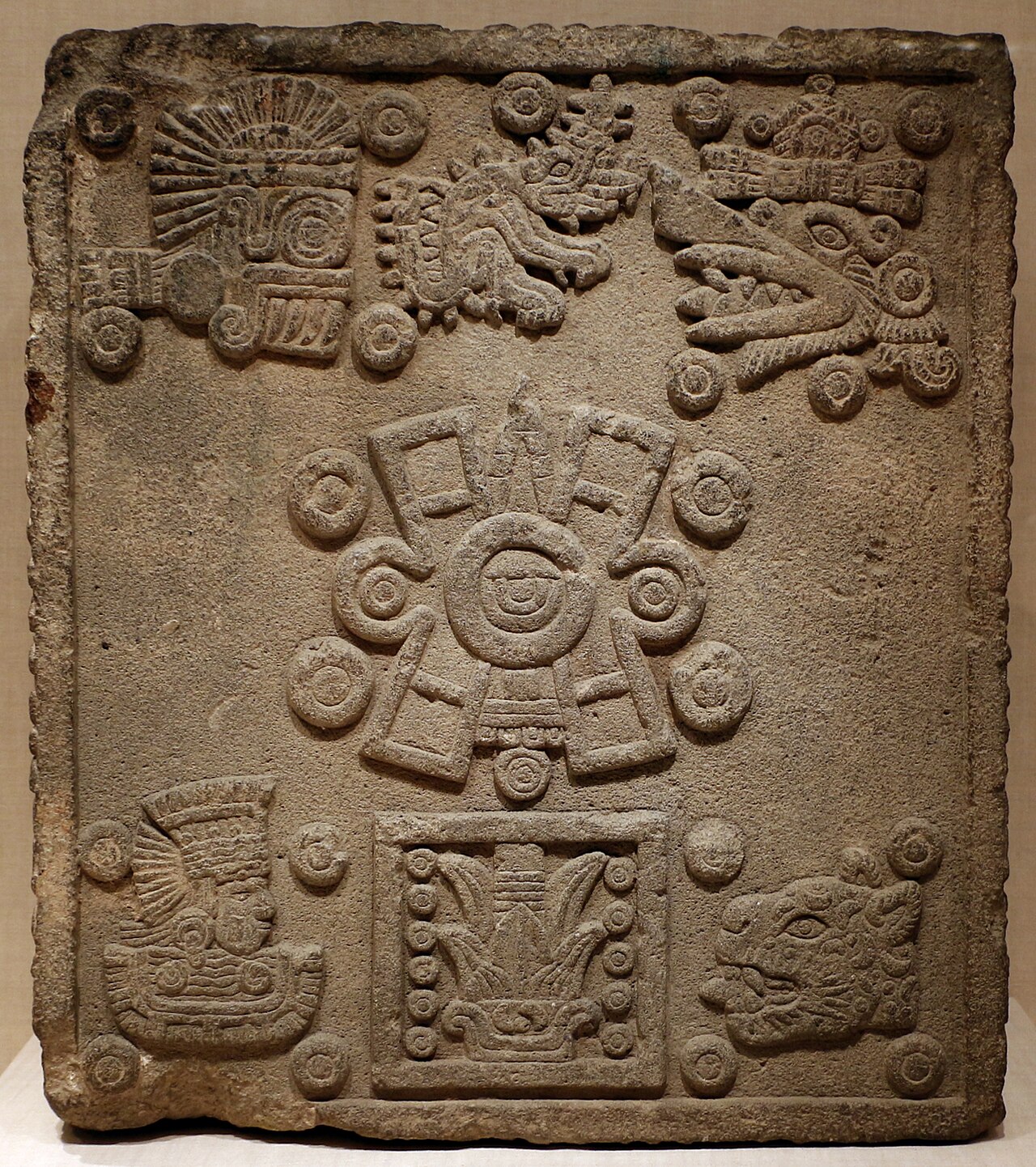
Photograph of a large, nearly square grey basalt stone carved in low relief. Carved figures and glyphs include a central circular face with radiating rays, four smaller face and creature panels in the corners, and a framed rectangular panel at the bottom. Dark background.Sculpture

Primary source

Stone of the Five Suns

Mexica sculptors · 1503

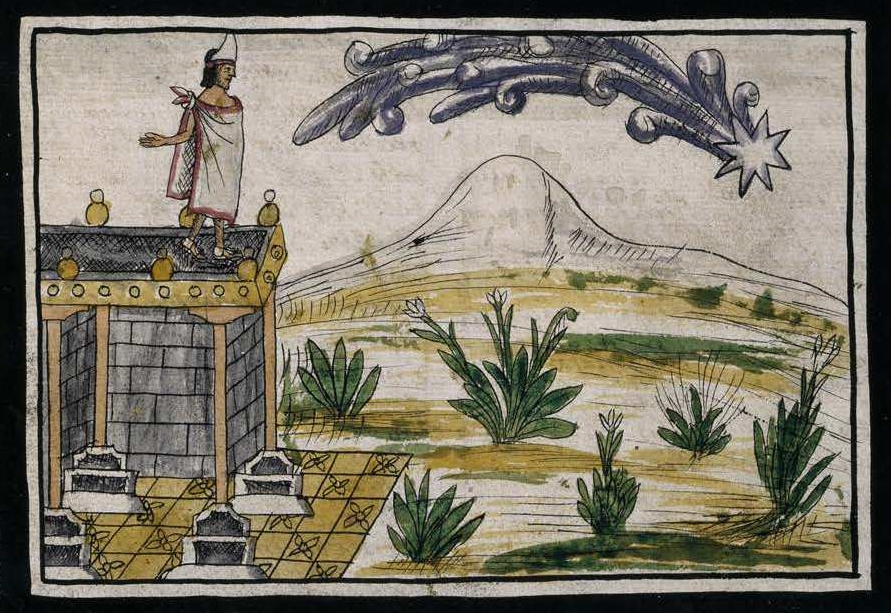
Painted manuscript page with a robed figure wearing a headdress, standing on a stone platform at the top left. A long, curling blue-purple comet with a star-shaped head streaks across the sky. Below are a mountain, green agave plants, and a tiled ground with stone steps.Book

Secondary source

Historia de las Indias de Nueva España (Codex Durán)

Diego Durán · c. 1581

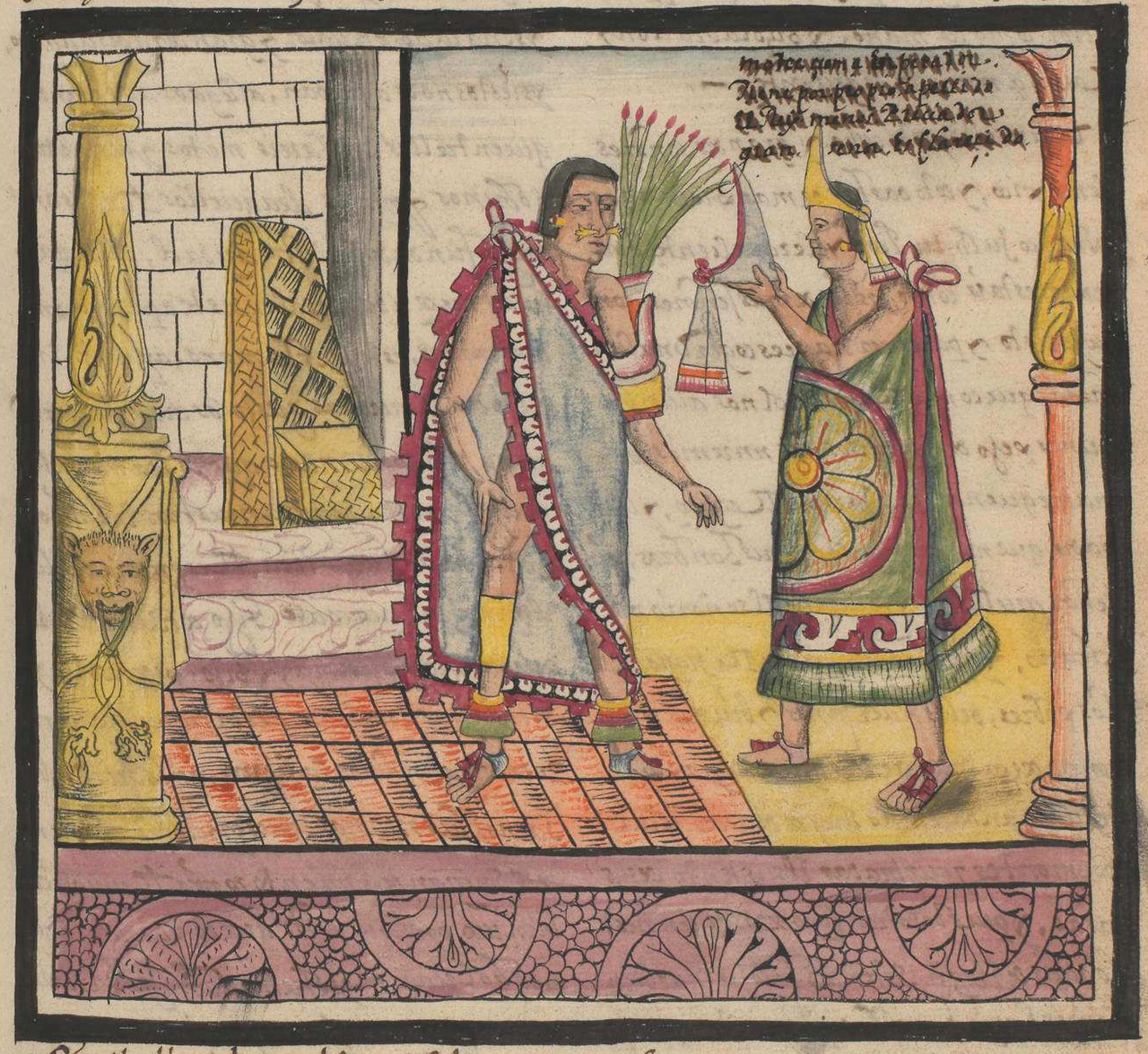
Painted manuscript illustration of a coronation scene: a standing figure in a blue robe with red border and yellow leg bands faces a figure in a green robe with a flower motif and a tall yellow headdress, who holds out a bundle of feathered reeds. Yellow throne-like seat with woven pattern and a carved stone pillar stand behind them on a checkered floor. Spanish text appears at top right.Painting

Secondary source

Coronación de Moctezuma II, folio 152

Unknown artist, in a manuscript by Diego Durán · c. 1581

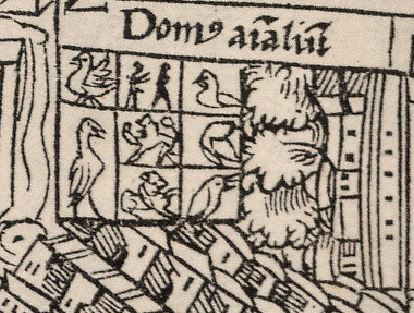
Detail of a 1524 woodcut map showing the label 'Domus animalium' in a banner above a grid of small cells, each holding a drawn animal such as birds, a deer-like creature, and a dog-like animal, beside a large tree-like form and rows of rooftops below.Artifact

Secondary source

Domus animalium, Map of Tenochtitlan

Hernán Cortés / F. Peypus · 1524

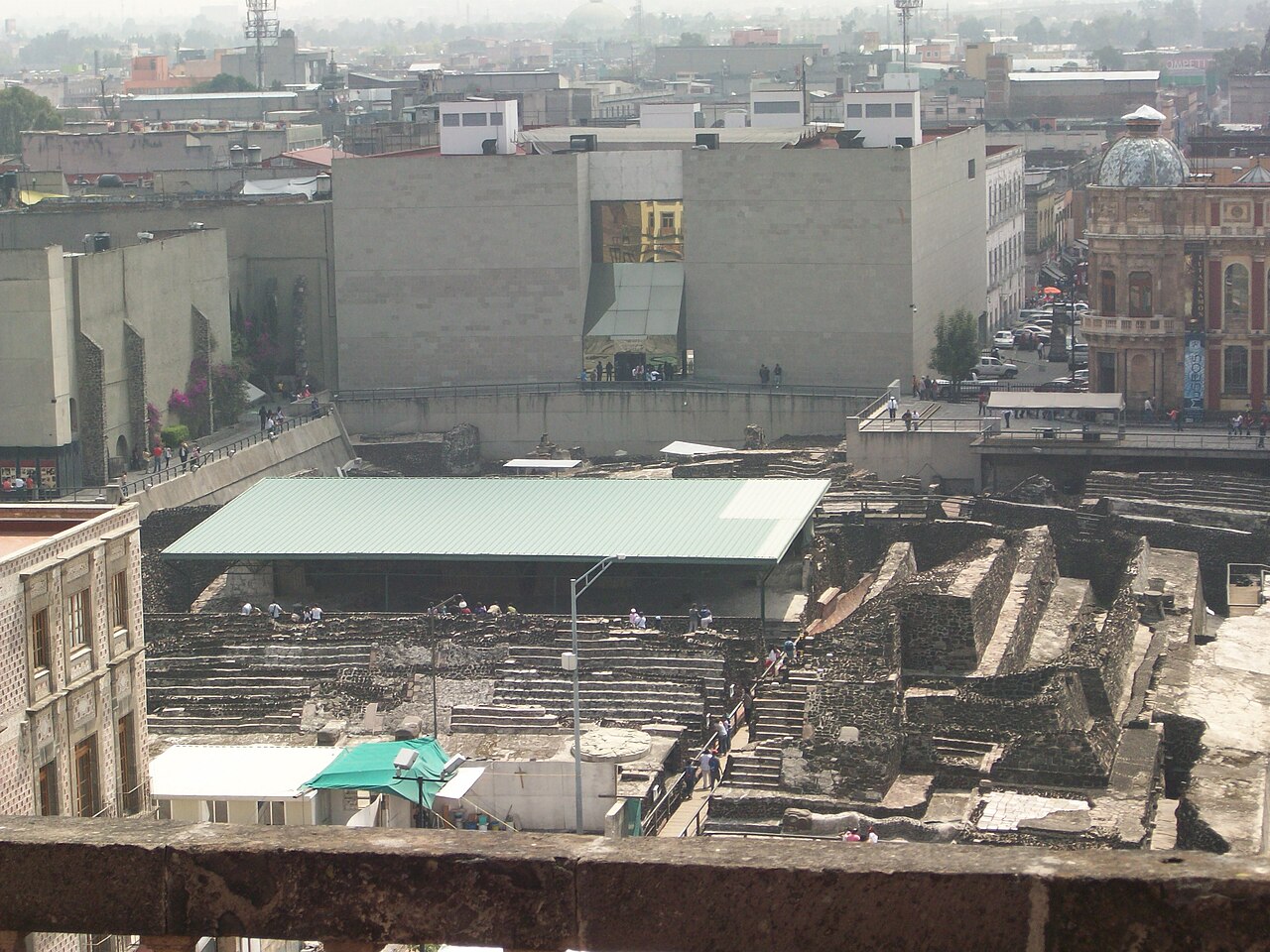
Aerial view over Mexico City of the Templo Mayor archaeological site: stepped stone ruins with a green-roofed shelter over part of the excavation, surrounded by modern buildings, a street and a rooftop railing in the foreground.Artifact

Primary source

Templo Mayor

1325

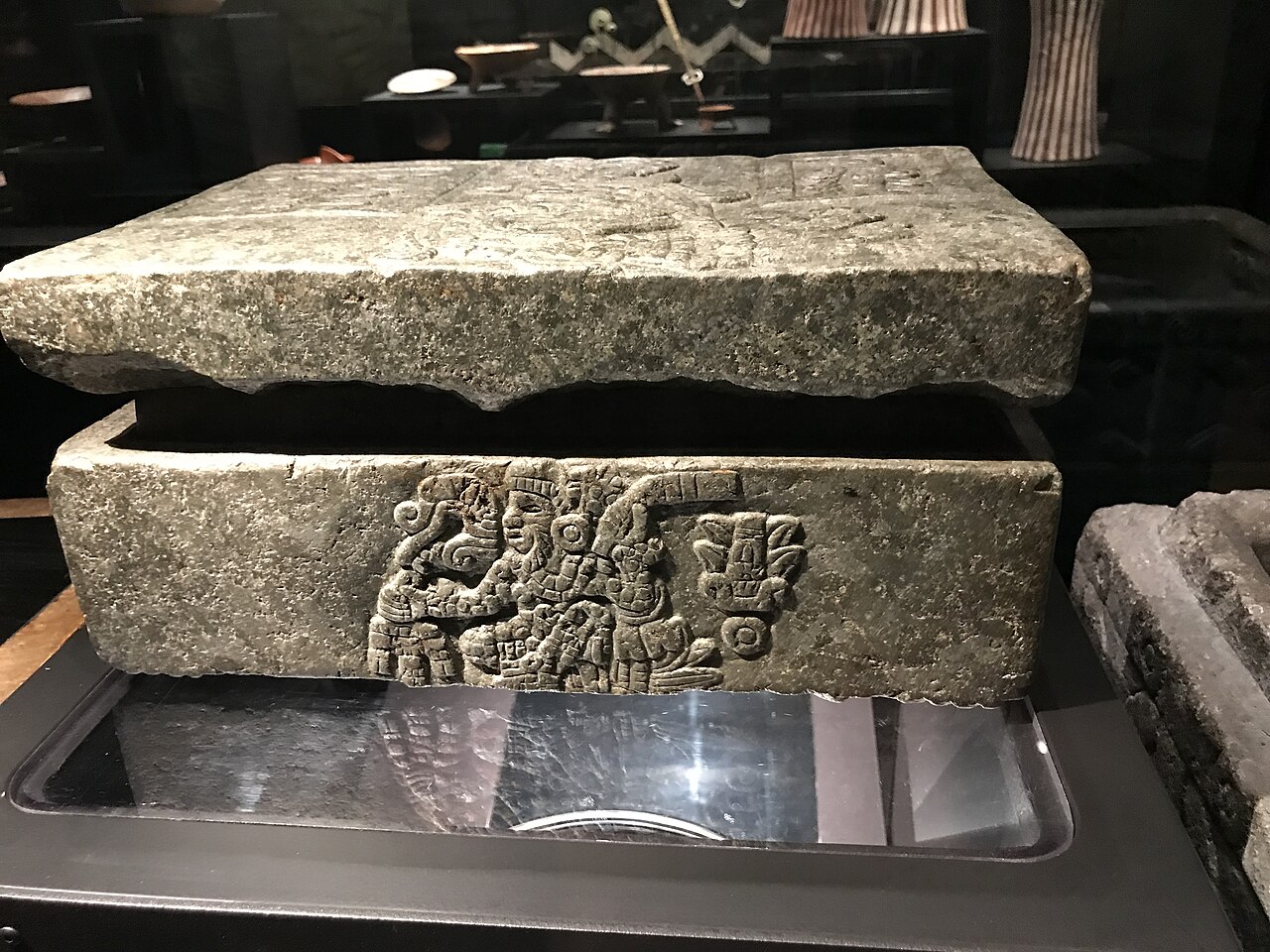
A grey-green stone chest with a lid resting slightly offset on top of a rectangular base. The side of the base has a carved relief of figures and glyph-like motifs. The chest sits on a dark display base in a museum case, with other objects blurred in the background.Artifact

Primary source

Stone Sacrificial Chest of Moctezuma II

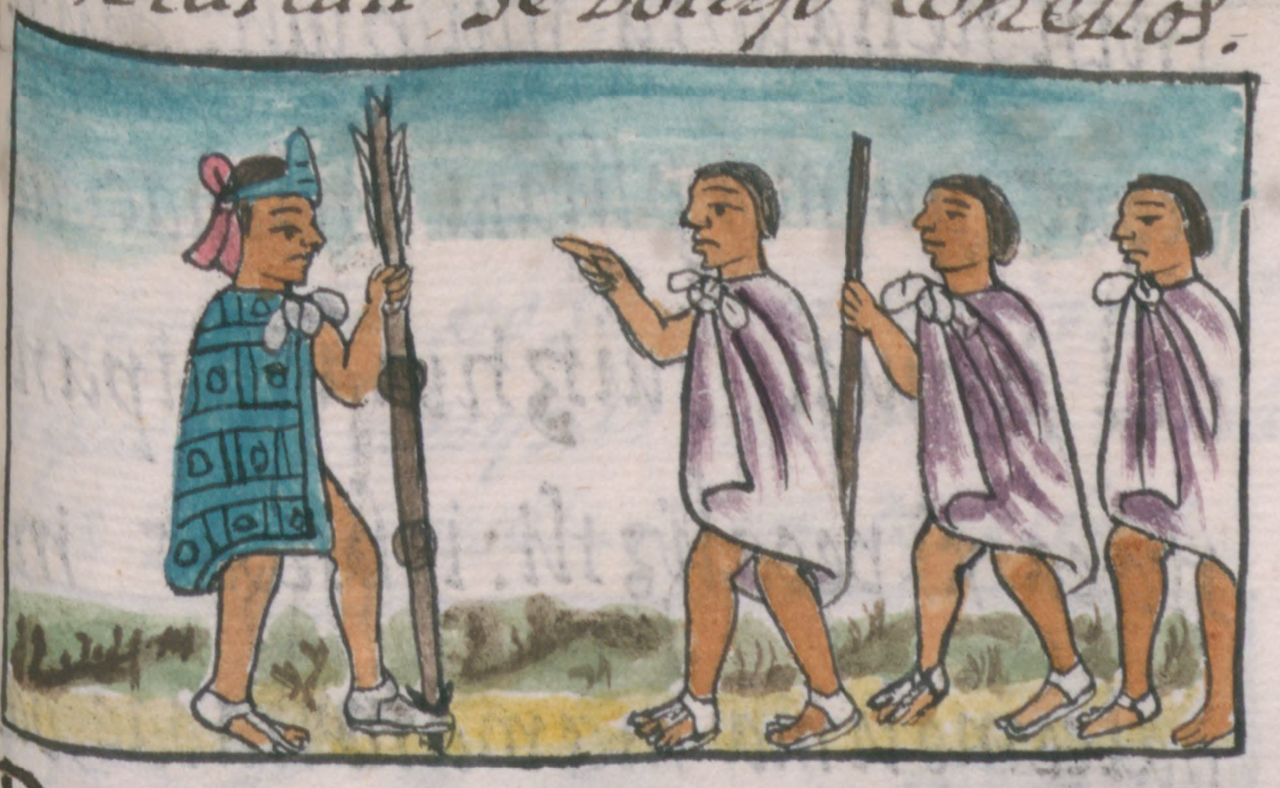
Painted manuscript illustration in Florentine Codex style: a young Aztec warrior with a feathered-topped headband and turquoise cloak holds a bundled spear, facing three men in lavender capes who walk toward him in a grassy landscape.Painting

Secondary source

Prince Moctezuma Arriving to Rescue the Besieged Merchants at Ayotlan

Unknown artist, manuscript compiled by Bernardino de Sahagún · 16th century

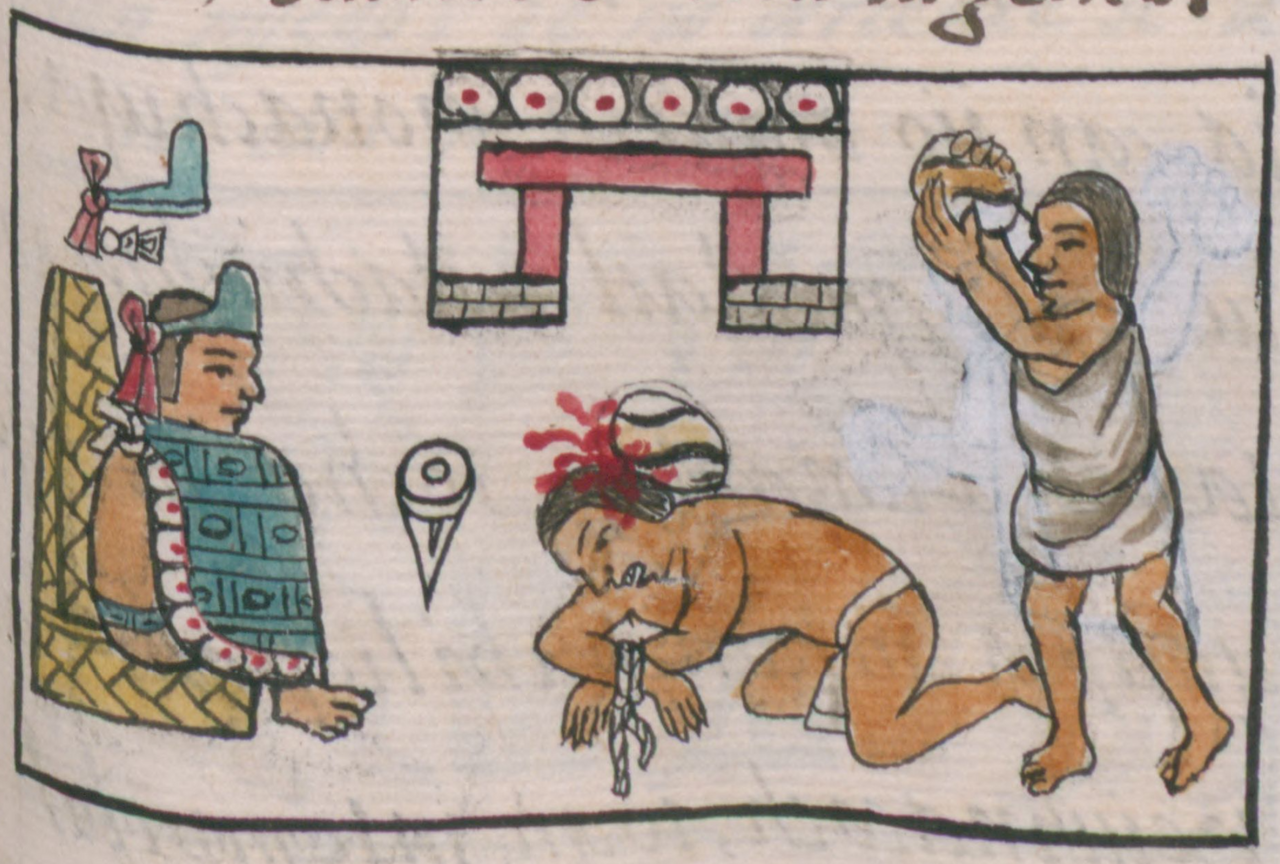
Painted manuscript illustration in colored ink: at left, a seated figure in a teal and white garment and headdress sits on a yellow patterned throne, watching. Center, a kneeling bound man bleeds from the head as a man in a white cloth stands behind him, raising an object. A stone platform structure with red beams is above.Painting

Secondary source

Moctezuma II Observing the Execution of Huitznahuatl Ecamalacotl

Unknown artist, manuscript compiled by Bernardino de Sahagún · 16th century

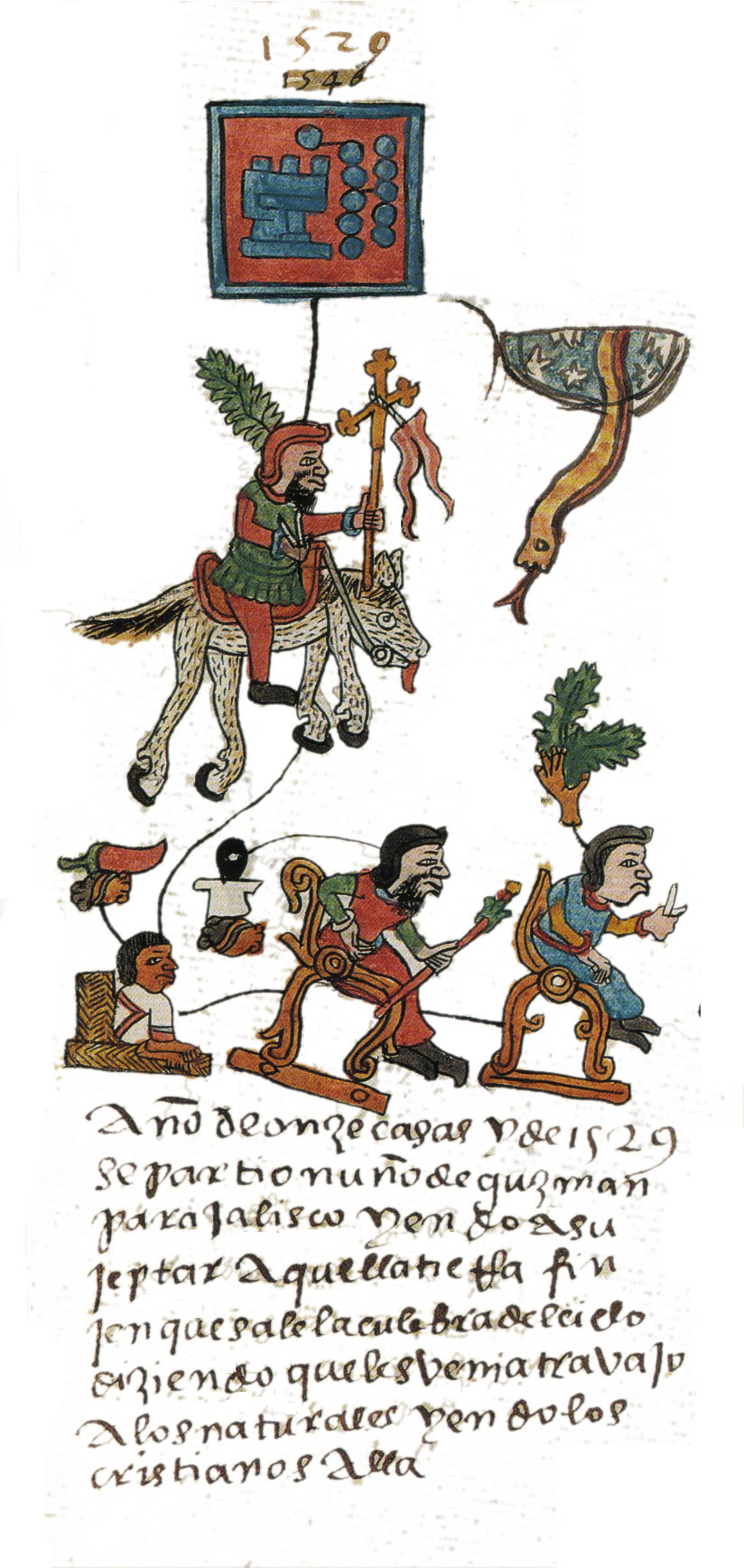
Page from a painted Mexican codex showing a Spanish rider on a horse with a cross-topped staff, a figure with a sword-like object, a seated indigenous figure, and a seated figure pointing. Above is a date glyph of 1529 and a 1546 notation. Below is handwritten Spanish text describing Nuño de Guzmán's expedition to Jalisco.Document

Secondary source

Codex Telleriano-Remensis

16th century

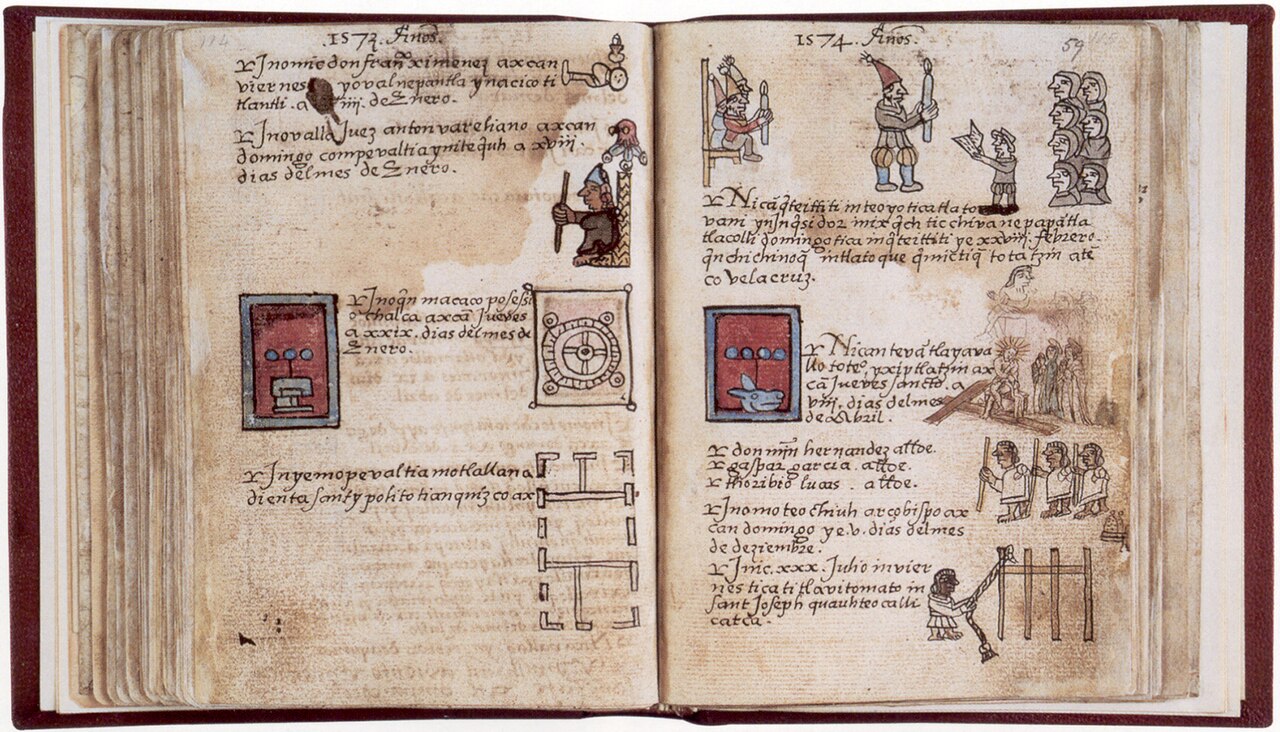
Open pages of a bound manuscript with European-style Spanish text in brown ink, dated 1574 at the top, alongside colored pictographic illustrations of figures, glyphs, and scenes, on aged paper.Document

Secondary source

Aubin Codex

1576

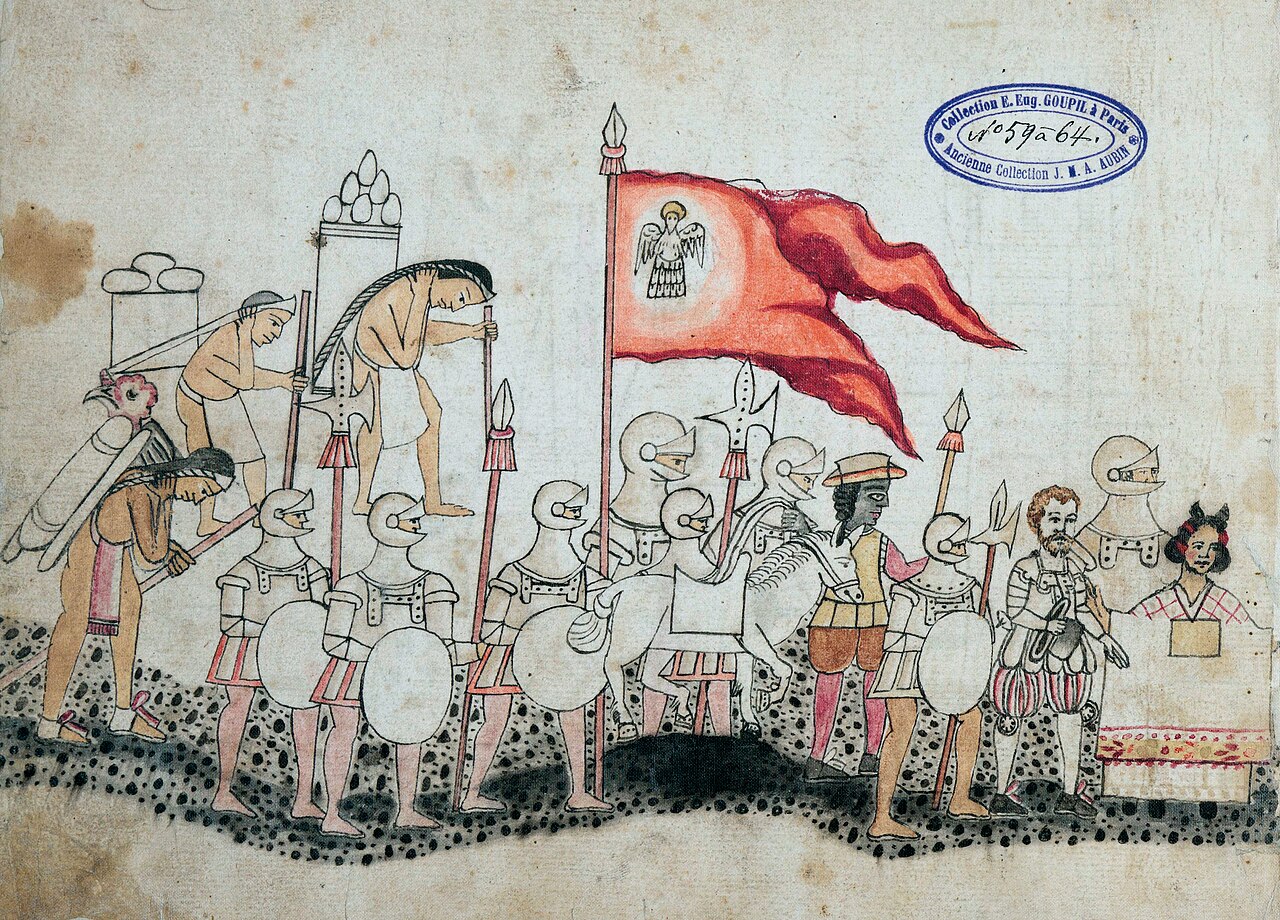
Painted page in a colonial-era Mesoamerican style showing a procession of armored Spanish soldiers with helmets, shields and spears, a red banner bearing a winged figure, and indigenous figures with feathered headdresses at left. A blue oval library stamp appears at top right.Document

Secondary source

Codex Azcatitlan

16th century

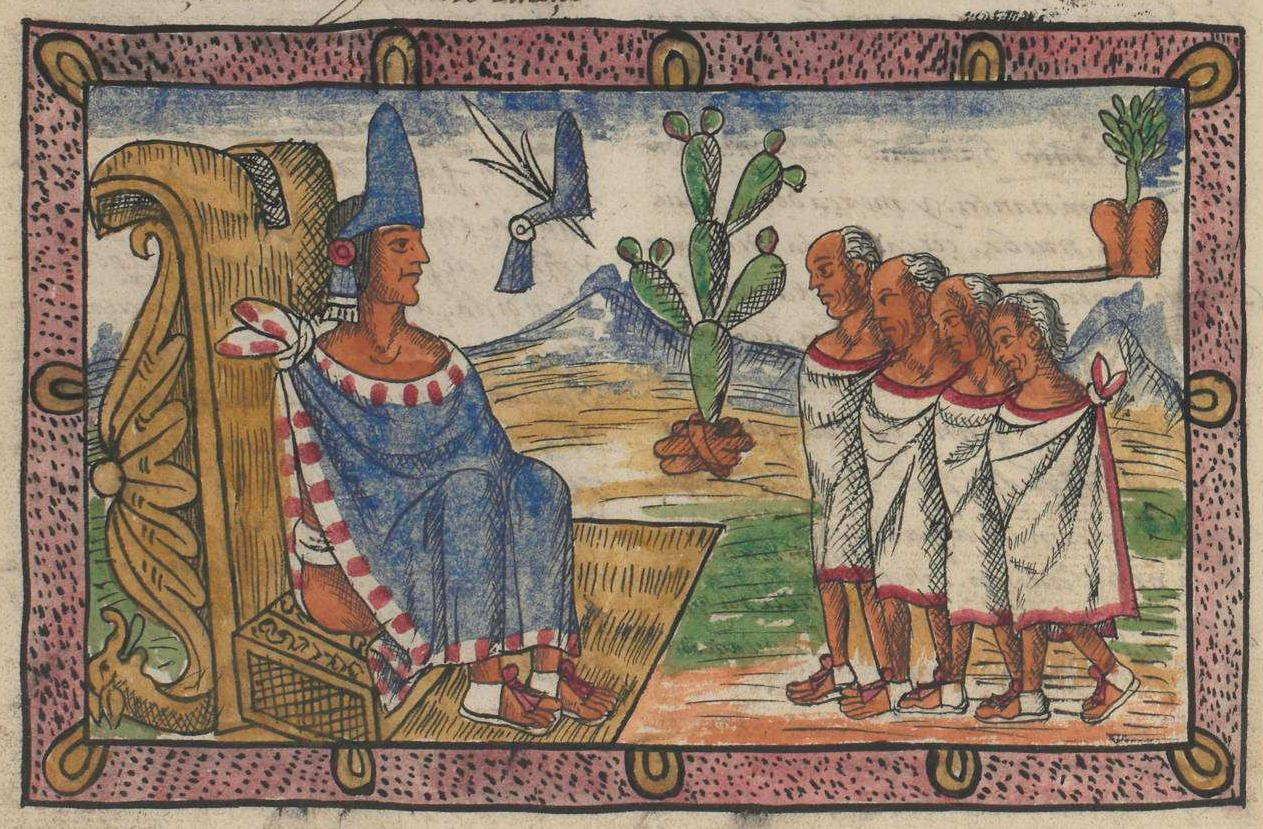
Painted manuscript illustration in a pink dotted border. A seated ruler in a blue robe and tall blue headdress sits on a carved wooden throne at left, facing four standing men with white cloaks and red trim at right. A cactus, mountains, and a bird appear in the background.Painting

Secondary source

Moctezuma II Receiving an Embassy from Huejotzingo

Diego Durán (text); unknown artist (illustration) · c. 1581

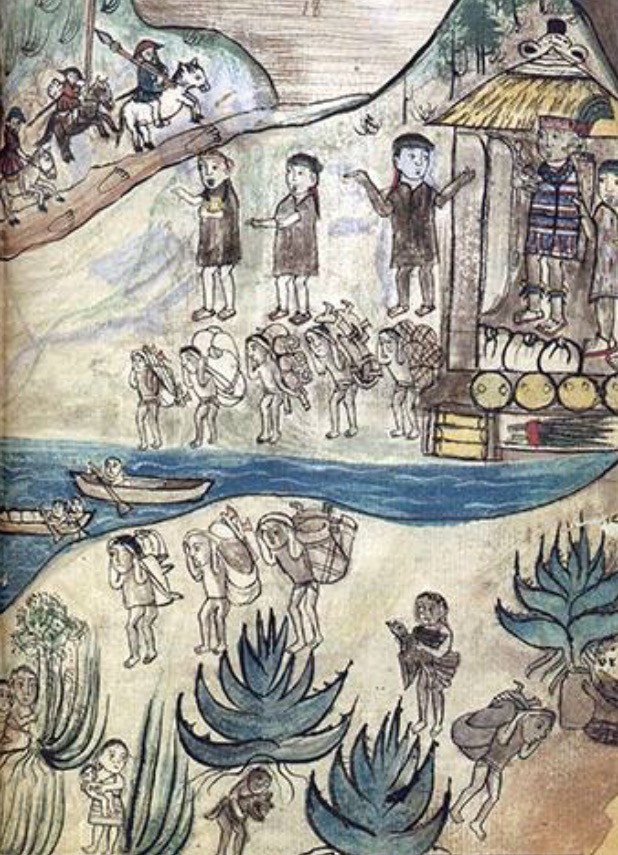
Painted page from a colonial manuscript showing Spanish horsemen with lances at top left, Spanish-dressed figures standing in a row, a thatched building with stacked goods at right, indigenous porters with burdens crossing a river, and agave plants and figures in the foreground.Book

Secondary source

Relation of Michoacan

Jerónimo de Alcalá · 1540

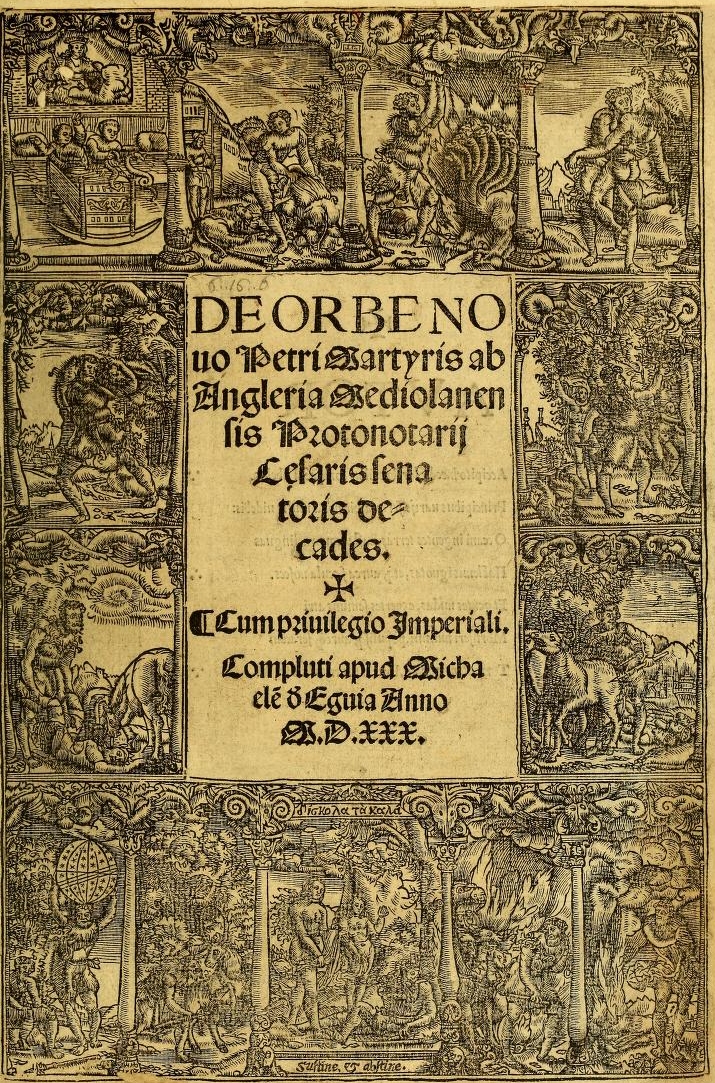
Illustrated title page of Peter Martyr's 'De orbe novo decades', printed in Alcalá 1530. Central printed text in a cream panel, framed by woodcut borders with scenes of figures, animals, and architecture.Book

Secondary source

Decades of the New World

Peter Martyr d'Anghiera · 1530 (complete edition)

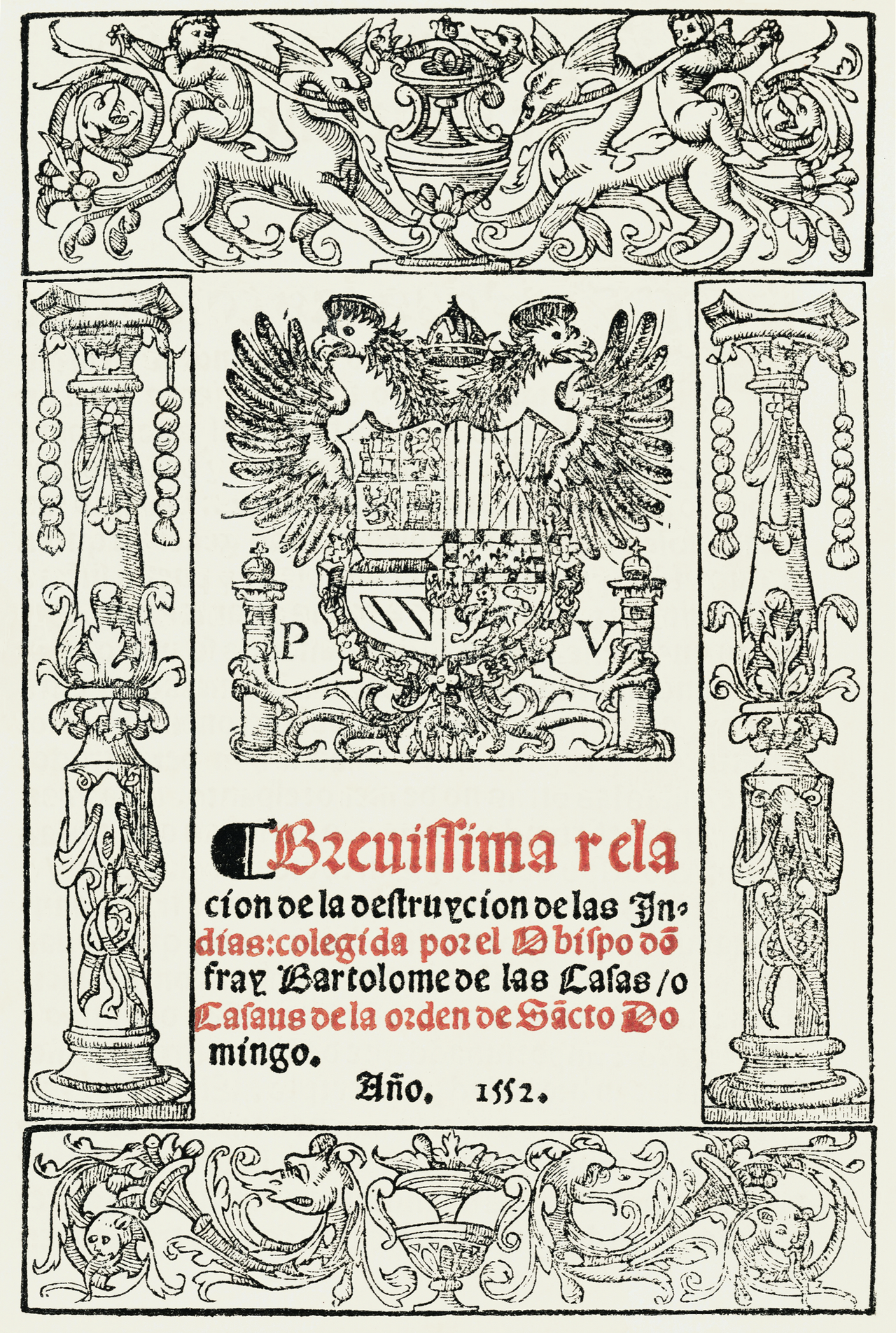
Title page of the 1552 Seville edition of Brevísima relación de la destrucción de las Indias, in black and red letterpress with a woodcut border, a central coat of arms with two eagles, and columns on each side. Text reads Brevísima relación, by Bartolomé de las Casas, Año 1552.Book

Secondary source

A Short Account of the Destruction of the Indies

Bartolomé de las Casas · 1552

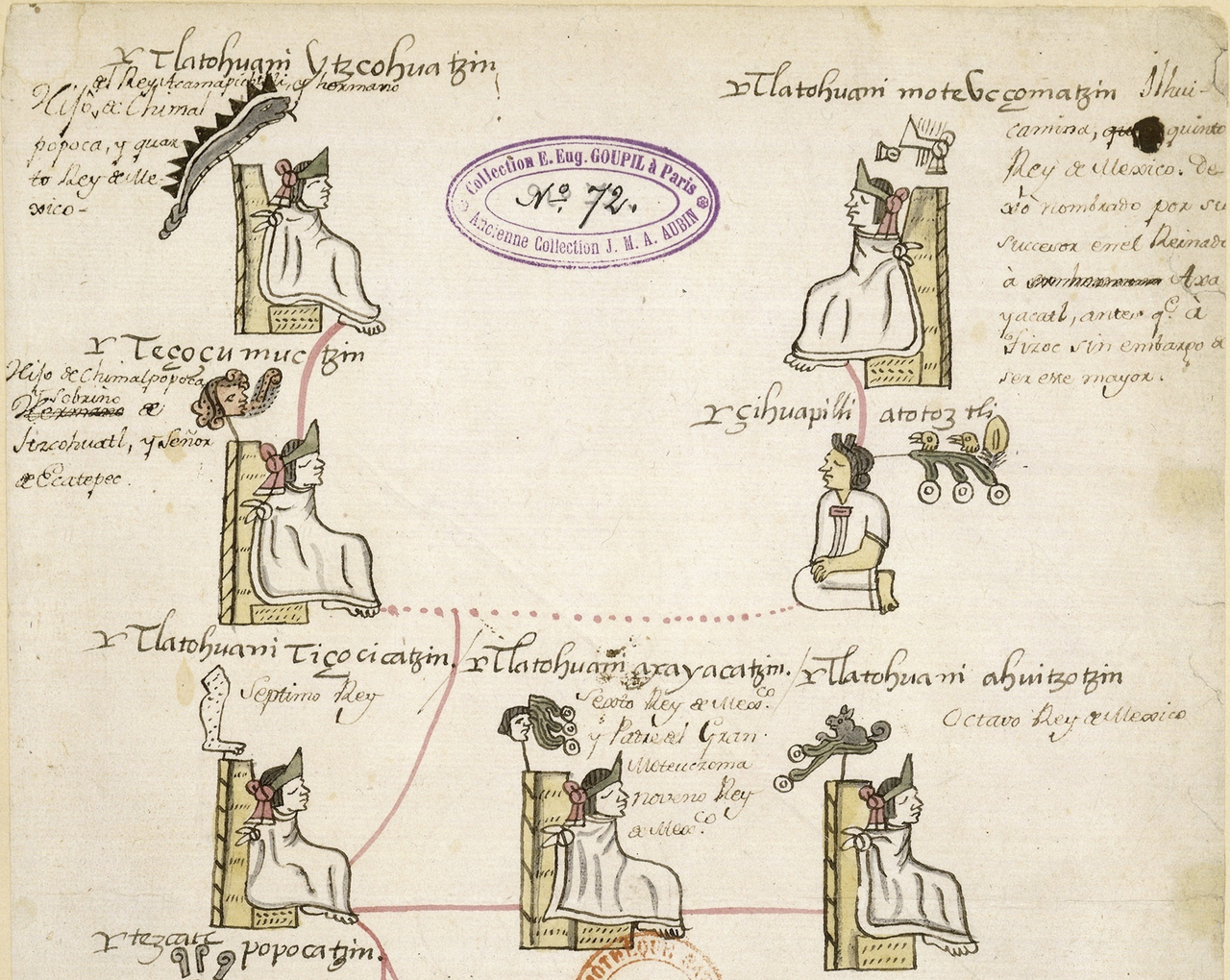
Pages of a painted genealogical manuscript showing Mexica rulers as seated figures in tall stone-like frames, with Nahuatl glosses in brown ink, red and purple annotations, and an oval library stamp reading No. 72 near the top center.Document

Secondary source

Genealogy of Don Pedro Dionisio

1566

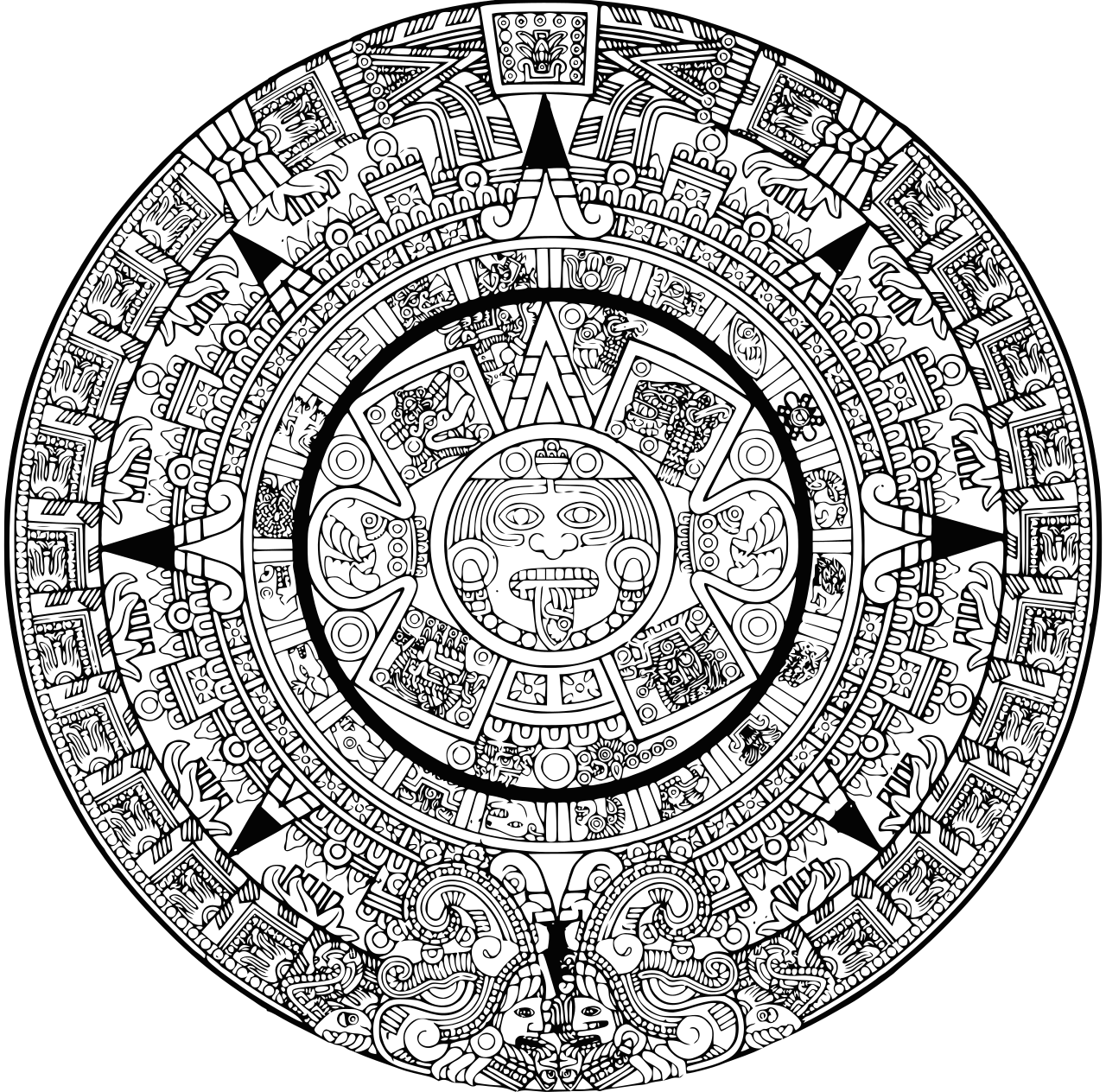
Black and white line drawing of a circular carved disk with a central human face with protruding tongue, surrounded by concentric rings of ornate symbols, triangular rays, and stylized serpent heads at the bottom.Sculpture

Primary source

Aztec Sun Stone

Mexica · 1510

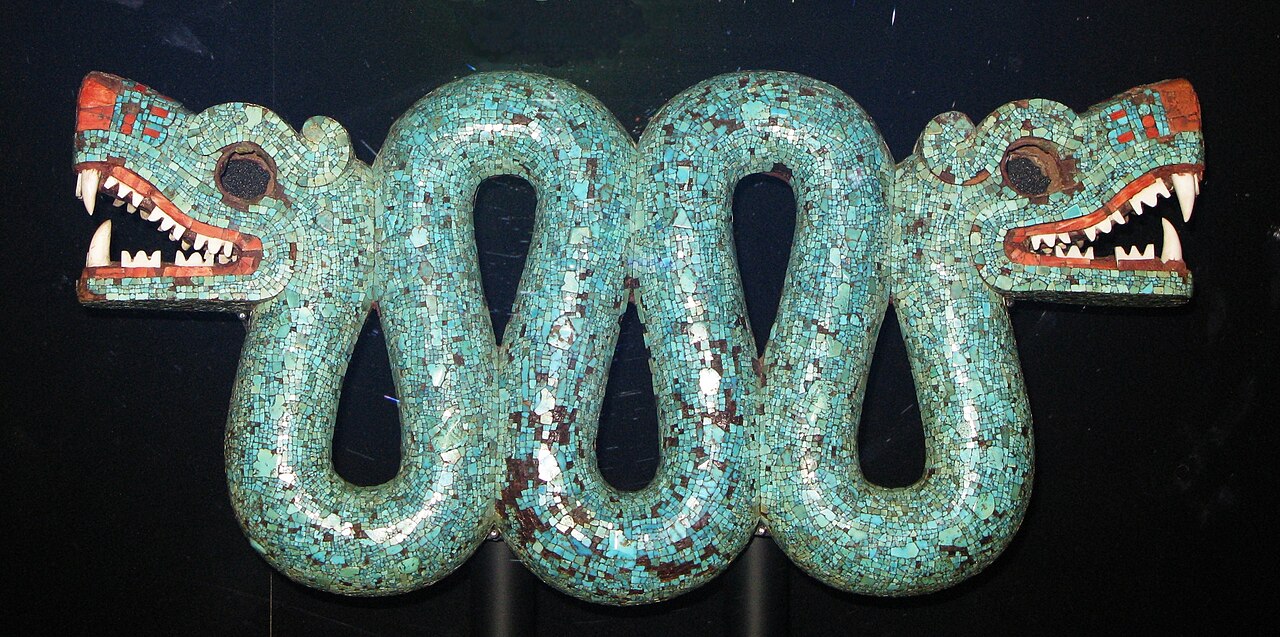
Photo of a double-headed serpent mosaic of small turquoise tiles with red and white inlays on a black background. Two serpent heads with open jaws, white teeth and red-edged mouths face outward, joined by a body that forms a continuous zigzag of loops.Artifact

Primary source

Double-headed Serpent

mid-15th century

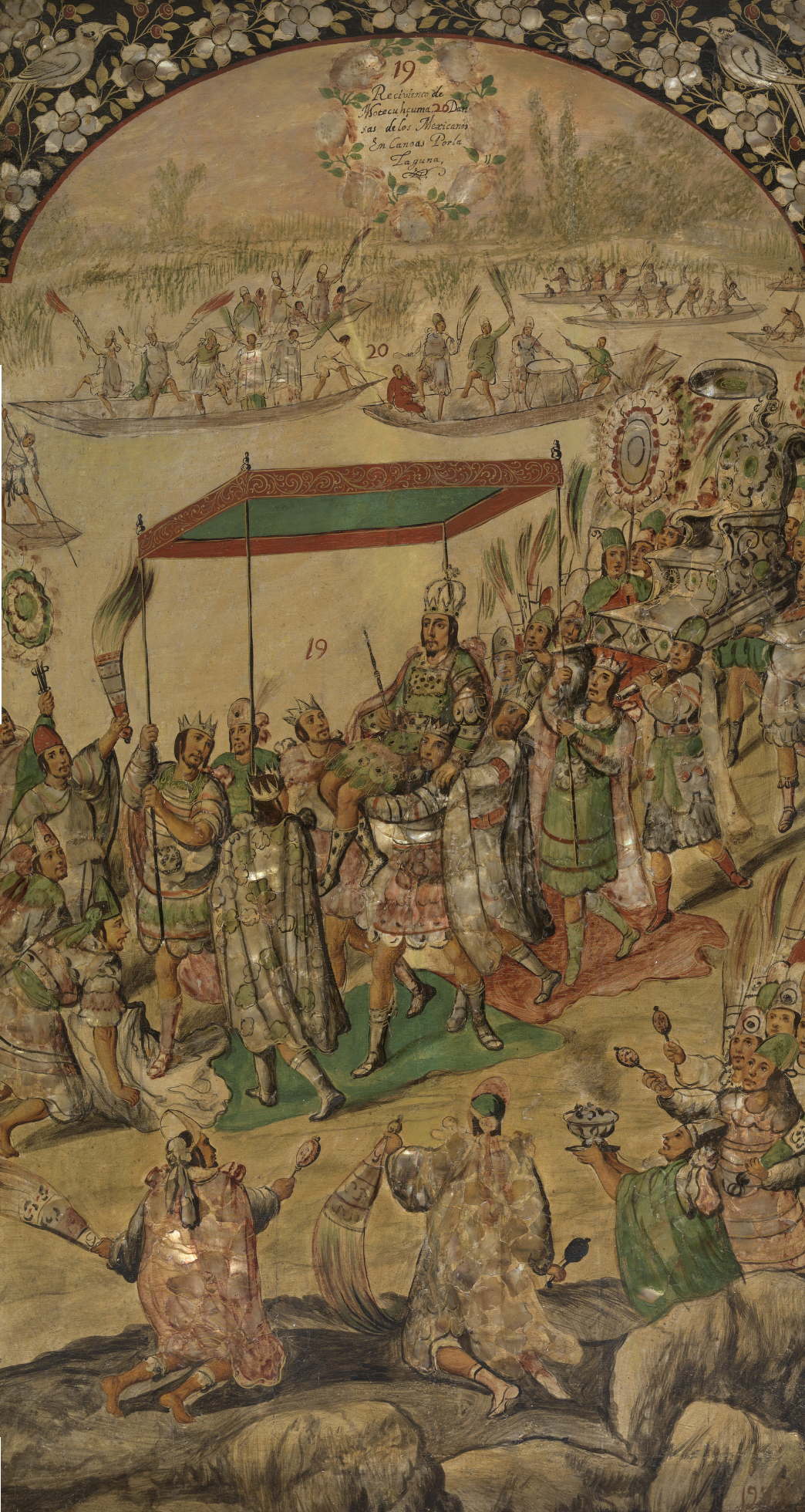
Detail of a colonial-era painting with mother-of-pearl inlay: a richly dressed ruler under a green and red canopy is carried or escorted by attendants along a path, with people kneeling and dancers with rattles below. Canoes with paddlers and banners fill the lagoon behind, under a decorative floral arch with a Spanish caption.Painting

Secondary source

Conquista de México (Tabla 10) - Recibimiento de Motecuhzuma

Juan González and Miguel González · 1698

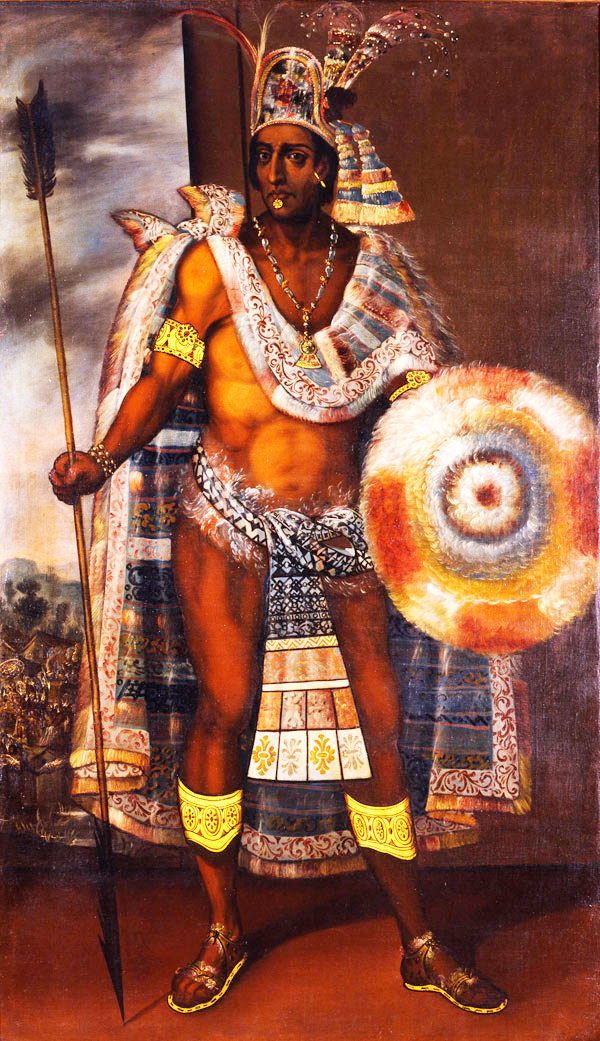
Full-length painting of a muscular man with a bare torso standing before a cloudy sky. He wears a feathered headdress, gold jewelry, a patterned cloak and loincloth, gold armbands and leg bands, and sandals. He holds a spear in his left hand and a round, colorful feathered shield in his right.Painting

Secondary source

Portrait of Moctezuma II

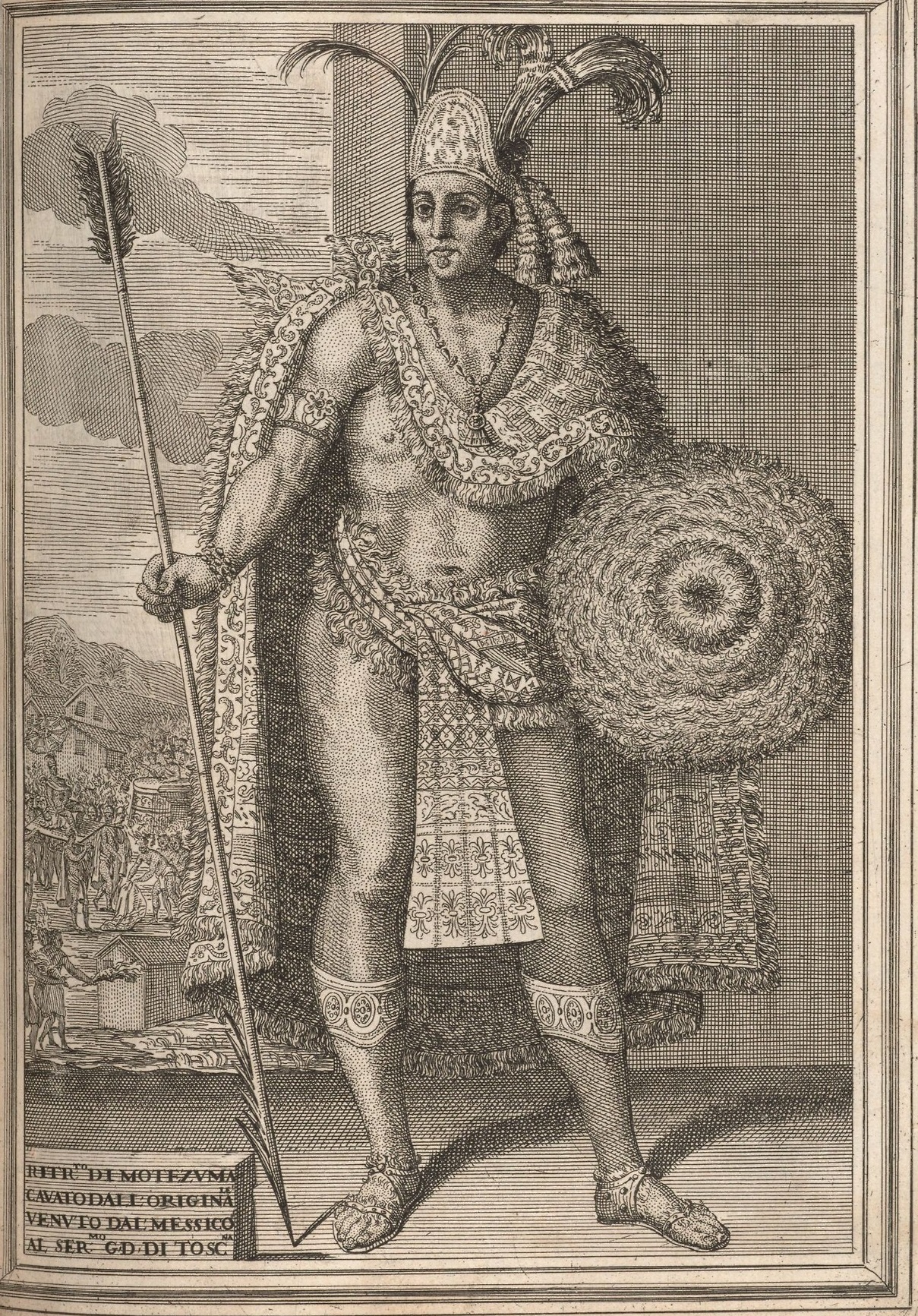
Engraving of a standing figure in feathered headdress and ornate fringed mantle, holding a feathered spear and a round feathered shield, with a caption below in Italian reading 'Motezuma'. Background shows a village scene with figures and huts.Painting

Secondary source

Motezuma

Antonio de Solís (author), artist unidentified · 1699

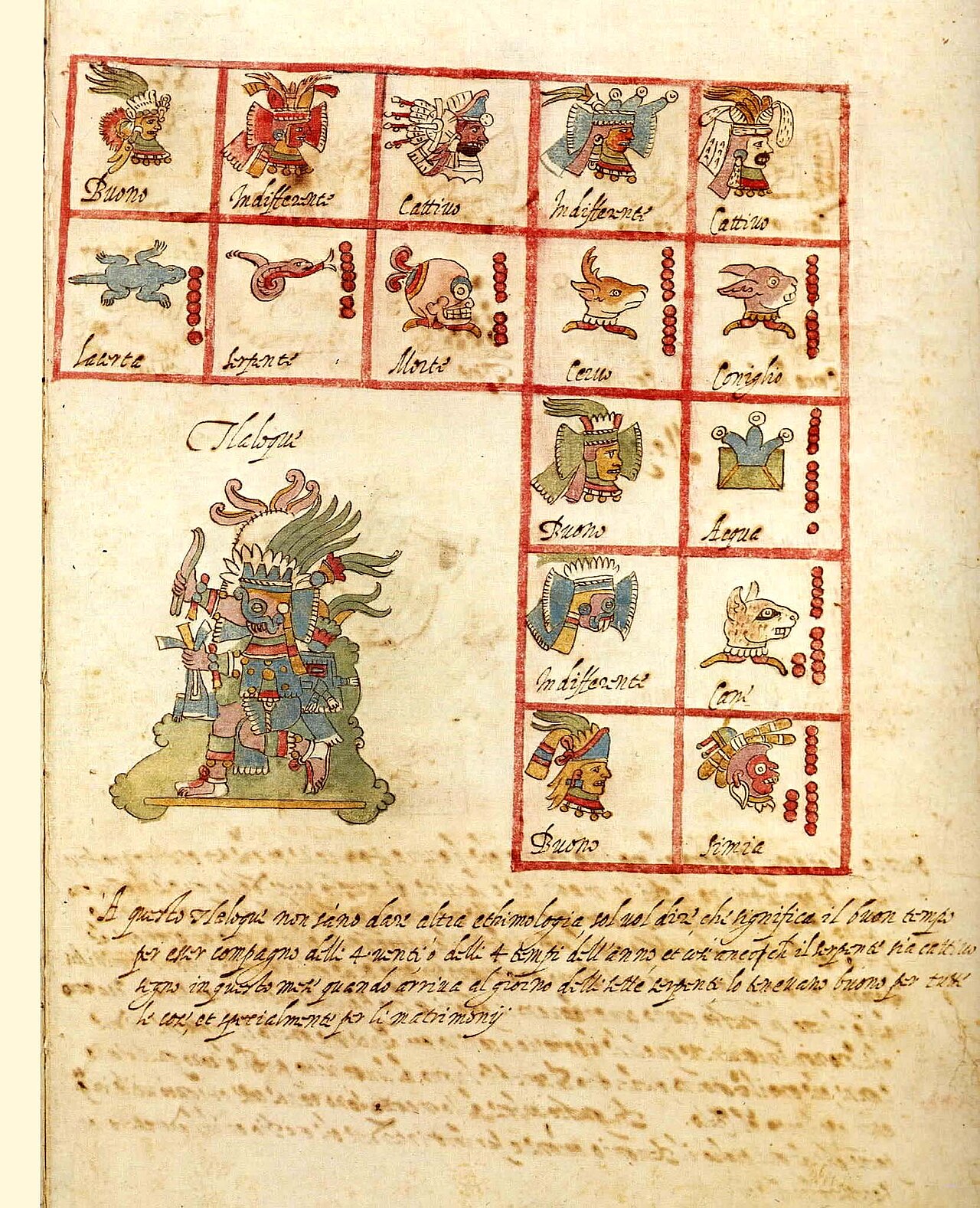
A page from a painted manuscript with a red-ruled grid of small colored Mesoamerican day signs and dot numerals, arranged in rows and columns. Below left is a large painted deity figure labeled in cursive script, with Italian handwritten text beneath.Book

Secondary source

Codex Ríos

Pedro de los Ríos (annotations); unknown Italian artist (illustrations) · c. 1600

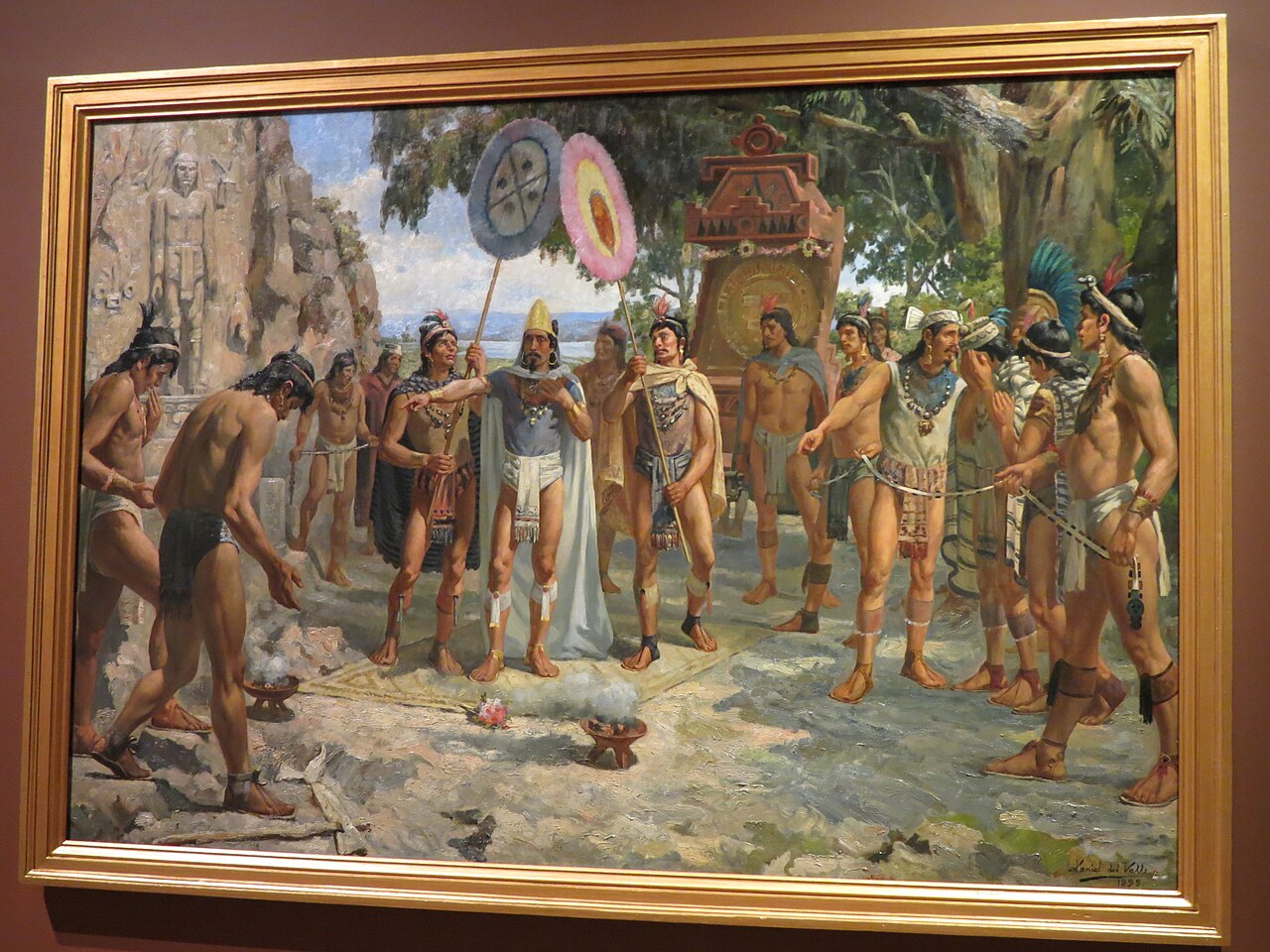
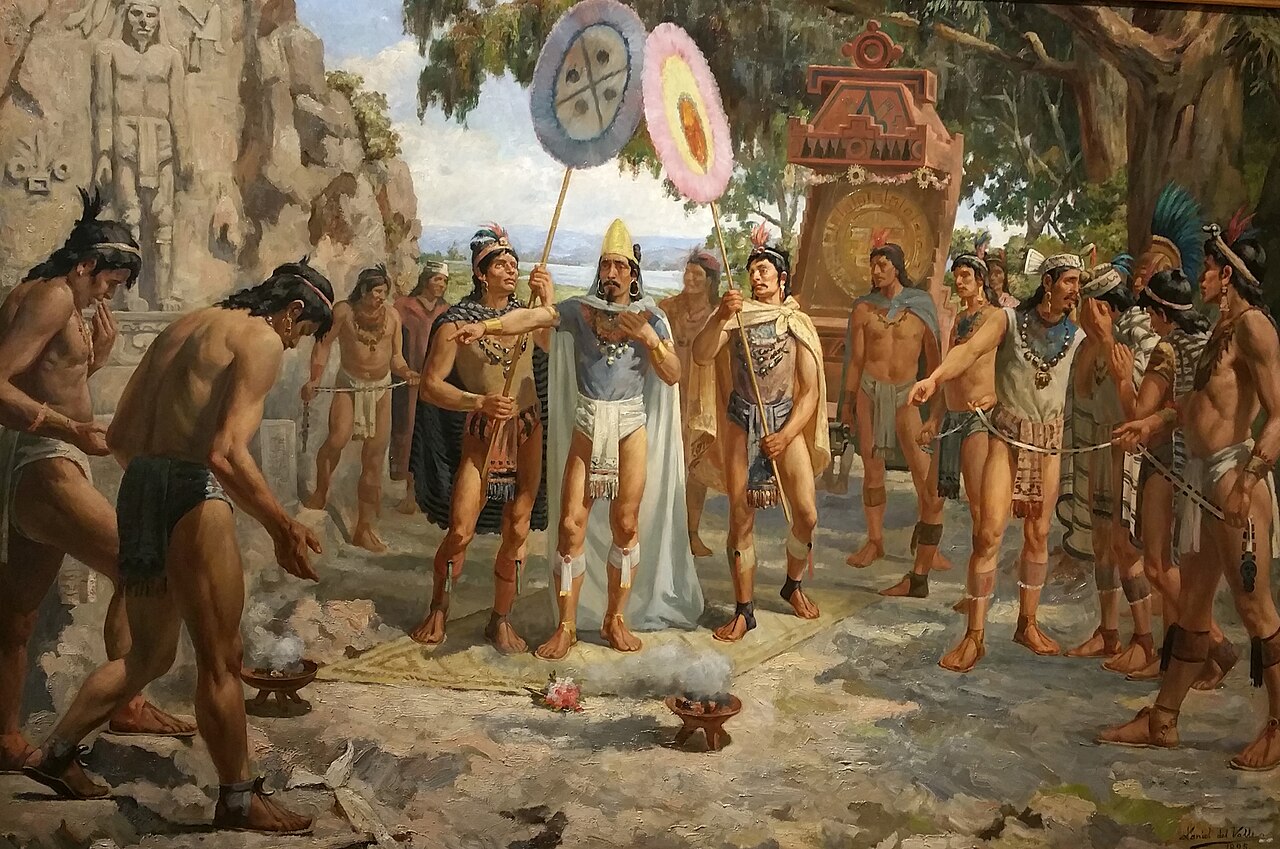
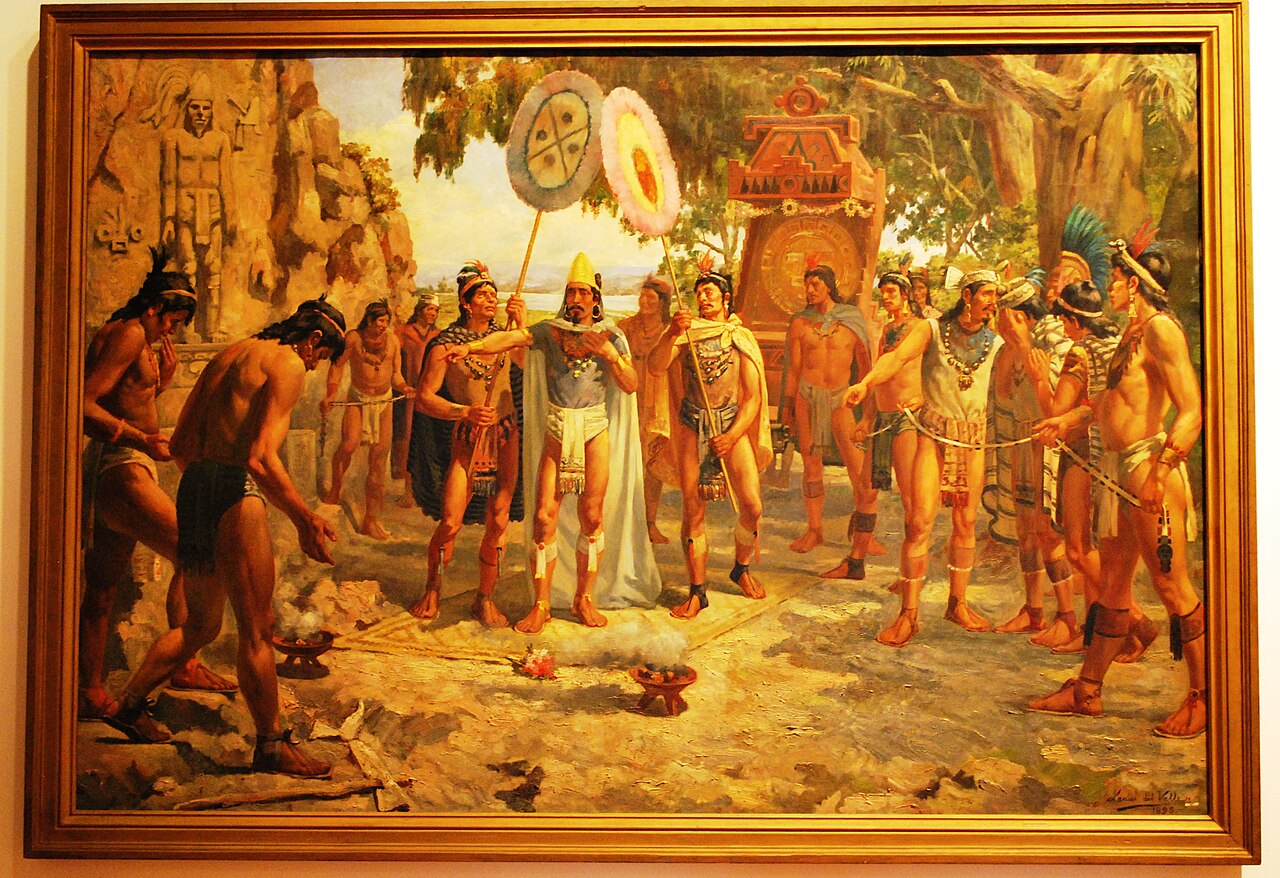
Framed painting of an Aztec court scene in a forest setting: a central richly dressed ruler holds a fan-like shield, flanked by attendants and warriors, while bound captives in chains stand to the right and a man burns incense on a low brazier at left. A carved stone relief is on the cliff behind.Painting

Secondary source

Moctezuma at Chapultepec

Daniel del Valle · 1895

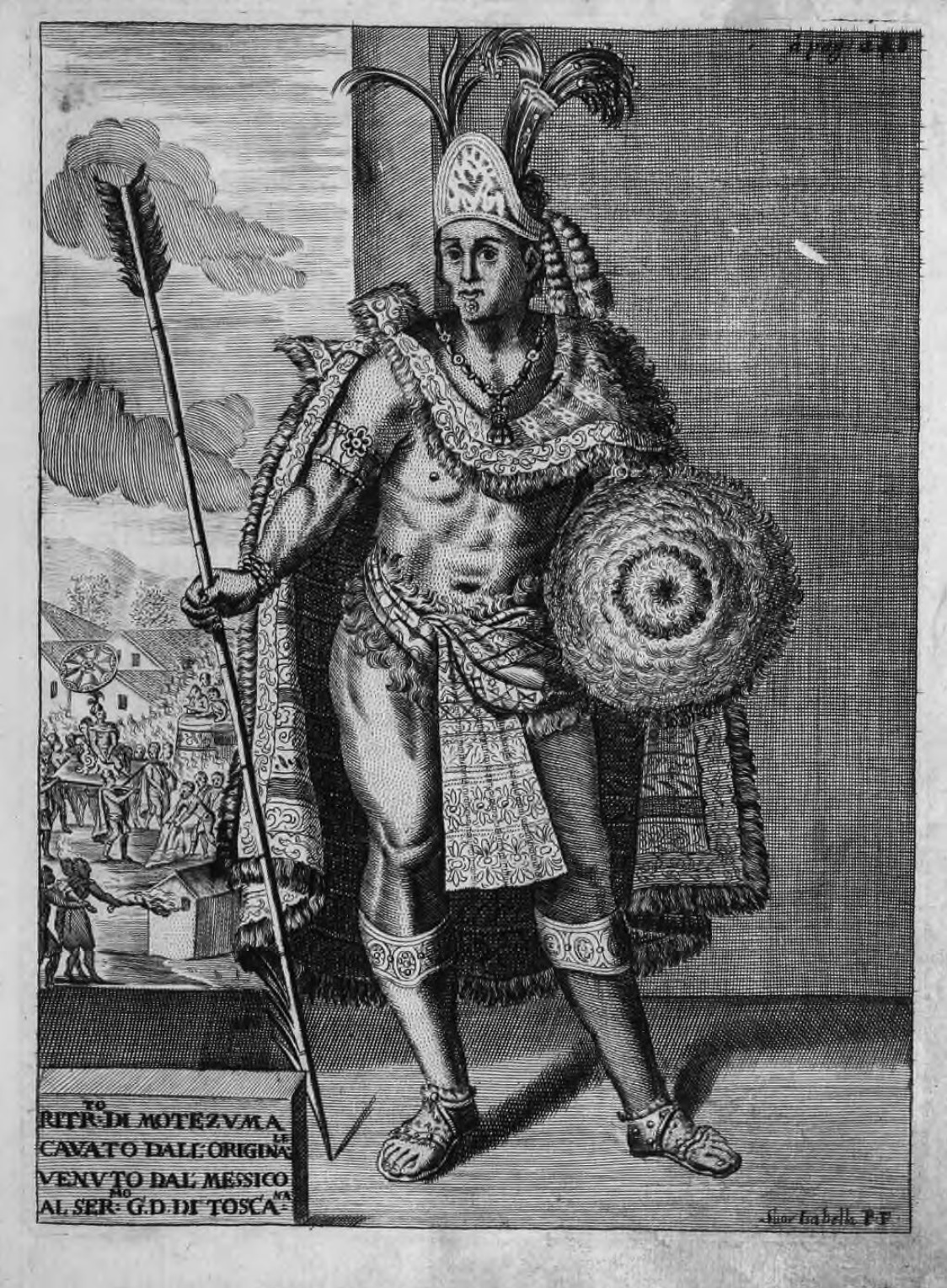
Black and white engraving of a standing man in feathered headdress, cape, and sandals, holding a spear and round shield. Inset scene at left shows figures in a village. Italian caption text in lower left corner.Painting

Secondary source

Motecuzoma Xocoyotzin, Engraving from Antonio de Solís

Antonio de Solís (text); engraver unknown · 1715

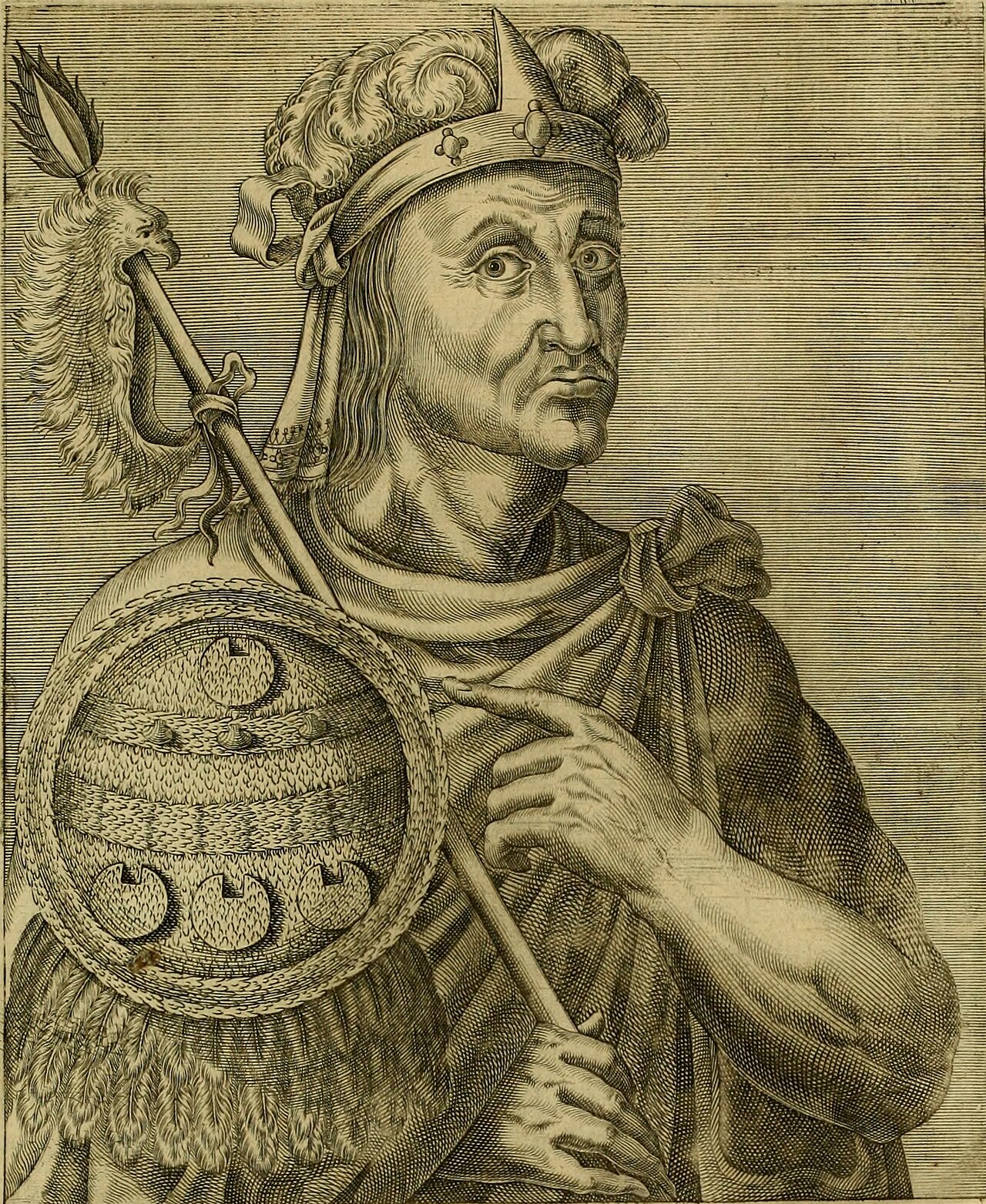
Black-and-white engraving of a bearded man in a feathered headdress with a crown-like band, holding a spear with a feathered tip and a round shield decorated with feathers. He wears a draped cloak and looks to the right. Sepia-toned paper.Painting

Secondary source

Moctezuma II Portrait by André Thevet

André Thevet · 1584

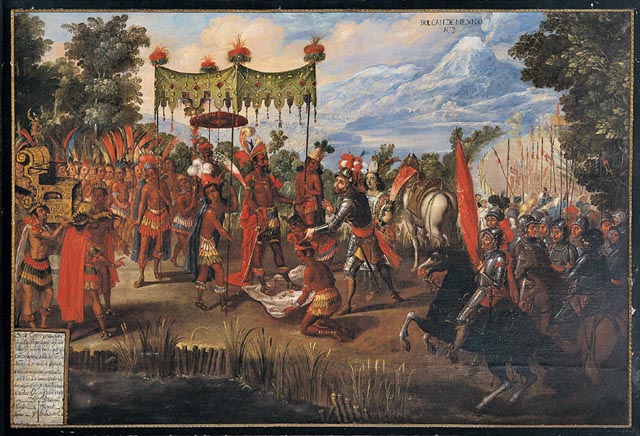
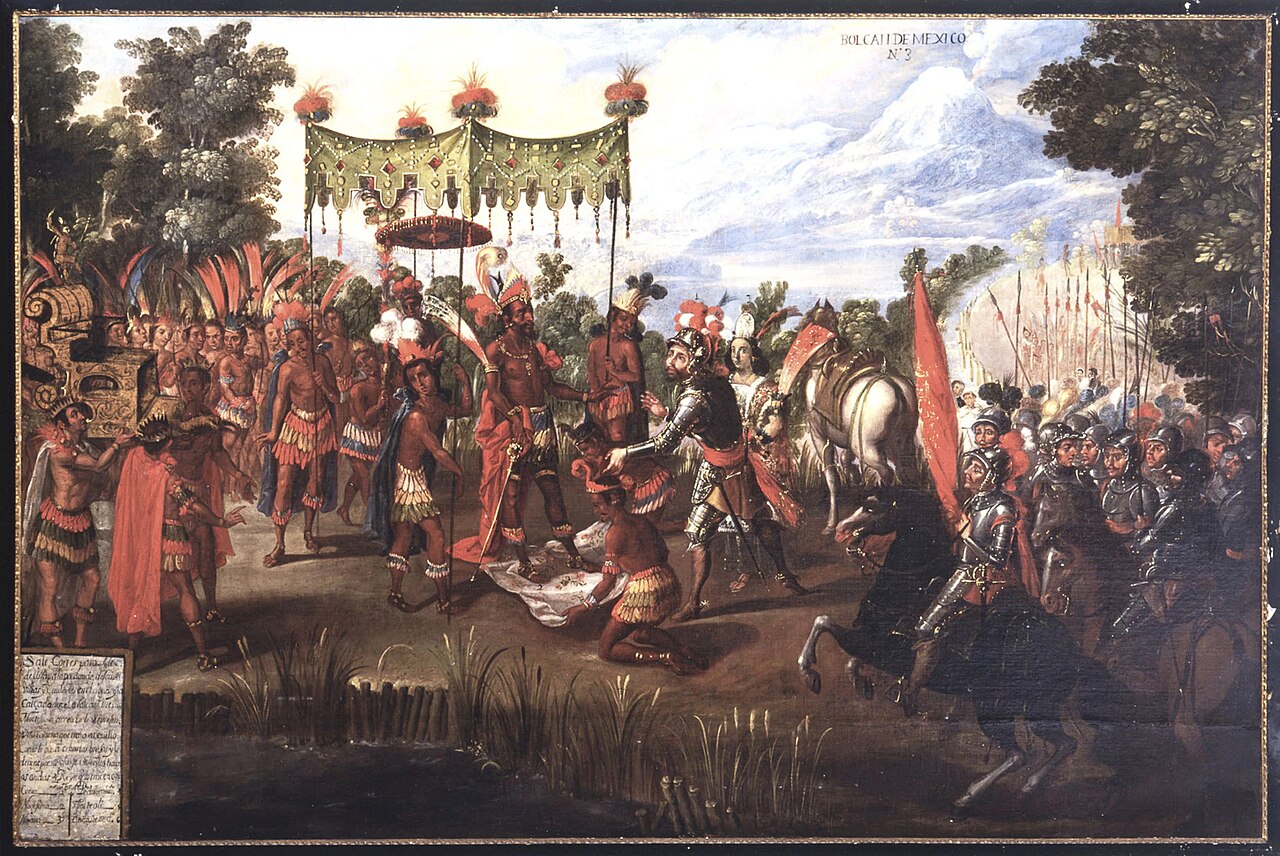
Painting of a colonial-era encounter on a grassy field: on the left, an Indigenous ruler under a green canopy with red-and-gold feathered decorations is attended by plumed warriors and officials; a kneeling figure in the foreground lays down cloth. On the right, armored European horsemen in helmets and a red banner approach on horseback. A snow-capped volcano and cloudy sky are in the background, with a handwritten label at lower left and an inscription at upper right.Painting

Secondary source

The Meeting of Cortés and Montezuma

Unknown artists · second half of the 17th century

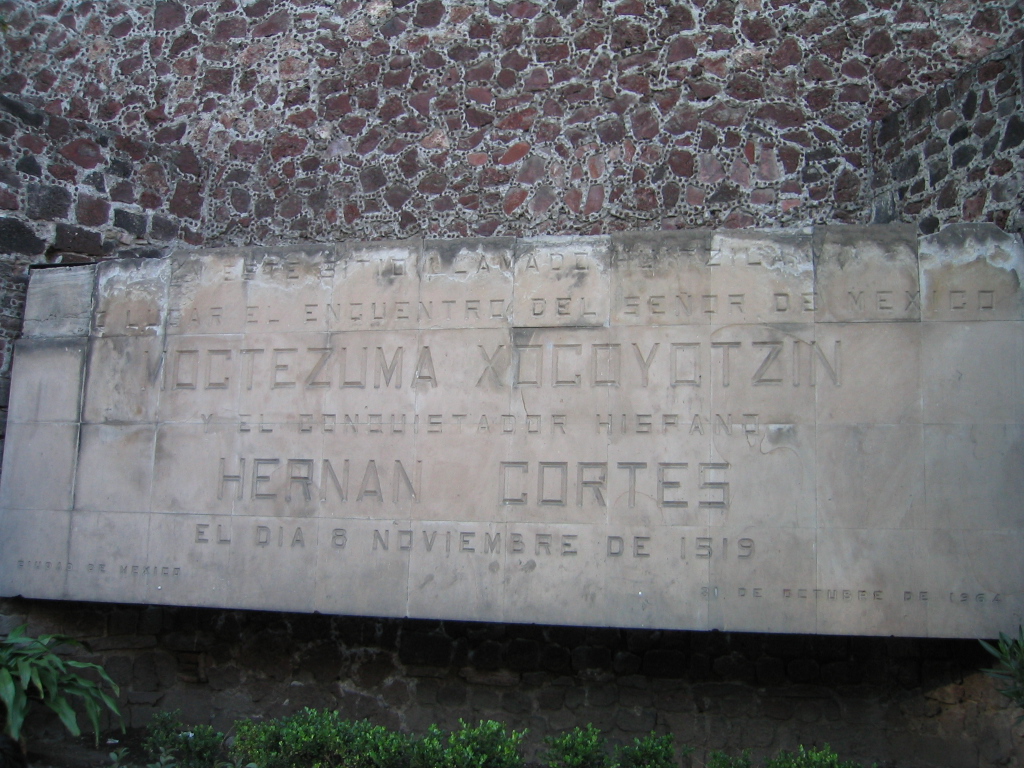
A weathered stone plaque set into a rough reddish stone wall in Mexico City. The carved inscription reads a commemoration of the meeting of Moctezuma Xocoyotzin and the Spanish conquistador Hernan Cortes, dated 8 November 1519, with a smaller inscription at the bottom right dated 1964. Green plants appear at the bottom edge.Artifact

Secondary source

Monument to Moctezuma and Hernán Cortés, Mexico City

1964 (installed)

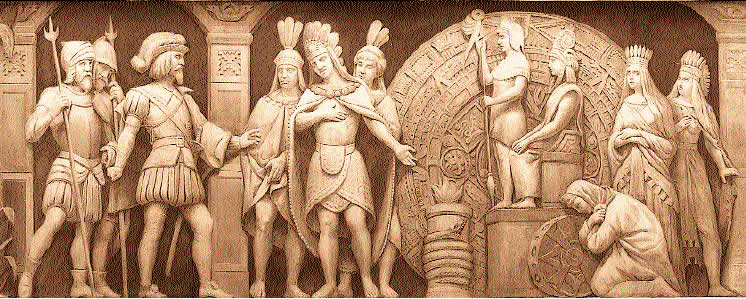
Sepia-toned mural showing Spanish conquistadors in armor on the left, with Cortez gesturing toward a richly dressed Aztec figure in feathered headdress. On the right, Montezuma sits on a raised platform beside a large circular calendar stone, with a kneeling figure and women in attendance.Painting

Secondary source

Cortez and Montezuma at Mexican Temple

Architect of the Capitol · 19th century

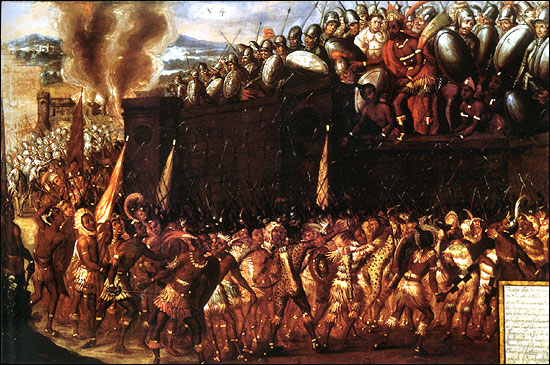
Painting of a crowded battle scene. Richly dressed warriors with feathered headdresses and spears fill the foreground. Armored soldiers with shields and helmets stand on a high stone wall at top. Smoke rises from fires at upper left.Painting

Secondary source

The Death of Moctezuma at the Hands of His Own People

Unknown · second half of the 17th century

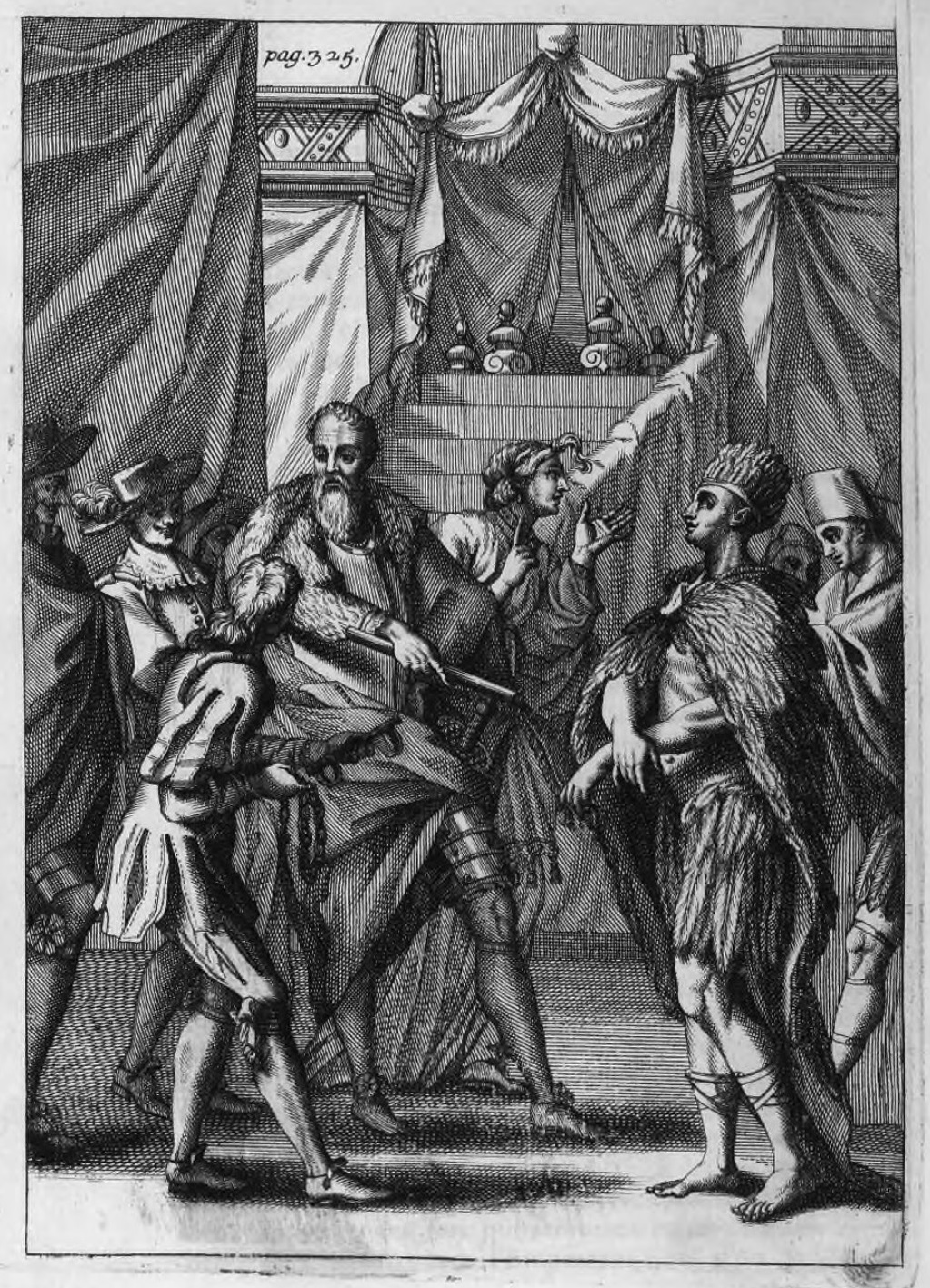
Black-and-white engraving with a page marker reading pag. 325 at top left. A bearded European man in a fur-trimmed cloak grips a sword hilt and stands before a draped curtain, while a feathered-headdress figure in a feathered cloak faces him. A soldier in armor and an armed man in a hat restrain or stand near the scene, and onlookers in hats and robes fill the edges of a palatial room.Painting

Secondary source

Moctezuma Imprisoned by Cortés

Jan Karel Donatus Van Beecq · 17th century

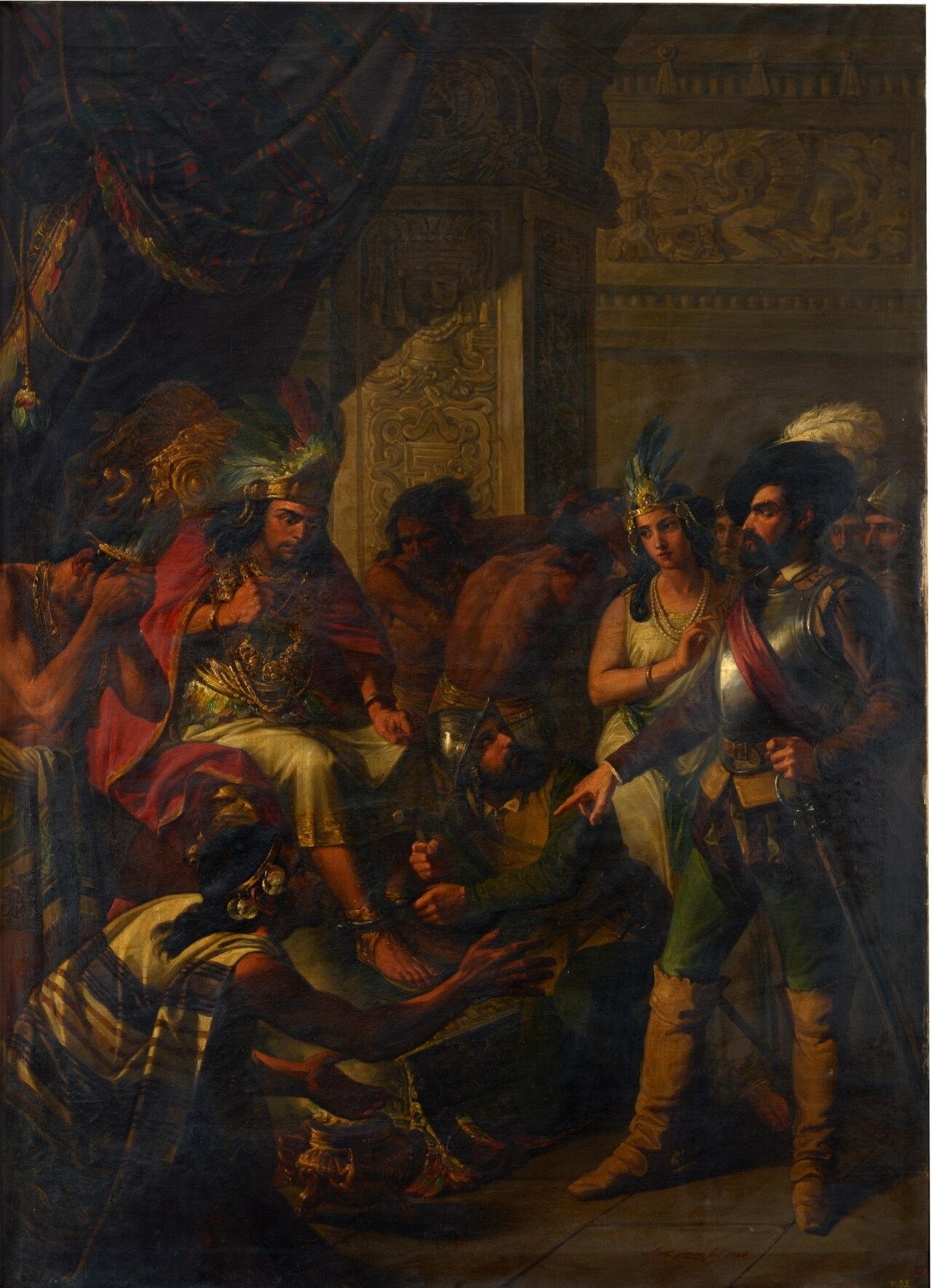
Oil painting of a scene in an Aztec palace: a seated, feathered and jeweled ruler (Moctezuma) in a red cloak looks toward a Spanish conquistador in armor with a black plumed hat, who points, while a woman in a headdress stands beside him. Attendants and a kneeling figure fill the scene, with carved stone walls behind.Painting

Secondary source

Cortés Entering Moctezuma's Chamber

Antoni Gómez i Cros · 1858

Oil painting of a ceremony: a central figure in white robes and a gold headdress stands on a woven mat between two attendants holding round feathered fans, with a stone carving and a sun-disc monument behind; kneeling and standing men in loincloths surround them, with smoke rising from incense braziers in the foreground.Painting

Secondary source

Moctezuma II Visiting the Tombs of His Ancestors

Daniel del Valle · 1895

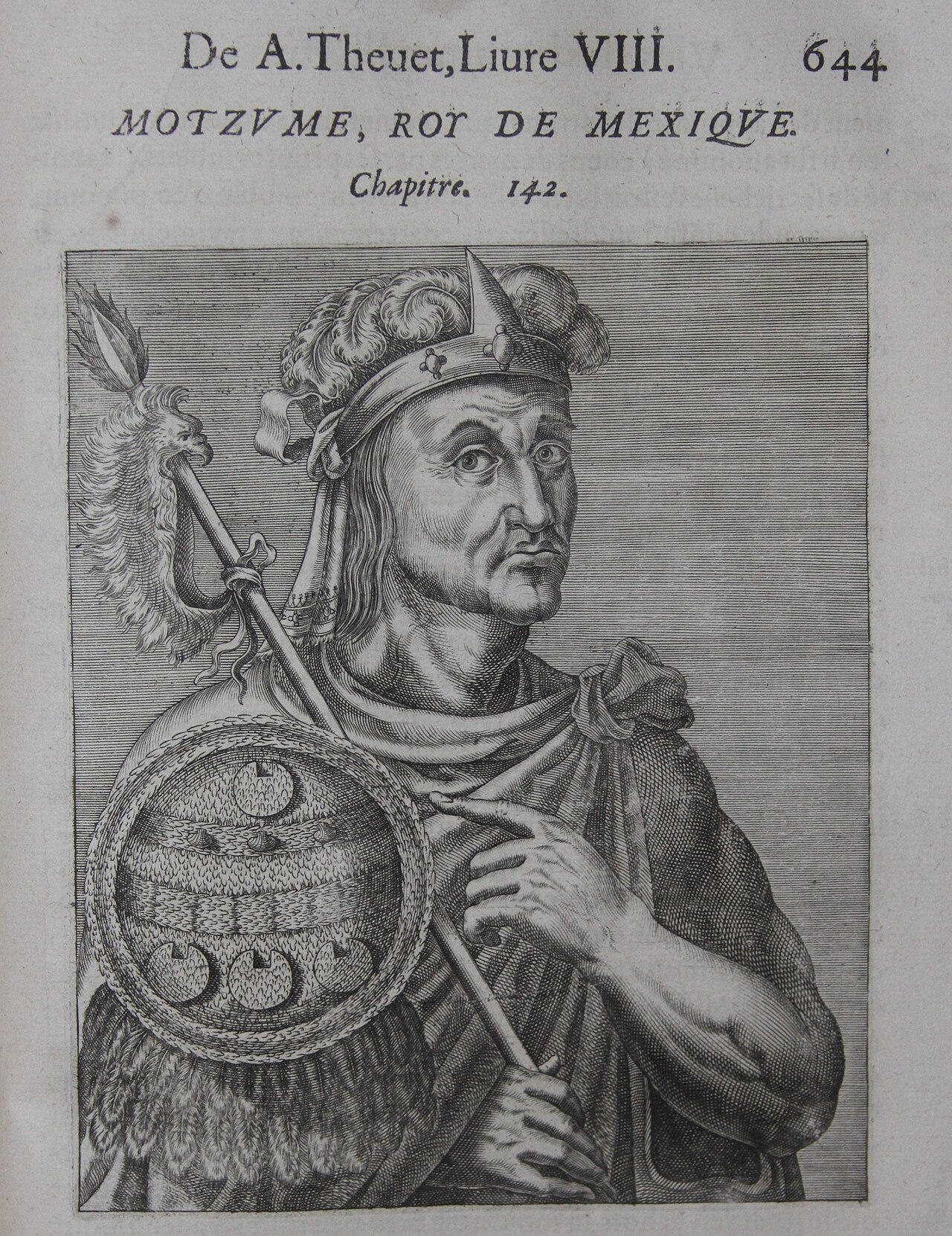
Engraved portrait of a bearded man in a feathered headdress with a shield and a spear, printed on a book page. Heading reads 'De A. Theuet, Liure VIII', 'MOTZVME, ROY DE MEXIQVE', 'Chapitre 142', and page number 644.Painting

Secondary source

Moctezuma engraving, Pourtraits et Vies des Hommes Illustres

André Thévet · 1584

Painting of a meeting between Spanish conquistadors on horseback in armor and Mexica nobles in feathered regalia under a green canopy, with a kneeling figure in front and a plumed mountain landscape behind. Label reads 'Mexico No 3' at upper right.Painting

Secondary source

The Meeting of Cortés and Moctezuma

Unknown · second half of the 17th century

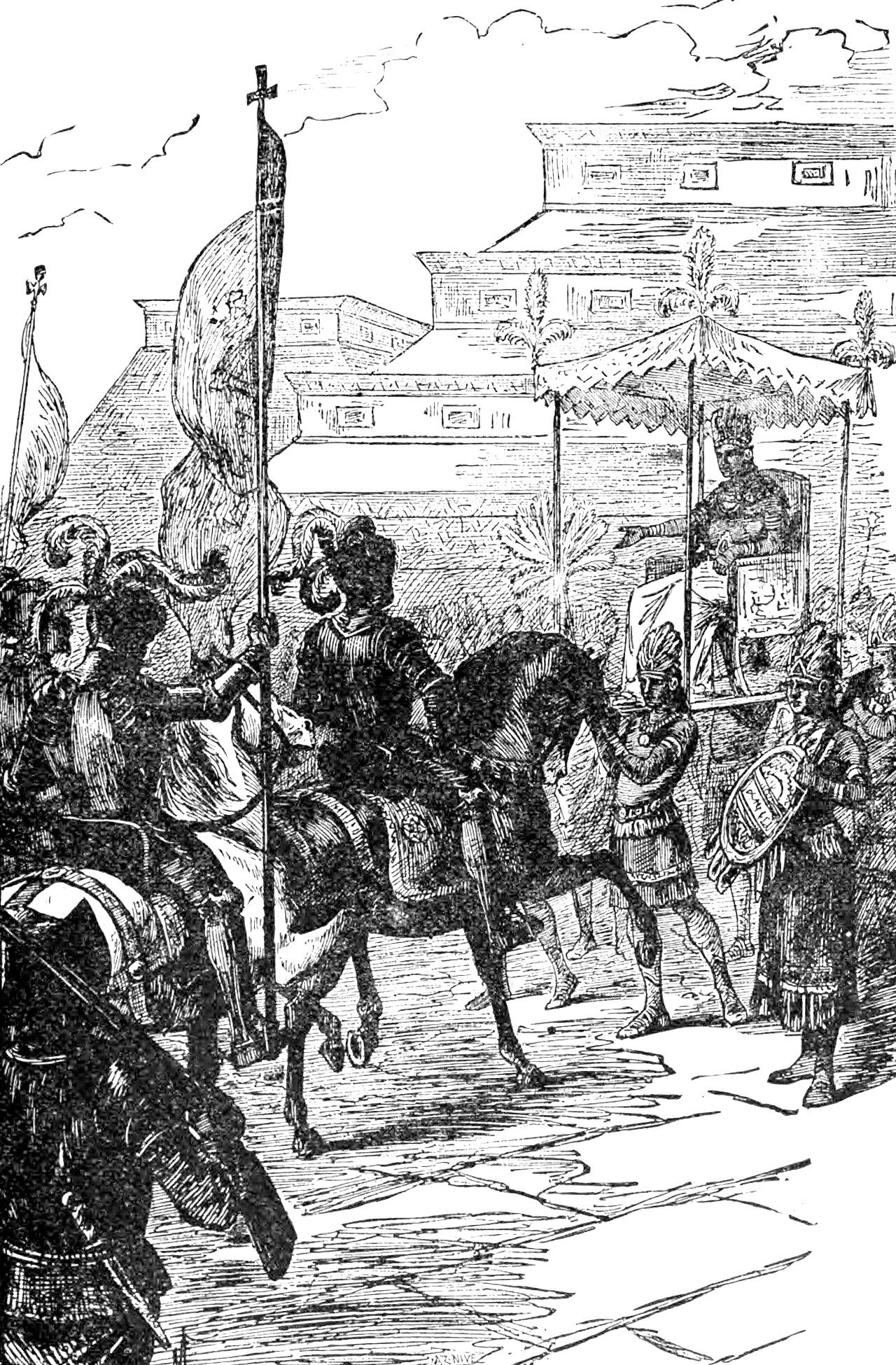
Black and white engraved illustration of the meeting of Cortez and Montezuma. Spanish horsemen in armor, one carrying a tall cross-topped banner, ride toward a canopied litter where a feathered, richly dressed ruler sits, attended by warriors with shields. Stepped stone buildings stand in the background.Painting

Secondary source

Meeting of Cortez and Montezuma

Frederick A. Ober · 19th century

Book

Primary source

True History of the Conquest of New Spain

Bernal Díaz del Castillo · 1844 (English translation)

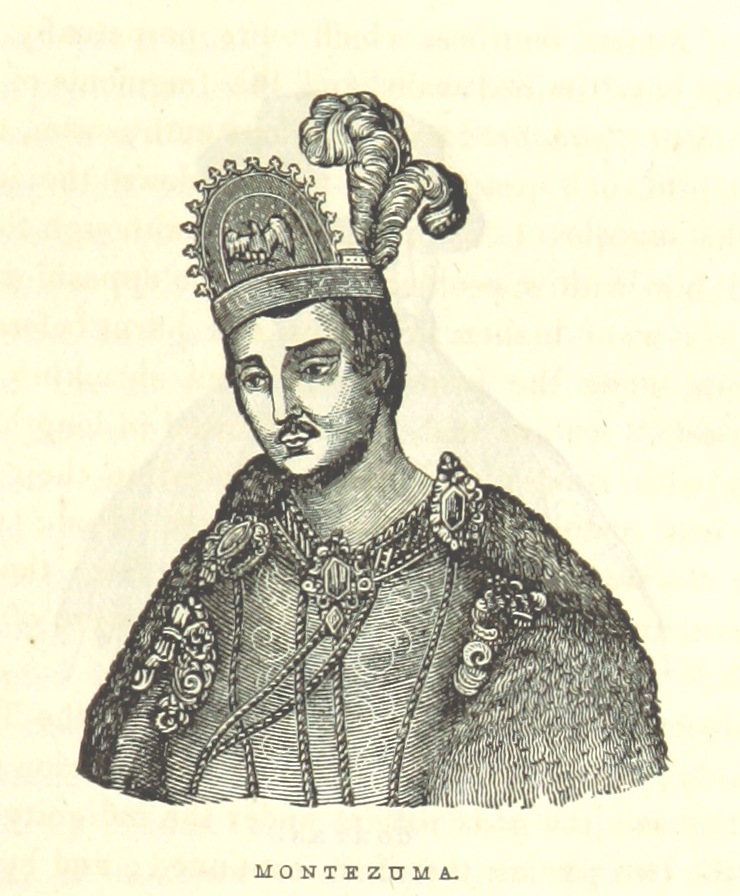
Engraved portrait bust of Montezuma II in a three-quarter view, wearing a feathered crown with an ornate headband, a fur-trimmed cloak, and jeweled ornaments. The caption below reads MONTEZUMA.Painting

Secondary source

Montezuma II, from An Illustrated History of the New World

John Ledyard Denison · 1873

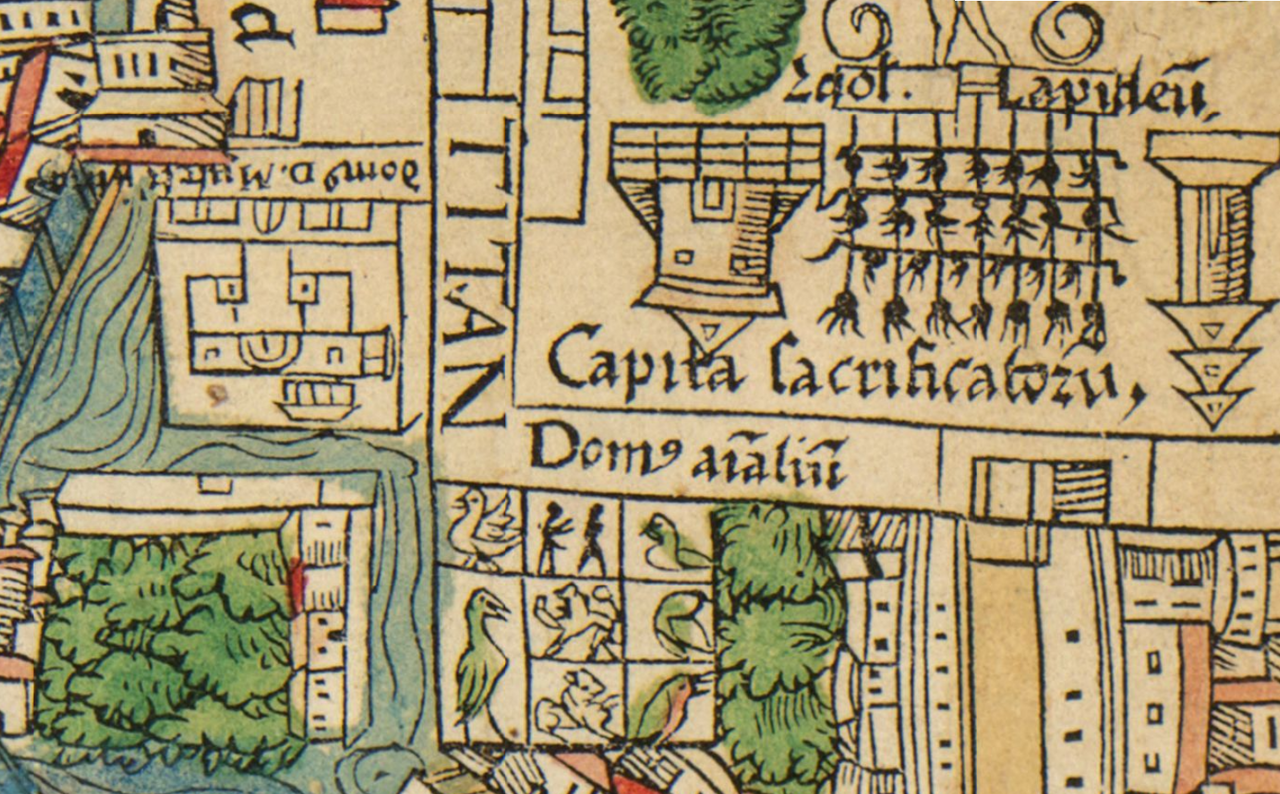
Detail of a hand-colored woodcut map of Tenochtitlan with labels in Latin-style script, including 'Capita sacrificatoru' and 'Domus ariatium', showing buildings, a temple platform, trees, and small animal figures in a grid.Document

Primary source

Map of Tenochtitlan showing Moctezuma's palace

Hernán Cortés (attributed) · 1524

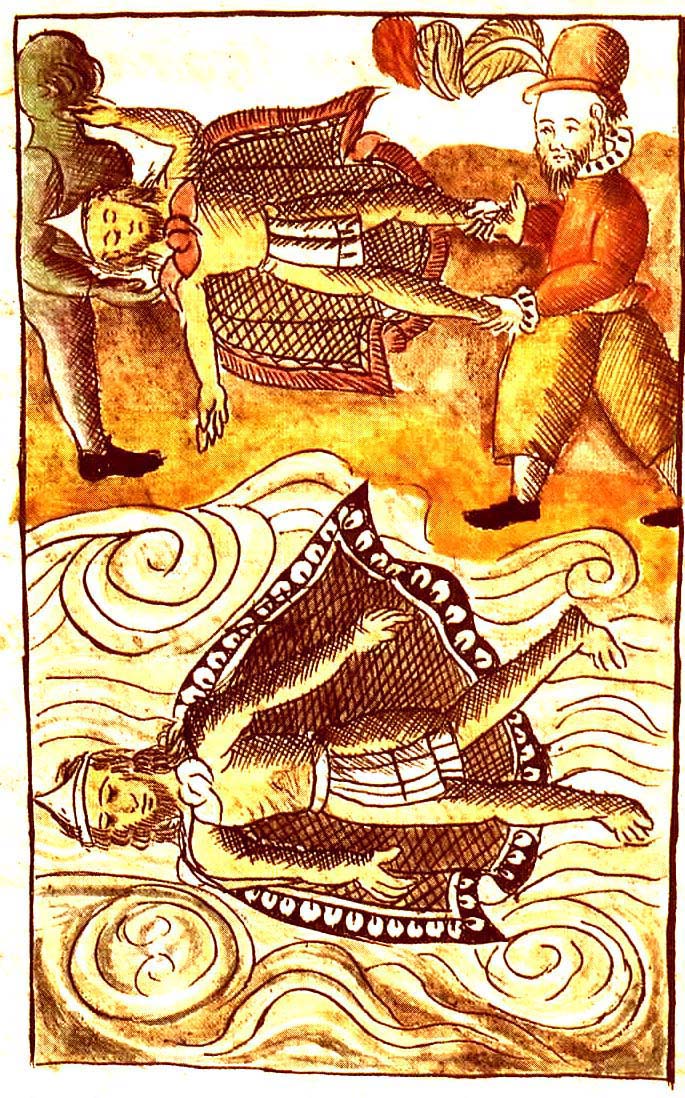
Colored illustration from a 16th-century manuscript. Above, a bearded Spaniard in a hat and ruff stands at right, holding the legs of a body in a patterned mantle; a second figure at left supports the upper body. Below, a body in a patterned mantle lies on swirling water lines, with arms outstretched.Painting

Primary source

Spaniards disposing of the bodies of Moctezuma and Itzquauhtzin

Bernardino de Sahagún · 16th century

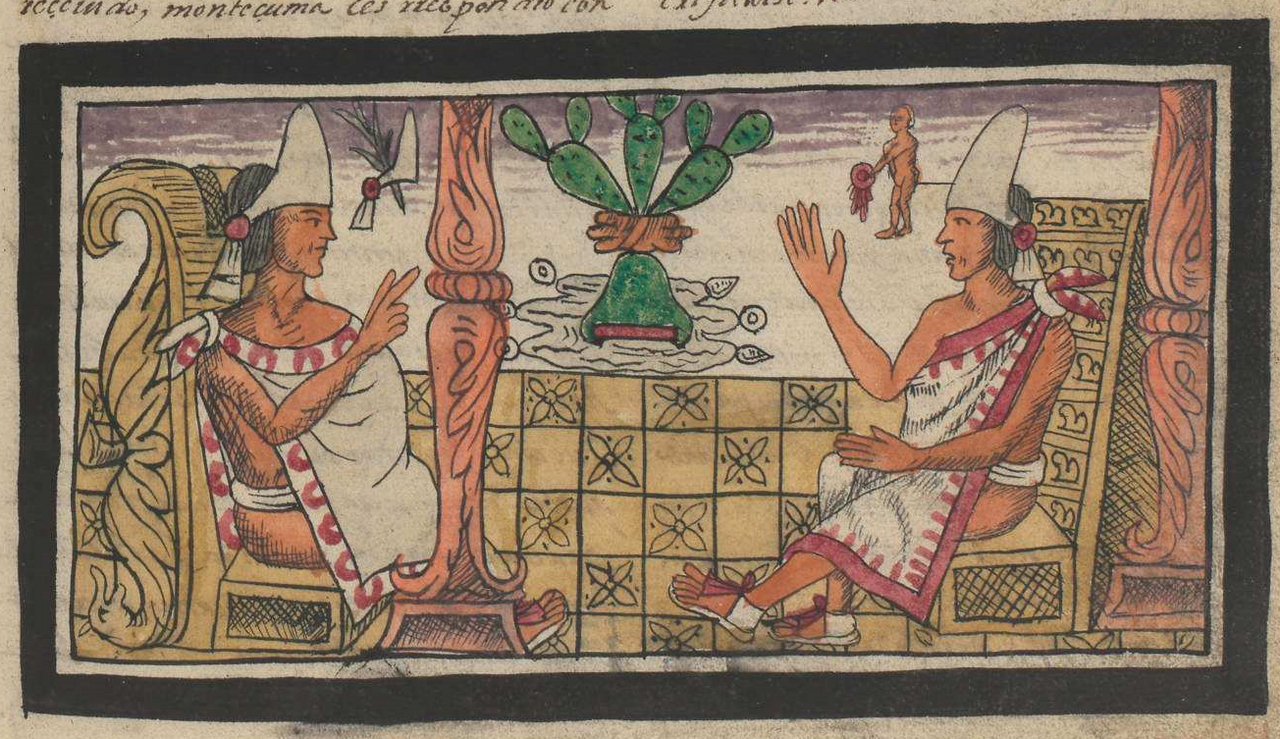
Colored manuscript illustration of two seated men facing each other on ornate low thrones, with a patterned tiled platform between them. A green cactus sits on a central pedestal, and a small figure stands in the upper right. The figure at left gestures with a pointing finger; the one at right raises an open hand. Framed by a black border.Document

Primary source

Nezahualpilli Warns Moctezuma II of the Empire's Fall

Diego Durán · 16th century

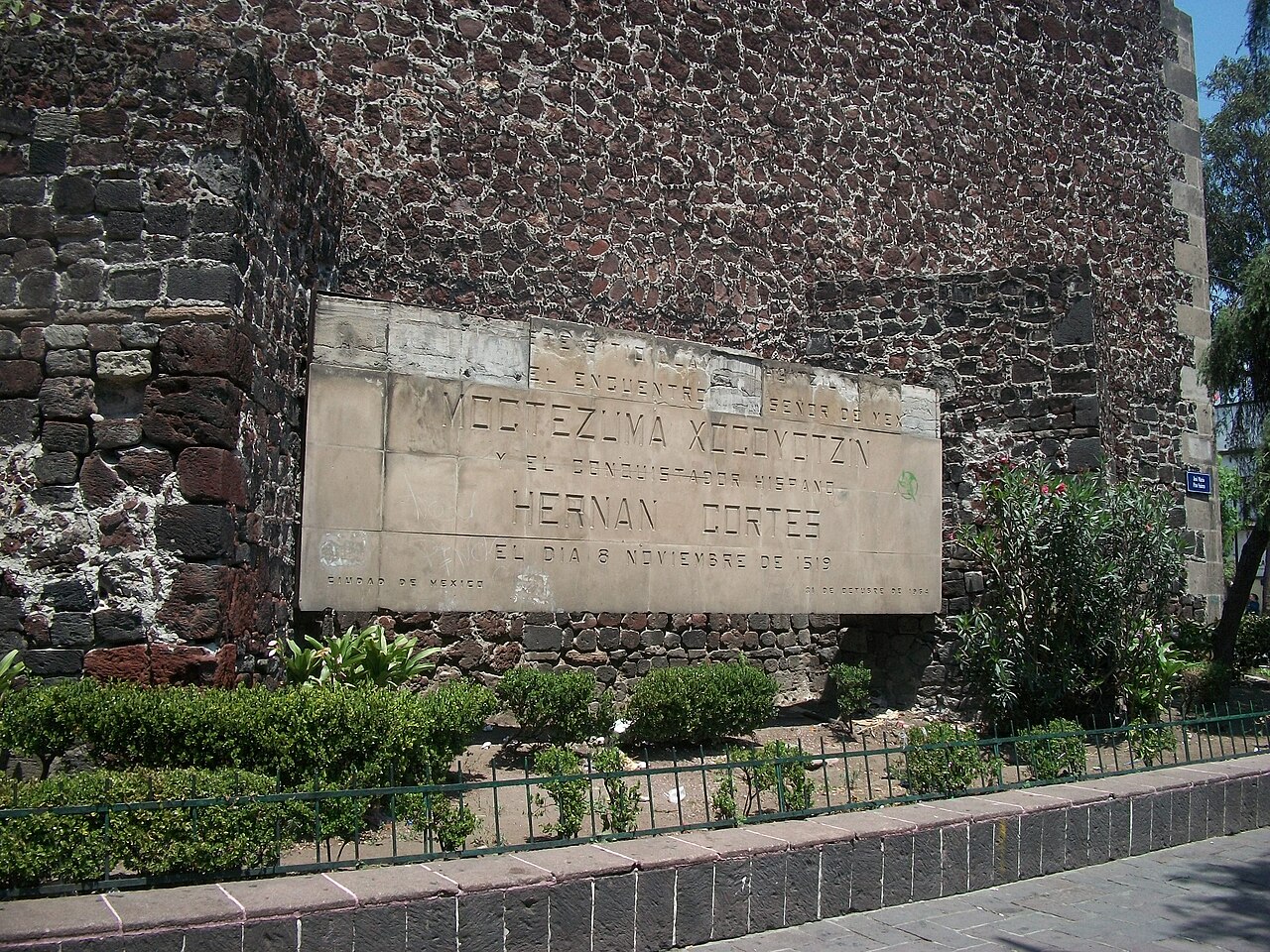
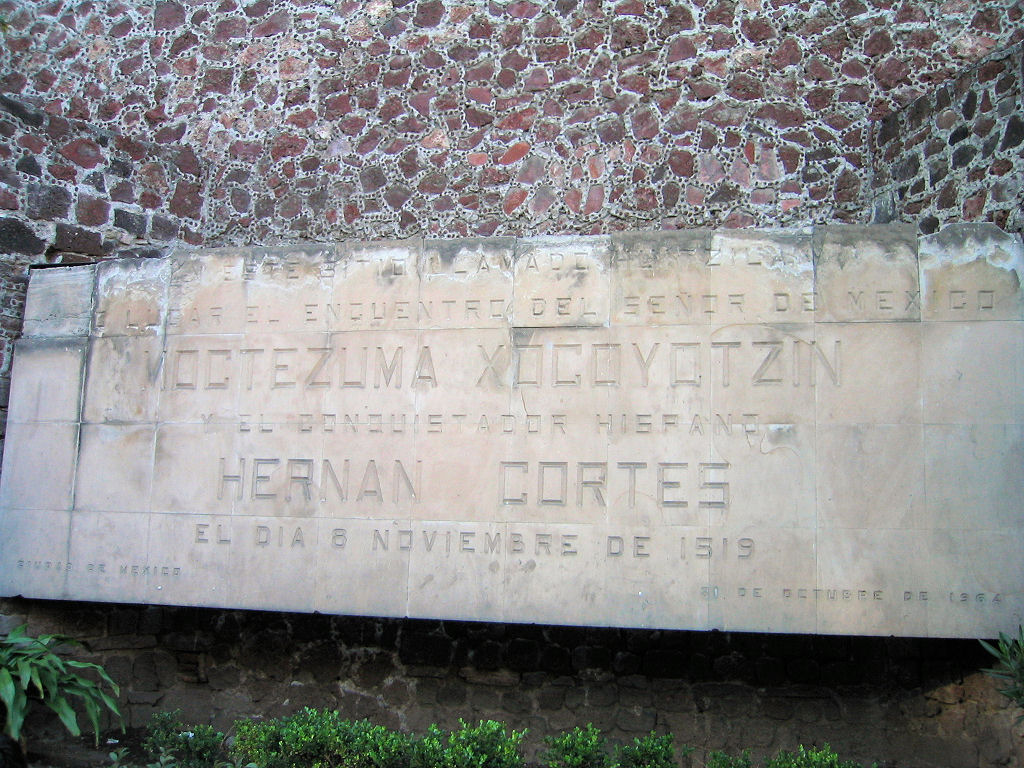
A large stone plaque set into an old dark volcanic stone wall, with raised lettering reading Moctezuma Xocoyotzin, Y el conquistador hispano Hernán Cortés, El día 8 de noviembre de 1519. Green shrubs and a metal railing sit in front.Artifact

Secondary source

Monument marking the meeting of Moctezuma and Cortés

Adamcastforth

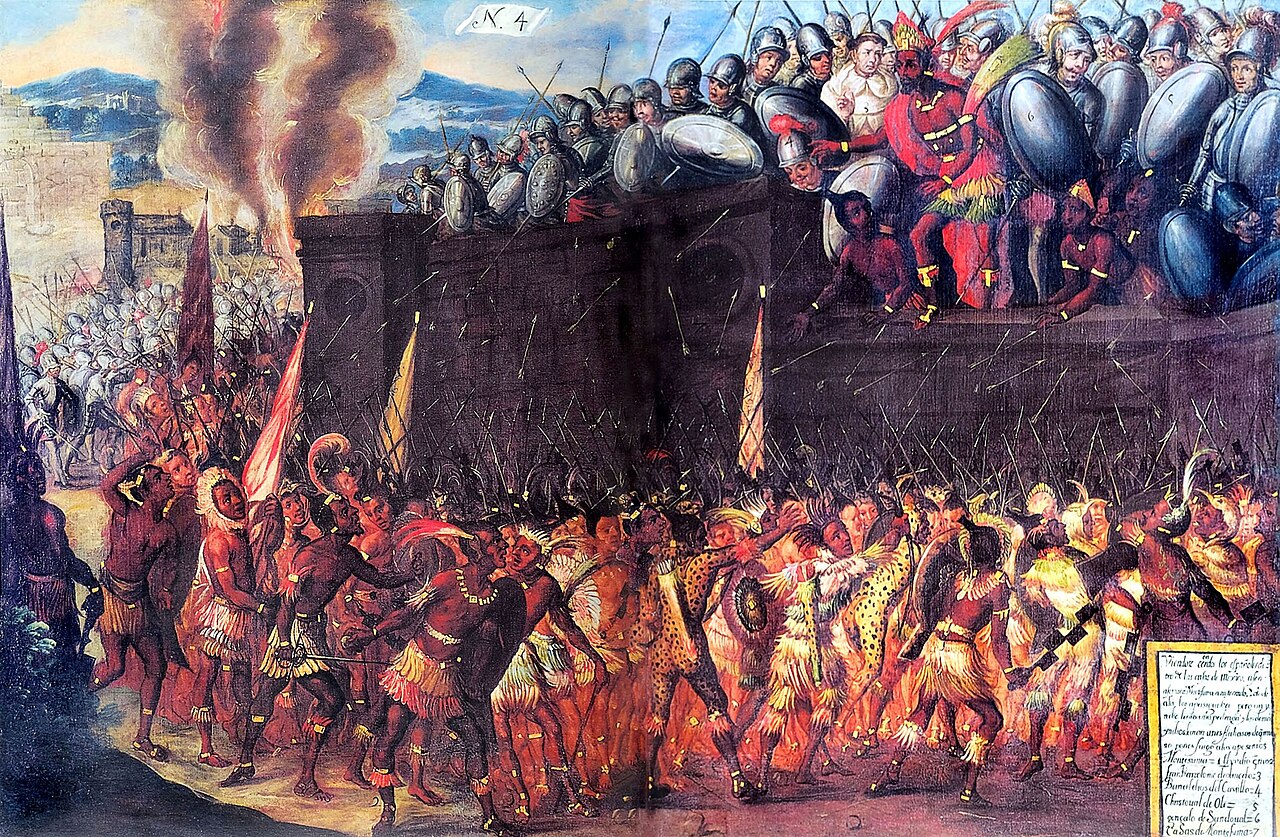
Painting of a battle scene: on the upper walls of a stone structure, Spanish soldiers in helmets and armor stand with shields, and a figure in red robes is among them; below, a dense crowd of Mexica warriors in feathered costumes and red-orange clothing charges forward, with smoke rising from burning buildings at left and banners flying.Painting

Secondary source

The Death of Moctezuma at the Hands of His Own People

Unknown · second half of 17th century

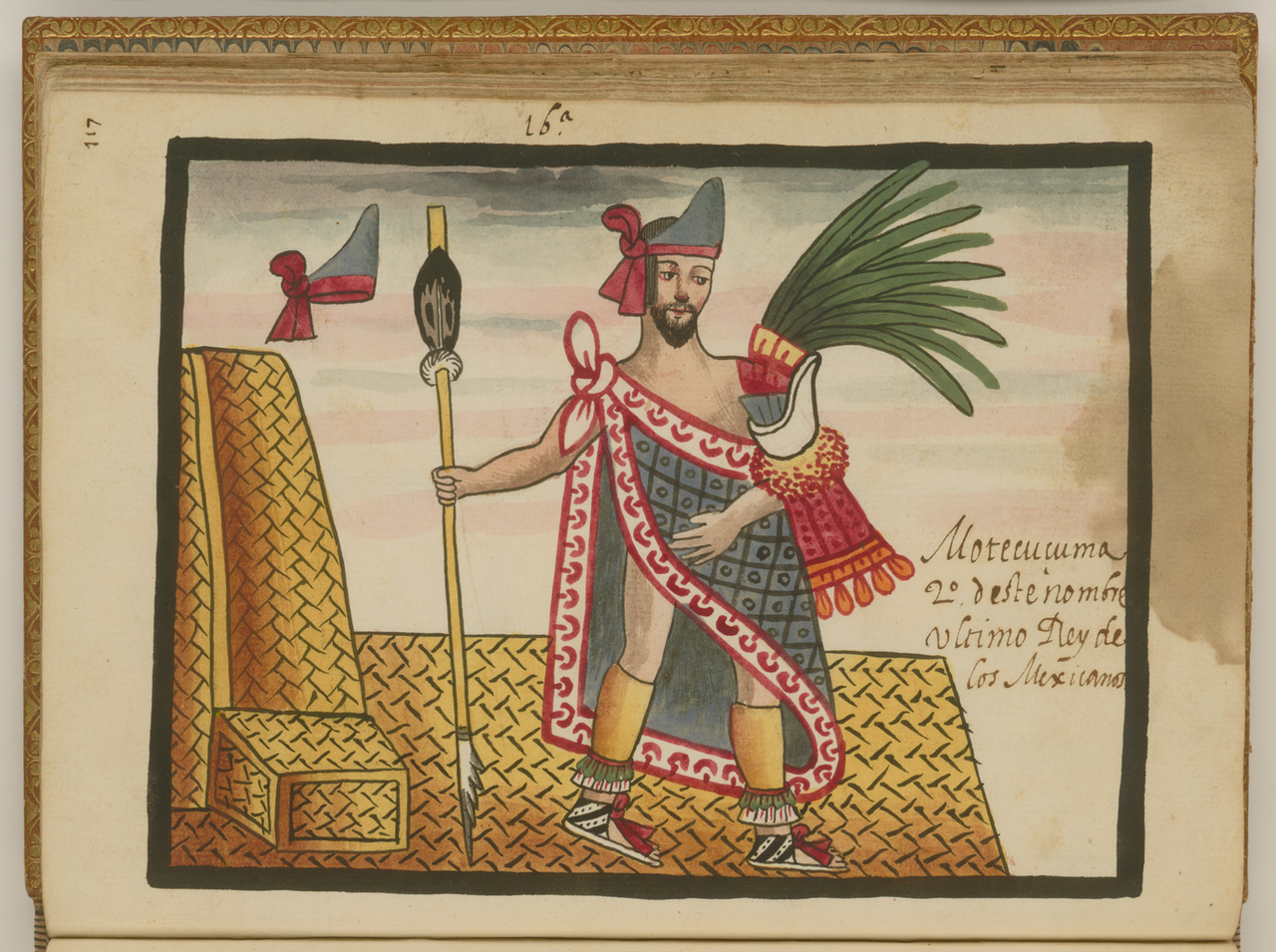
Painted manuscript page showing a standing man with a beard and a blue-gray headdress with red ribbon, holding a gold-shafted spear and wearing a red-and-white patterned cape and a green feather plume. A woven throne stands to the left. Handwritten Spanish label reads Moteuczuma 2o deste nombre ultimo Rey de los Mexicanos.Painting

Primary source

Tovar Codex Image of Moctezuma II

Juan de Tovar · 1585

Framed painting of an Indigenous ceremony outdoors: a central figure in white robes and a gold headdress stands between two men holding circular feathered shields, with a stone carving on a cliff at left and a ceremonial brazier at lower center. Several men in loincloths and feathered ornaments stand around.Painting

Secondary source

Moctezuma en Chapultepec

Daniel del Valle · 1895

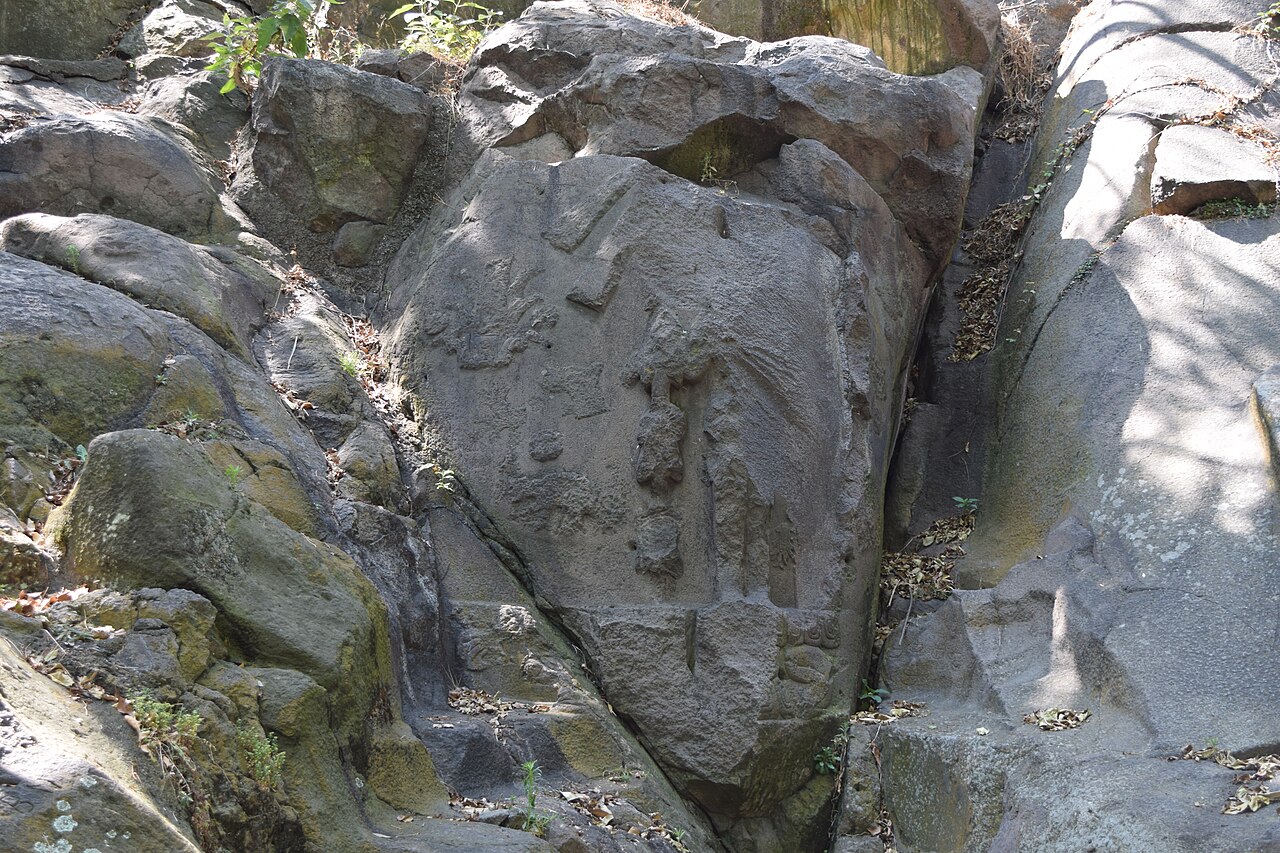
Weathered grey-brown rock face on a hillside of boulders, showing faint carved relief figures. A standing figure is partly visible in the center, with eroded shapes around it. Green moss and dry leaves surround the rock.Sculpture

Primary source

Rock Carving of Moctezuma Xocoyotzin at Chapultepec Hill

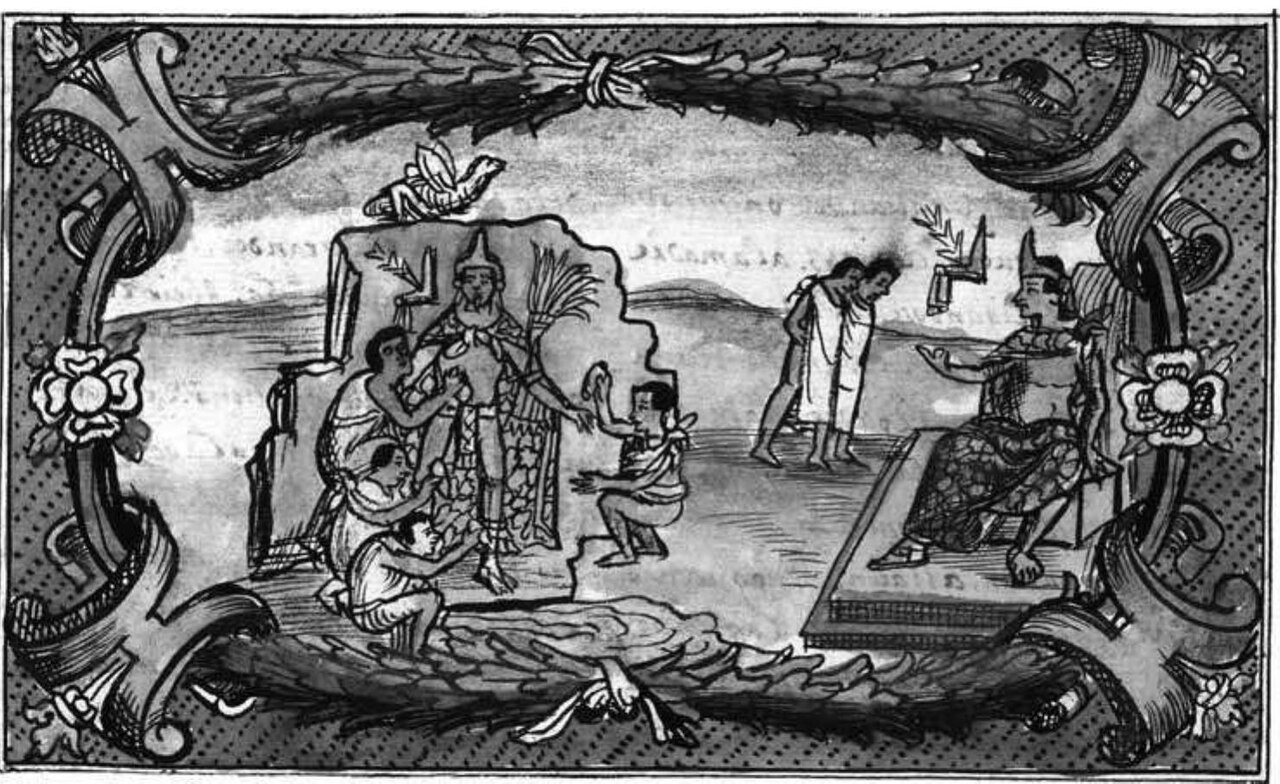
Black-and-white reproduction of a framed colonial-era manuscript painting. At left, figures labor around a seated carved stone figure on a hill. At right, a seated ruler on a raised platform gestures toward two standing men, while a small kneeling figure stands between the scenes.Painting

Primary source

Codex Durán: Moctezuma Overseeing His Chapultepec Sculpture

Diego Durán · 16th century

Woodcut-framed title page of an early printed Spanish letter. The engraving shows a crowned figure seated on a throne in an arched hall, holding a scepter, with a ship and pineapple-like plants in side niches. Below is black-letter text, and a handwritten signature is at the bottom.Letter

Primary source

Second Letter of Hernán Cortés to Charles V

Hernán Cortés · 30 October 1520 (printed 1522)

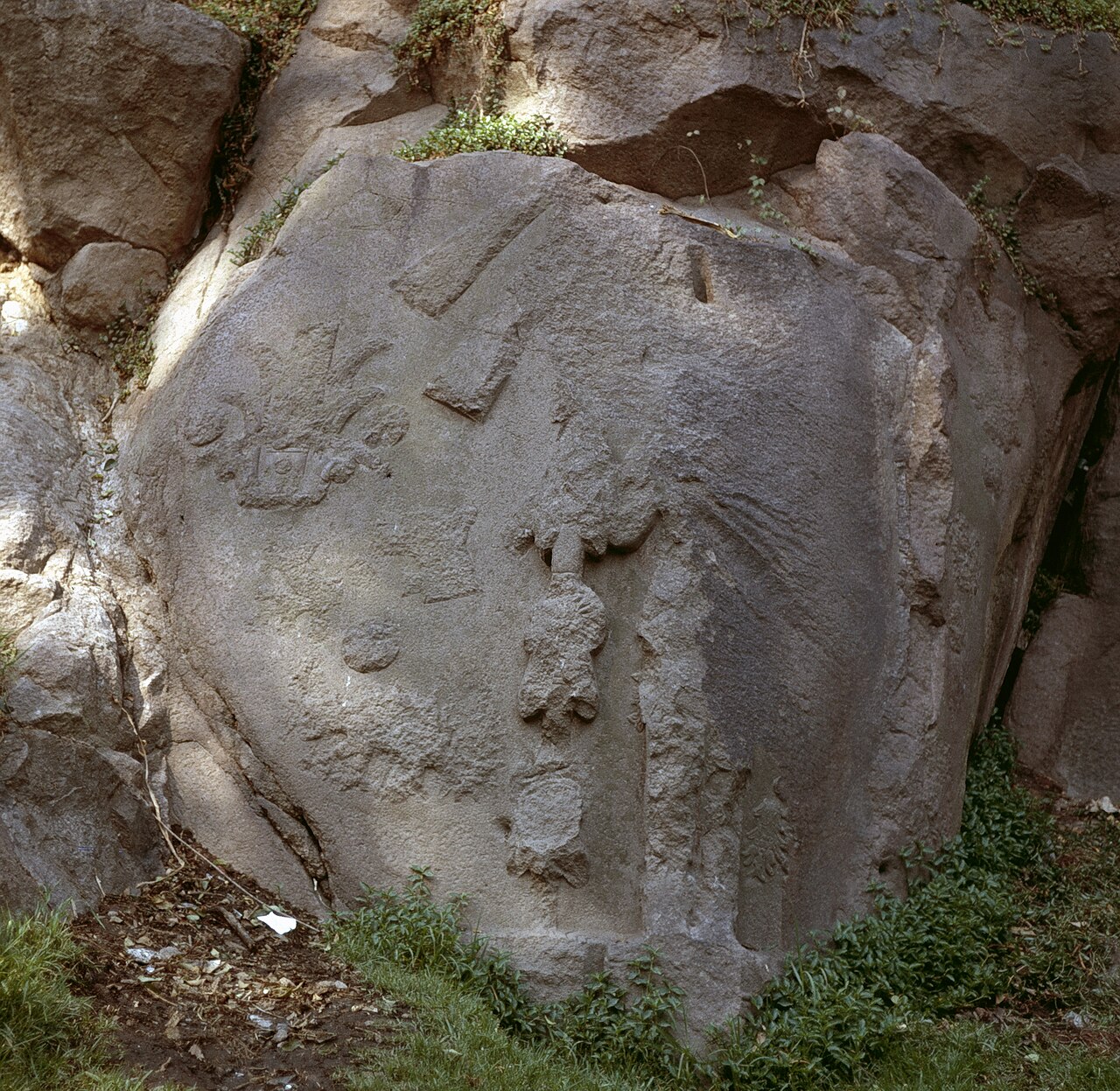
Weathered grey granite boulder on a hillside with eroded carved relief figures and glyphs. A faint standing figure with a staff is visible on the left; a vertical carved form and smaller shapes are visible in the centre and right. Grass and ivy surround the rock.Sculpture

Secondary source

Rock Sculpture of Moctezuma II on Chapultepec Hill

HJPD · 1986 (photograph of carving made earlier)

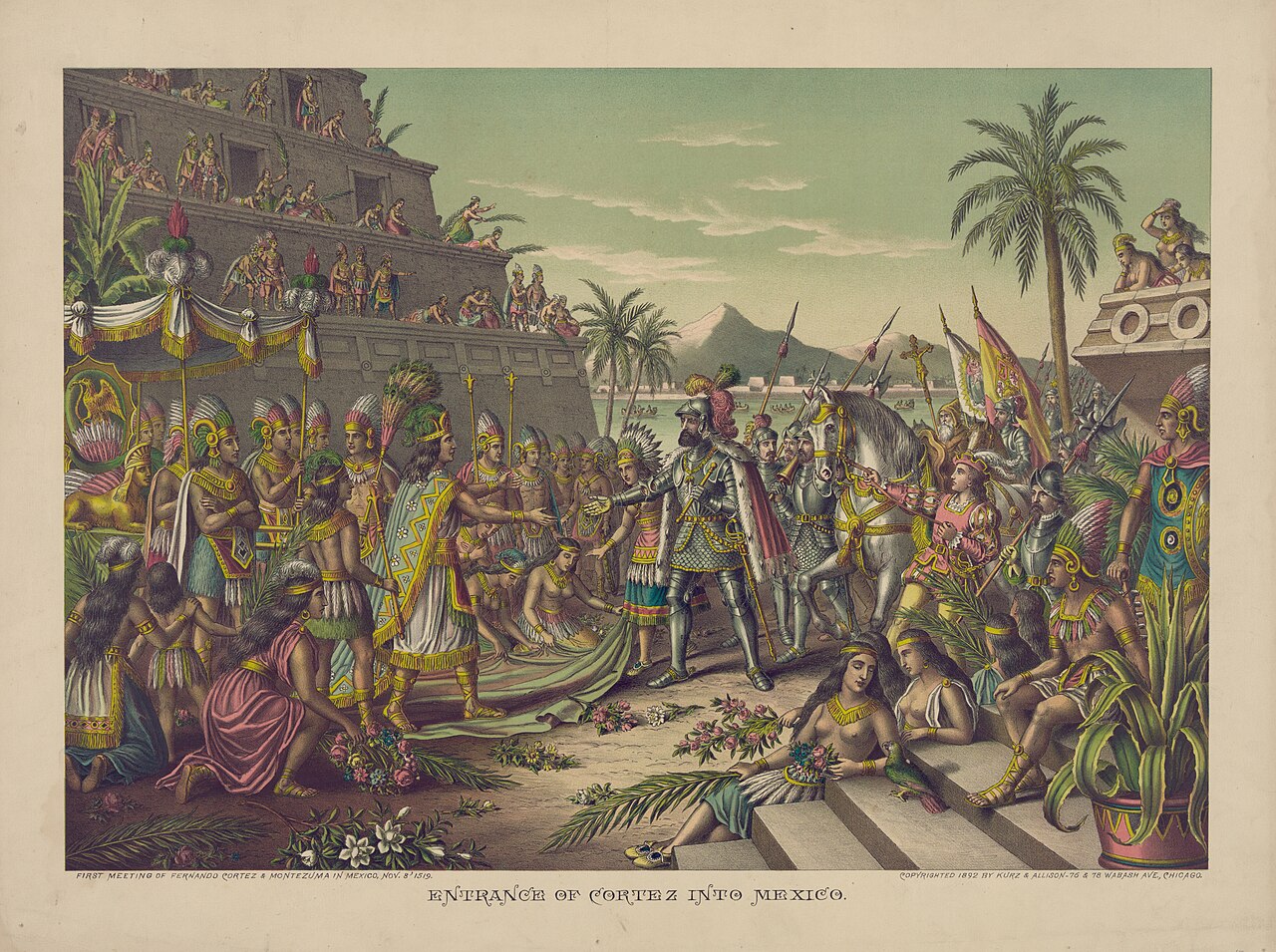
Colored lithographic print titled Entrance of Cortez into Mexico. Spanish conquistador in armor on a grey horse is greeted by a richly dressed Aztec leader under a canopy, with kneeling attendants, flowers, palms, a pyramid, and a mountain in the background.Painting

Secondary source

Cortés Meets Montezuma in Mexico

Kurz and Allison (publisher) · c. 1892

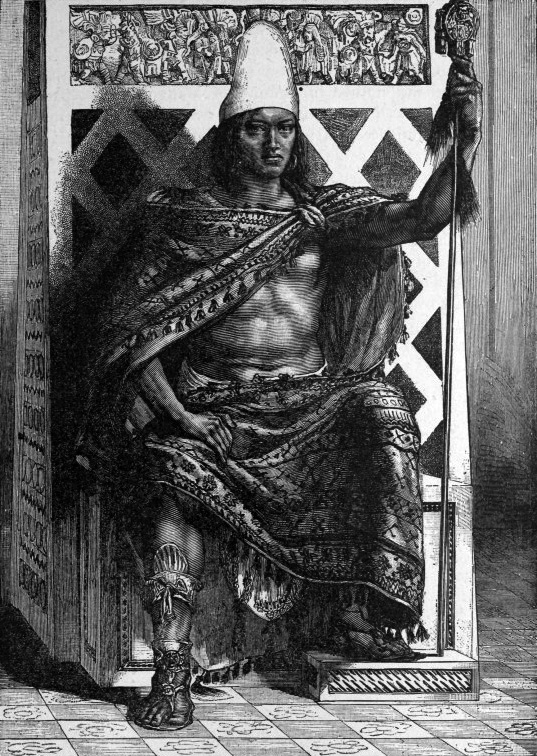
Black-and-white engraving of a standing man in a tall white headdress and a patterned cloak draped over his shoulders, with bare chest and legs visible. He holds a tall staff with an ornate top in his right hand and rests his left hand on his hip. He stands before a geometric lattice backdrop, with a carved frieze of figures above and a tiled floor below.Painting

Secondary source

The Emperor Moctezuma

N. Mathew · 1892

Photograph of a carved grey volcanic stone slab with raised relief designs: a central sun-disc with radiating motifs, serpent and jaguar heads at the corners and sides, and a framed panel at the bottom with a feathered element.Artifact

Primary source

Stone of the Five Suns, Coronation Stone of Motecuhzoma II

1503

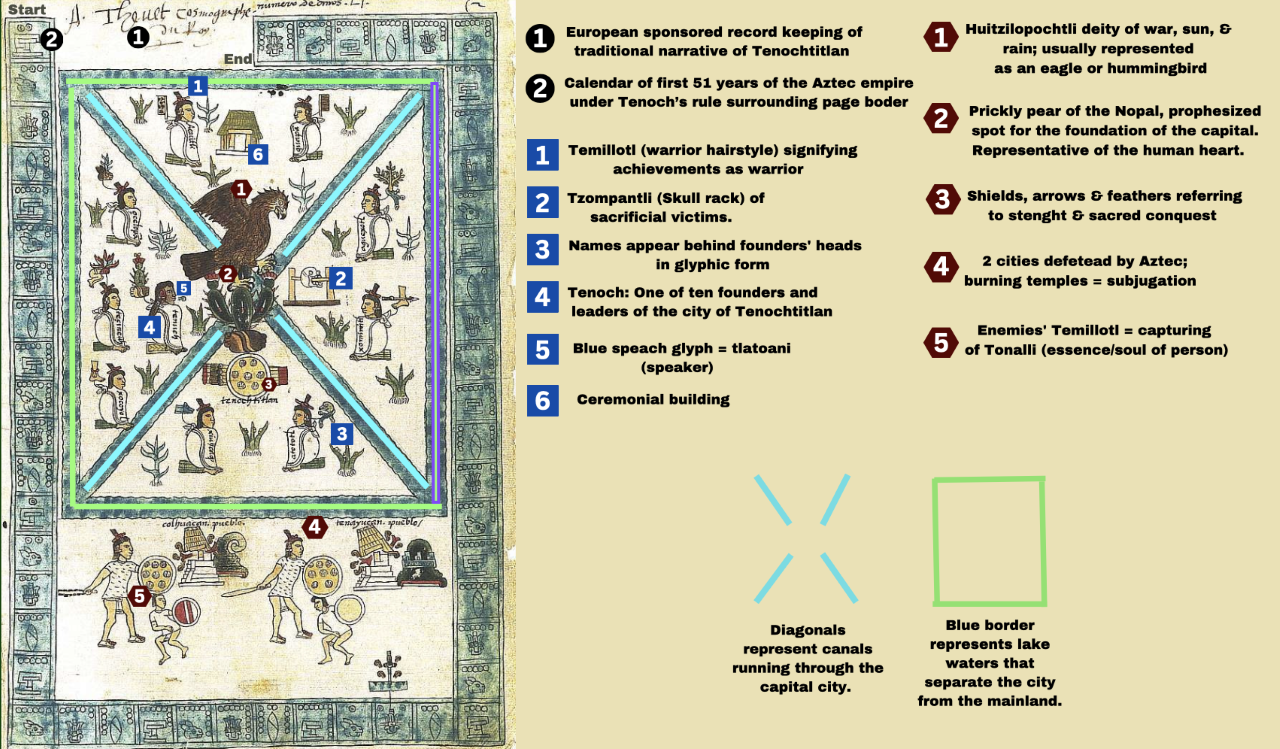
Annotated diagram of the first page of the Codex Mendoza. Center shows a stylized map of Tenochtitlan with diagonal blue canals, a blue border for lake waters, an eagle on a cactus, and figures with glyphs. Numbered labels and explanatory text on the right describe symbols. Right panel is a key with numbered items and color legend.Document

Primary source

Codex Mendoza: First Page

16th century

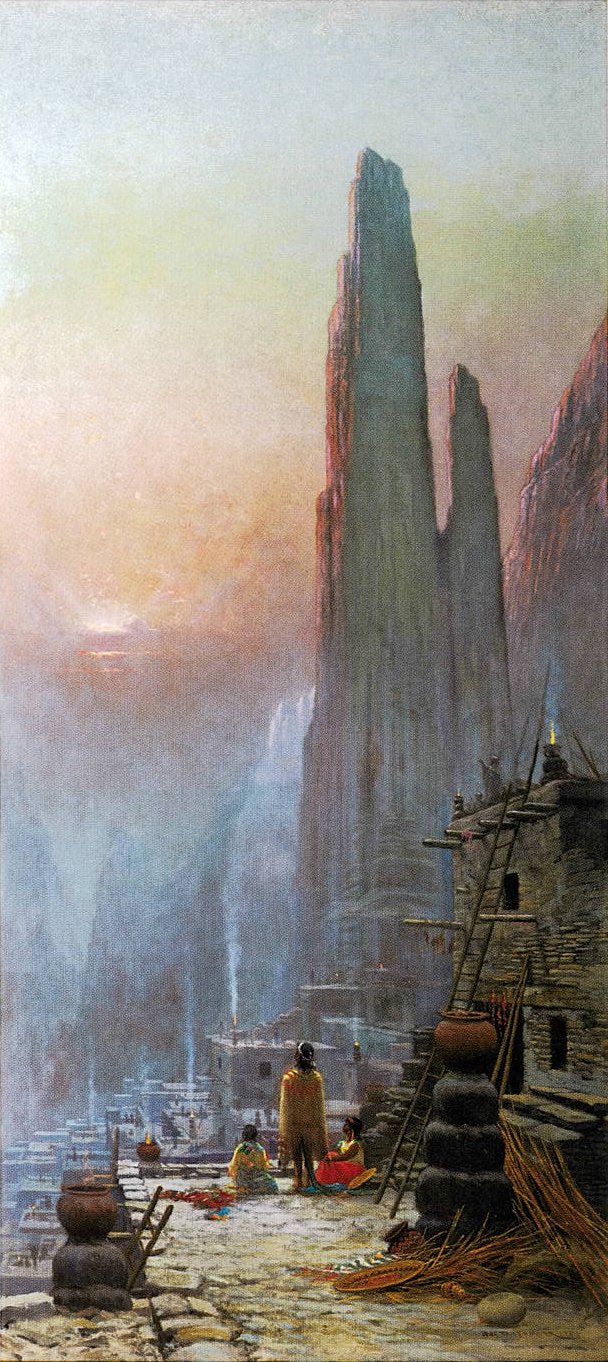
Tall vertical painting of a dawn or dusk scene with towering rock spires under a pale, glowing sky. In the foreground, a figure in a long cloak stands beside two seated women in colorful skirts, near stone buildings, pots, and a ladder against an adobe-style wall.Painting

Secondary source

Waiting for Montezuma

Jules Tavernier · 1879

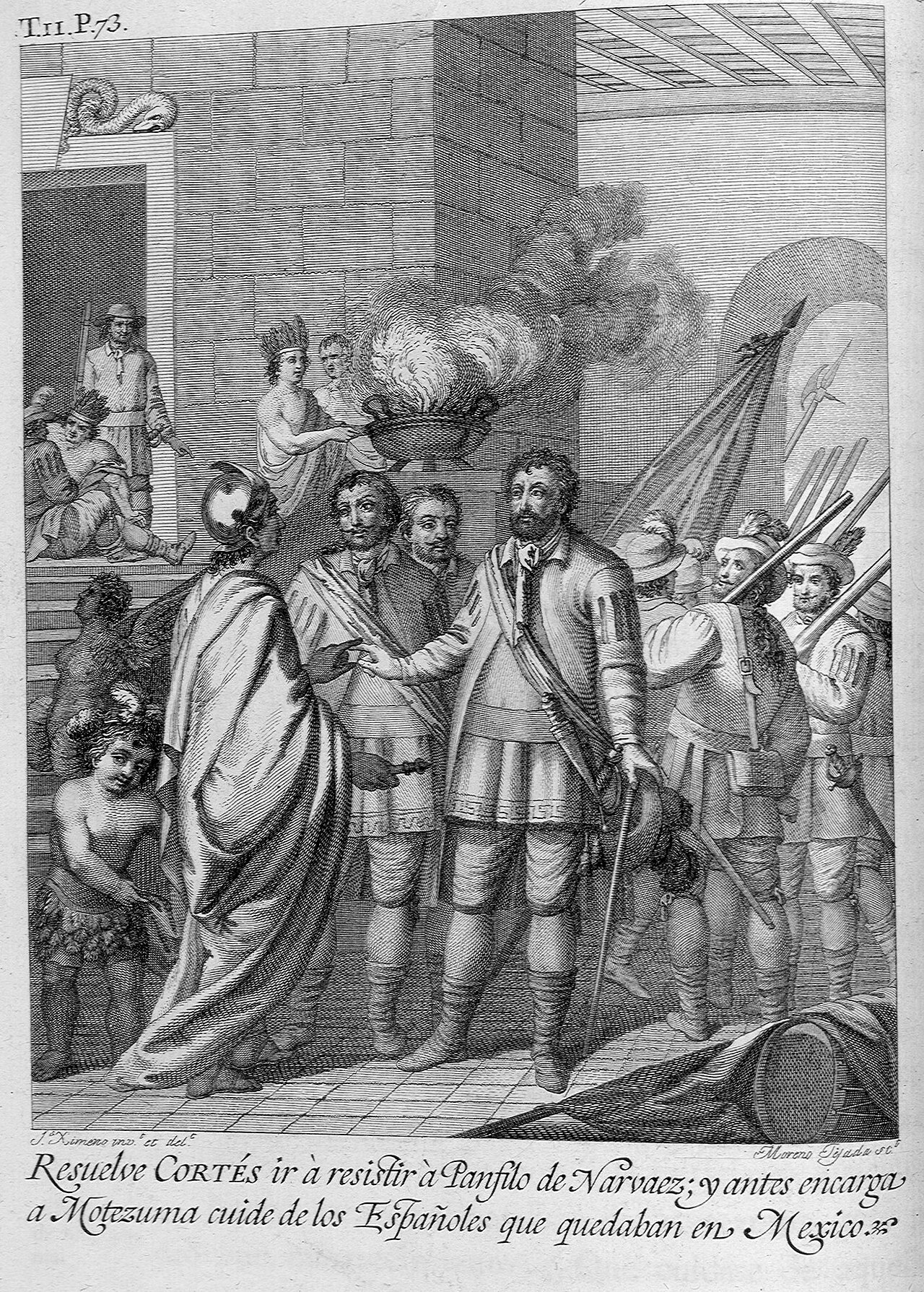
Engraved plate from a 1783 book. Cortés, in armor with a sash, clasps hands with a robed Montezuma before a brazier fire. Spanish soldiers with muskets and a flag stand at right; Mexica figures appear at left. A Spanish caption lies below the image.Painting

Secondary source

Cortés leaves Montezuma in charge

1783

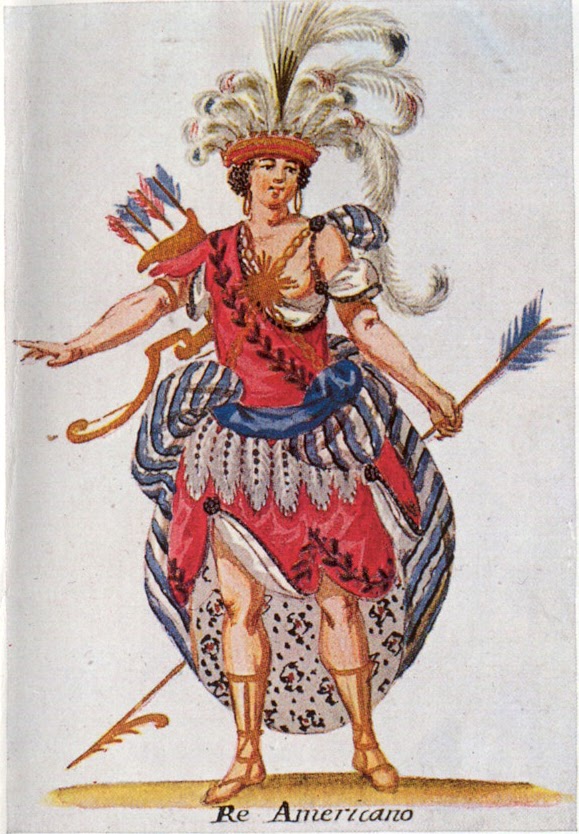
Hand-colored drawing of a standing figure labeled 'Re Americano'. The figure wears a red headdress with tall white and grey feathers, a red and blue striped gown with a red sash, and sandals. It holds a bow and quiver on one arm and an arrow in the other hand.Painting

Secondary source

Costume Design of Montezuma for Graun's Opera

Christian Gottlob Fechhelm · c. 1755

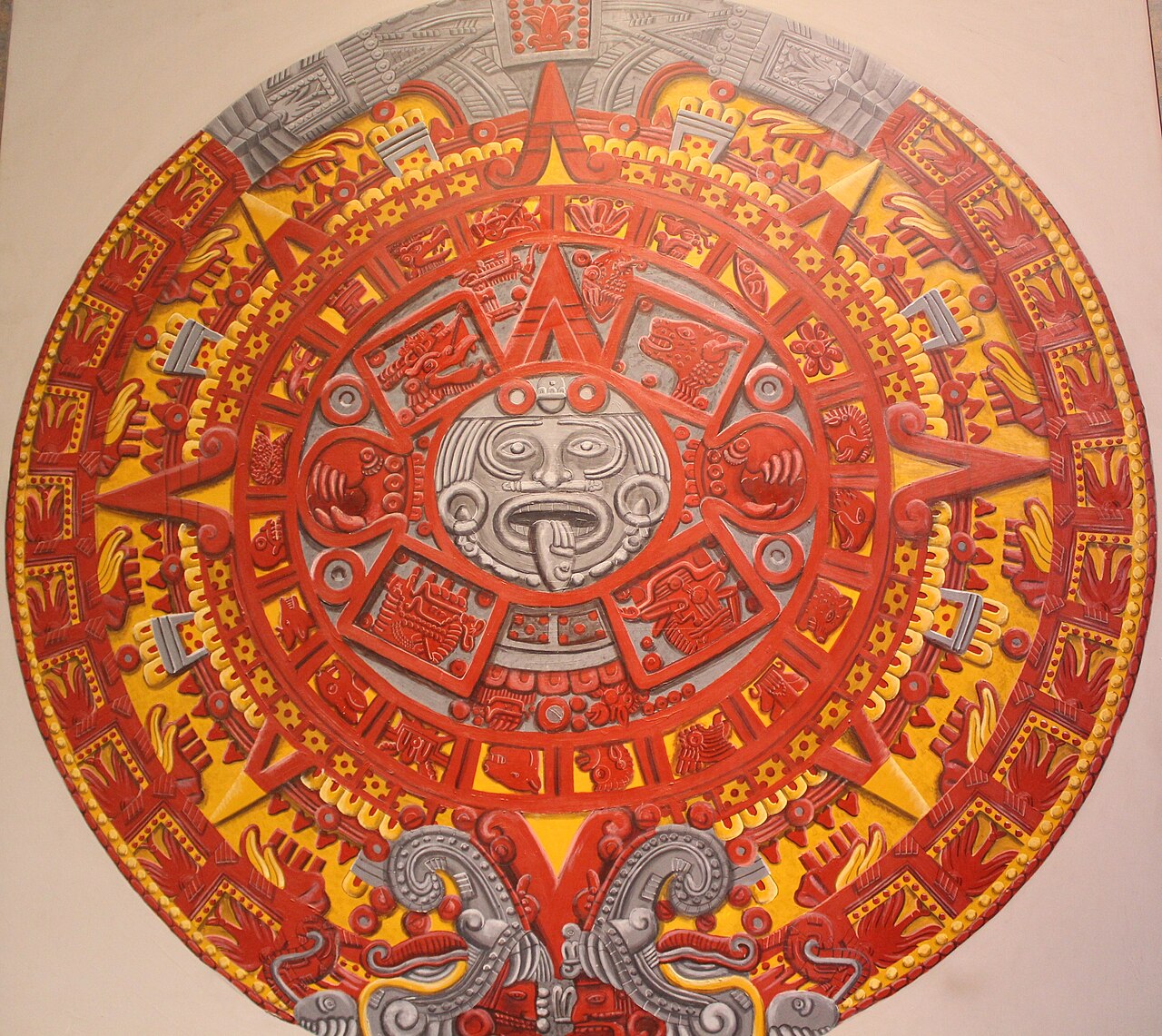
A large circular painted replica of the Aztec Sun Stone, in red, yellow, and grey, with a central carved stone face with protruding tongue surrounded by ornate square panels and stylized sun rays. Placed against a plain pale wall.Photograph

Secondary source

Stone of the Sun at the National Anthropology Museum

Deror_avi · 2015-07-14

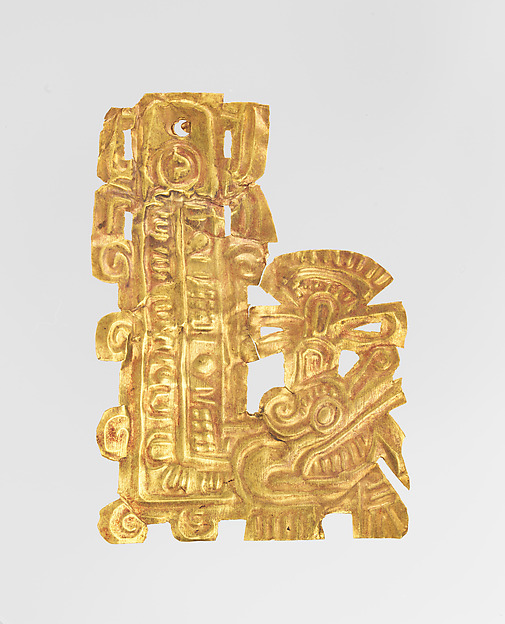
A thin, hammered gold plaque with embossed relief decoration on a light grey background. The left side has a tall vertical column of stacked motifs with a small hole near the top. The right side shows a stylized serpent head with a feathered crest, curled scroll forms, and a toothed jaw.Artifact

Secondary source

Feathered Serpent Gold Ornament

Mexica or Mixtec (Ñuu Savi) artists · 1325-1521

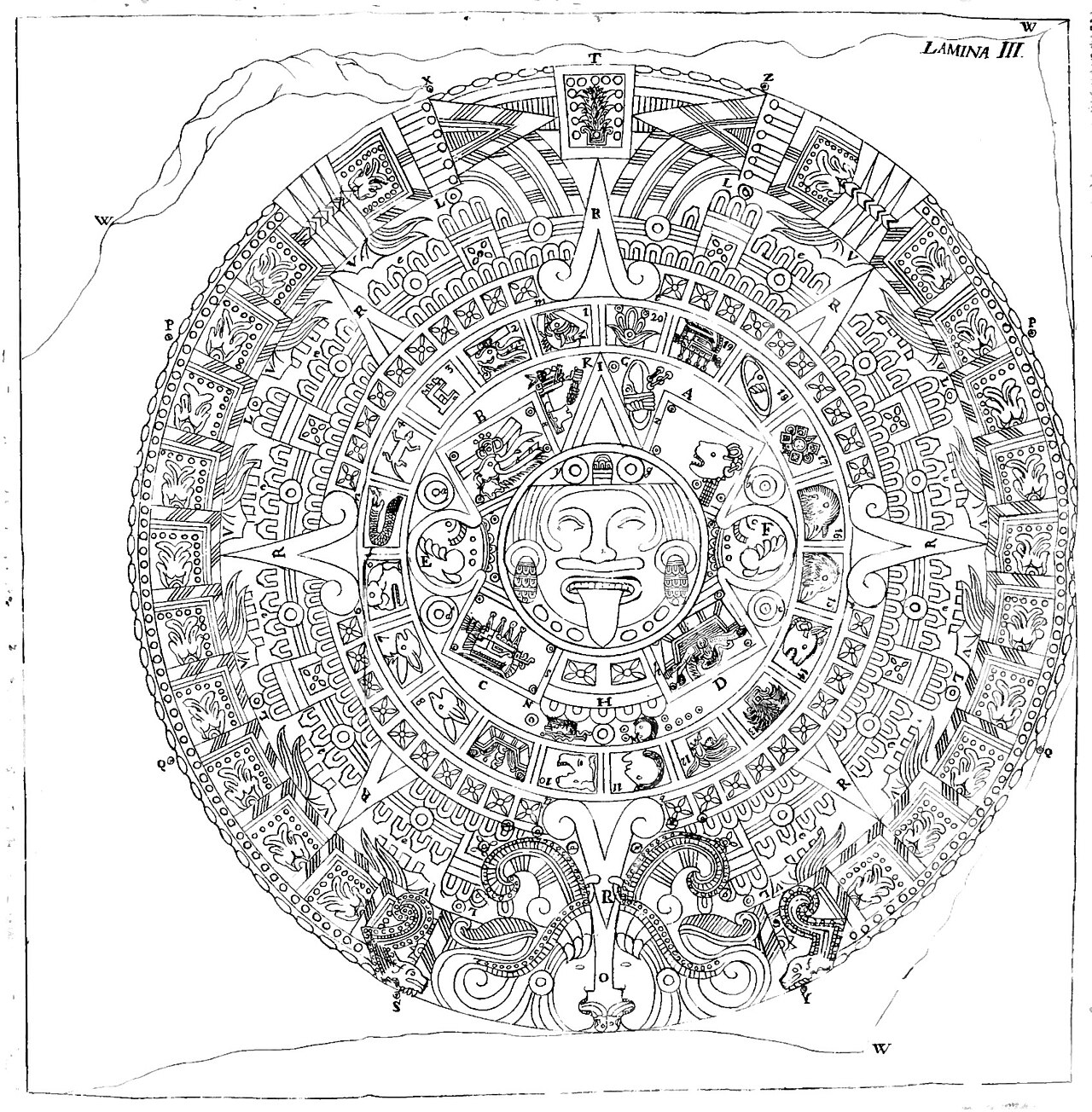
Engraved plate labeled Lamina III showing a circular Aztec calendar stone drawing: a central carved face with protruding tongue surrounded by concentric rings of glyphs, day signs, and decorative motifs, with letter labels around the edge.Painting

Secondary source

Plate III, Historical and Chronological Description of the Calendar Stone

1792

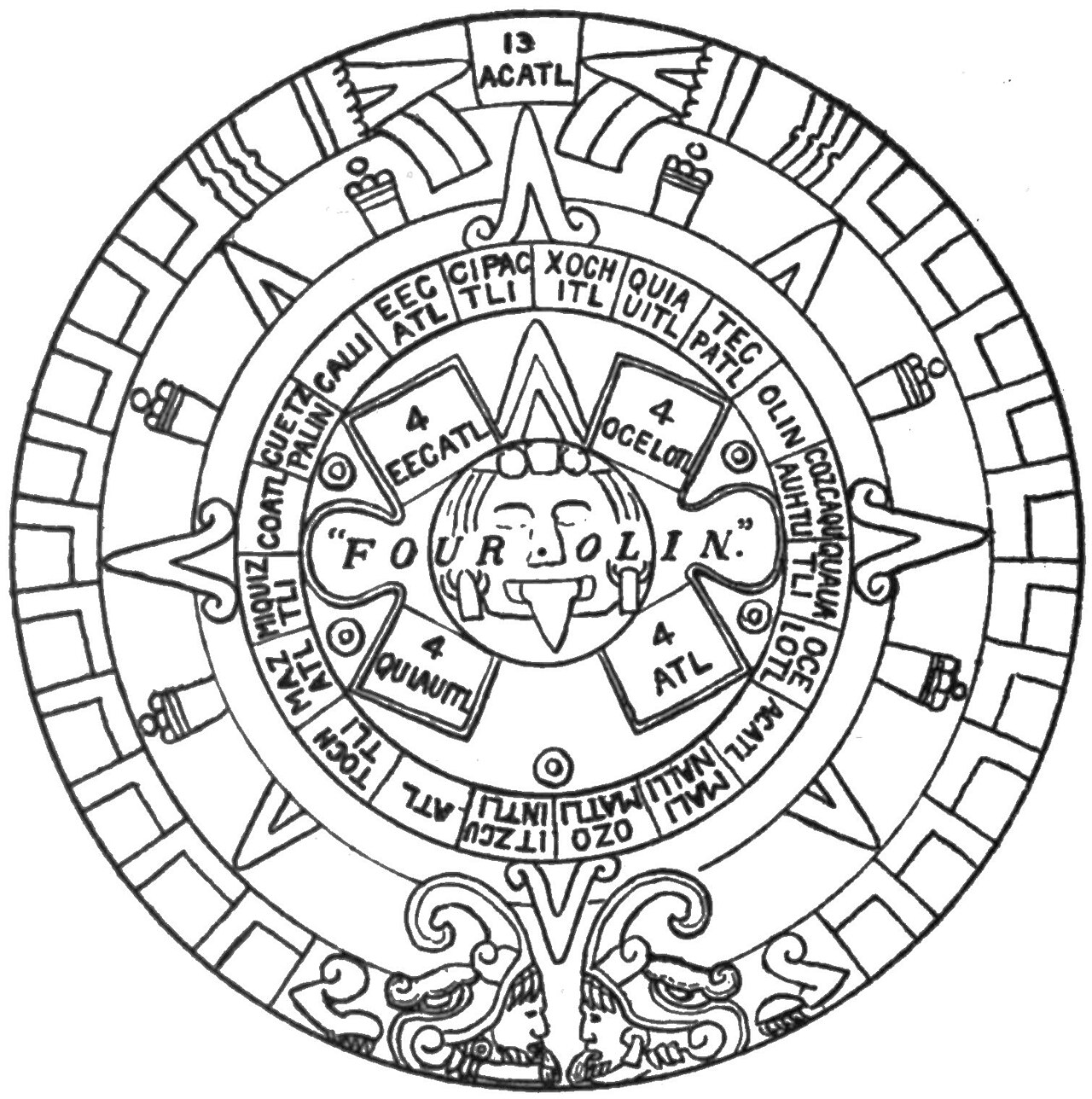
Black and white line drawing of the Aztec calendar stone key. Concentric rings show day signs such as Acatl, Ocelotl, Atl and Quiahuitl, with a central face with protruding tongue and the label Four Olin, and carved serpent-like heads at the bottom.Document

Secondary source

Key to the Calendar Stone

1914

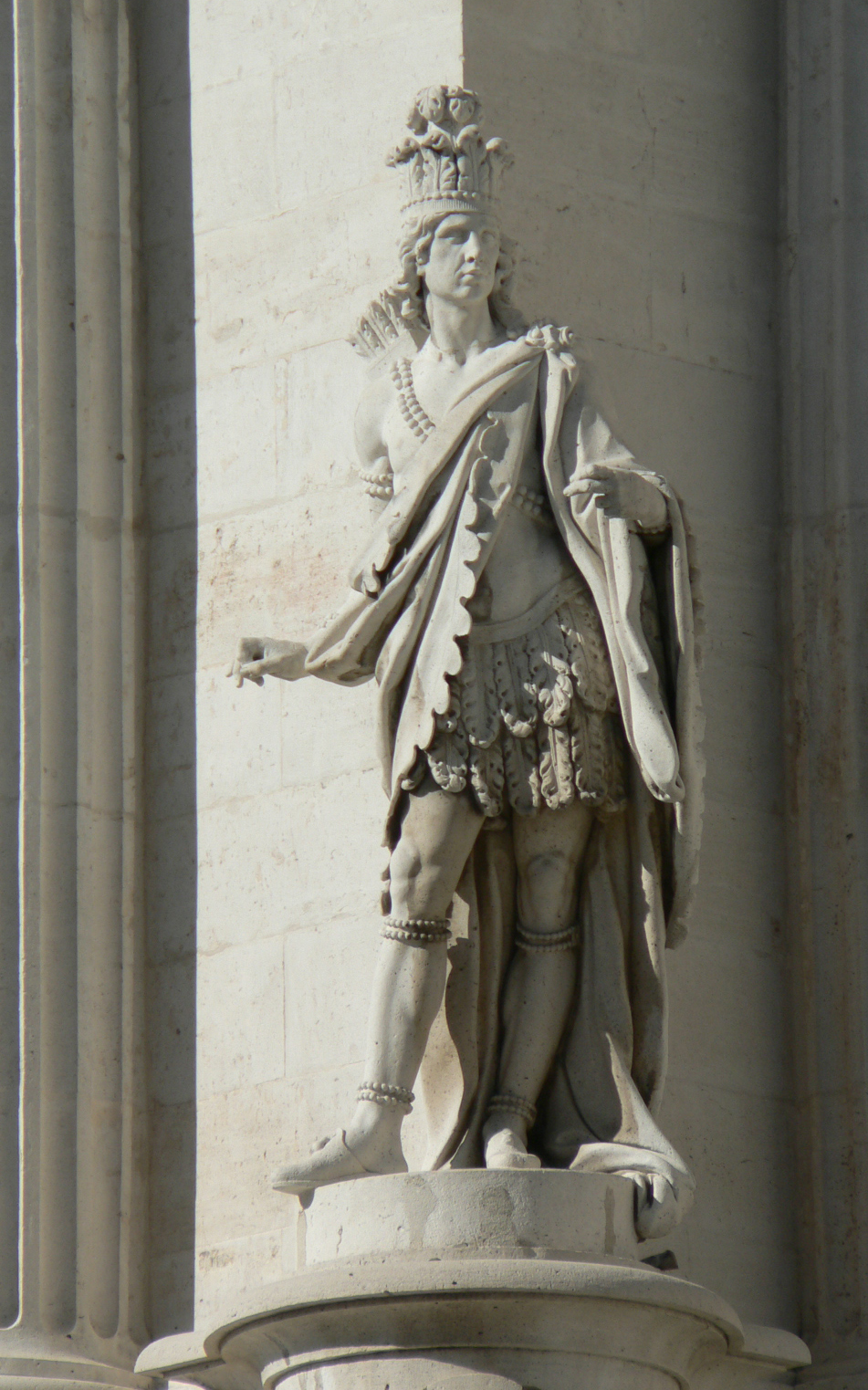
White stone statue of a crowned figure standing on a pedestal against a pale building wall. The figure wears a feathered or leafy headdress, a draped cloak over one shoulder, a short pleated skirt with fringed trim, and a beaded necklace and armband. One arm extends outward, the other holds the cloak.Sculpture

Secondary source

Statue of Moctezuma II, Royal Palace of Madrid

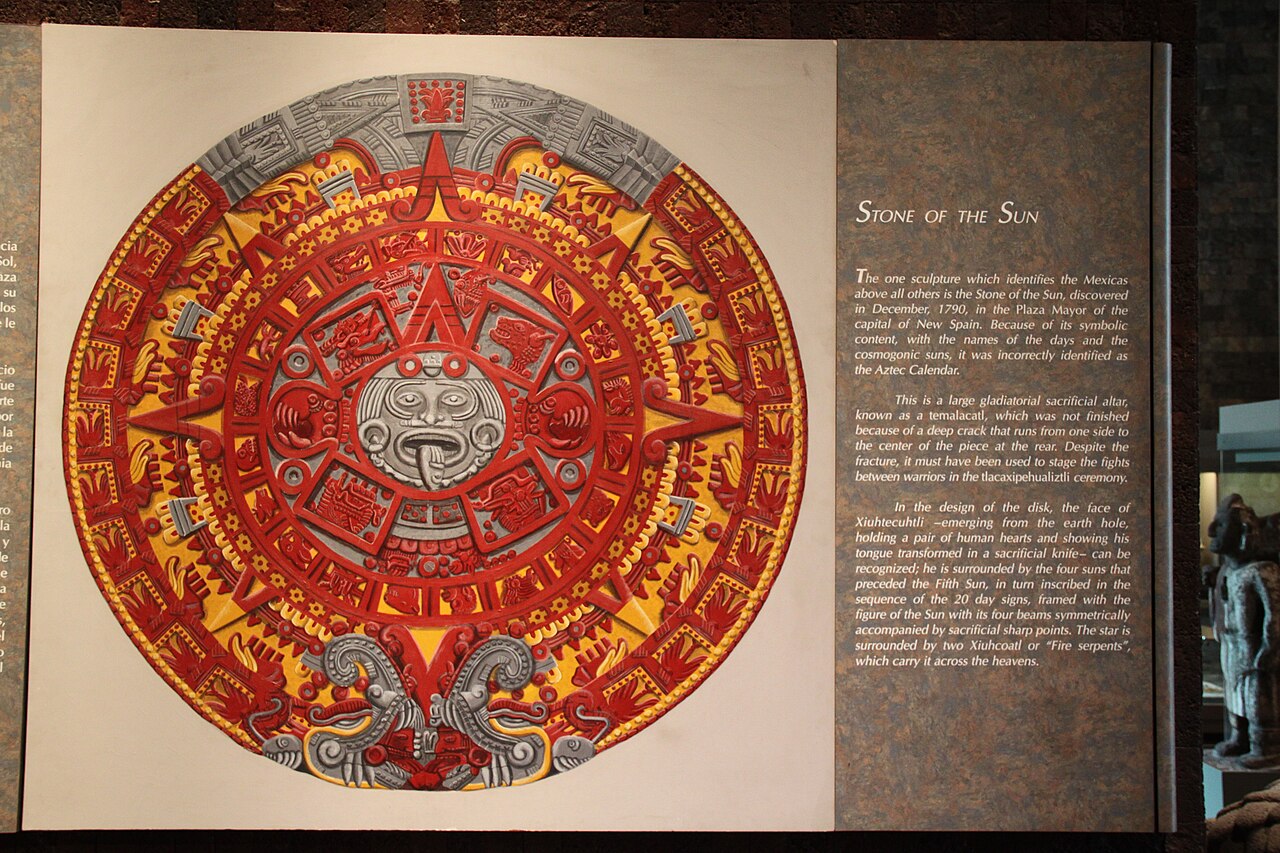
A museum display panel showing a large painted reproduction of the Stone of the Sun, a red, yellow and grey circular Aztec calendar with a central carved face, beside a text panel describing it.Photograph

Secondary source

Aztec Stone of the Sun Display, National Museum of Anthropology

Gary Todd · 2012-07-04

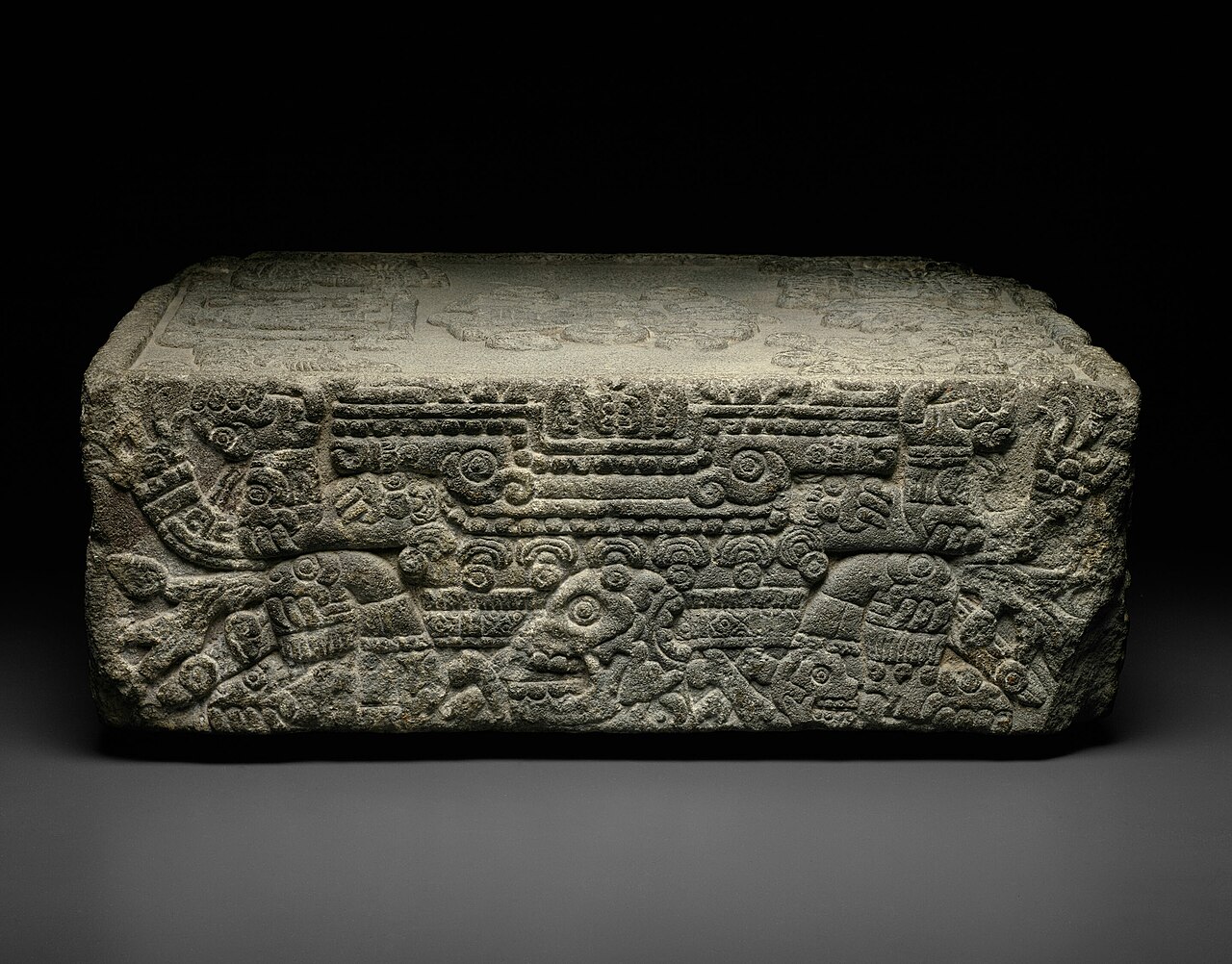
Photograph of a rectangular dark grey volcanic stone block against a black background, its front face carved in low relief with dense Aztec-style figures, glyphs, and scrolling motifs. The top surface is also carved.Artifact

Secondary source

Profile View of Moctezuma's Coronation Stone

Unknown · 1503

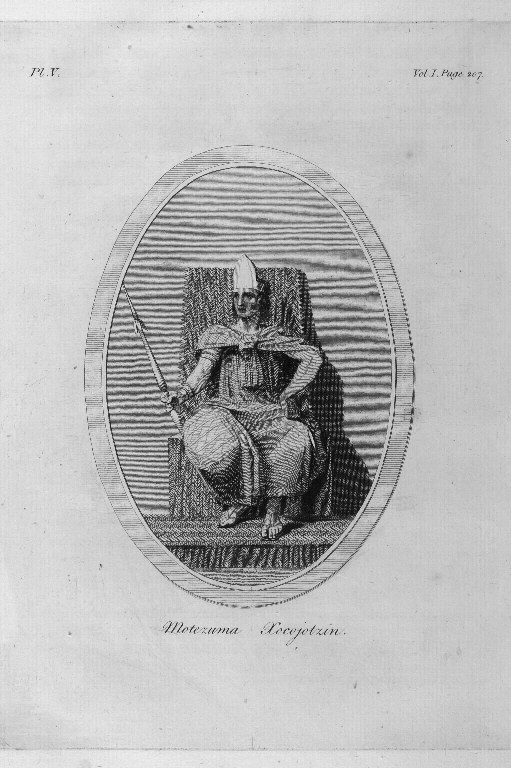
Black-and-white engraved plate labeled Pl. V, Vol. I, Page 267, showing a seated figure in an oval frame. The figure wears a tall white headdress, a draped garment, and holds a staff, seated on a throne with a striped background. Caption below reads Motezuma Xocojotzin.Painting

Secondary source

Moctezuma Xocojotzin Portrait, Clavigero 1787

Francesco Saverio Clavigero · 1787

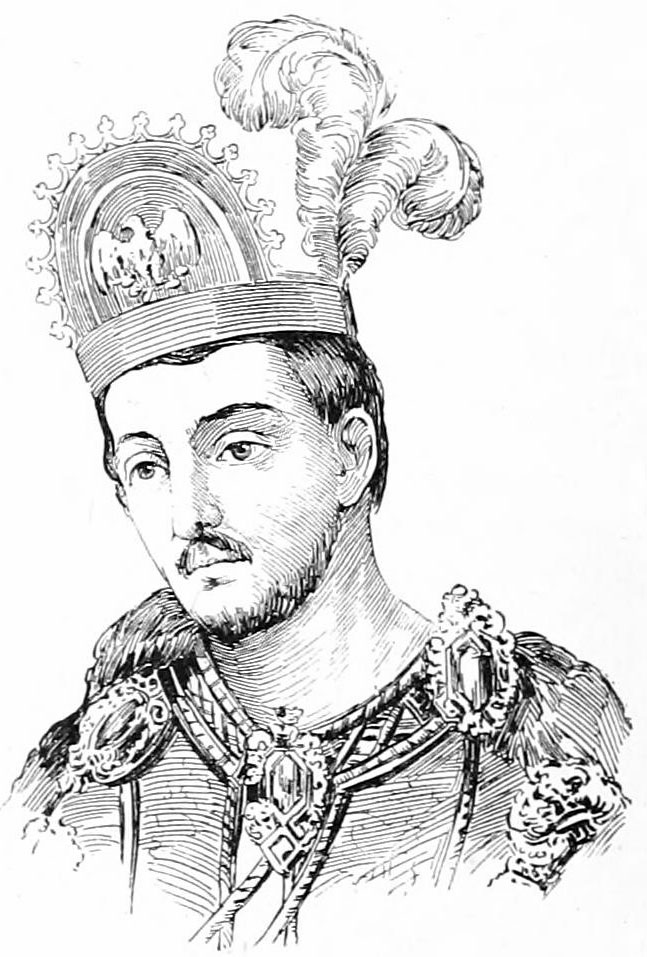
Black and white engraved portrait of a man in three-quarter view, wearing a tall crown-like headdress with an eagle emblem and ornate feathers, a jeweled collar and shoulder ornaments. Fine line hatching shades the image.Painting

Secondary source

Portrait Drawing of Montezuma II

Jacques Reich · published 1900

Faded, grainy color photograph of a weathered rock surface with faint carved relief lines and shapes, partly shadowed on the right edge by dark vegetation. The carving is hard to make out clearly.Photograph

Secondary source

Defaced Sculpture of Moctezuma II at Chapultepec

Infrogmation · 1976

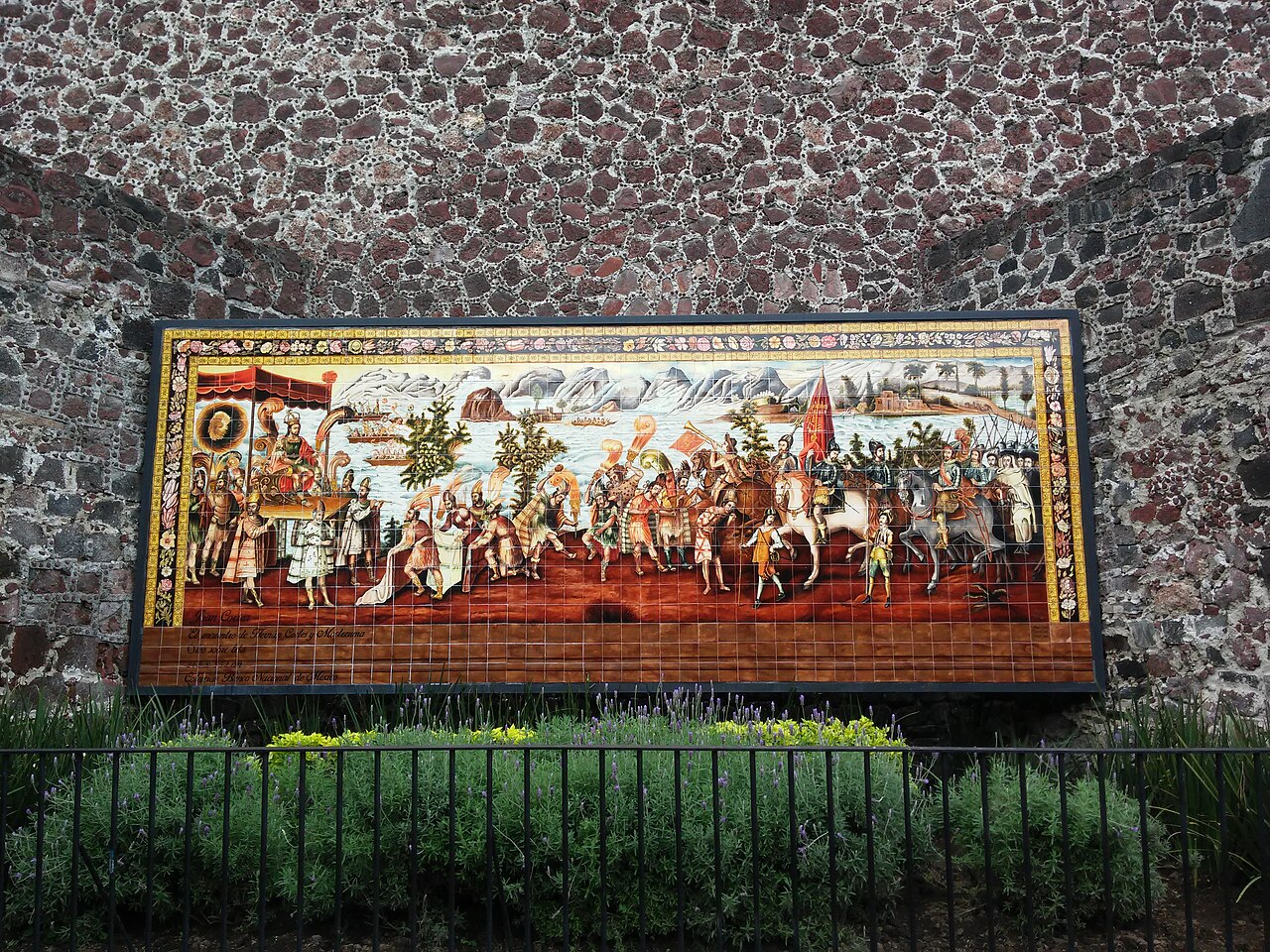
A large rectangular tile mural set into a stone wall, depicting a crowded historical procession: a canopied palanquin on the left with a seated figure, many people in colorful dress, horses with riders in armor on the right, and mountains and water in the background. Lavender plants and a black metal railing are in front.Sculpture

Secondary source

Plaque Marking Moctezuma's Meeting with Cortés

Henryficar · 2017

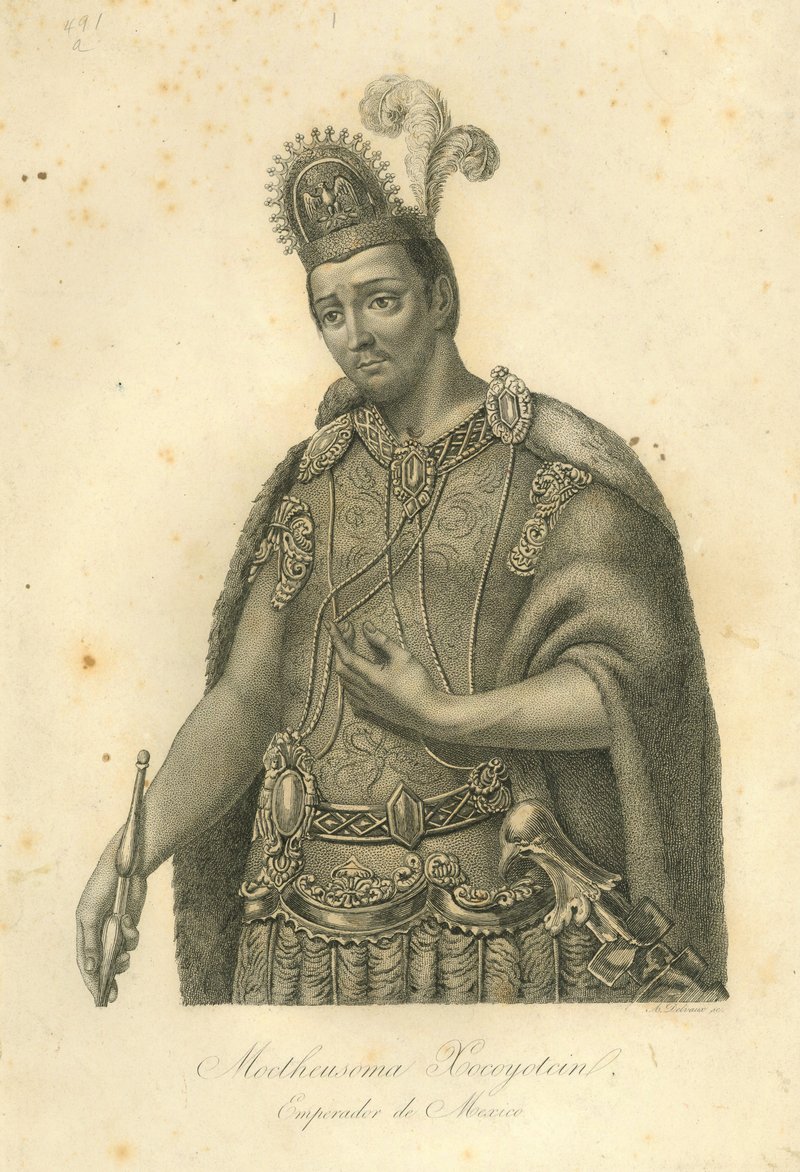
Steel engraving portrait of a man wearing an ornate crown with a tall white feather plume, a jeweled collar, a patterned cape, and a belt with jewels. He holds a scepter in one hand and rests the other on his chest. Caption below reads Moctezuma Xocoyotzin, Emperador de Mexico.Painting

Secondary source

Portrait of Moctezuma Xocoyotzin, Steel Engraving Before 1879

before 1879

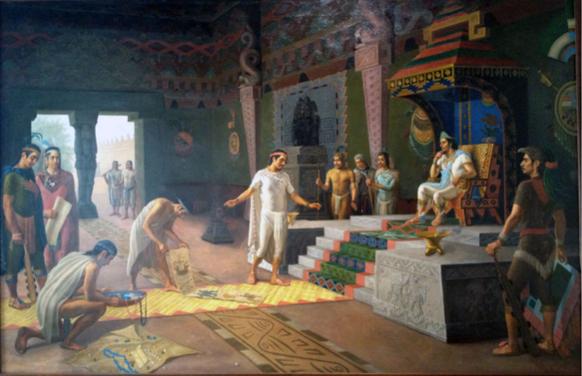
Painting of an Aztec court scene. A seated ruler on a raised throne with a feathered canopy receives a pale-robed man standing on a step. Kneeling and bent figures on a patterned floor appear to draw or record on cloth. Other attendants, guards in dark garments, and ornate red and green wall decorations surround the room, with an open doorway at left.Painting

Secondary source

Moctezuma's Messengers

Isidro Martínez · 19th century

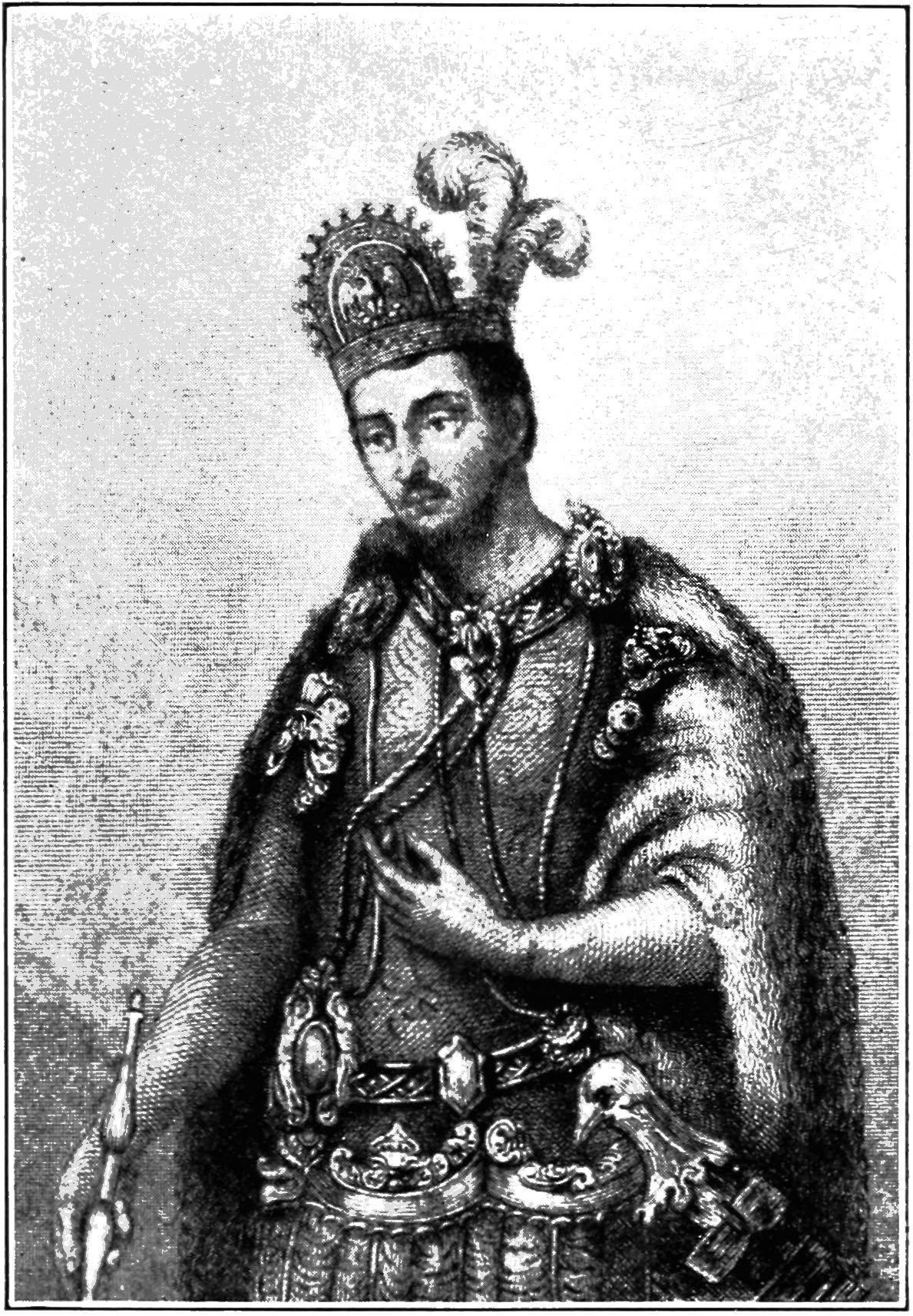
Black and white engraved illustration of a man wearing an ornate crown with a large feather plume, a richly decorated cloak with fur trim and jeweled ornaments, holding a staff in one hand and resting the other on his chest.Painting

Secondary source

The Great Montezuma

1916

A carved stone plaque set into a rough stone wall, with raised lettering reading Moctezuma Xocoyotzin, El conquistador hispano Hernan Cortes, and El dia 8 noviembre de 1519, commemorating their meeting.Sculpture

Secondary source

Monument to the Meeting of Moctezuma and Hernán Cortés

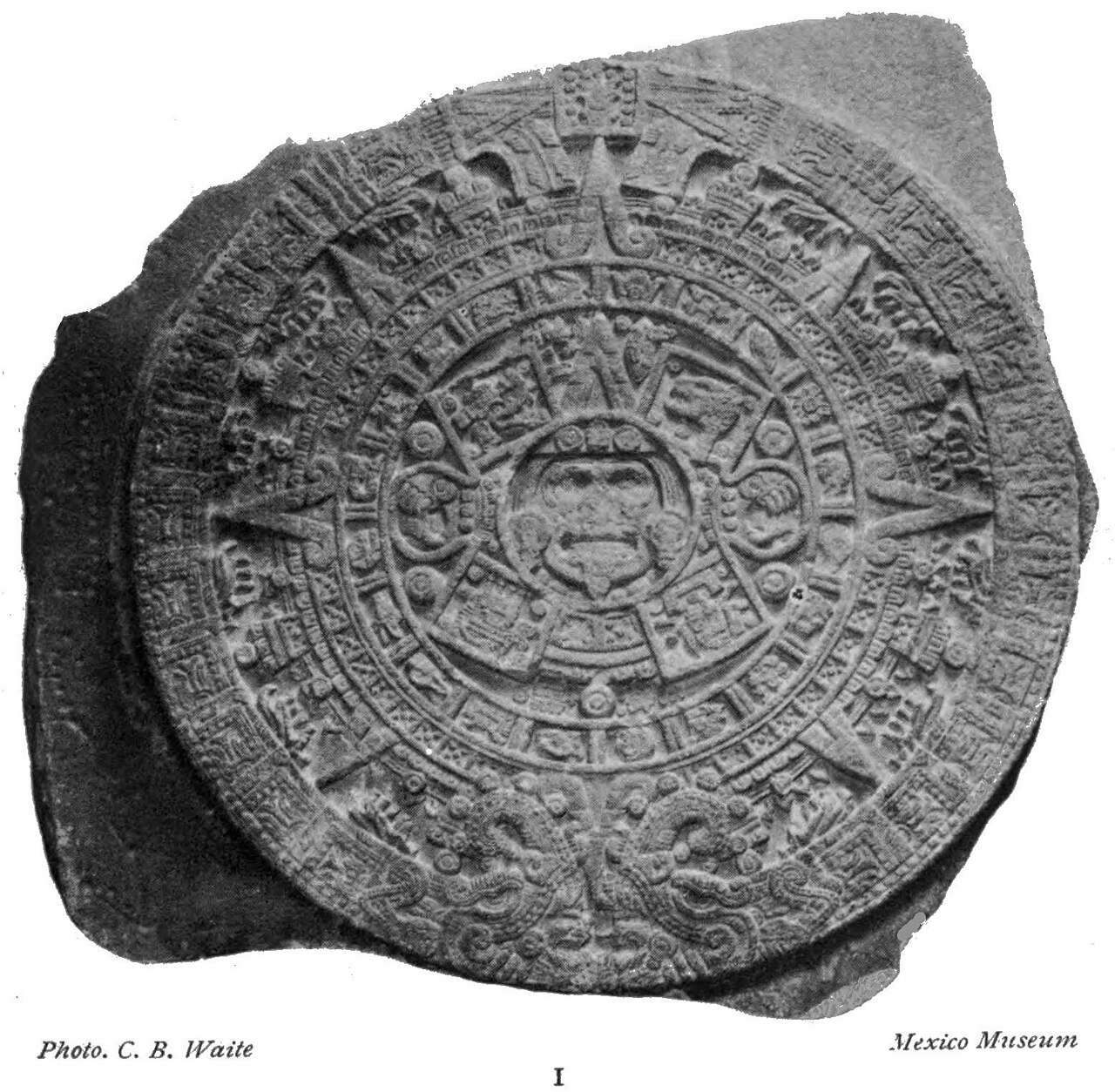
Black and white photograph of the Aztec calendar stone, a large circular carved stone disc with a central face surrounded by concentric rings of carved glyphs and sun-ray motifs. Photo credit C. B. Waite and caption Mexico Museum appear below.Photograph

Secondary source

The Calendar Stone

C. B. Waite · 1914

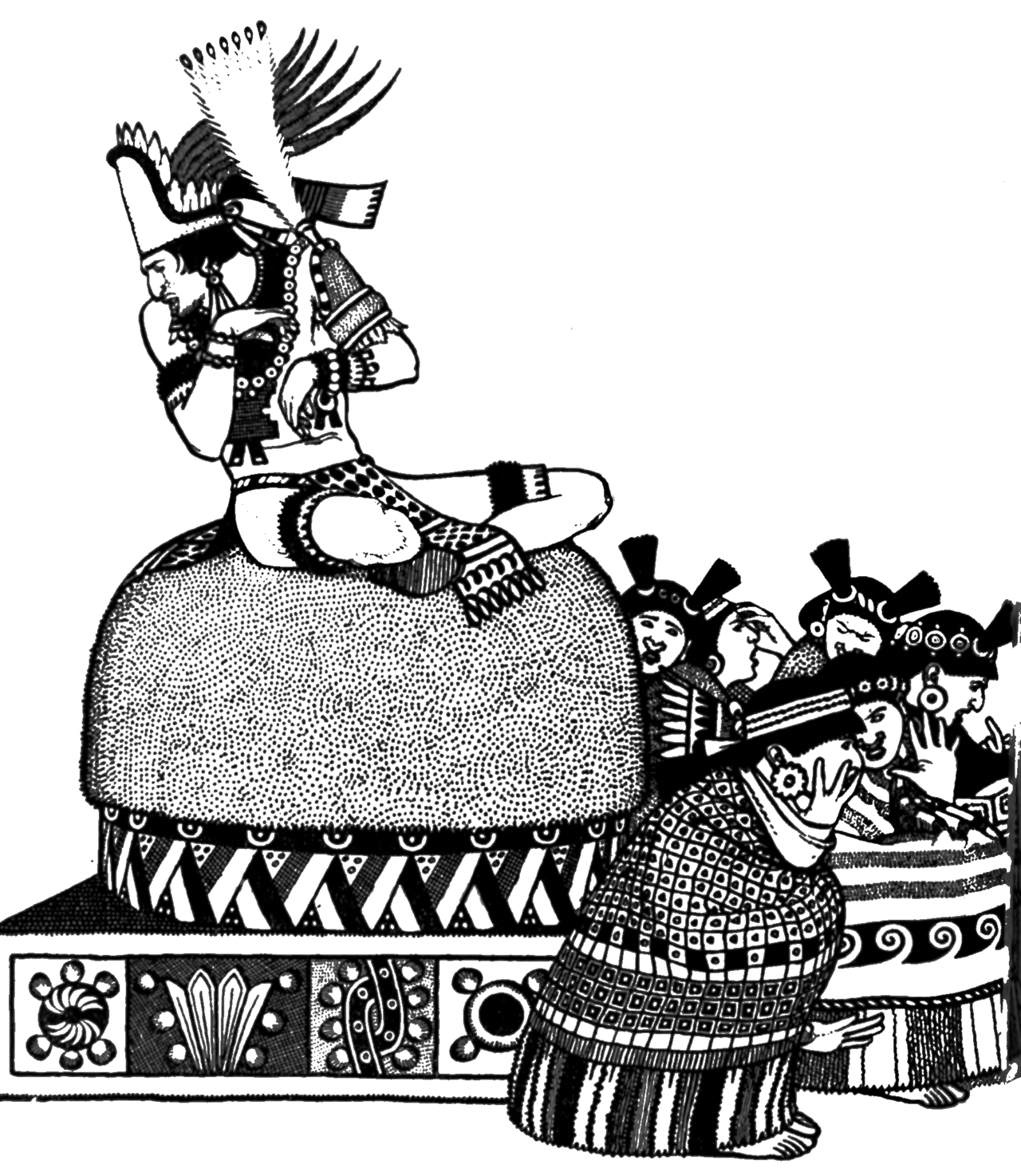
Black-and-white stippled illustration of a seated, feathered-headdress ruler on a large domed cushion or platform, with kneeling and standing attendants in patterned robes gathered at the right. Geometric and scroll borders decorate the base.Painting

Secondary source

Montezuma Turned Away With a Shudder

1922

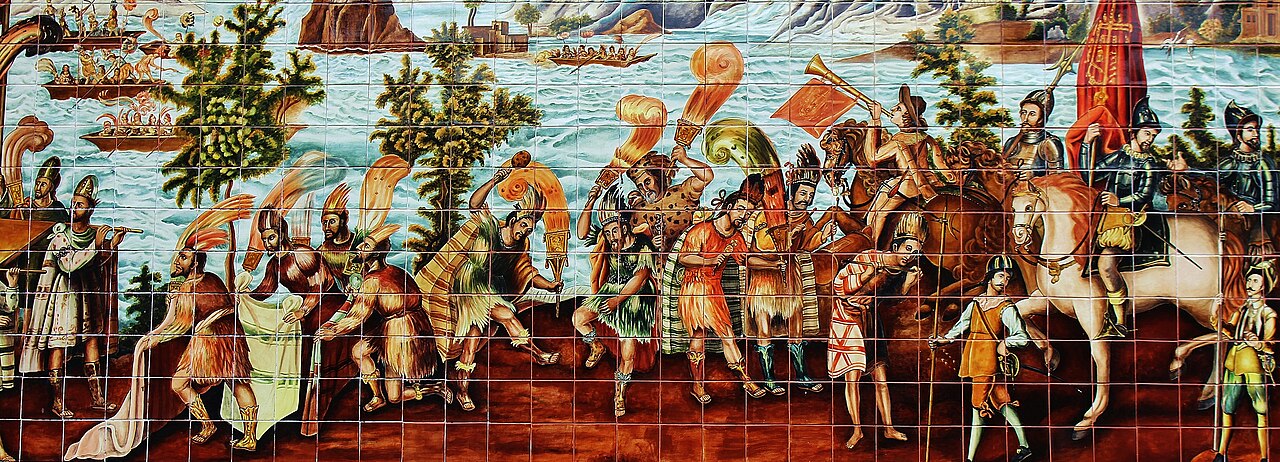
Tiled mosaic mural fragment showing a procession of Indigenous warriors in feathered headdresses and a Spanish mounted procession with armored horsemen, banners and trumpeters, set against a painted landscape of water, trees and a distant city.Artifact

Secondary source

Mosaic of the Meeting of Cortés and Moctezuma

Mario Yaír TS · 2026

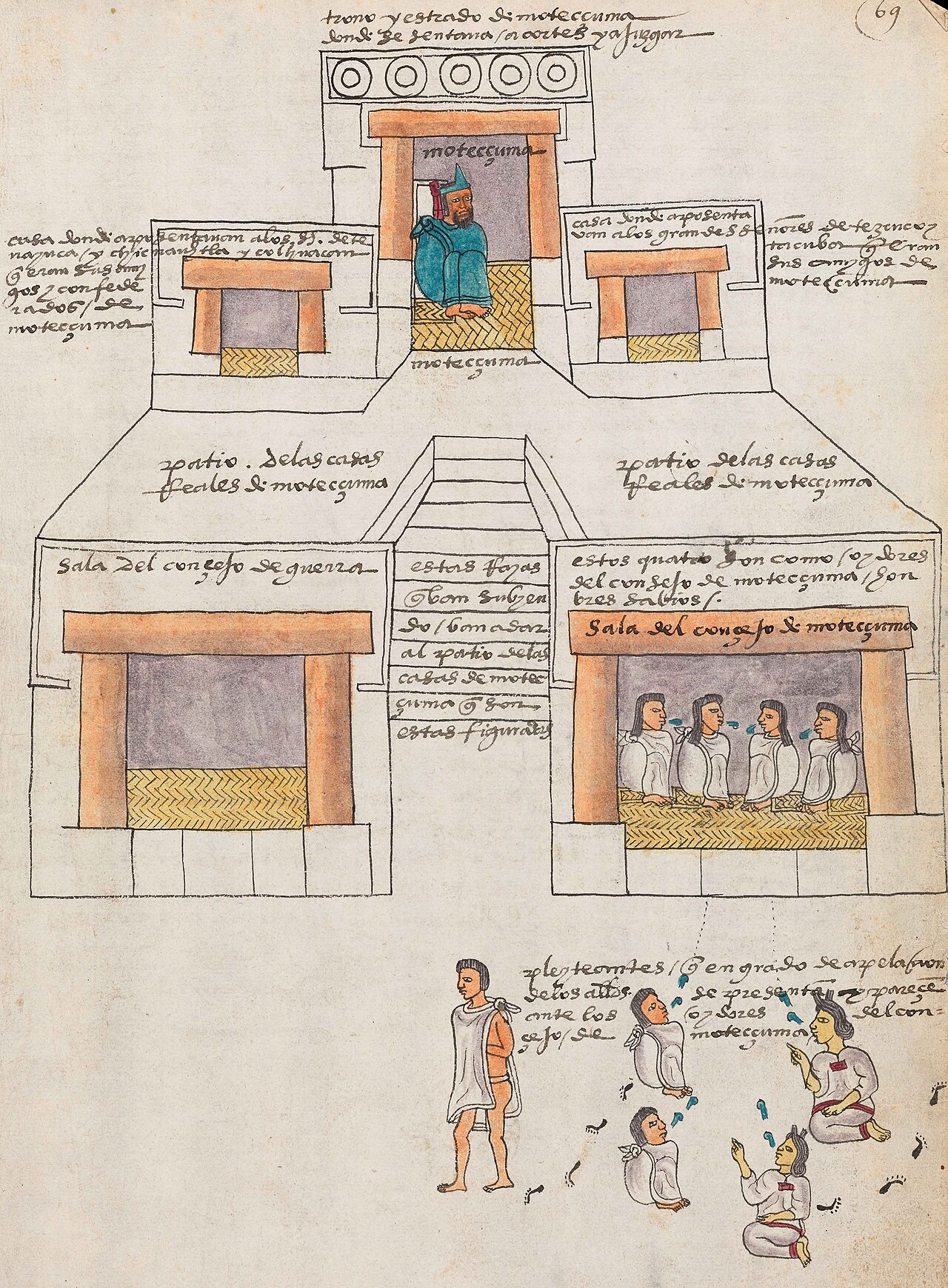
Colonial-era Mexican manuscript page in ink and watercolor showing a schematic plan of Moctezuma's palace complex: a throne room with a seated ruler in blue, flanking chambers, courtyards, a council hall with four seated men, and standing and kneeling figures below. Spanish annotations appear throughout.Painting

Secondary source

Moctezuma Palace Plan

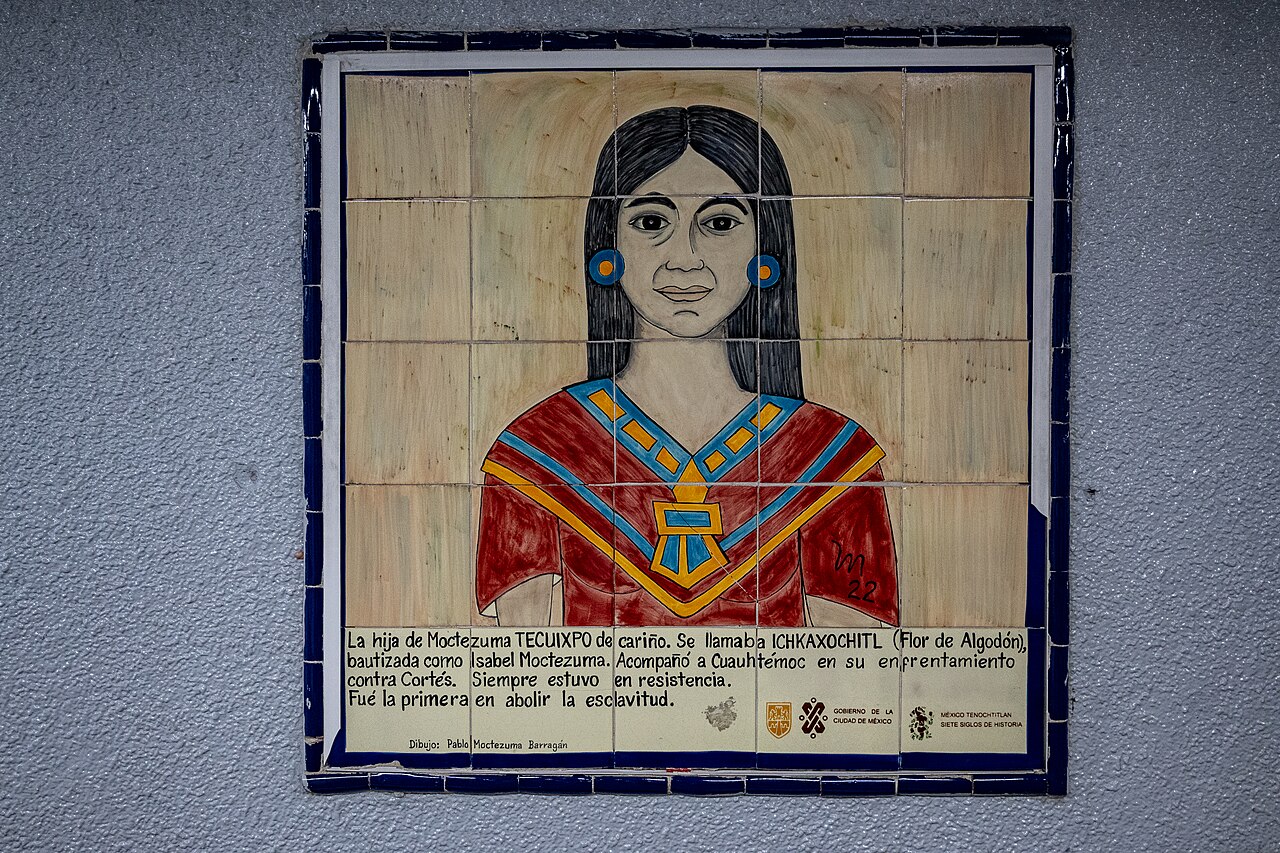
Ceramic tile mosaic portrait of a woman with long dark hair, blue hoop earrings, and a red garment with yellow and blue trim, set on a wall. Caption text in Spanish below the portrait describes her as Isabel Moctezuma.Artifact

Secondary source

Commemorative Mosaic of Isabel Moctezuma

ProtoplasmaKid · 14 June 2025

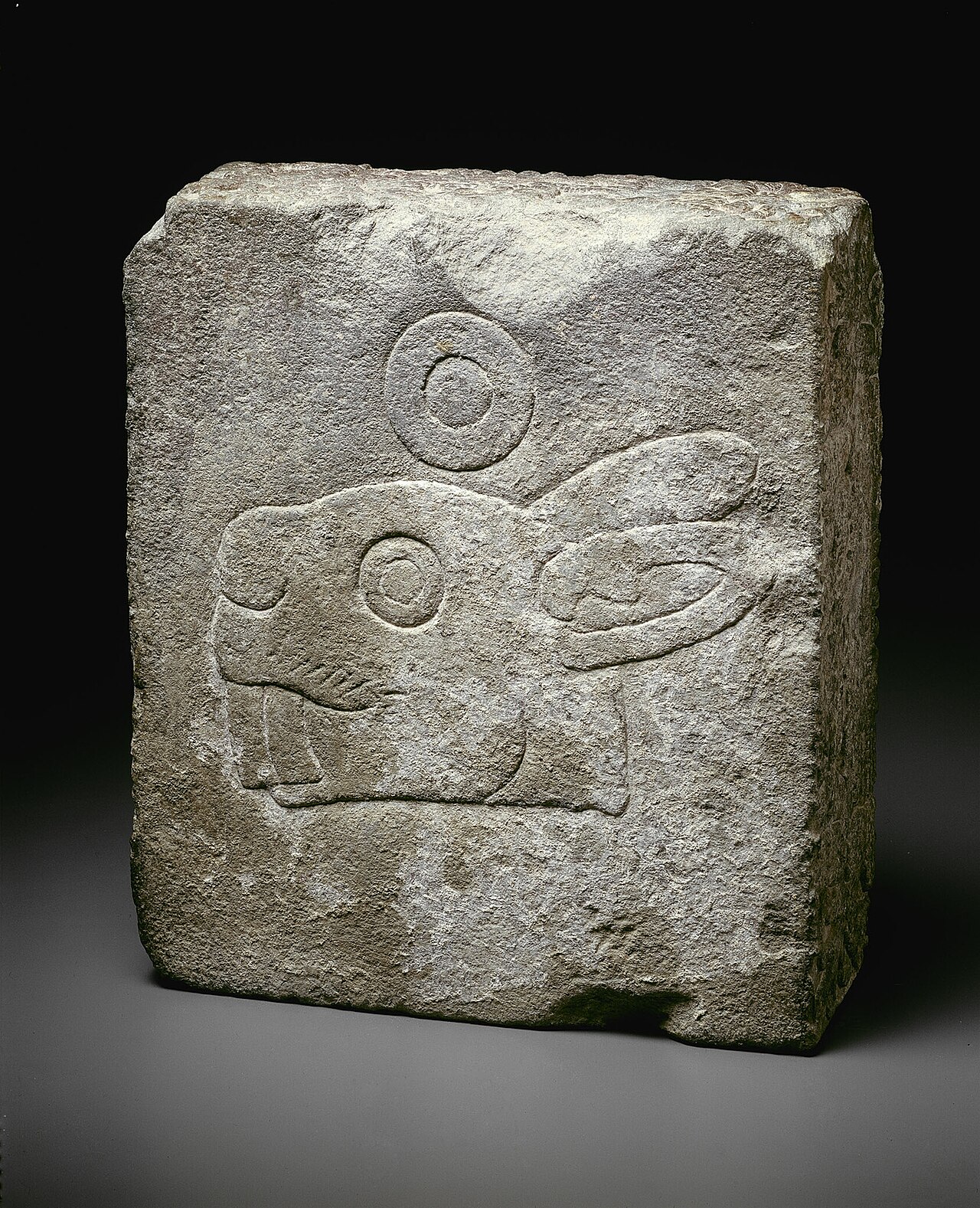
Photo of a rectangular grey stone block against a dark background. Carved in shallow relief on its face is a stylized rabbit-like head with long ears, an eye formed by concentric circles, and a circle above it.Artifact

Secondary source

Date Inscription Ce Tochtli on the Coronation Stone

1503

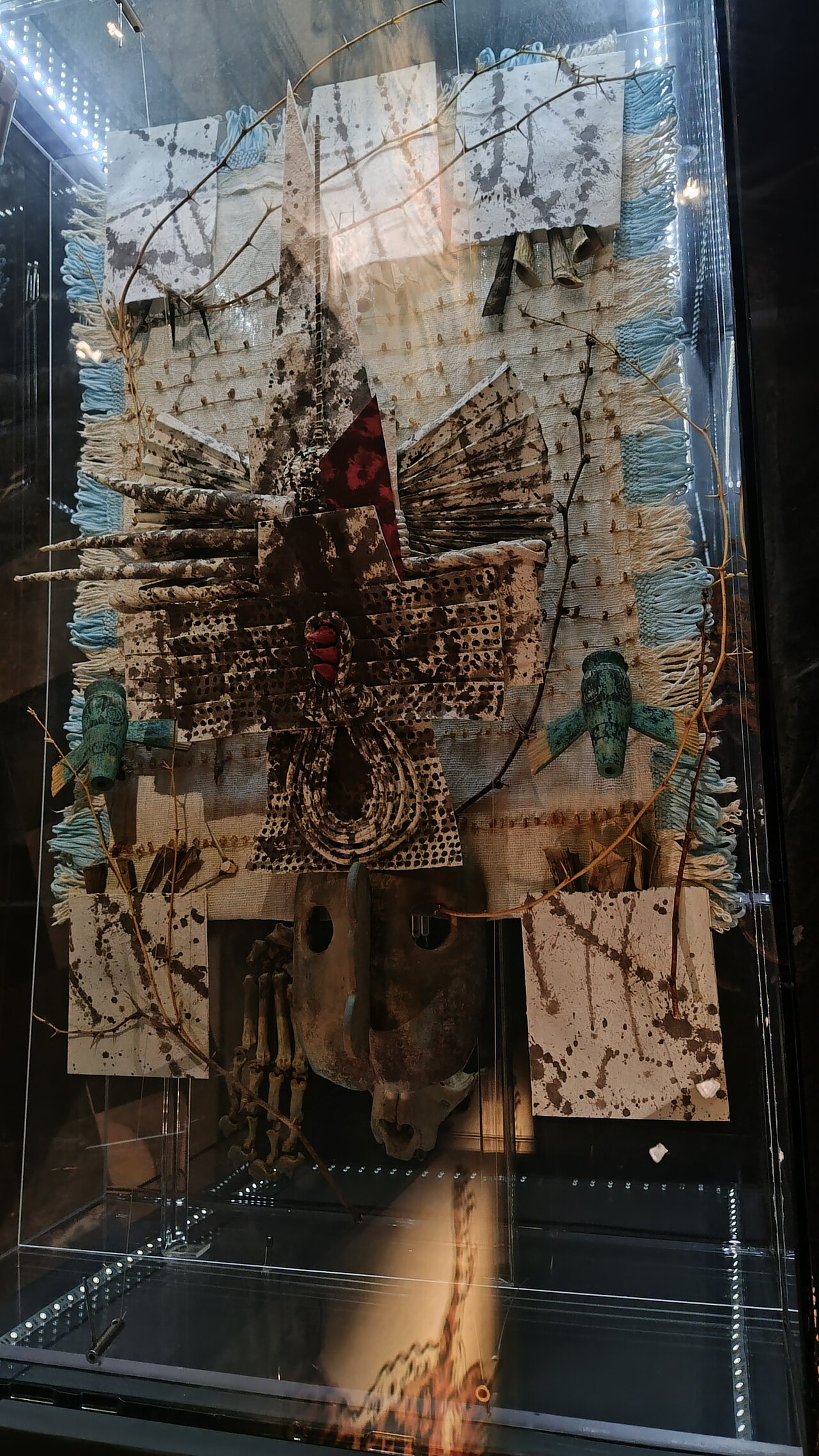
Photo through glass of a museum display case containing an assemblage: a light textile backdrop with fringed blue edges, splattered paper panels, a dark mask-like object with holes, a skeletal hand, green carved figures, and dried branches with thorns.Photograph

Tertiary source

Offering Display Case, Museo del Templo Mayor

Ichkaansiho · 14 September 2025

Want the full shelf? Chat with Montezuma II in the app and open the Sources panel — every quote links back to the original.

Use Montezuma II in class

1 assignment · 2 collections

A ready-made assignment and collections from the Humy team and other teachers that feature Montezuma II. Preview any of them, then try it free.

Trusted by educators worldwide

Conversations
375,000+
Real exchanges between students and historical figures
Messages exchanged
4,142,000+
Across every figure, classroom and language
Historical figures
100,000+
Each informed by a curated biography and selected sources
Languages supported
50+
From English and Spanish to Arabic and Korean

Paying customers

Used by 98 schools and universities

Partner school logo
Tecnológico de Monterrey logo
Hyper Island logo
Partner school logo
Chambersburg Area School District logo
Broward County Public Schools logo
Nebo School District logo
National Louis University logo
South Florida PBS logo
Punahou School logo
University of Wisconsin–River Falls logo
Partner school logo
Partner school logo
Archbishop Mitty High School logo
Kingsburg High School logo
Norwalk Public Schools logo
Partner school logo
Connections logo
Partner school logo
Moore Public Schools logo
Partner school logo
Partner school logo
Partner school logo
Partner school logo
Robbinsville Public Schools logo
Partner school logo
Partner school logo
Partner school logo
Tecnológico de Monterrey logo
Hyper Island logo
Partner school logo
Chambersburg Area School District logo
Broward County Public Schools logo
Nebo School District logo
National Louis University logo
South Florida PBS logo
Punahou School logo
University of Wisconsin–River Falls logo
Partner school logo
Partner school logo
Archbishop Mitty High School logo
Kingsburg High School logo
Norwalk Public Schools logo
Partner school logo
Connections logo
Partner school logo
Moore Public Schools logo
Partner school logo
Partner school logo
Partner school logo
Partner school logo
Robbinsville Public Schools logo
Partner school logo
Partner school logo

What educators are saying

“We enjoyed the program last year and used it frequently.”
“My students say it’s a welcome change of pace. I’m not a fan of the “sage on the stage” model, so I try to incorporate research-oriented and self-paced activities. With Humy, students have to take charge of their learning. They’ve become more adept at critical thinking, forming better questions, and improving their reading comprehension. The interview feature has been my go-to tool. I create assignments where students must ask historical figures a set number of questions, then summarize the responses to ensure they’re truly absorbing the material. This approach lets them actively explore the past rather than passively consuming information.”
“Humy has helped me bring historical figures, sometimes long past, to life. When my students interact with these figures in real-time, it eliminates some of the perceived “ancient” characteristics of my curriculum. This has shifted my students’ thinking away from viewing history as abstract or irrelevant. Real-time interactions make historical figures relatable, even allowing students to ask off-topic questions that help put historical lives in a more relevant context for 13-year-olds. The feature I use the most is the interview feature. After teaching a topic, most recently Gandhi and Joan of Arc, I have the students ask pointed, focused questions. We practice good conversation techniques beforehand, teaching them to listen (or read) carefully and formulate thoughtful follow-up questions rather than just interrogating. It helps students practice effective conversation skills.”

FAQ

Frequently asked questions

Who is Montezuma II?
Aztec emperor during the Spanish conquest of Mexico. On Humy.ai you can chat with an AI version of Montezuma II that draws on a short biography and 88 historical sources during the conversation — by text or voice, in 42 languages.
Is Montezuma II AI free?
Montezuma II is part of Humy's full library of more than 100,000 figures, which comes with a paid plan. A free account (no credit card) includes 20 messages a month with the free library's figures, so you can try how the conversations work first.
What sources does the Montezuma II AI use?
It draws on a short biography and 88 historical sources (paintings, artifacts and documents), including “Codex Mendoza, Folio 15v”, “Prisión del emperador Moctezuma” and “Florentine Codex”. Each source has its own page on Humy.ai.
How historically accurate is the AI version of Montezuma II?
Each figure uses a short biography and a small set of selected historical sources as context (retrieval-augmented generation), so answers stay closer to known material than the model's general knowledge alone. It isn't a citation-grade research tool — like any LLM, the AI can get details wrong or extrapolate. Treat it as a strong starting point for inquiry and cross-reference important claims.
Can I talk to Montezuma II by voice?
Yes. In addition to text chat, you can call Montezuma II and hear their voice respond in real time — useful for auditory learners, interview practice and Socratic dialogue.
Is Humy.ai safe and compliant for schools?
Yes. Humy.ai is used by more than 100 schools, universities and organisations. The platform is FERPA- and GDPR-aligned, supports SSO, and offers an IT-approval pack tailored for school procurement teams.

Ready when you are

Start chatting with Montezuma II now.

20 messages free · No credit card · Available in 50+ languages.