


Secondary sourcePainting1699
Motezuma
Antonio de Solís (author), artist unidentified · 1699
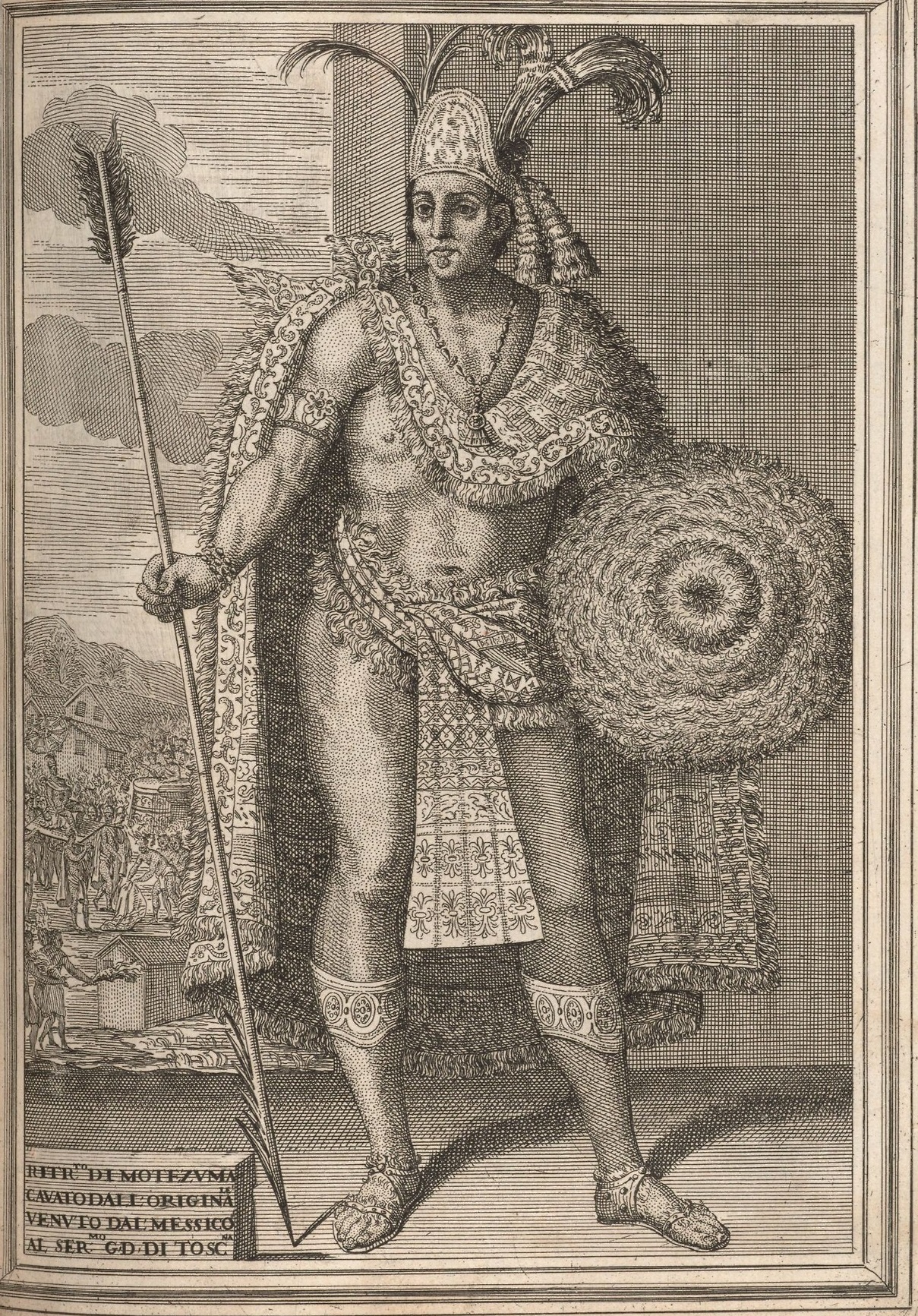
A 1699 Italian engraving of Moctezuma II illustrating Antonio de Solís's history of the Spanish conquest of Mexico.
This engraving illustrates Moctezuma II in a widely circulated European history of the conquest, shaping his image abroad.
About this source
What it is
This is an engraving from the 1699 Italian edition of Antonio de Solís's history of the conquest of Mexico, showing a standing figure labeled 'Motezuma' in a feathered headdress and fringed mantle, holding a feathered spear and shield, with a village scene behind him. The print is held at Harvard's Houghton Library.
Why it matters
Made over a century and a half after Moctezuma's death, this engraving shows how his image continued to spread and change across Europe through printed histories like Solís's. It reveals more about European imagination and interest in the conquest than about Moctezuma's actual appearance.
Look closer
- What details in the costume and pose seem invented rather than observed?
- Why would a history book published in Italy in 1699 need an illustration of an Aztec ruler?
- What does the repeated use of feathered headdresses and shields in European images of Moctezuma suggest about European stereotypes?
This painting is part of the curated material that grounds the AI version of Montezuma II on Humy.ai — when students ask about related events, the AI can quote it and cite it.
More Montezuma II sources
Meet the AI Montezuma II → Document
Secondary source
Codex Mendoza, Folio 15v
Unknown author · 16th century
 Painting
Secondary source
Prisión del emperador Moctezuma
Rafael del Castillo de la Cuesta · 1880
 Book
Secondary source
Florentine Codex
Bernardino de Sahagún with Nahua collaborators · 1569
 Painting
Secondary source
Hernán Cortés takes Moctezuma prisoner
Louis Auguste Turgis · 1895
 Letter
Primary source
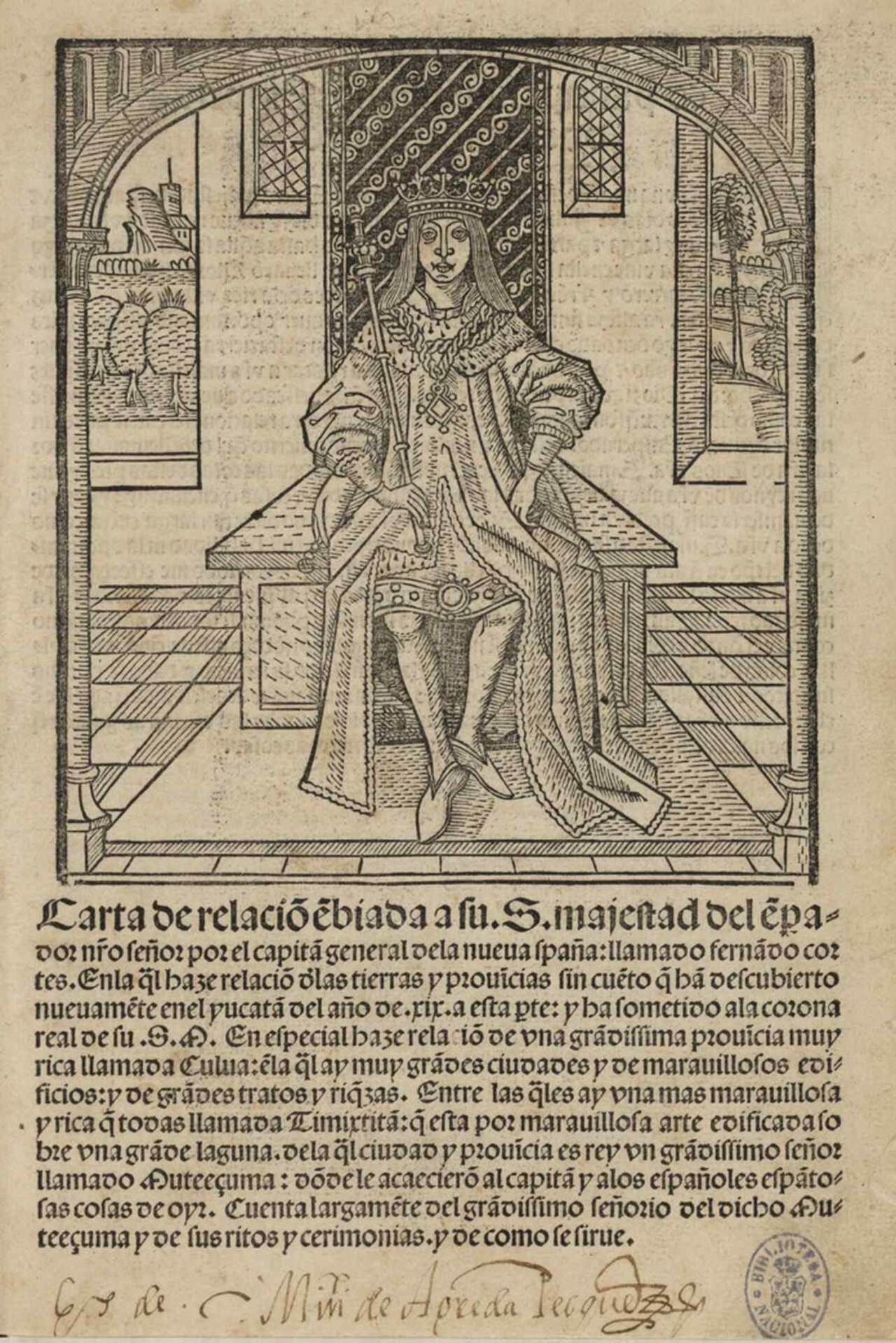
Second Letter to Charles V
Hernán Cortés · 1520 (printed 1522)
Ready when you are
Start chatting with Montezuma II now.
20 messages free · No credit card · Available in 50+ languages.