


Secondary sourcePainting19th century
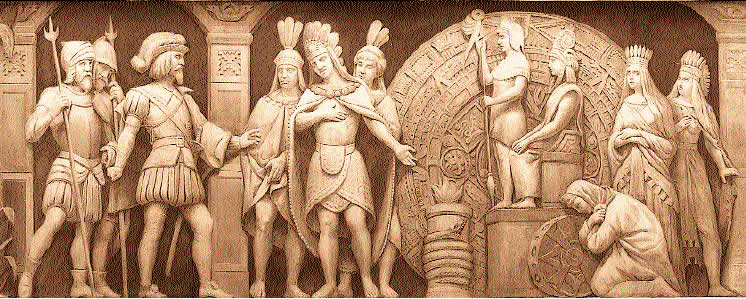
Cortez and Montezuma at Mexican Temple
Architect of the Capitol · 19th century
A 19th-century mural in the US Capitol showing Moctezuma welcoming Cortés into an Aztec temple.
Shows Moctezuma welcoming Cortés into a temple, reflecting a 19th-century American retelling of their meeting.
About this source
What it is
This painting by the Architect of the Capitol shows the Spanish conquistador Hernando Cortés entering an Aztec temple, where he is welcomed by Emperor Moctezuma II. According to the collection record, the calendar stone and idols shown were based on sketches the artist made in Mexico City.
Why it matters
The painting repeats the old European idea that Moctezuma thought Cortés was a god, a belief historians today question as coming mostly from later Spanish accounts rather than firm evidence. It shows how 19th-century American art used the conquest story to tell a particular version of history for a government building.
Look closer
- Why might the artist have chosen to show Moctezuma welcoming, rather than resisting, Cortés?
- What does the claim that Moctezuma thought Cortés was a god tell you about whose point of view shaped this image?
- Whose voice is missing from this painting's story?
This painting is part of the curated material that grounds the AI version of Montezuma II and Hernán Cortés on Humy.ai — when students ask about related events, the AI can quote it and cite it.
More Montezuma II sources
Meet the AI Montezuma II →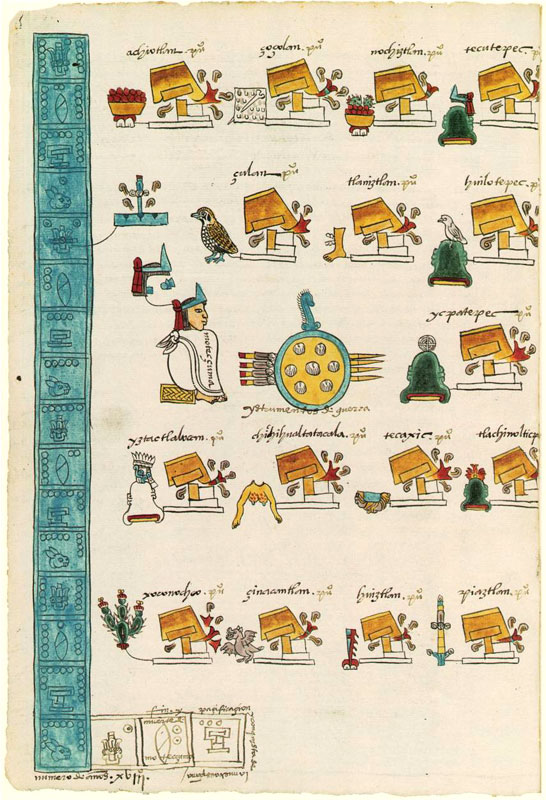 Document
Secondary source
Codex Mendoza, Folio 15v
Unknown author · 16th century
 Painting
Secondary source
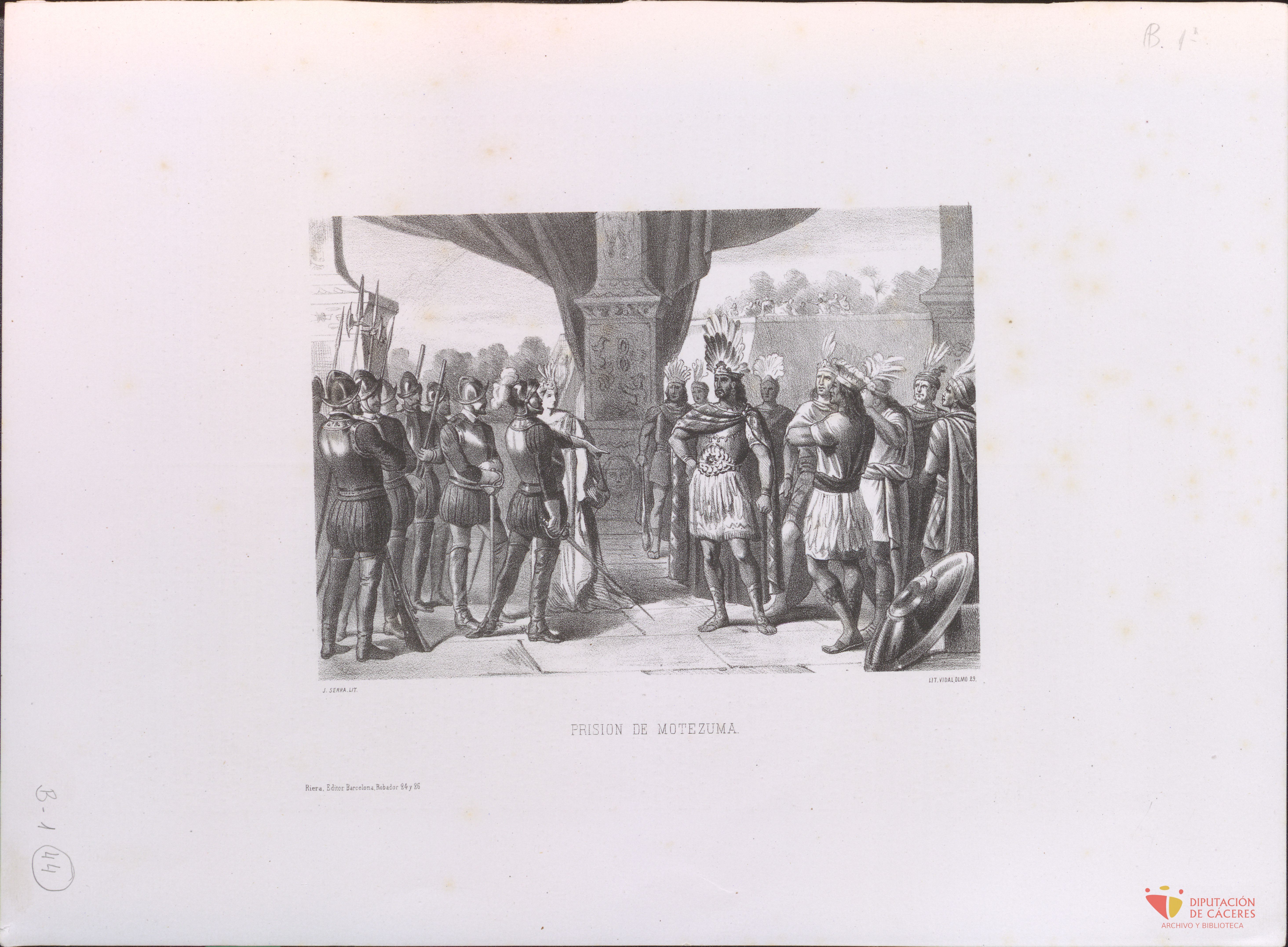
Prisión del emperador Moctezuma
Rafael del Castillo de la Cuesta · 1880
 Book
Secondary source
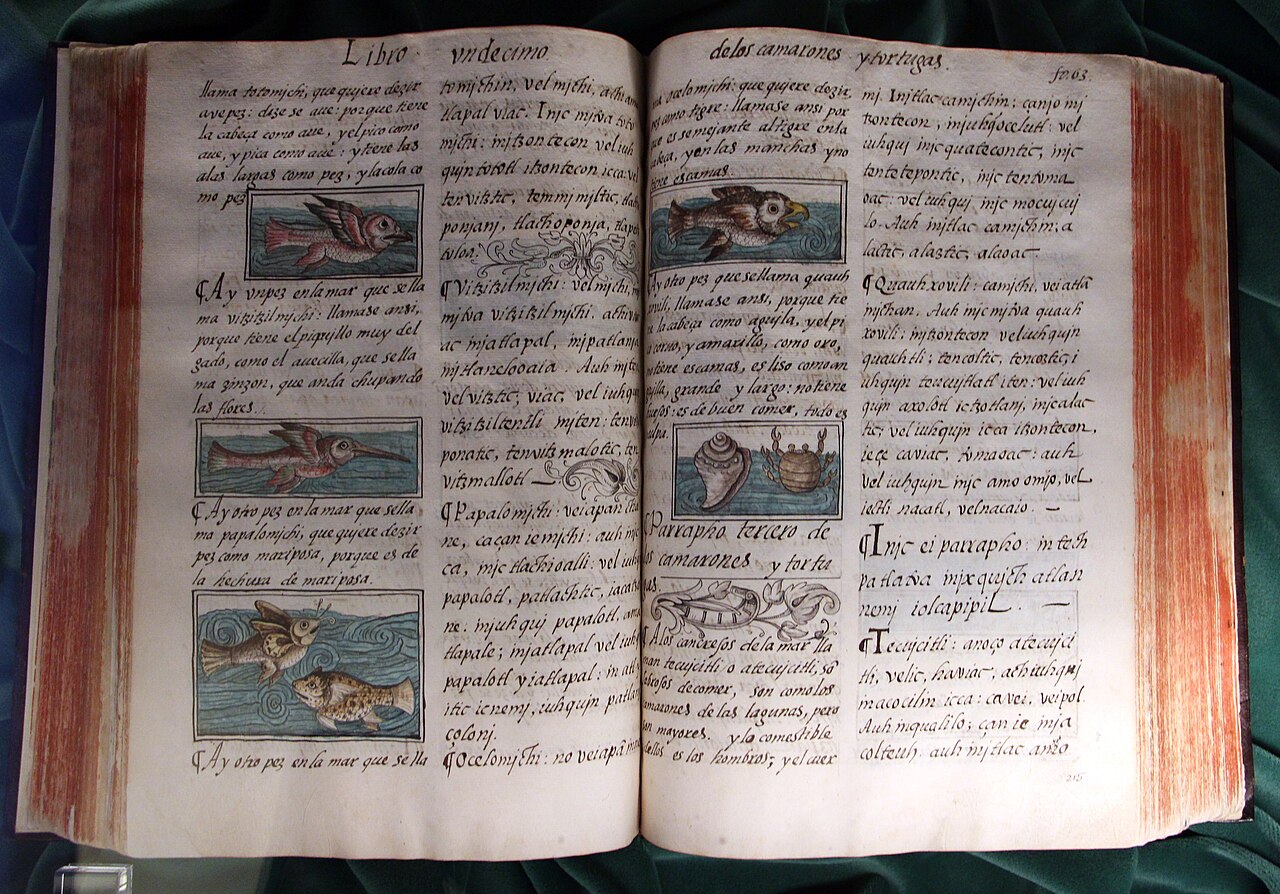
Florentine Codex
Bernardino de Sahagún with Nahua collaborators · 1569
 Painting
Secondary source
Hernán Cortés takes Moctezuma prisoner
Louis Auguste Turgis · 1895
 Letter
Primary source
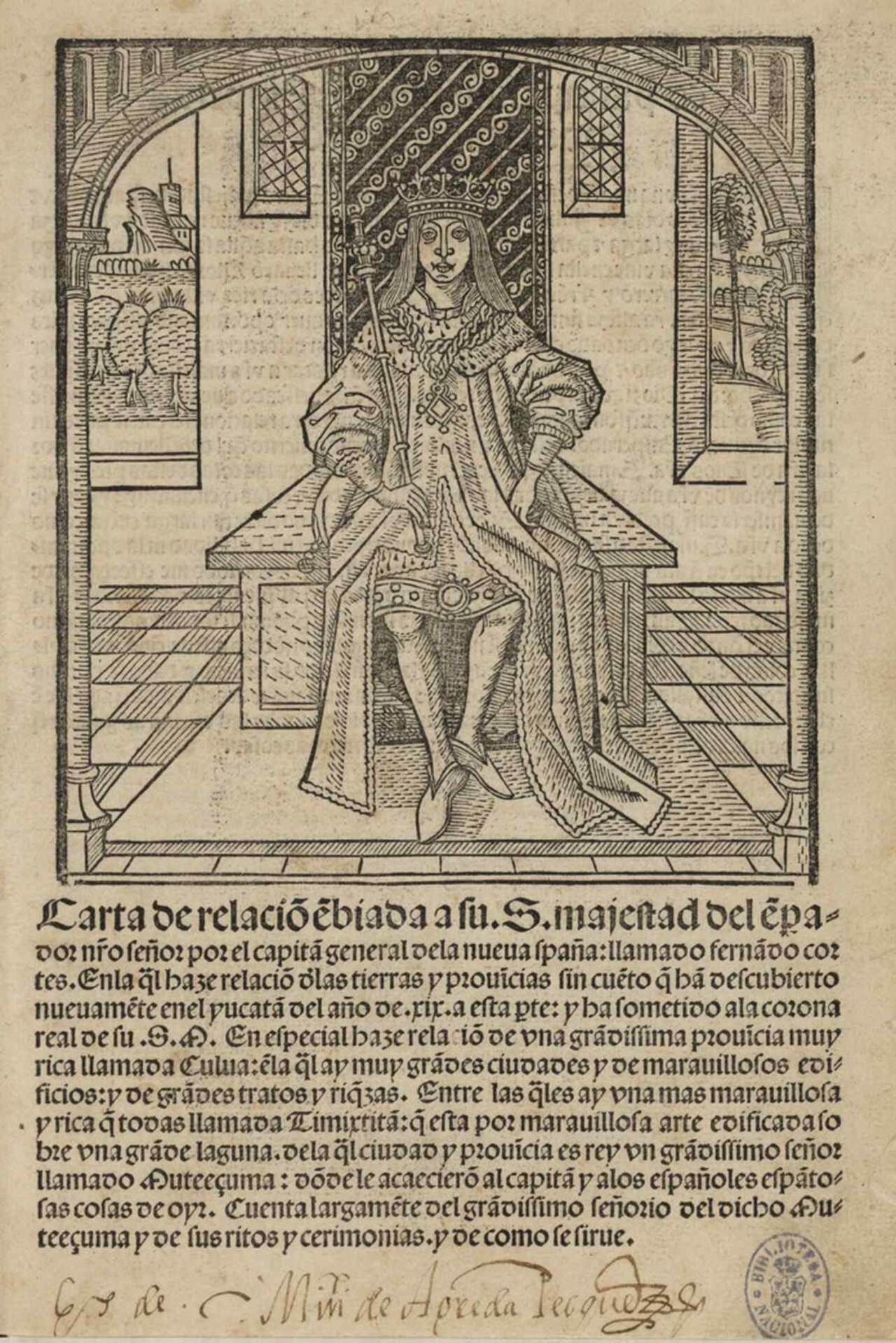
Second Letter to Charles V
Hernán Cortés · 1520 (printed 1522)
Ready when you are
Start chatting with Montezuma II now.
20 messages free · No credit card · Available in 50+ languages.