


Primary sourcePainting11 March 1885
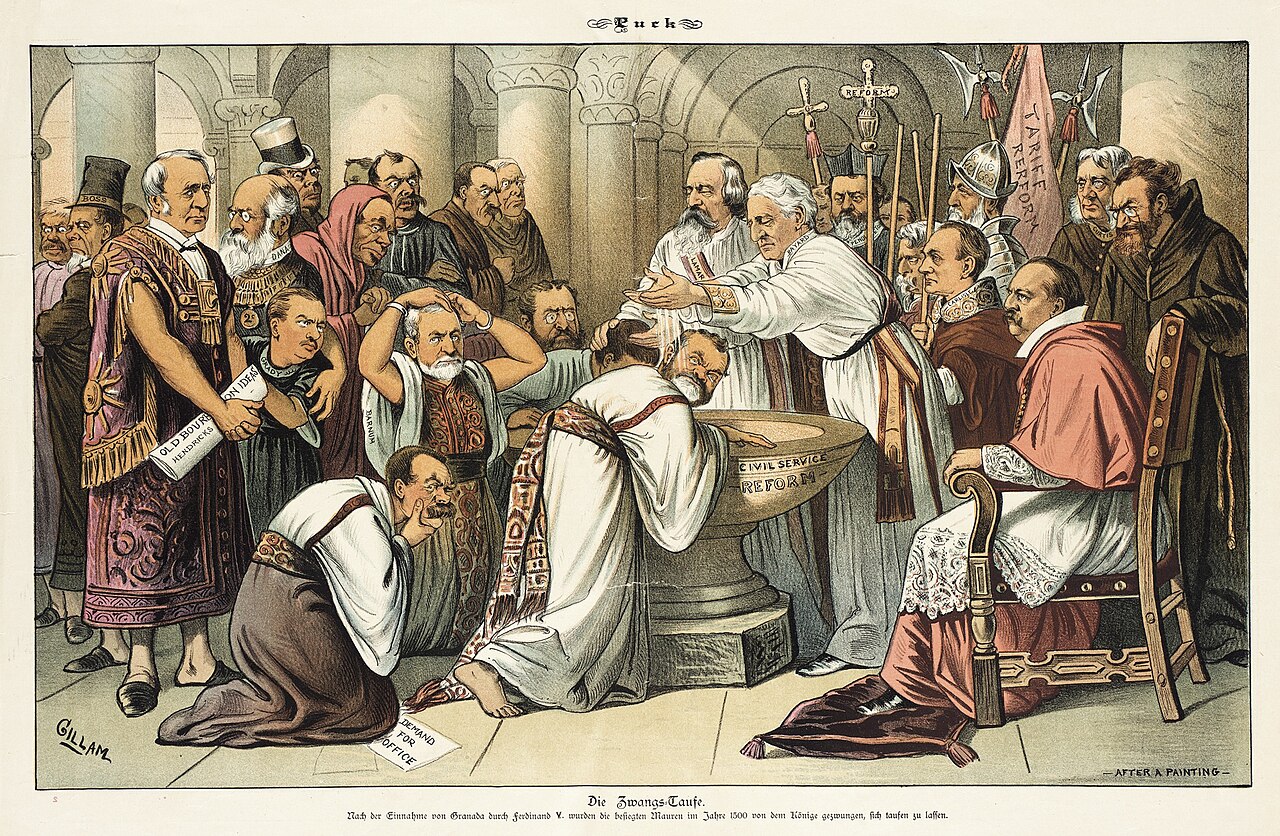
Compulsory Baptism
Bernhard Gillam · 11 March 1885
A Puck magazine cartoon showing President Cleveland as a medieval king watching civil service office-seekers being baptized into reform.
This cartoon depicts Cleveland as a king overseeing civil service reform, reflecting his early presidential priorities in 1885.
About this source
What it is
This color lithograph cartoon, titled 'Die Zwangs-Taufe' (Compulsory Baptism), was published in Puck magazine on March 11, 1885, by cartoonist Bernhard Gillam. It depicts President Grover Cleveland as the historical king Ferdinand V, seated on a throne, watching as office-seeking politicians are baptized at a font labeled 'Civil Service Reform.' Many named political figures of the era appear among the onlookers, including Thomas Hendricks, Carl Schurz, and John G. Carlisle. The original is held as a print in a museum's Prints and Drawings collection.
Why it matters
The cartoon comments on Cleveland's early push for civil service reform at the start of his first term, replacing the old spoils system with merit-based appointments. By casting Cleveland as a stern historical monarch, the cartoonist suggests the forced, almost religious nature of this political change, and shows how the many politicians named depended on or resisted these reforms.
Look closer
- Why might the cartoonist have chosen a baptism scene to represent civil service reform?
- What does casting Cleveland as Ferdinand V suggest about how the artist saw his authority?
- Who are the people shown in the crowd, and what might their presence tell you about the politics of reform?
This painting is part of the curated material that grounds the AI version of Grover Cleveland on Humy.ai — when students ask about related events, the AI can quote it and cite it.
More Grover Cleveland sources
Meet the AI Grover Cleveland →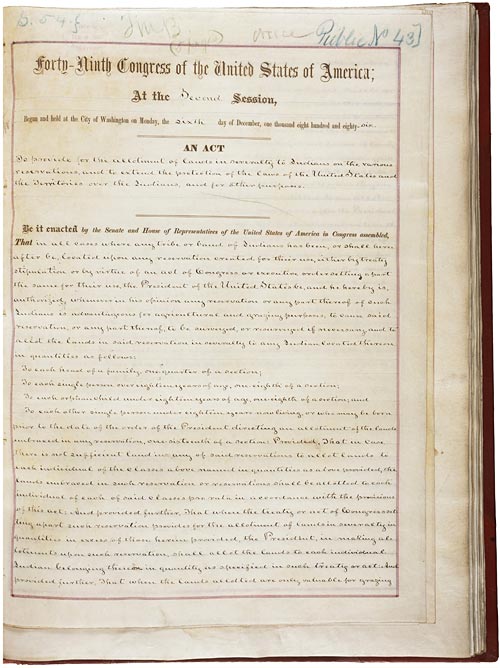 Document
Primary source
Dawes Act
Henry Dawes · 8 February 1887
 Document
Primary source
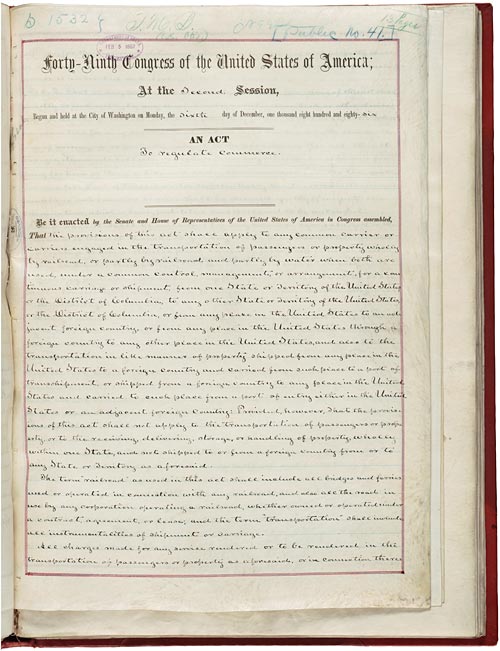
Interstate Commerce Act
4 February 1887
 Speech
Primary source
Message to Congress on Hawaii
Grover Cleveland · 18 December 1893
 Painting
Primary source
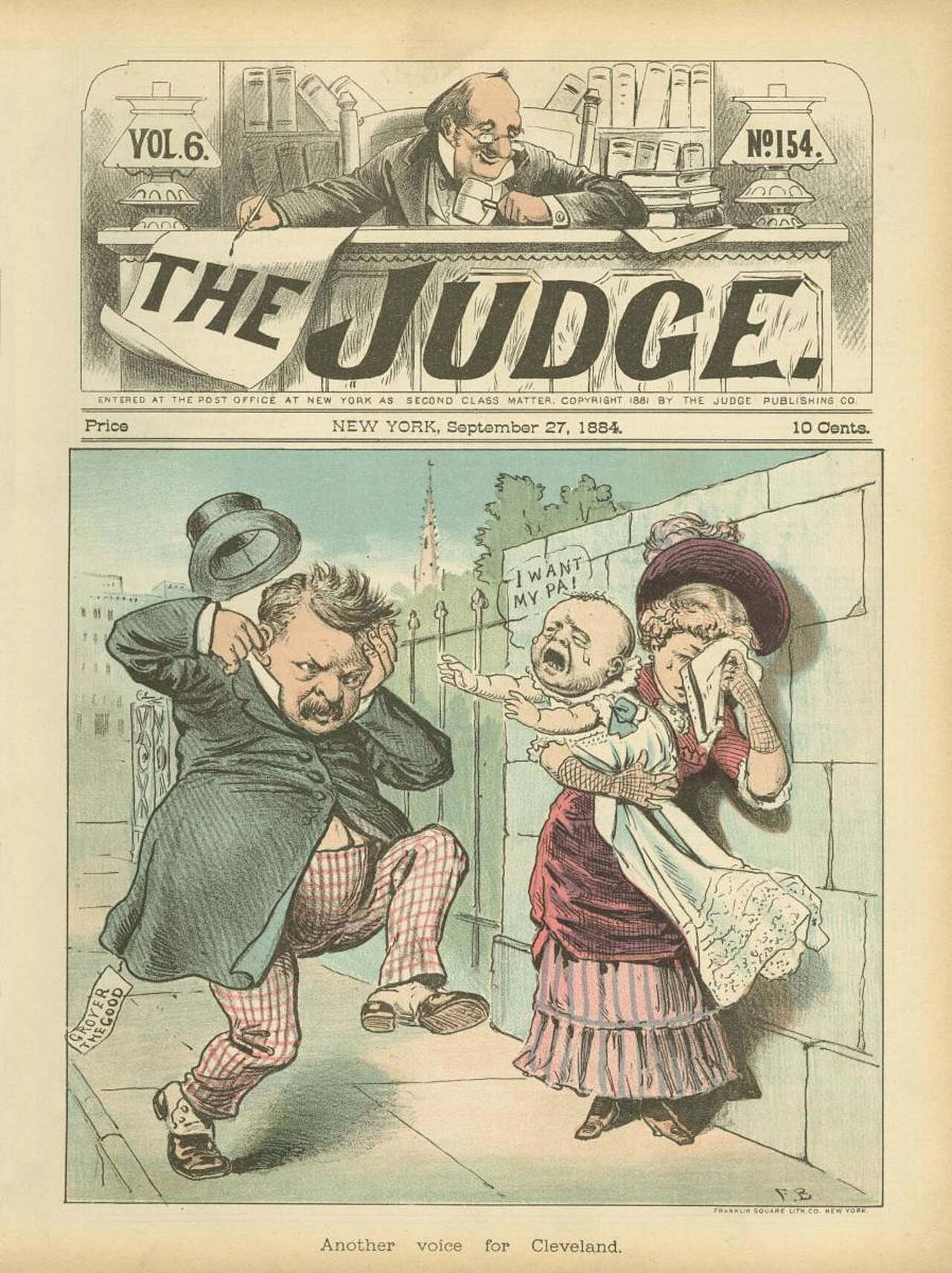
Another Voice for Cleveland
Frank Beard · 27 September 1884
Primary source
First Inaugural Address of Grover Cleveland
Grover Cleveland · 4 March 1885
Ready when you are
Start chatting with Grover Cleveland now.
20 messages free · No credit card · Available in 50+ languages.