


Primary sourceDocument1991
County of Riverside v. McLaughlin (Marshall dissent)
Thurgood Marshall · 1991
Justice Thurgood Marshall's dissent, joined by Justices Blackmun and Stevens, arguing that a probable-cause hearing must follow immediately after the administrative steps of an arrest.
Marshall wrote this dissent himself, applying the Gerstein promptness rule to arrested people's right to a hearing.
About this source
What it is
This is a written dissent by Justice Thurgood Marshall in the 1991 Supreme Court decision County of Riverside v. McLaughlin, reported as 500 U.S. 44. The text is listed on Wikisource and is a transcribed version of the opinion.
Why it matters
The case concerned how quickly a person arrested without a warrant must receive a judicial hearing on probable cause. Marshall relied on the earlier decision in Gerstein v. Pugh (1975), which required a "prompt" determination, and agreed with Justice Scalia that the hearing must come right after the administrative steps of arrest. He would have affirmed the Court of Appeals.
Look closer
- What does the word "prompt" mean in Marshall's reading of Gerstein, and how does he define it?
- Why does Marshall agree with Justice Scalia, and who is most affected by the timing?
- What does this technical text leave out about the people who wait in custody?
This document is part of the curated material that grounds the AI version of Thurgood Marshall on Humy.ai — when students ask about related events, the AI can quote it and cite it.
More Thurgood Marshall sources
Meet the AI Thurgood Marshall →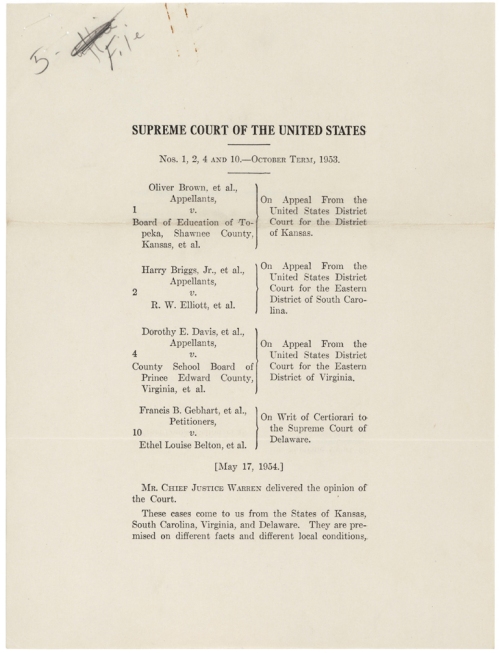 Document
Primary source
Brown v. Board of Education
Earl Warren · 17 May 1954
 Painting
Primary source
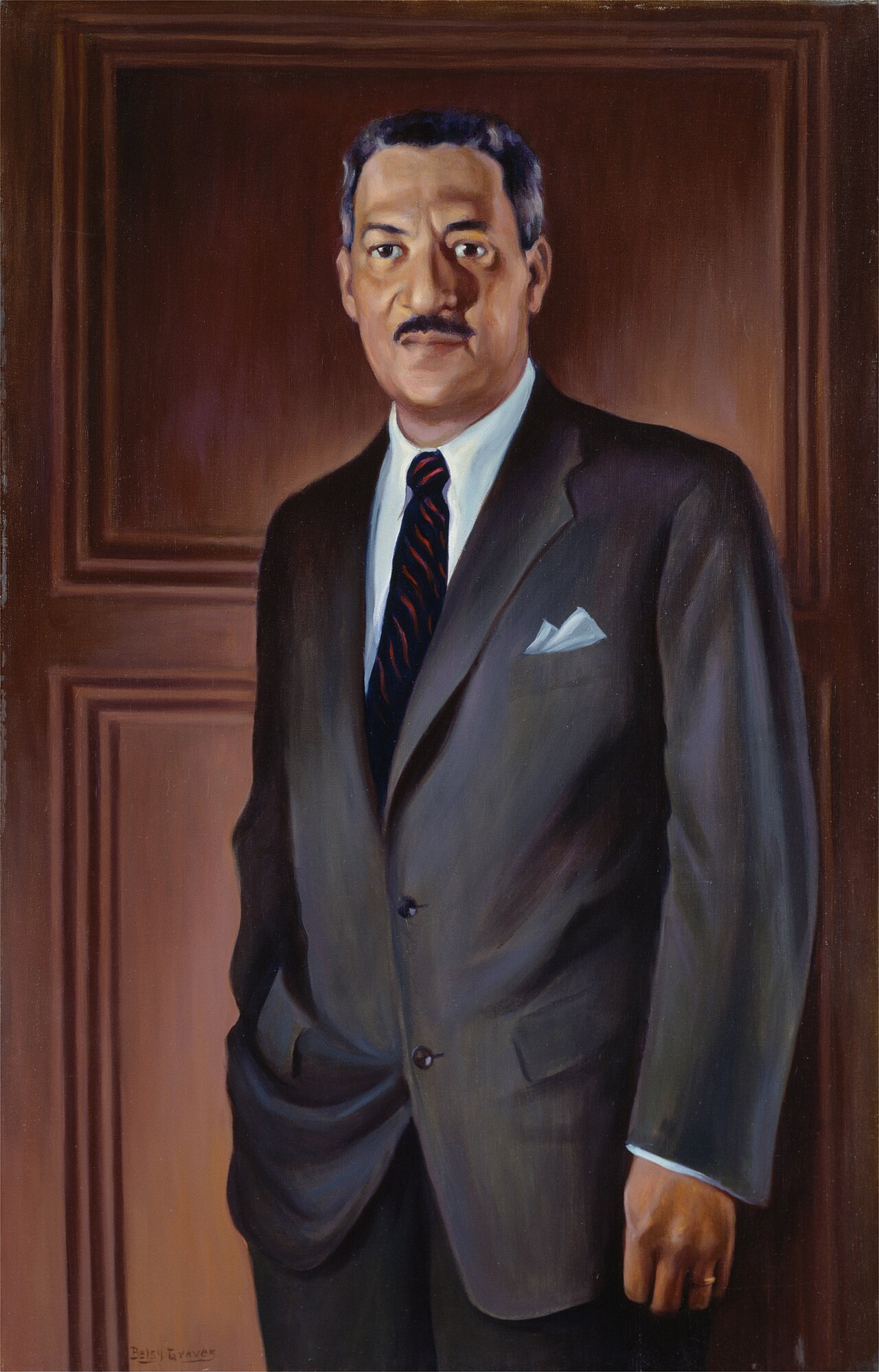
Thurgood Marshall
Betsy Graves Reyneau · 1956
 Photograph
Primary source
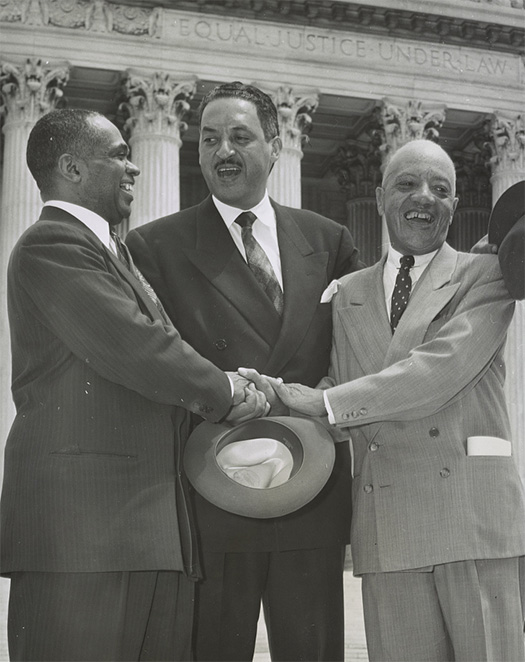
George Edward Chalmer Hayes, Thurgood Marshall, and James Nabrit in 1954 winning Brown case
1954
 Photograph
Primary source
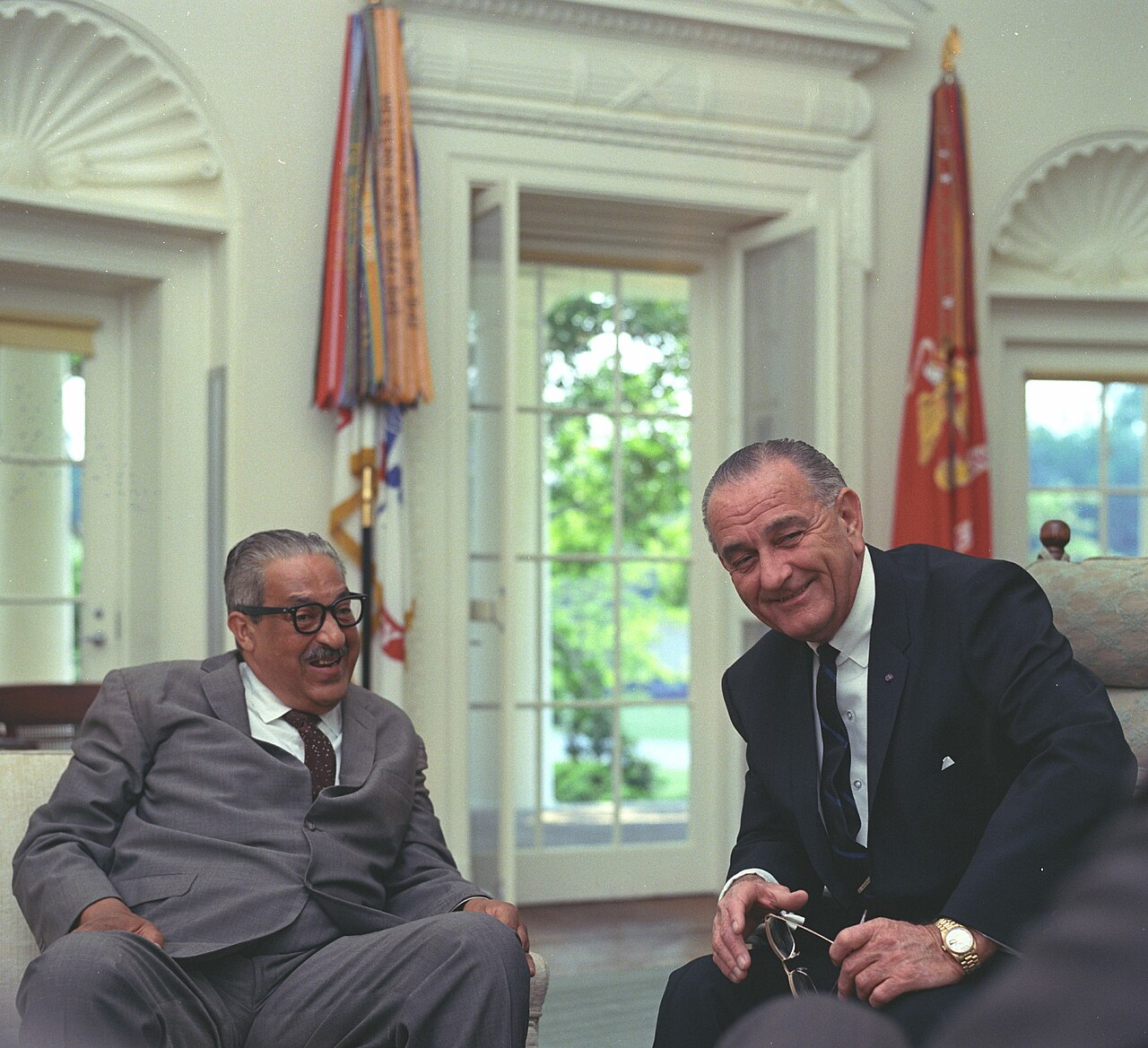
Thurgood Marshall and President Lyndon B. Johnson, June 13, 1967
Frank Wolfe · 13 June 1967
Primary source
Cooper v. Aaron
12 September 1958
Ready when you are
Start chatting with Thurgood Marshall now.
20 messages free · No credit card · Available in 50+ languages.