


Secondary sourcePainting1882
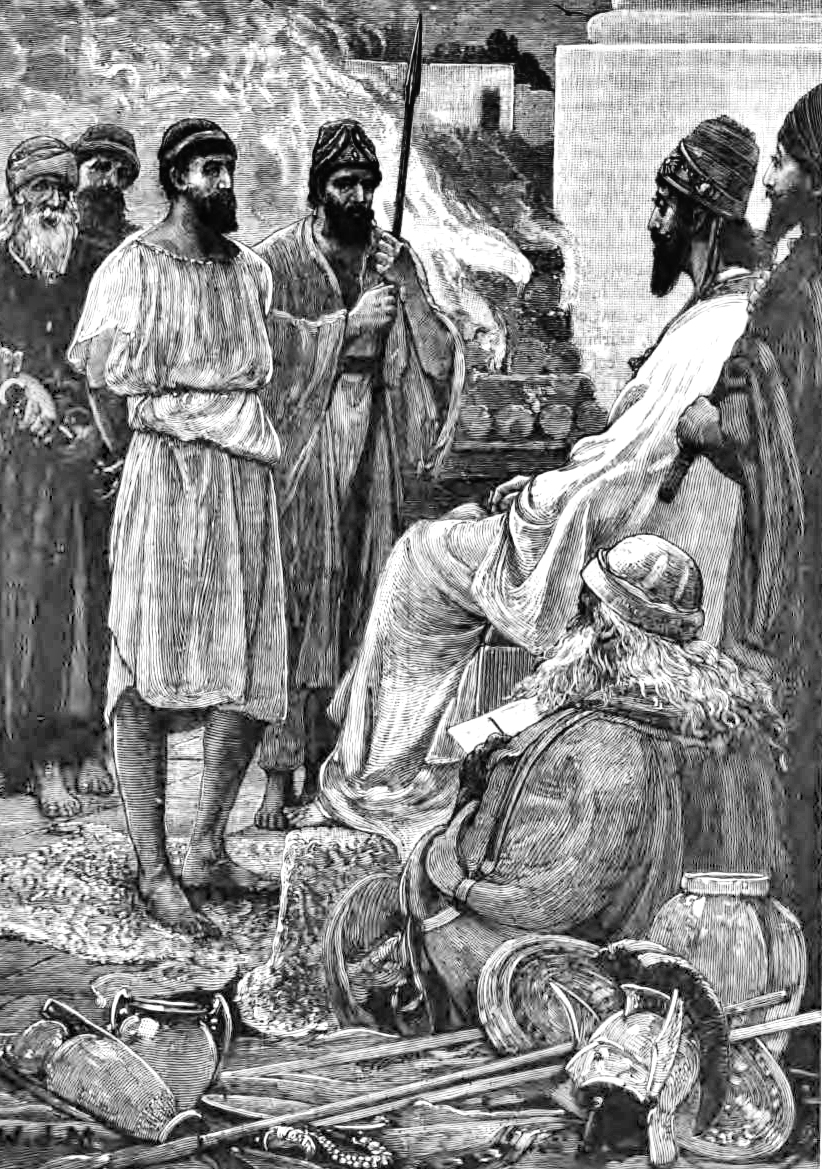
Croesus and Cyrus
Edmund Ollier · 1882
An 1882 engraving depicting Cyrus the Great's encounter with the defeated King Croesus of Lydia.
Depicts Cyrus's famous encounter with the defeated Lydian king Croesus, a key episode in his rise to power.
About this source
What it is
This black-and-white engraving, published in 1882 by Edmund Ollier, illustrates the ancient story of Cyrus the Great's encounter with Croesus, the defeated king of Lydia, after Cyrus's conquest of Lydia.
Why it matters
The image reflects the enduring fascination in the 19th century with ancient history, when illustrated books brought classical stories to a wide public. The scene, showing a bound captive before a seated ruler, echoes ancient accounts of how Cyrus treated defeated kings, which were often used to illustrate lessons about mercy, fate, and the rise and fall of empires.
Look closer
- What does the bound figure in the foreground suggest about his status compared to the seated ruler?
- Why do you think 19th-century illustrators returned again and again to stories from ancient history like this one?
- What might this image leave out about the real political and military events of Cyrus's conquest of Lydia?
This painting is part of the curated material that grounds the AI version of Cyrus the Great on Humy.ai — when students ask about related events, the AI can quote it and cite it.
More Cyrus the Great sources
Meet the AI Cyrus the Great →

Ready when you are
Start chatting with Cyrus the Great now.
20 messages free · No credit card · Available in 50+ languages.