


Secondary sourcePainting17th century (copy)
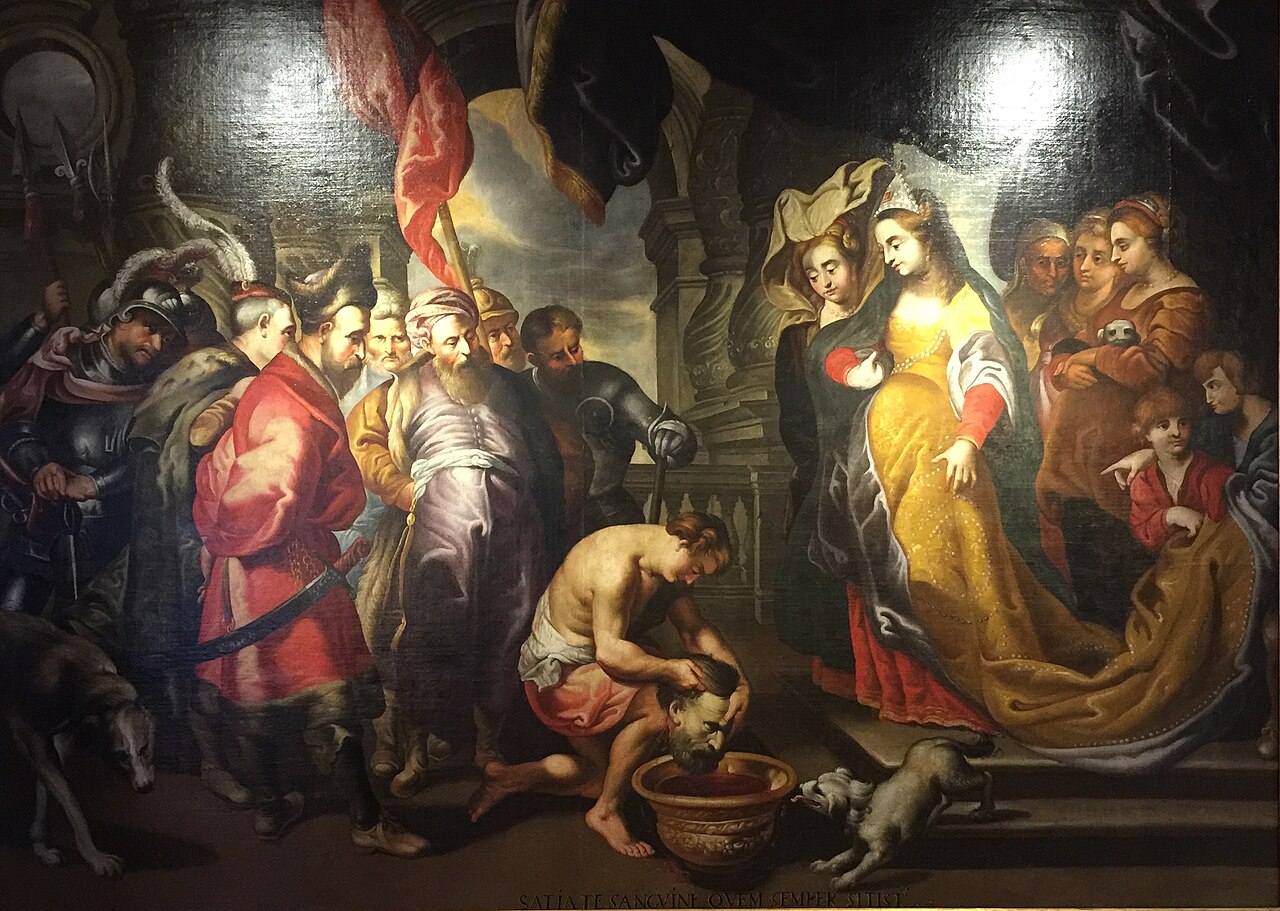
Cyrus and Tomyris
Anonymous, after Peter Paul Rubens · 17th century (copy)
An anonymous copy of a Rubens painting showing Queen Tomyris receiving the severed head of Cyrus, based on the ancient legend of his death.
This later copy of a Rubens work imagines the legendary death of Cyrus at the hands of Queen Tomyris.
About this source
What it is
This painting is an anonymous copy of a work by the Flemish painter Peter Paul Rubens, made in the 17th century. It shows a dramatic scene: a kneeling man holds a severed head over a basin while a crowned woman and armored soldiers look on.
Why it matters
The scene illustrates an ancient legend about the death of Cyrus the Great, said to have been killed by Queen Tomyris. The story reveals how later European painters, including Rubens, used ancient history to create dramatic, moralizing art. It is not a historical record but a legend passed down through classical writers.
Look closer
- Why might an artist choose this violent moment to paint?
- What does the clothing and setting tell you about when this copy was made?
- How reliable do you think this legend is as history?
This painting is part of the curated material that grounds the AI version of Cyrus the Great on Humy.ai — when students ask about related events, the AI can quote it and cite it.
More Cyrus the Great sources
Meet the AI Cyrus the Great →

Ready when you are
Start chatting with Cyrus the Great now.
20 messages free · No credit card · Available in 50+ languages.