


Secondary sourcePaintingc. 1413-1415
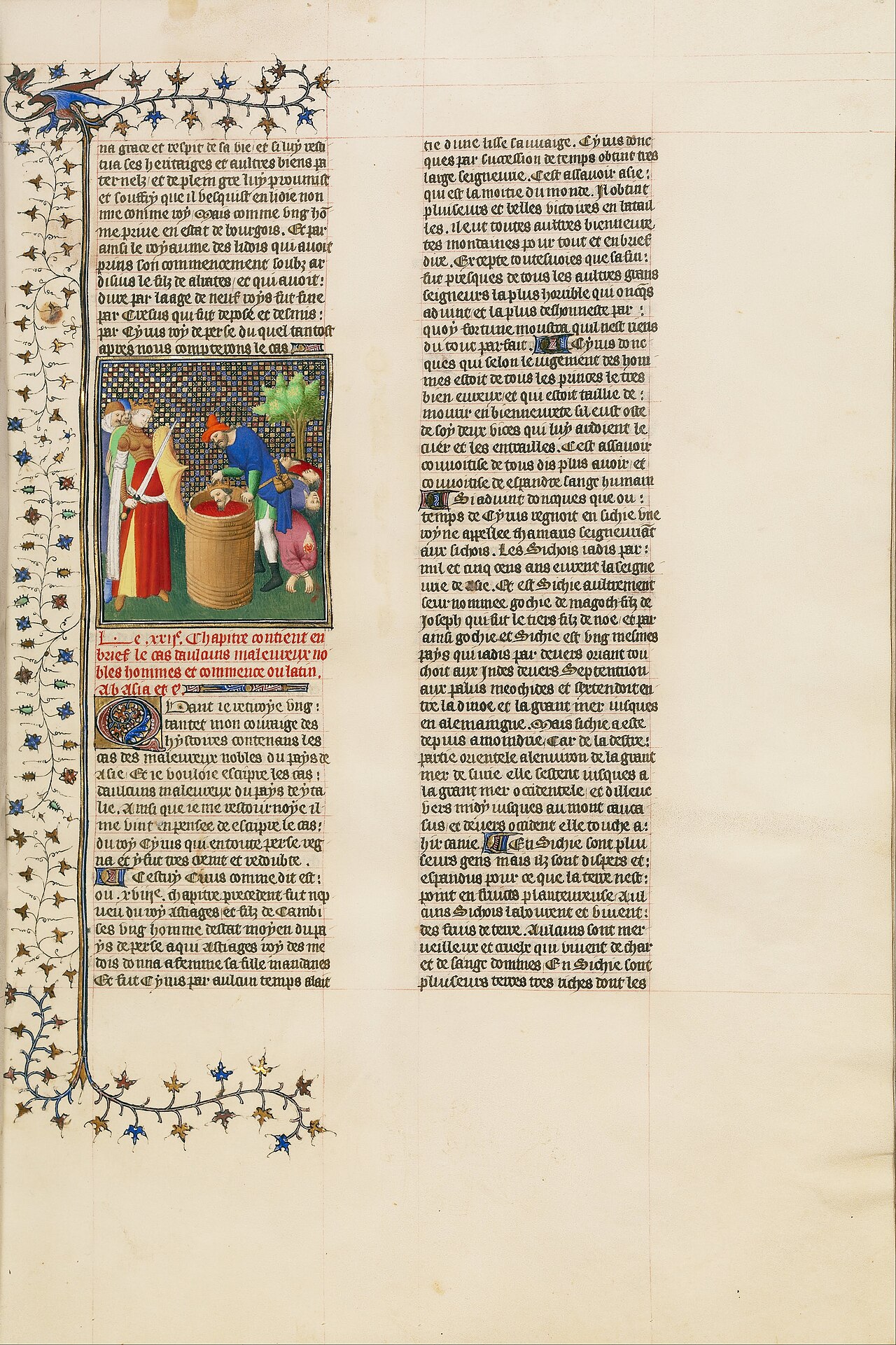
Cyrus Killed by Thamaris
Boucicaut Master · c. 1413-1415
A 15th-century French manuscript miniature depicting the legendary death of Cyrus the Great at the hands of Queen Tomyris.
Illustrates the legendary death of Cyrus at the hands of Queen Tomyris.
About this source
What it is
This is a manuscript miniature painted by the Boucicaut Master, an illuminator active in France around 1390–1430, made about 1413–1415. It illustrates the death of Cyrus the Great, showing a queen with a raised sword and a man leaning over a barrel containing severed heads, referring to the legend of Queen Tomyris's revenge.
Why it matters
This image reflects a famous ancient legend, recorded by classical writers, about the violent end of Cyrus's life. It shows how medieval European artists illustrated ancient history according to the dramatic stories passed down from antiquity, rather than from direct evidence.
Look closer
- What does the inclusion of severed heads and blood tell you about how this story was meant to shock or warn readers?
- Why would a French illuminator around 1413–1415 be interested in illustrating an ancient Persian king's death?
- How might this legendary image differ from what we actually know happened to Cyrus?
This painting is part of the curated material that grounds the AI version of Cyrus the Great on Humy.ai — when students ask about related events, the AI can quote it and cite it.
More Cyrus the Great sources
Meet the AI Cyrus the Great →

Ready when you are
Start chatting with Cyrus the Great now.
20 messages free · No credit card · Available in 50+ languages.