


Secondary sourceSculpturec. 1755
Cyrus the Great Freeing Prisoners
Ignatz Franz Platzer · c. 1755
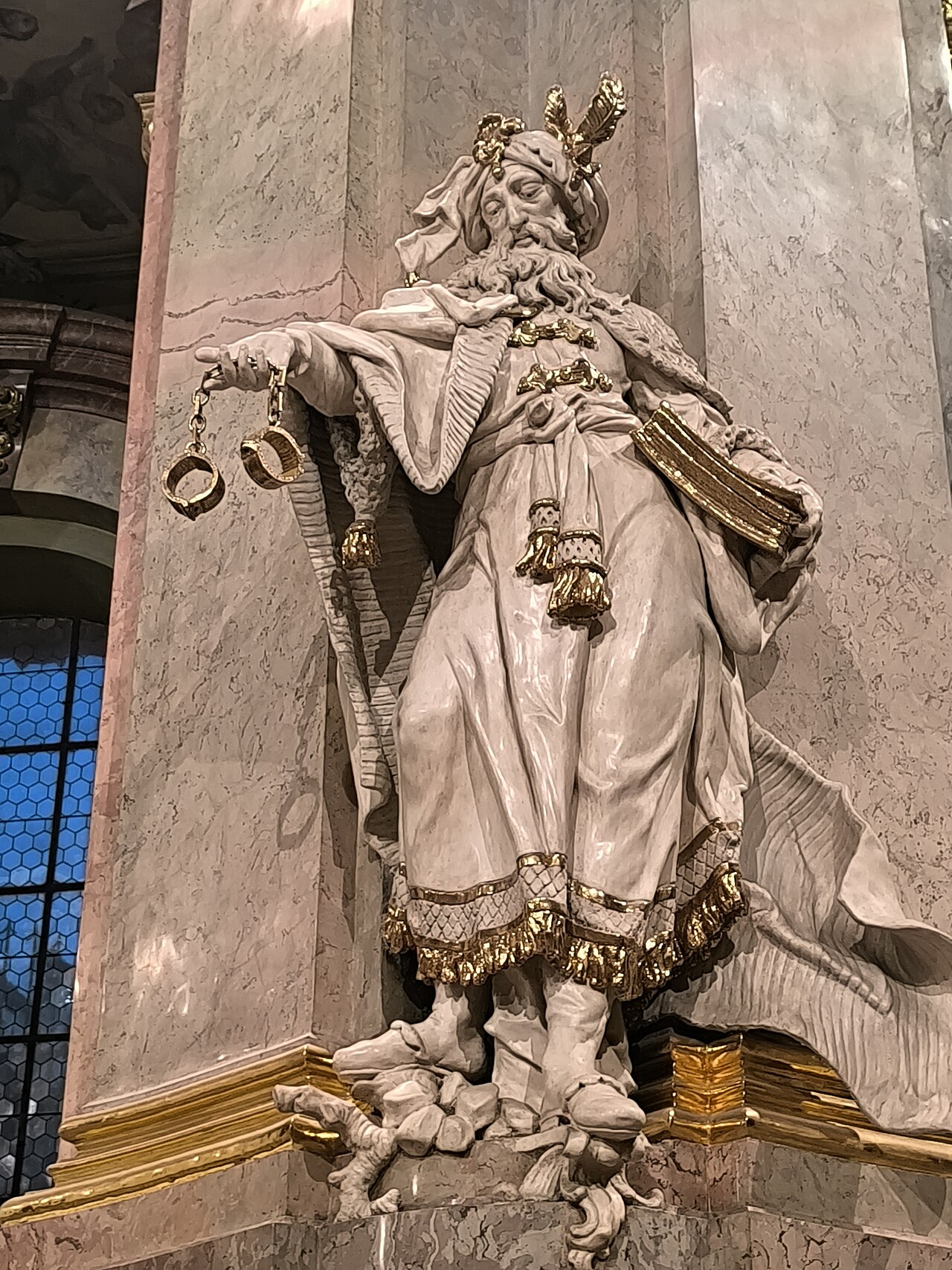
An 18th-century carved wood sculpture by Ignatz Franz Platzer showing Cyrus the Great granting freedom to prisoners.
This sculpture presents Cyrus the Great as a generous ruler freeing prisoners, shaping his later reputation.
About this source
What it is
This white lacquered wood sculpture was made around 1755 by the sculptor Ignatz Franz Platzer. It depicts a bearded man in Persian dress holding open shackles in one hand and a book in the other, standing on a decorated pedestal.
Why it matters
The sculpture presents Cyrus the Great as a merciful ruler who frees captives, a reputation tied to ancient accounts of his rule. It shows how later European artists admired Cyrus as a symbol of enlightened kingship, long after his empire had ended.
Look closer
- Why might the sculptor choose to show Cyrus holding shackles rather than a weapon?
- What might the book in his other hand symbolize?
- How does this image of Cyrus compare with stories of his military conquests?
This sculpture is part of the curated material that grounds the AI version of Cyrus the Great on Humy.ai — when students ask about related events, the AI can quote it and cite it.
More Cyrus the Great sources
Meet the AI Cyrus the Great →

Ready when you are
Start chatting with Cyrus the Great now.
20 messages free · No credit card · Available in 50+ languages.