


Secondary sourcePaintingc. 1445
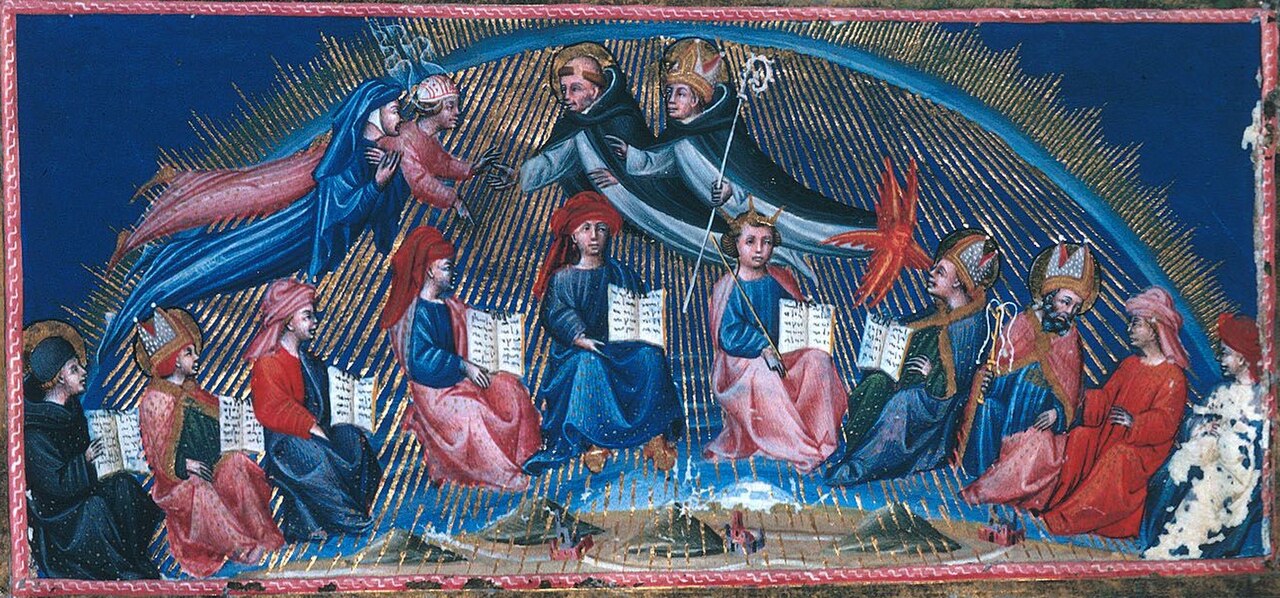
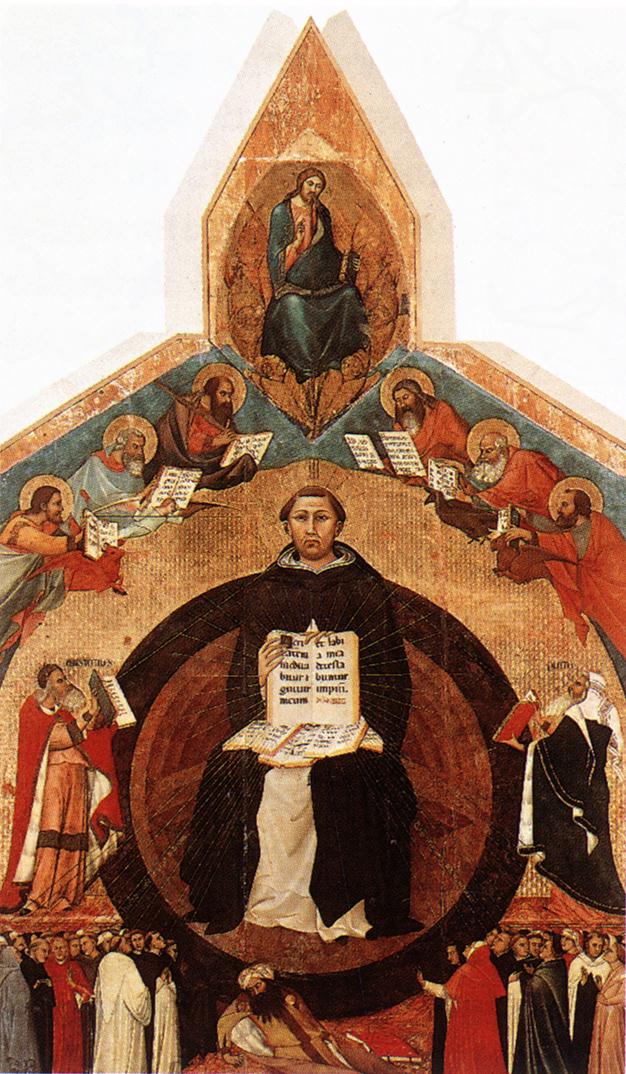
Dante's Paradiso canto X: Aquinas leading the teachers of wisdom
Giovanni di Paolo · c. 1445
A manuscript miniature by Giovanni di Paolo, c. 1445, illustrating Dante's Paradiso, where Thomas Aquinas leads the wise. It is a later depiction of the figure.
Shows Aquinas leading the wise in Dante's Paradiso, a later literary portrait placing him among the great teachers of wisdom.
About this source
What it is
This is a miniature painting from a manuscript of Dante's Paradiso, canto X, dated to about 1445 by catalogue records and attributed to Giovanni di Paolo. Gold rays fill a blue arch. At the top, two Dominican friars appear, one with a halo and one wearing a bishop's mitre and holding a crozier. Below them, a Virgin in blue sits with a circle of about a dozen robed figures holding open books, some with halos or mitres. A gold-brown landscape lies at the bottom.
Why it matters
In Dante's poem, Thomas Aquinas leads a circle of wise men in heaven. Dante wrote the poem in the early fourteenth century, and this manuscript illustrates it about a century later. The miniature shows how Aquinas was honored in the fifteenth century as a leader among the teachers of wisdom, and how a book's pictures could guide readers through a literary work.
Look closer
- Who are the figures with halos and mitres, and how can you tell their roles from their clothing?
- Why might an illustrator use gold rays and a blue arch to show heaven?
- This picture illustrates a poem. What does it show about Aquinas, and what does it leave out about his own writing?
This painting is part of the curated material that grounds the AI version of Saint Thomas Aquinas on Humy.ai — when students ask about related events, the AI can quote it and cite it.
More Saint Thomas Aquinas sources
Meet the AI Saint Thomas Aquinas →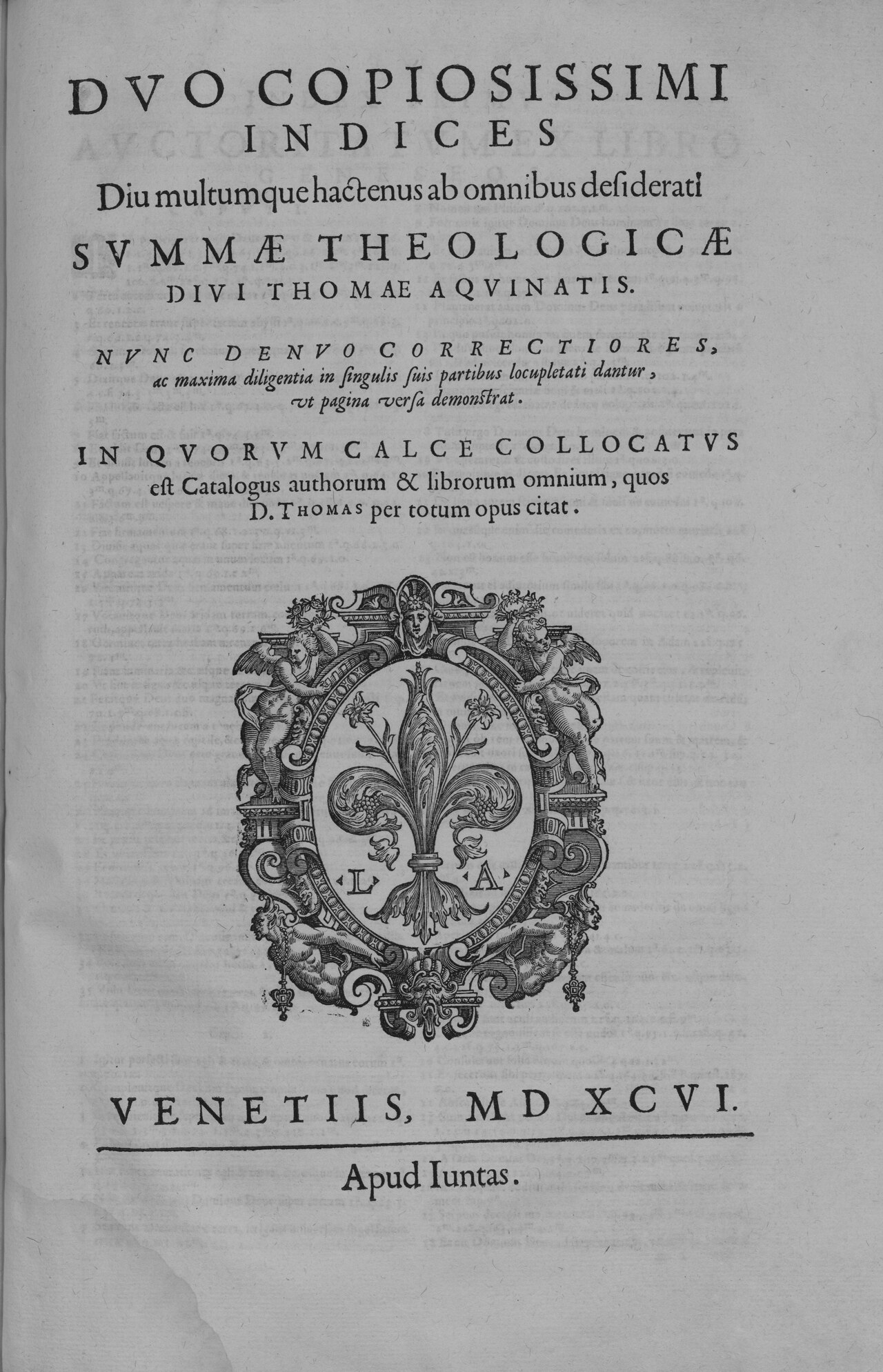 Book
Primary source
Summa Theologica
Thomas Aquinas · 1274
 Painting
Secondary source
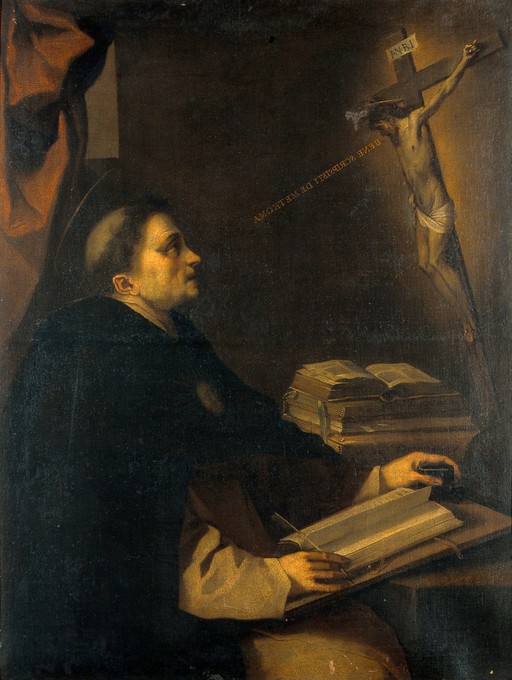
St Thomas Aquinas, 17th-century Italian oil painting
17th century
Primary source
Pange Lingua Gloriosi Corporis Mysterium
Thomas Aquinas · 1263
 Painting
Secondary source
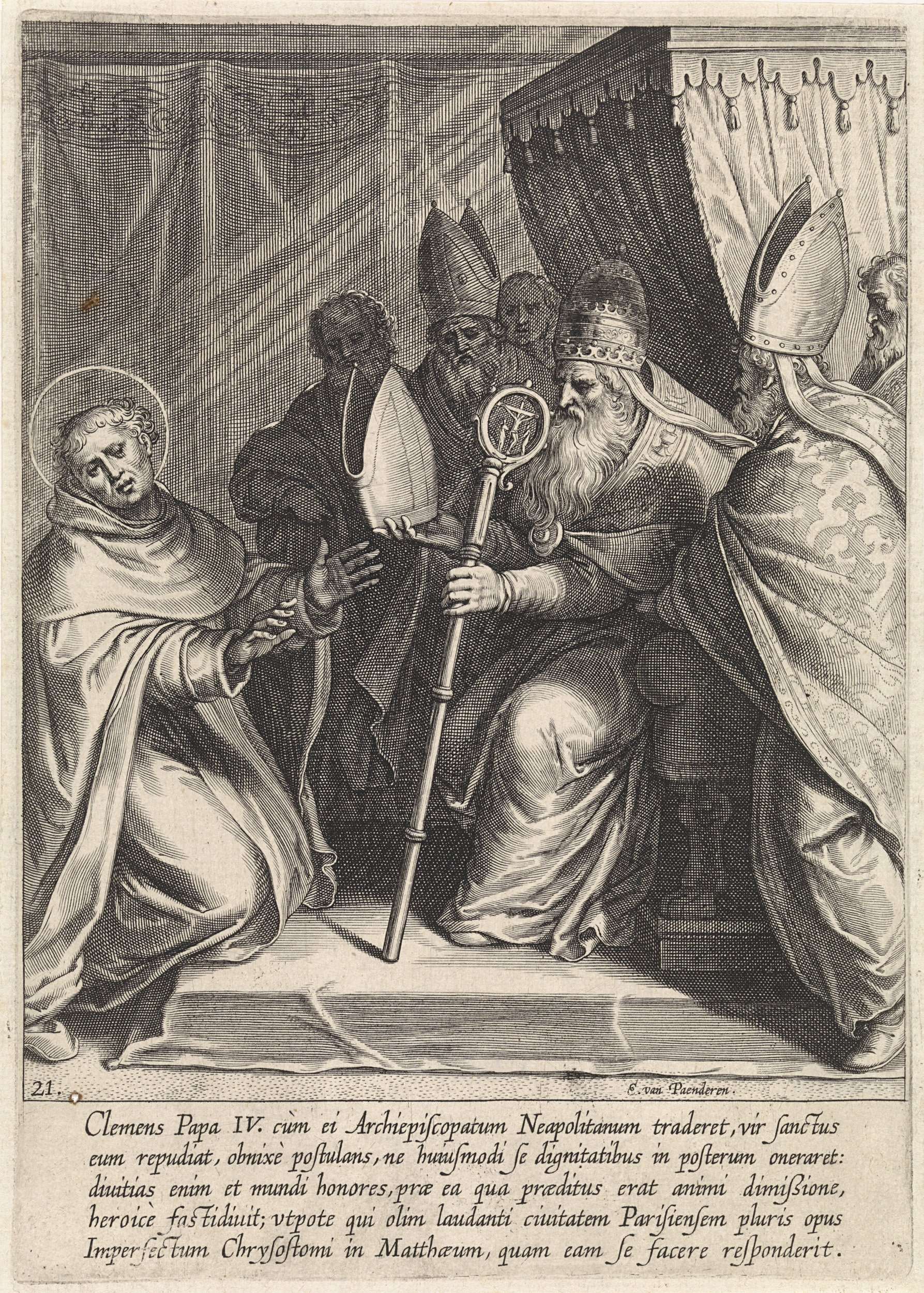
Thomas Aquinas Refuses the Archbishopric of Naples
1610
 Painting
Secondary source
Triumph of Saint Thomas Aquinas
Lippo Memmi · 1340
Ready when you are
Start chatting with Saint Thomas Aquinas now.
20 messages free · No credit card · Available in 50+ languages.