


Primary sourceBook1524
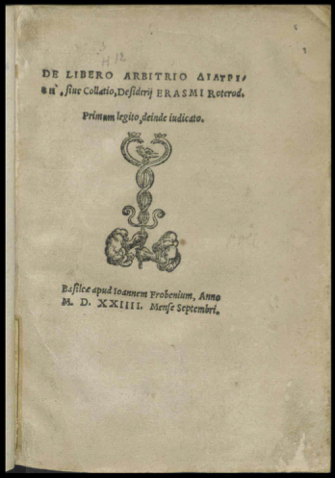
De libero arbitrio diatribe sive collatio
Erasmus · 1524
Erasmus's 1524 Latin treatise defending free will, written against Luther's teaching on necessity and grace, which provoked Luther's reply The Bondage of the Will.
Luther is the target of this treatise, and his famous reply to it became one of his key theological works.
About this source
What it is
This is the title page of a book written by the humanist scholar Erasmus of Rotterdam, printed in Basel in 1524. In it Erasmus argues against Martin Luther's claim that human will is bound and that everything happens by necessity.
Why it matters
The book triggered one of the most important theological debates of the Reformation. Luther answered it with his own work, On the Bondage of the Will, which he considered one of his most important writings. The exchange shows how reformers and humanists who agreed on reforming the church could still disagree sharply on core theology.
Look closer
- What does the title page tell you about who printed the book and when?
- Why might Erasmus have chosen a calm, scholarly tone rather than an angry one?
- What does this debate reveal about disagreements even among reformers?
This book is part of the curated material that grounds the AI version of Martin Luther and Desiderius Erasmus on Humy.ai — when students ask about related events, the AI can quote it and cite it.
More Martin Luther sources
Meet the AI Martin Luther →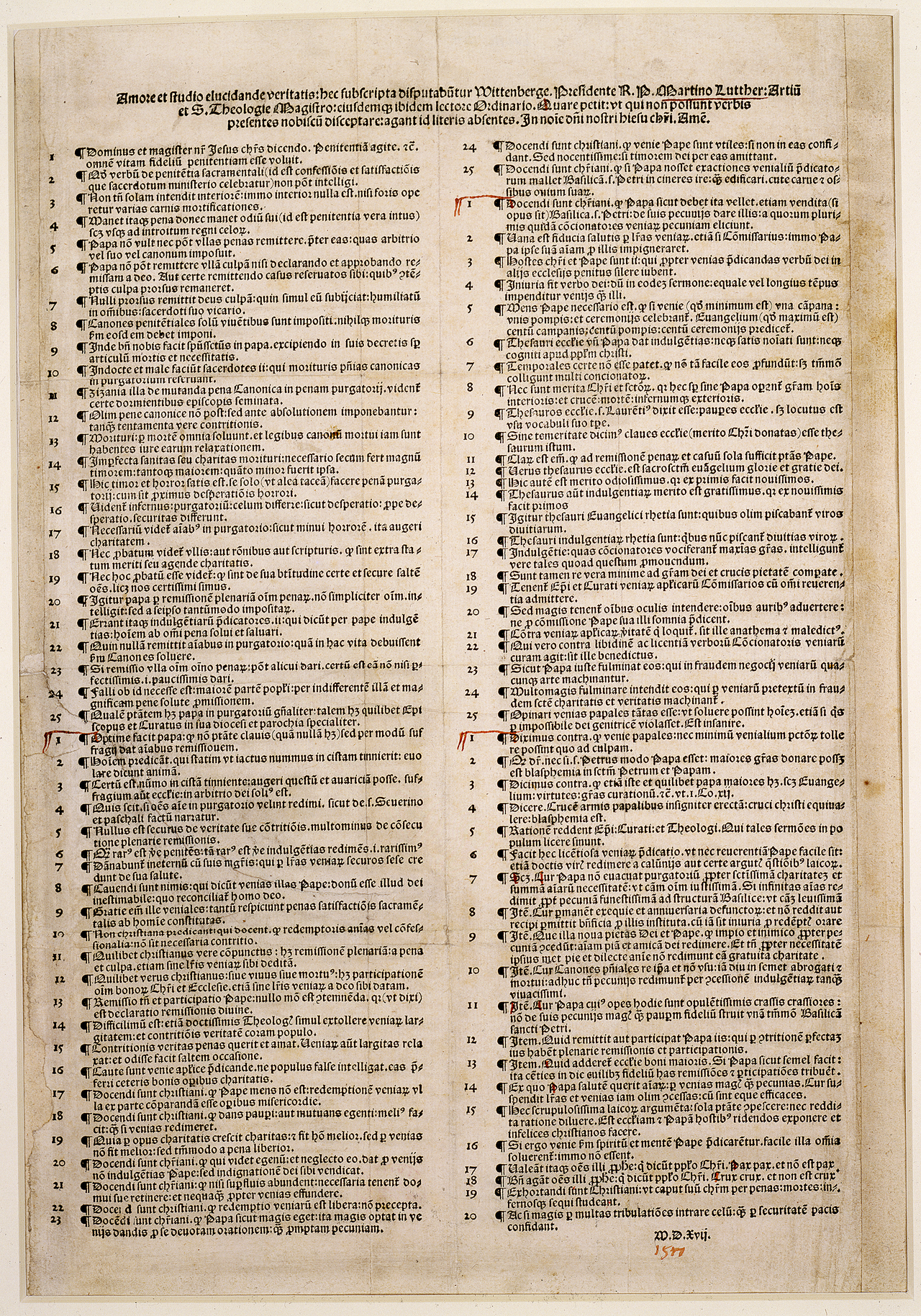 Document
Primary source
Ninety-five Theses
Martin Luther · 1517
 Painting
Secondary source
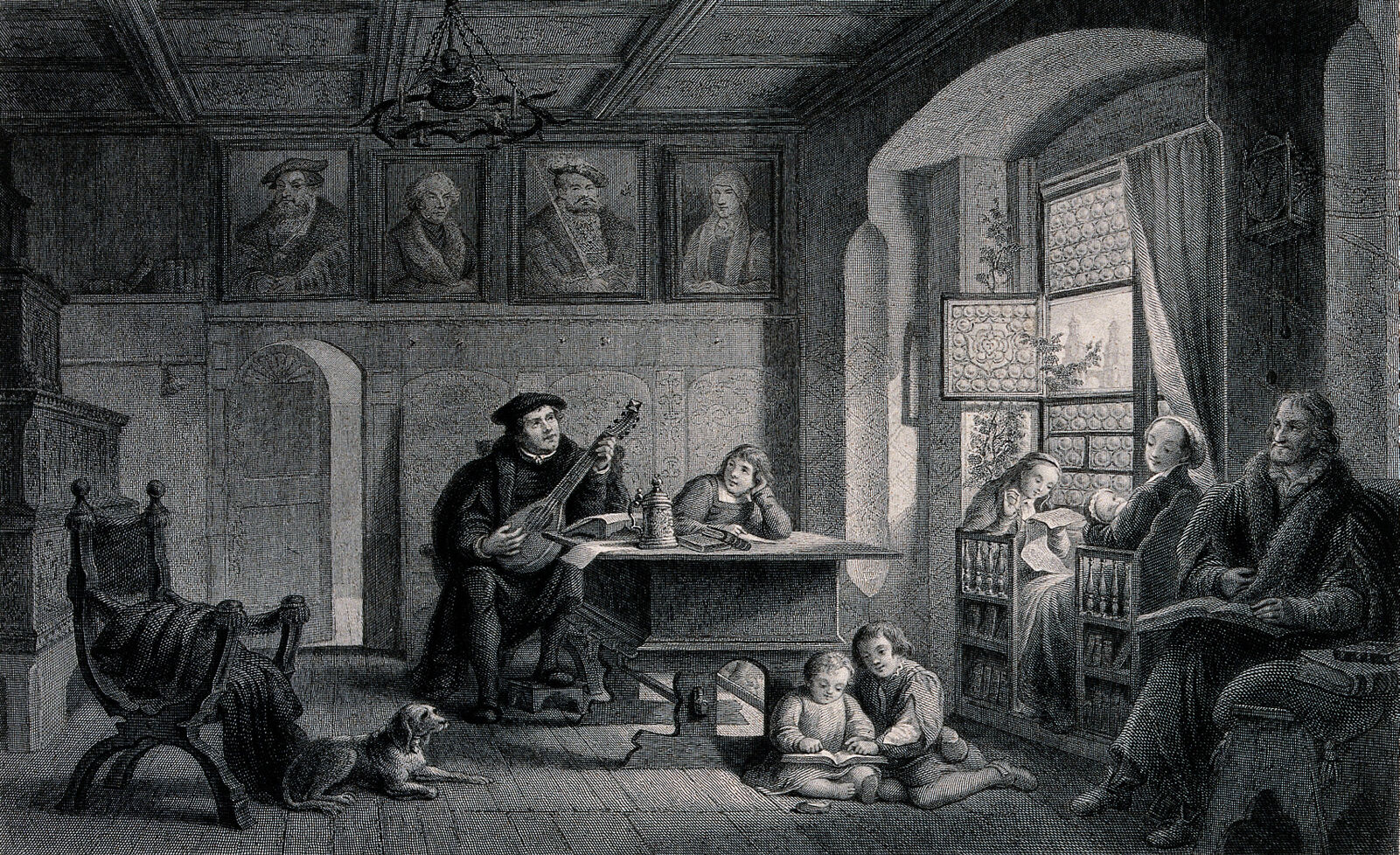
Domestic Life of Martin Luther at Wittenberg
Pierre-Antoine Labouchère (design); J. D. Nargeot (engraving) · 1800-1899
 Painting
Primary source
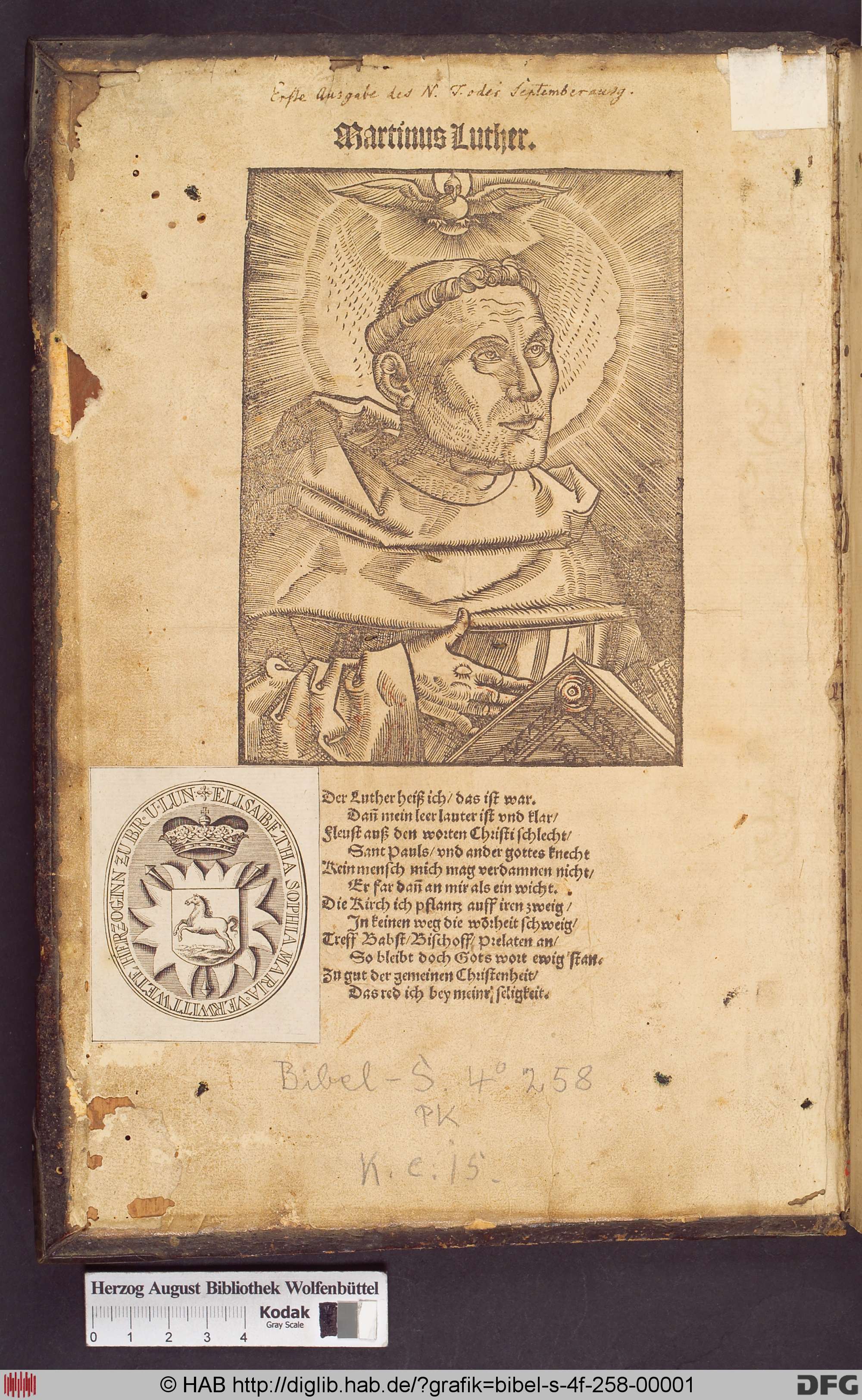
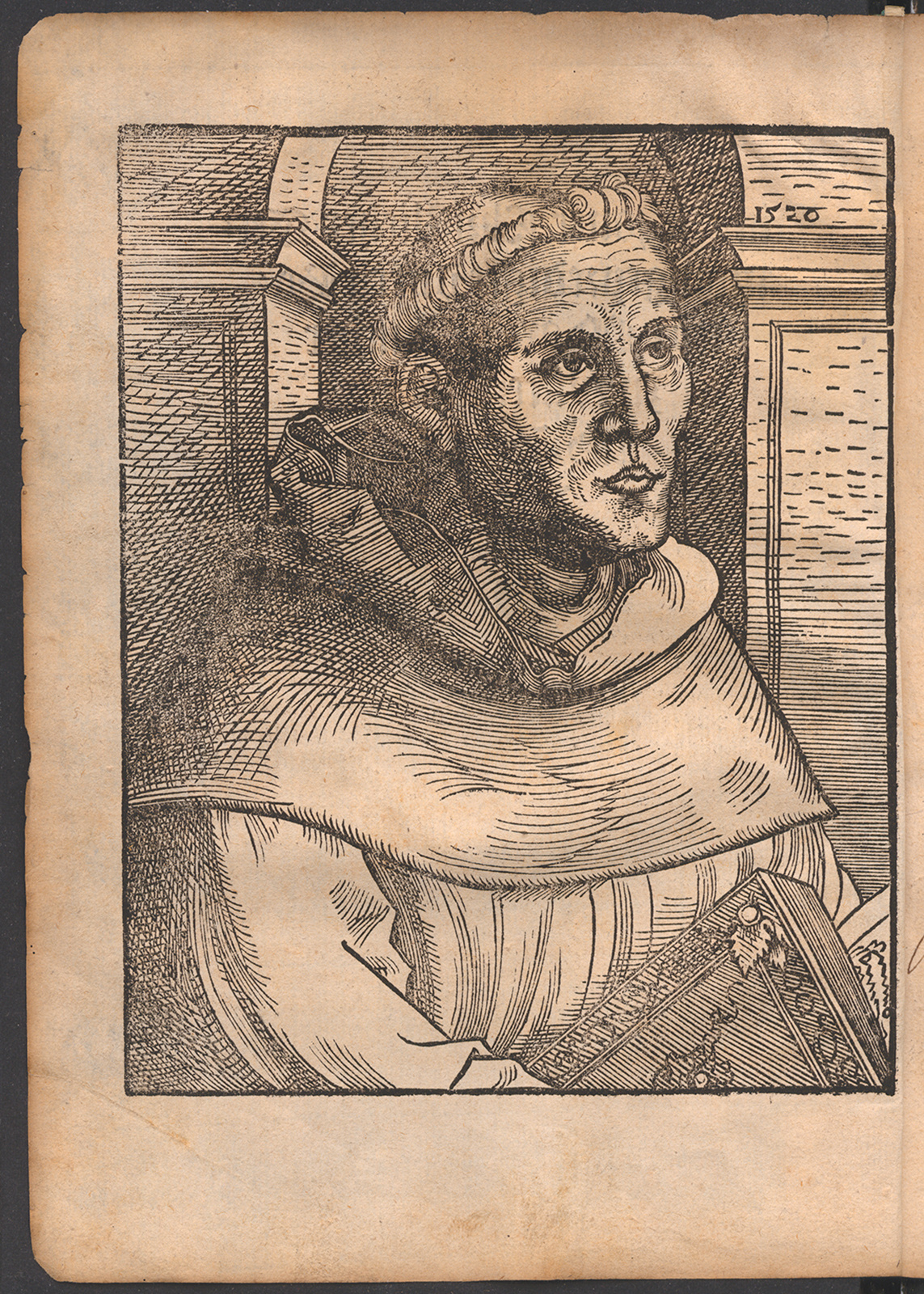
Martinus Luther Woodcut Portrait
Unbekannt (Formschneider)
 Painting
Primary source
Woodcut Portrait of Luther in Sermon Pamphlet
1523
 Book
Secondary source
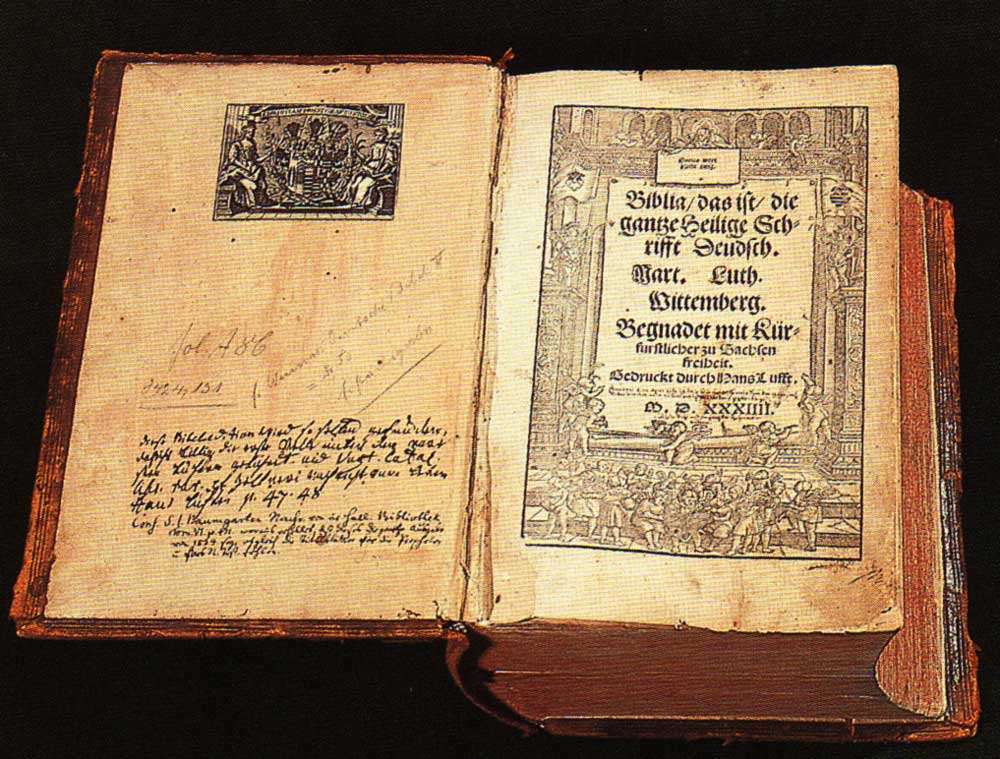
Luther Bible
Martin Luther · 1534
Ready when you are
Start chatting with Martin Luther now.
20 messages free · No credit card · Available in 50+ languages.