


Primary sourceDocument1790
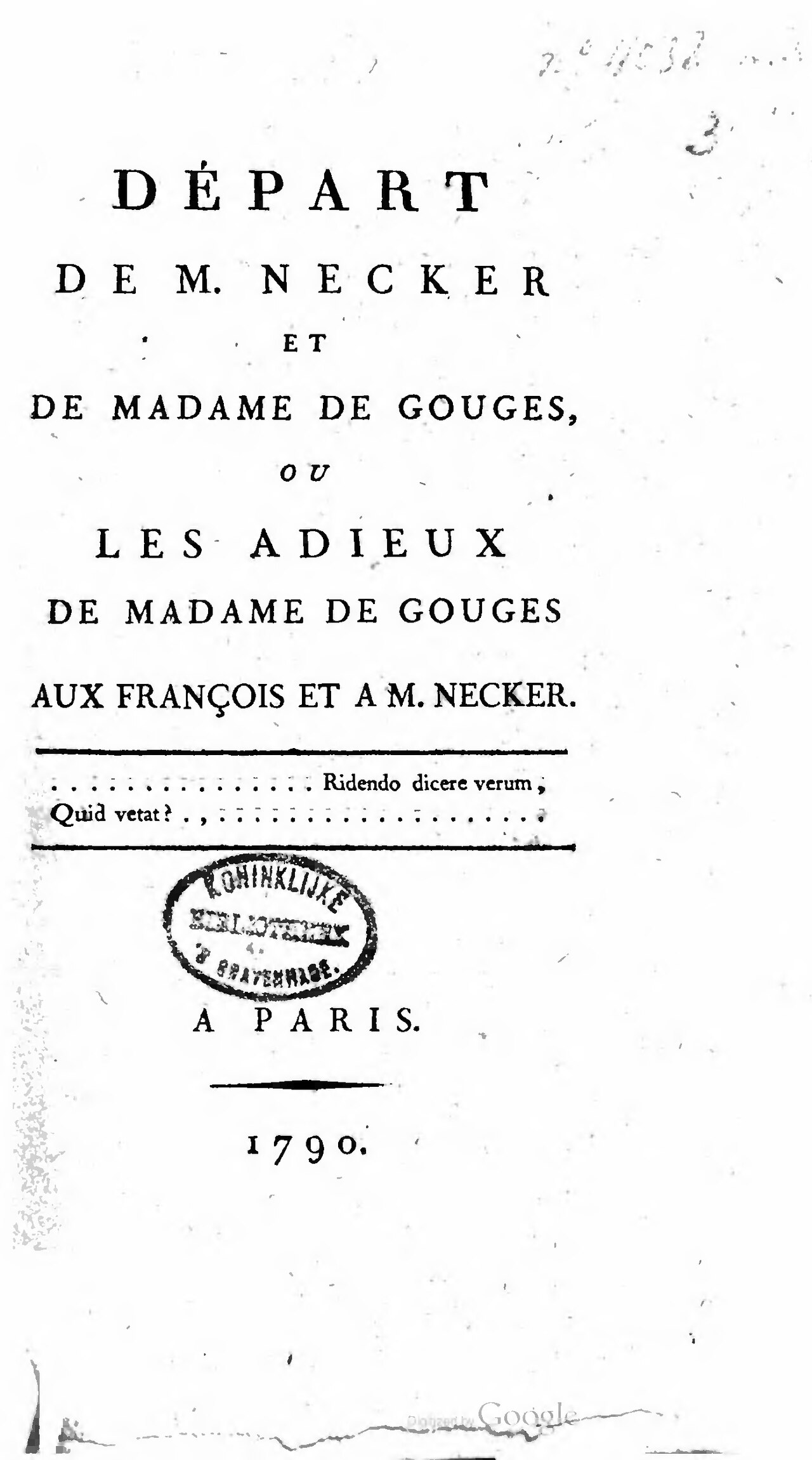
Départ de M. Necker et de Madame de Gouges
Olympe de Gouges · 1790
A 1790 pamphlet by Olympe de Gouges on finance minister Necker's resignation, in which she also announces her own farewell to politics.
Written by Gouges herself, pairing her own political withdrawal with Necker's, showing her engagement with revolutionary politics.
About this source
What it is
This is the title page of a printed pamphlet written by Olympe de Gouges in 1790, called Départ de M. Necker et de Madame de Gouges, ou les Adieux de Madame de Gouges aux François et à M. Necker. It was printed in Paris and is now held with a library stamp from the Koninklijke Bibliotheek in The Hague.
Why it matters
Jacques Necker was a leading royal finance minister during the early French Revolution, and his resignation was a major political event. By linking her own farewell to politics with Necker's departure, Gouges placed herself, as a woman writer, within the serious political conversations of her time.
Look closer
- Why might Gouges choose to compare her own 'farewell' to that of a famous minister?
- What does the Latin motto on the title page suggest about her tone?
- What can a library stamp tell us about how old documents like this survive?
This document is part of the curated material that grounds the AI version of Olympe de Gouges on Humy.ai — when students ask about related events, the AI can quote it and cite it.
More Olympe de Gouges sources
Meet the AI Olympe de Gouges →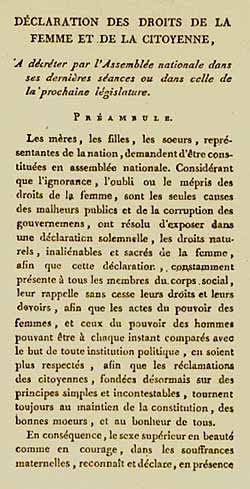 Document
Primary source
Declaration of the Rights of Woman and the Female Citizen
Olympe de Gouges · 1791
 Document
Primary source
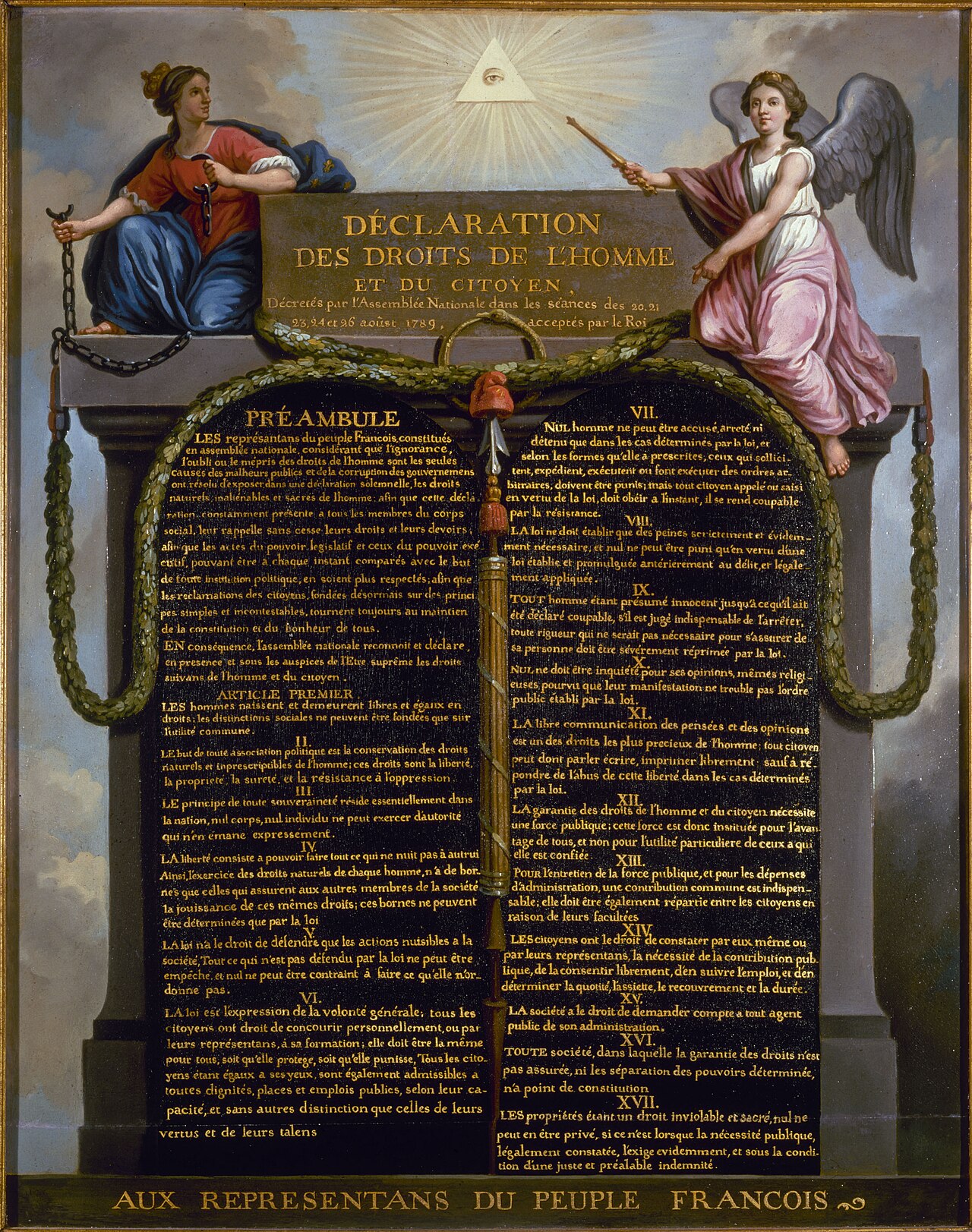
Declaration of the Rights of Man and of the Citizen
National Constituent Assembly · 1789
 Document
Primary source
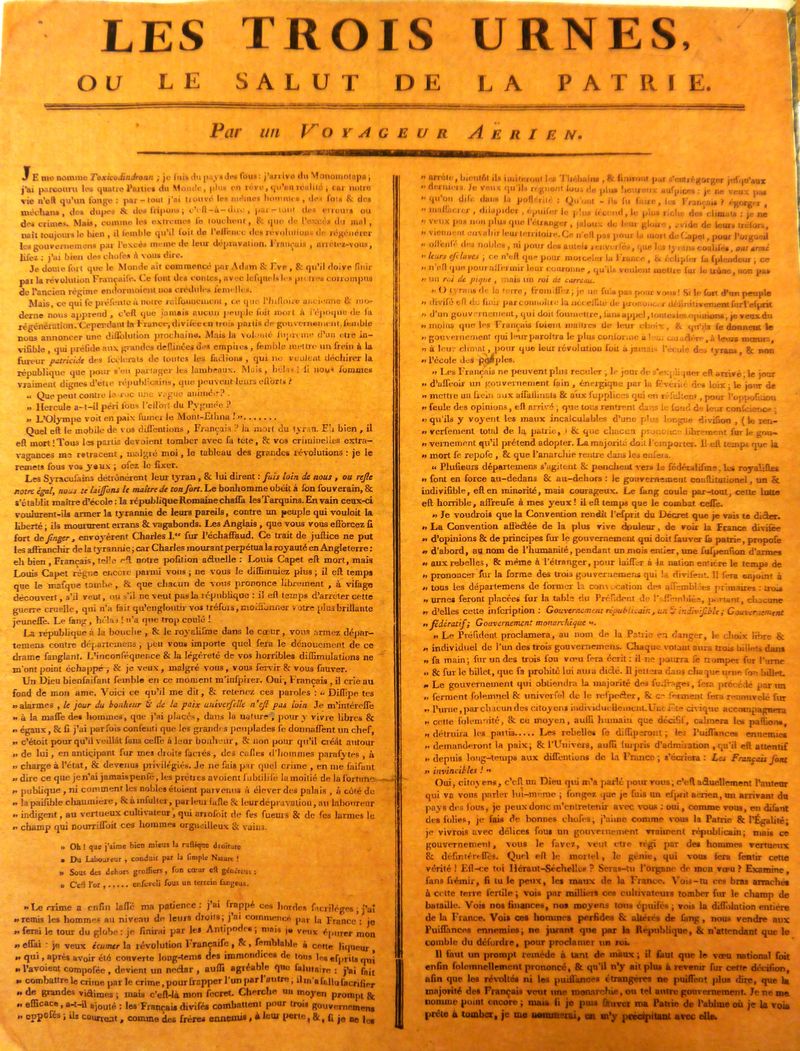
Les Trois Urnes, ou le Salut de la Patrie, par un voyageur aérien
Olympe de Gouges · 1793
 Painting
Primary source
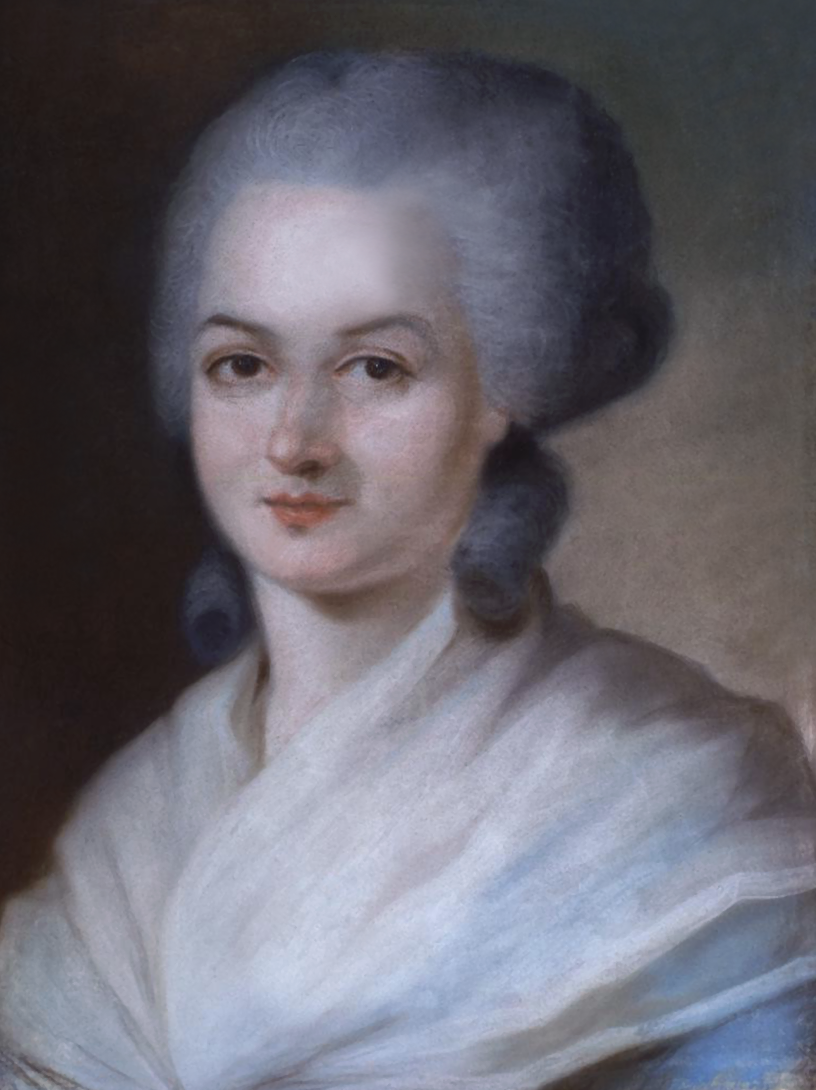
Portrait of Olympe de Gouges
Alexander Kucharsky
 Document
Primary source
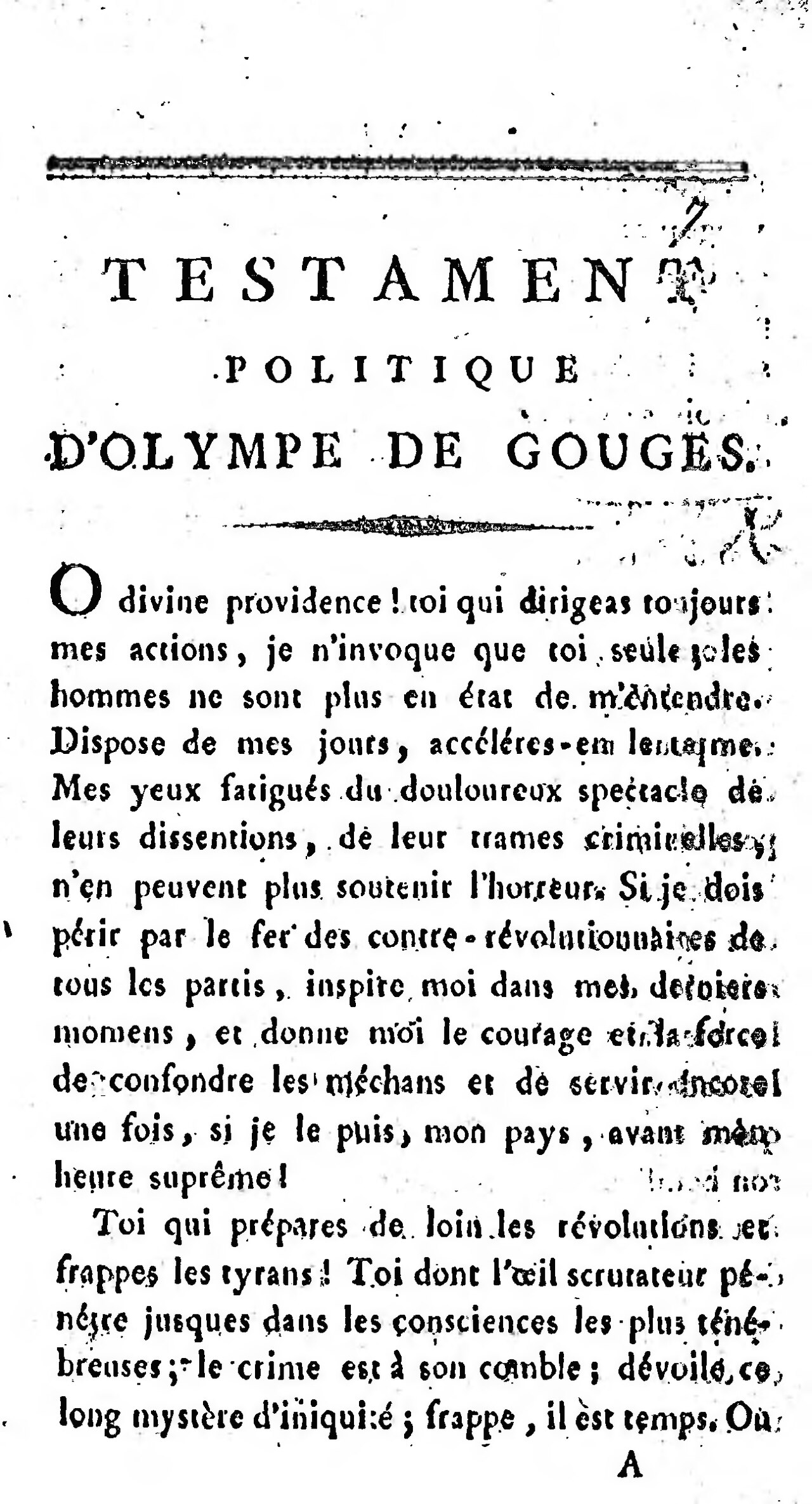
Testament politique d'Olympe de Gouges
Olympe de Gouges · June 1793
Ready when you are
Start chatting with Olympe de Gouges now.
20 messages free · No credit card · Available in 50+ languages.