


Secondary sourceBook1920
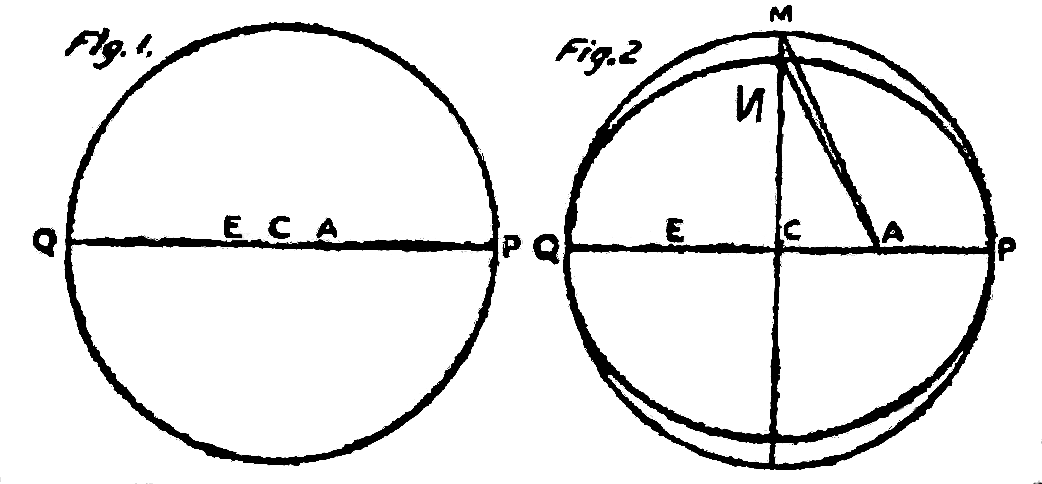
Diagrams of Kepler's theory of Mars's motion, from Bryant's Kepler (1920)
Walter W. Bryant · 1920
Two geometric diagrams from page 42 of Walter W. Bryant's 1920 book Kepler, explaining Kepler's analysis of Mars's motion. They show an ellipse-like orbit.
Diagrams from a 1920 book that explain Kepler's analysis of Mars's orbit, showing how later writers studied his work.
About this source
What it is
These are two geometric diagrams from page 42 of the book Kepler by Walter W. Bryant, published in 1920. Fig. 1 shows a circle with diameter QP and points E, C and A marked on it. Fig. 2 shows a circle and an inner oval curve with diameter QP, center C, points E and A, and a point M on the upper edge with a line from M to A. They illustrate Kepler's theory of the motion of Mars.
Why it matters
Kepler's analysis of Mars's motion was among his most important studies. A book from 1920 explains that work to later readers, showing that his ideas were still being taught and studied centuries after his death. Bryant's diagrams are a later explanation, so they show how Kepler was understood in the early twentieth century.
Look closer
- What do the labeled points E, C, A and M tell you about how the orbit is being measured?
- Why might a book use geometric diagrams rather than words alone to explain Mars's motion?
- Who was Bryant writing for, and what does the page assume the reader already knows?
This book is part of the curated material that grounds the AI version of Johannes Kepler on Humy.ai — when students ask about related events, the AI can quote it and cite it.
More Johannes Kepler sources
Meet the AI Johannes Kepler →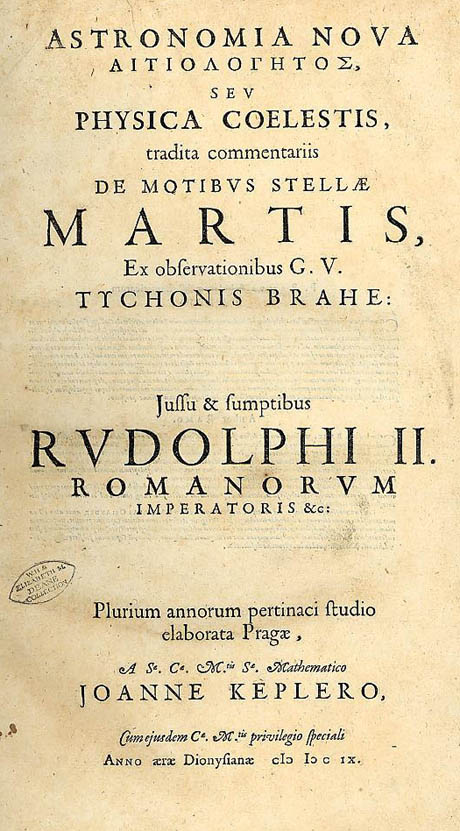 Book
Secondary source
Astronomia Nova
Johannes Kepler · 1609
 Book
Primary source
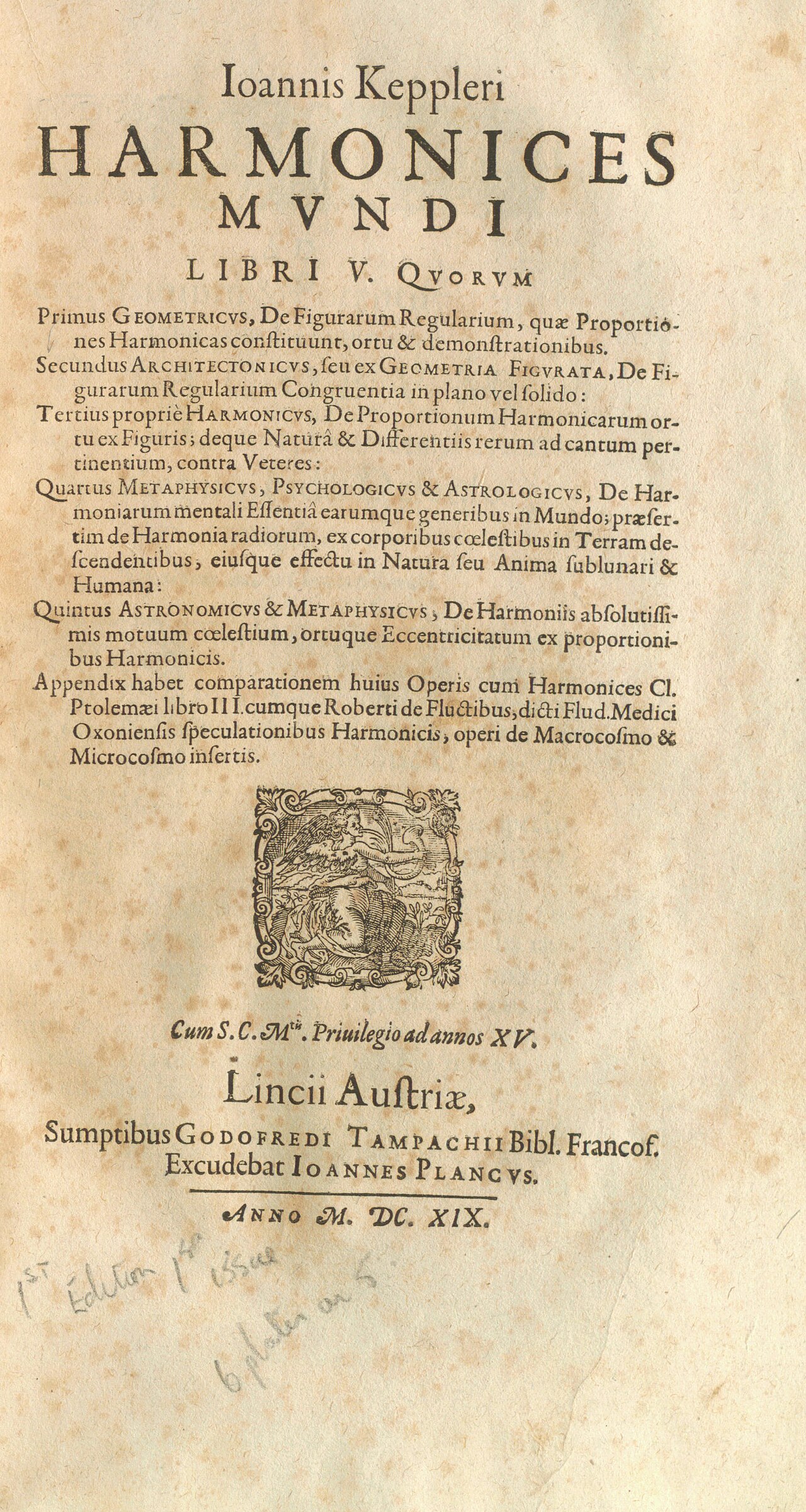
Harmonices Mundi
Johannes Kepler · 1619
 Book
Secondary source
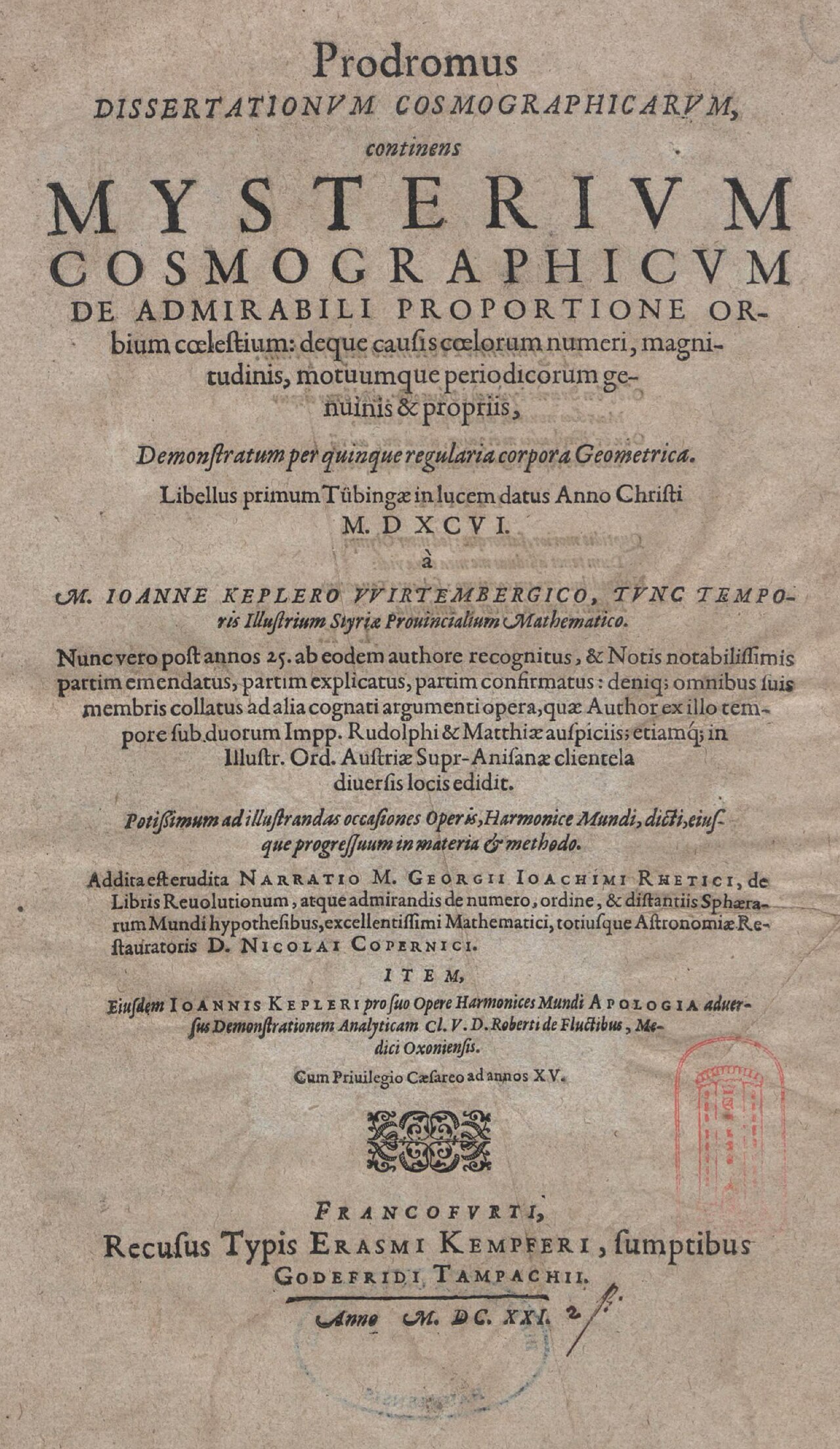
Mysterium Cosmographicum
Johannes Kepler · 1596 (2nd edition 1621)
Secondary source
The Martyrs of Science: Galileo, Tycho Brahe and Kepler
David Brewster
 Book
Secondary source
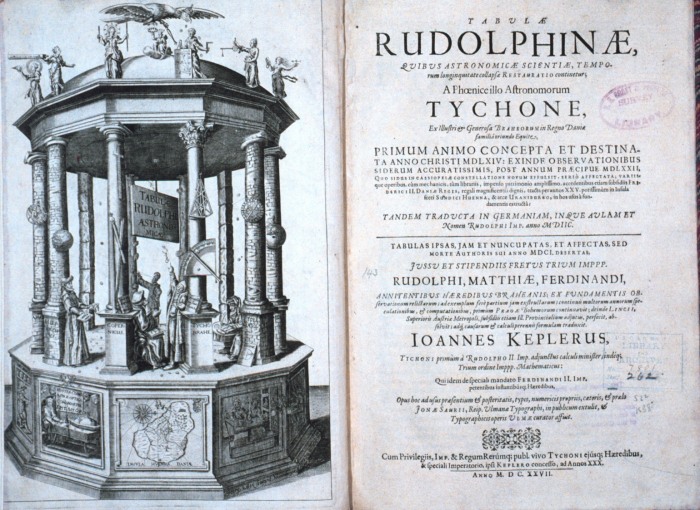
Rudolphine Tables
Johannes Kepler · 1627
Ready when you are
Start chatting with Johannes Kepler now.
20 messages free · No credit card · Available in 50+ languages.