


Secondary sourceDocumentbetween 1000 and 1100
Dialogi, Beinecke MS 1039
Gregory I, Pope · between 1000 and 1100
A medieval Latin manuscript of Pope Gregory the Great's Dialogues, the main early source for the life of Saint Benedict.
This manuscript preserves Gregory the Great's Dialogues, the earliest substantial written account of Benedict's life.
About this source
What it is
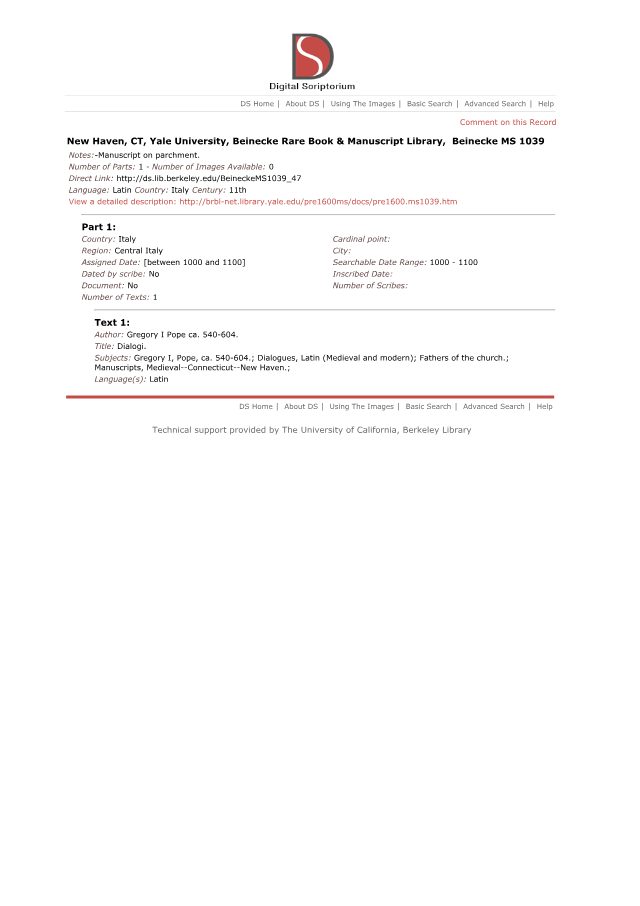
This is a medieval manuscript copy of the Dialogi (Dialogues) written by Pope Gregory I, known as Gregory the Great. It was copied in Italy, likely in the 11th century, and is now held at Yale University's Beinecke Rare Book & Manuscript Library as Beinecke MS 1039.
The catalogue record describes the manuscript's physical details but little of its content is otherwise described here.
Why it matters
The second book of Gregory's Dialogues is the earliest substantial account of Saint Benedict's life, based on the testimony of his own disciples. Manuscripts like this one are how that text was copied and preserved for centuries after it was written.
Look closer
- Why would monasteries keep copying this same text for hundreds of years?
- What does the survival of many copies tell us about how important this text was considered?
- What questions can't this catalogue record answer about the manuscript's content?
This document is part of the curated material that grounds the AI version of Saint Benedict on Humy.ai — when students ask about related events, the AI can quote it and cite it.
More Saint Benedict sources
Meet the AI Saint Benedict →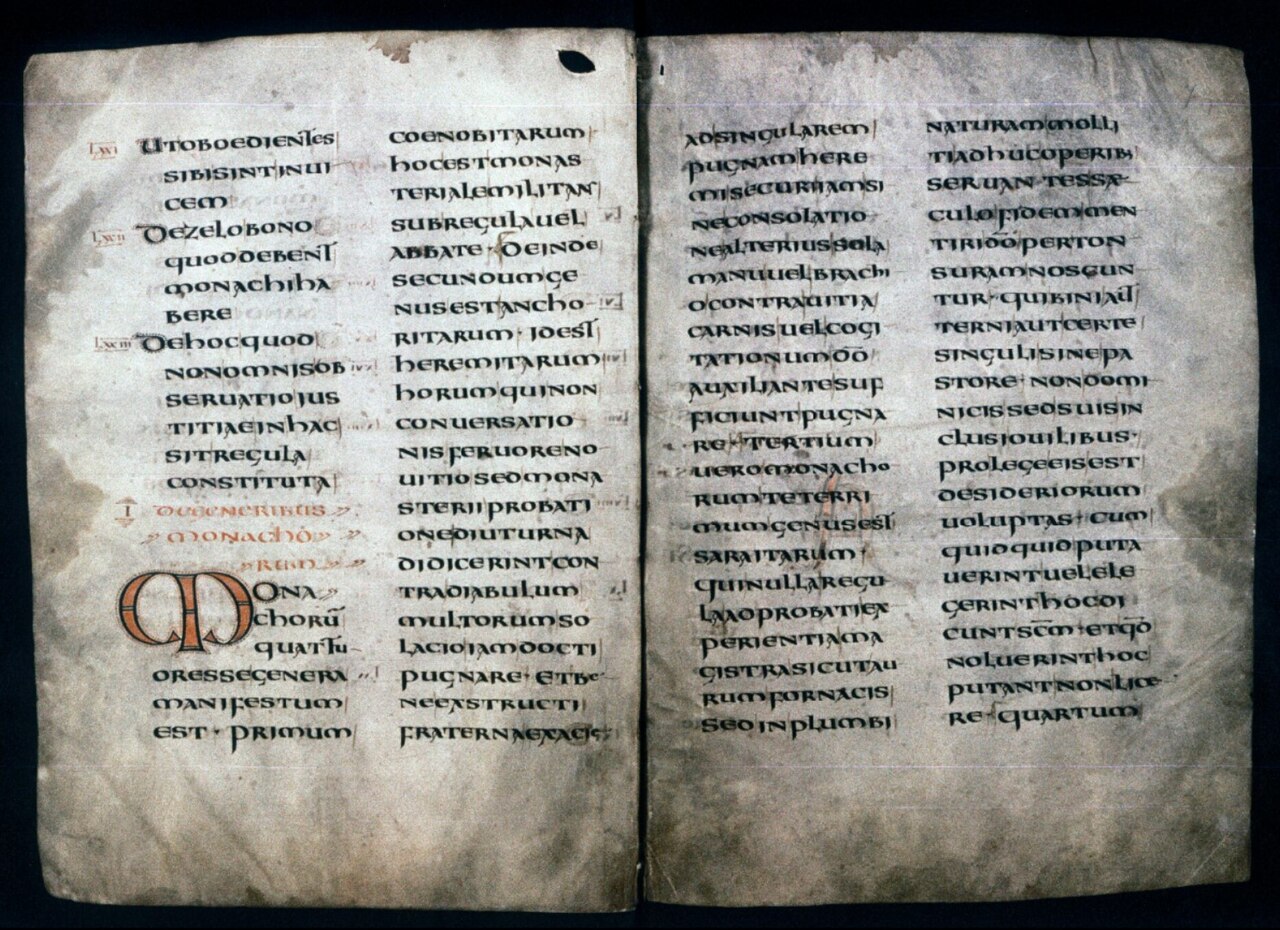 Book
Primary source
Rule of Saint Benedict
Benedict of Nursia · c. 600
 Artifact
Secondary source
Monte Cassino
founded c. 529/530
 Painting
Secondary source
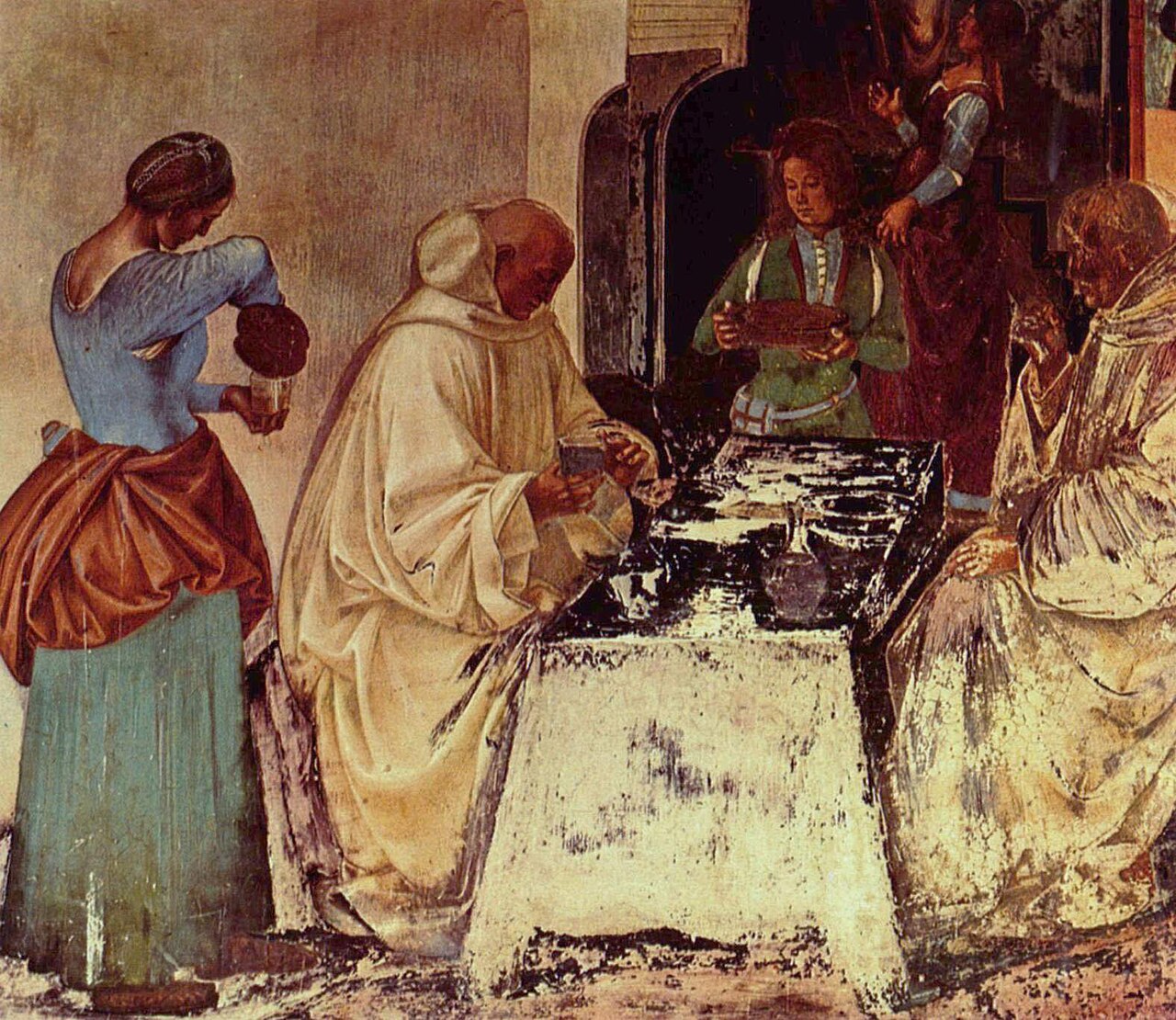
Fresco Cycle of the Life of St Benedict at Monte Oliveto Maggiore
Luca Signorelli and Sodoma · 1497-1505 (fresco cycle); abbey founded 1313
 Artifact
Secondary source
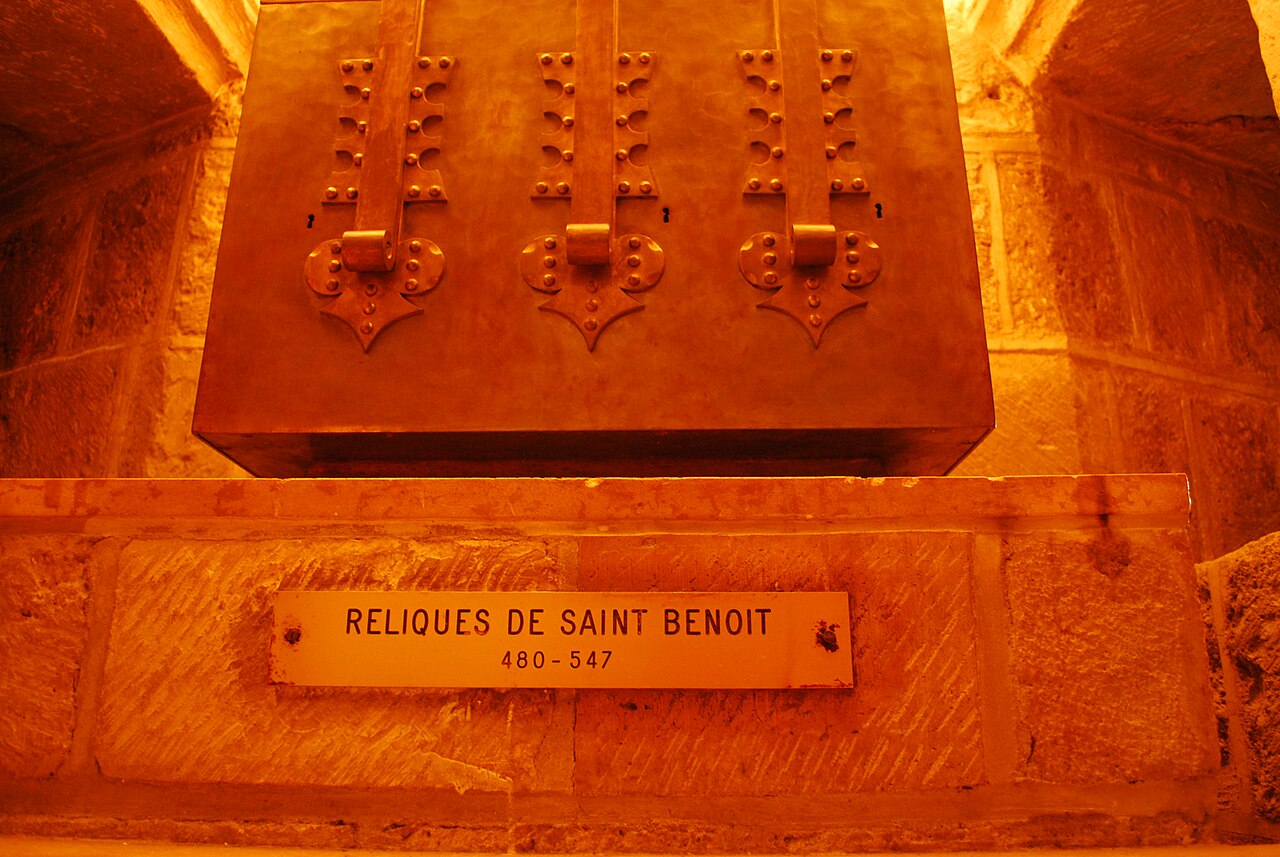
Reliquary of Saint Benedict at Fleury
 Artifact
Secondary source
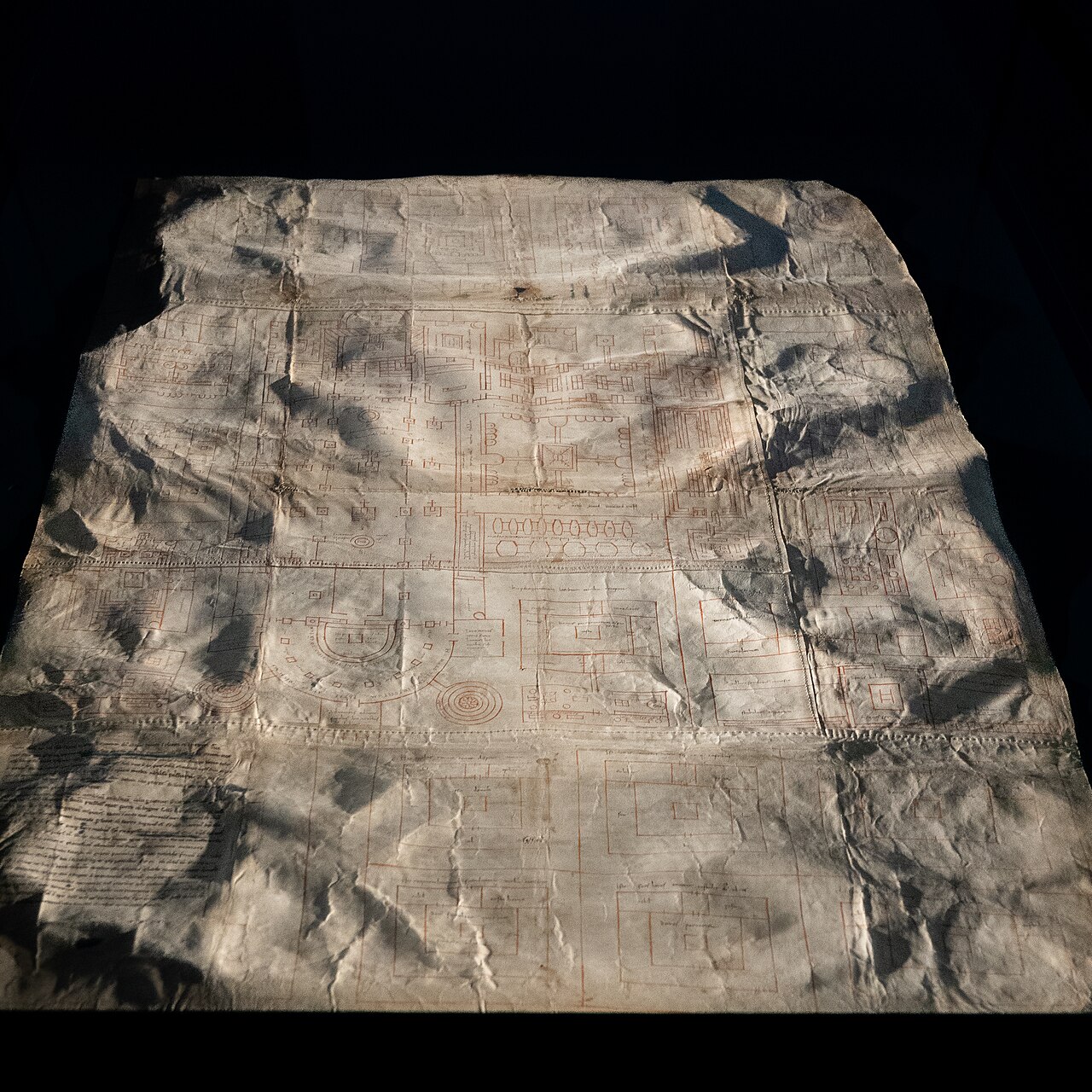
Plan of Saint Gall
c. 820-830
Ready when you are
Start chatting with Saint Benedict now.
20 messages free · No credit card · Available in 50+ languages.