


Primary sourceArtifactAH 586 (AD 1190-91)
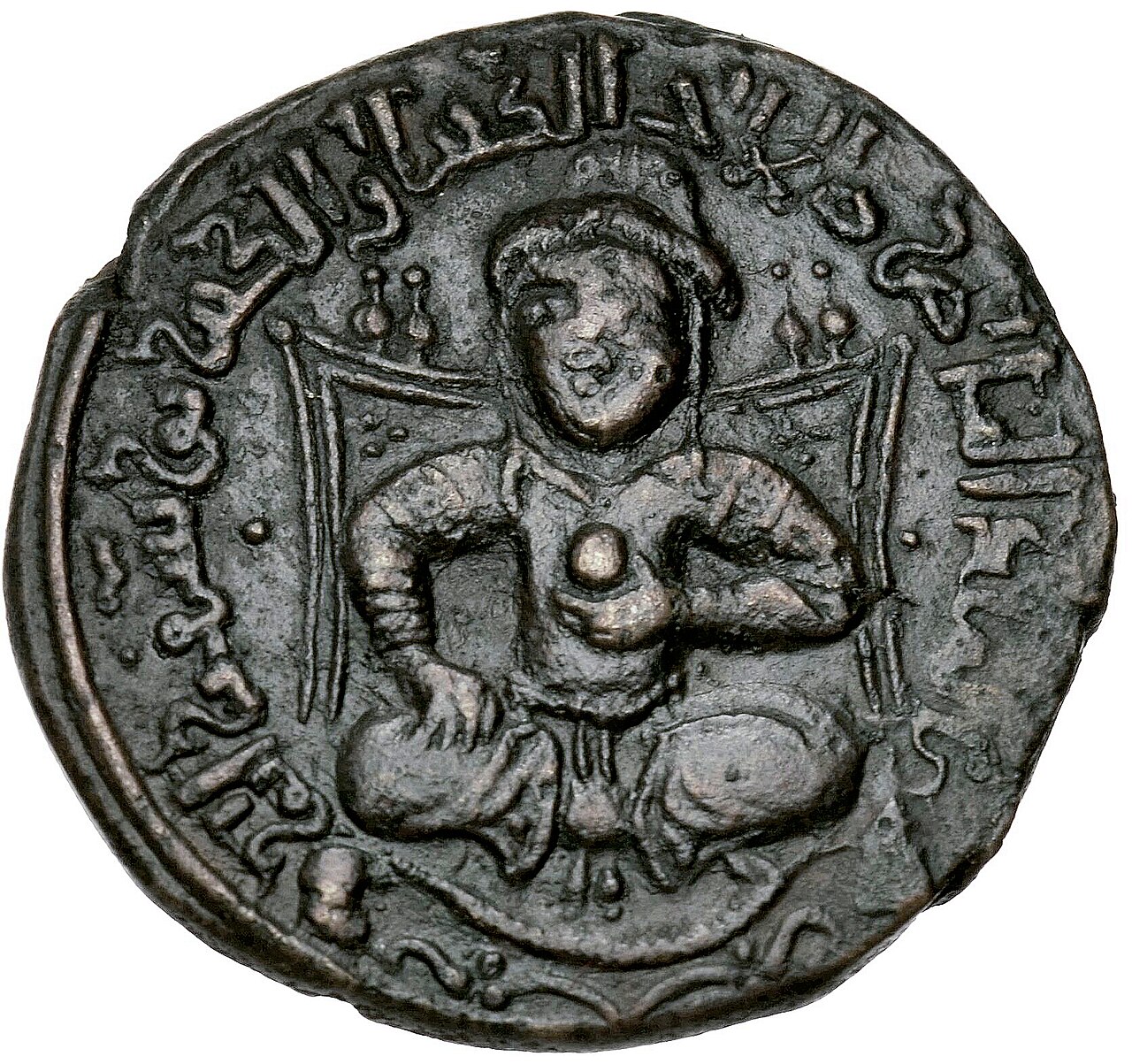
Dirham of Saladin
AH 586 (AD 1190-91)
A bronze coin struck during Saladin's reign showing a seated ruler on a throne, one of the few images made during his own lifetime.
This coin was struck under Saladin's own authority during his lifetime, making it rare physical evidence of his rule.
About this source
What it is
This is a copper dirham, a coin struck under Saladin's authority and dated to AH 586 (AD 1190-91). The front shows a seated ruler figure, cross-legged on a high-backed throne, surrounded by an Arabic inscription.
Why it matters
Coins like this were issued across the lands Saladin controlled in Syria and Mesopotamia, and they were one of the main ways a medieval ruler advertised his power. Because it was minted during his lifetime, it counts as one of the very few surviving images connected directly to Saladin himself, unlike the many later paintings made of him.
Look closer
- Why might a ruler choose to show himself seated on a throne rather than on horseback or in battle?
- What does the Arabic inscription tell us that the image alone cannot?
- Why do coins often survive better than paintings or manuscripts from the same period?
This artifact is part of the curated material that grounds the AI version of Saladin on Humy.ai — when students ask about related events, the AI can quote it and cite it.
More Saladin sources
Meet the AI Saladin →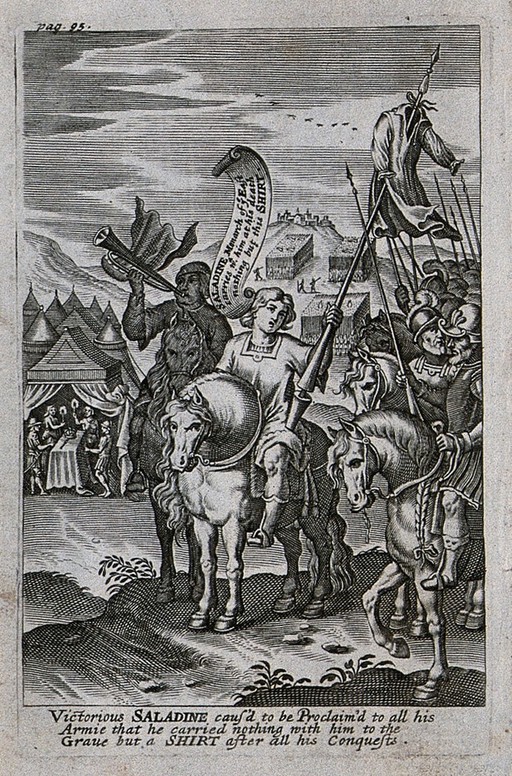 Painting
Secondary source
Saladin Proclaims He Will Take Only a Shirt to His Grave
John Payne · 1639
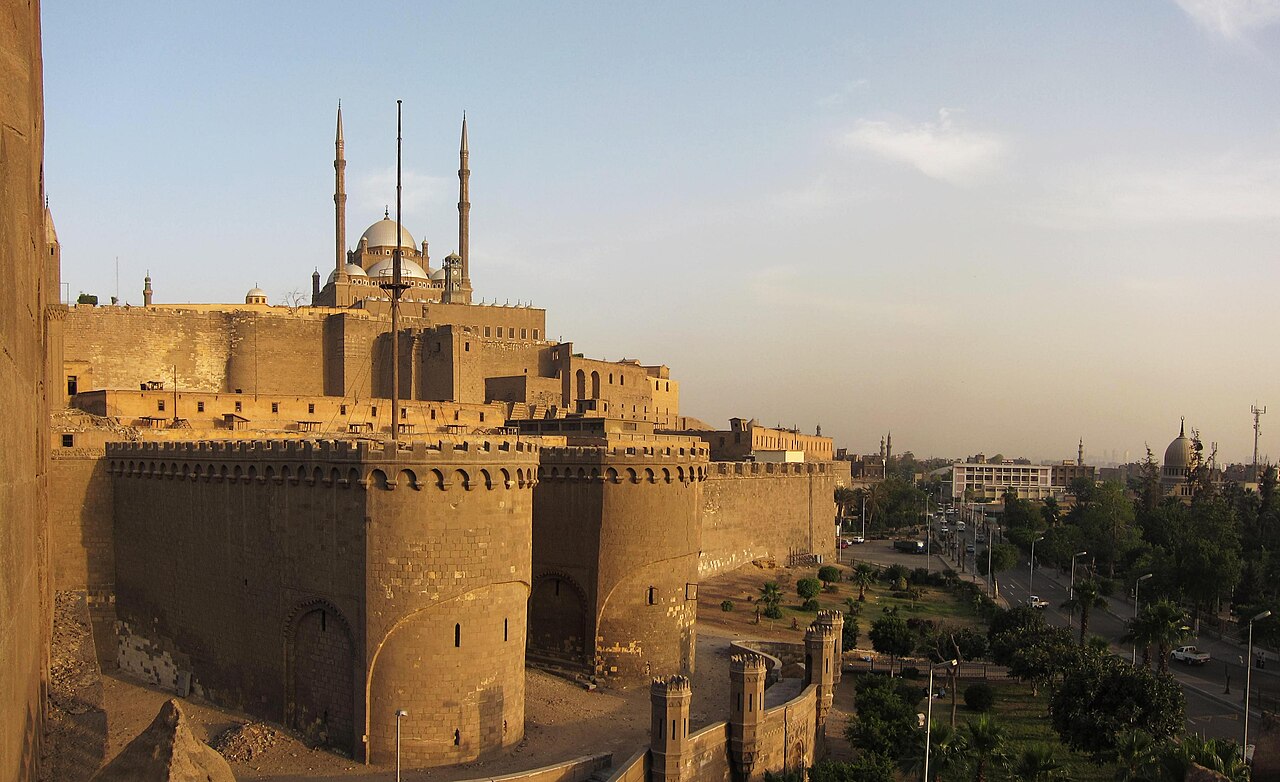 Artifact
Primary source
Cairo Citadel
Saladin · begun 1176
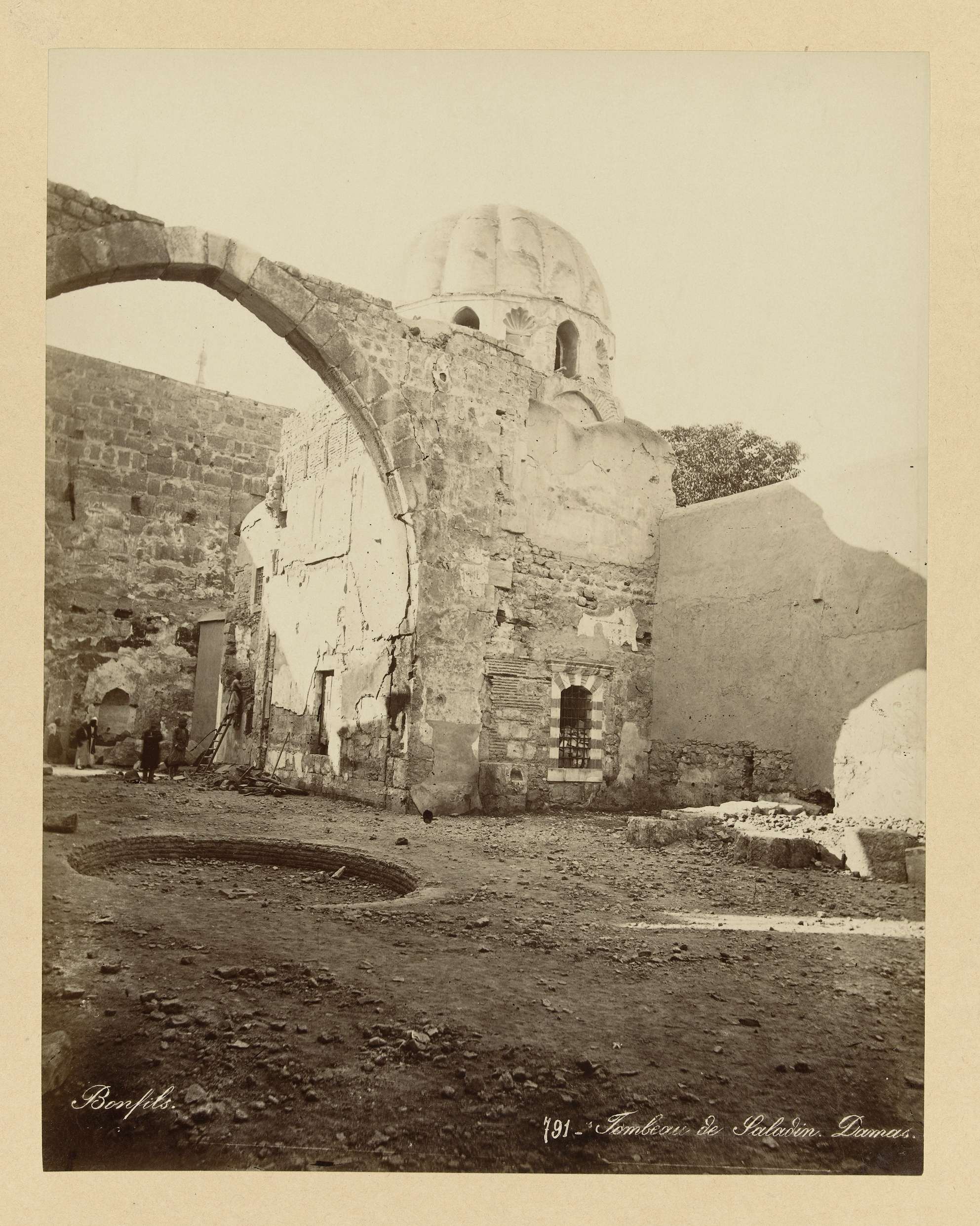 Photograph
Secondary source
Tomb of Saladin, Damascus
 Painting
Secondary source
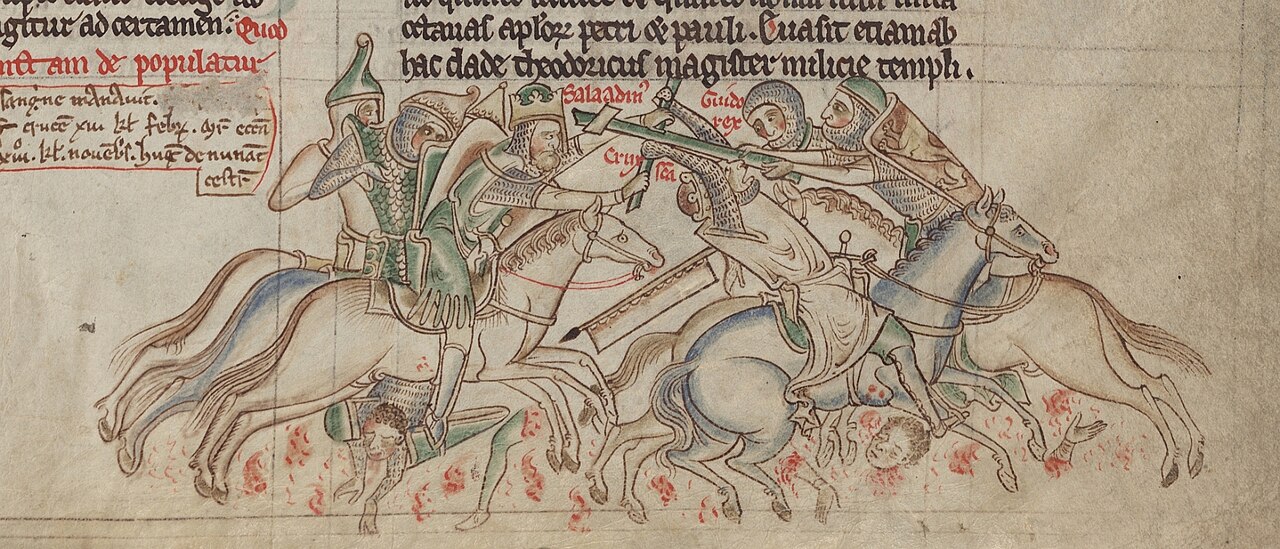
Saladin Seizing the True Cross from Guy of Lusignan
Matthew Paris
 Artifact
Secondary source
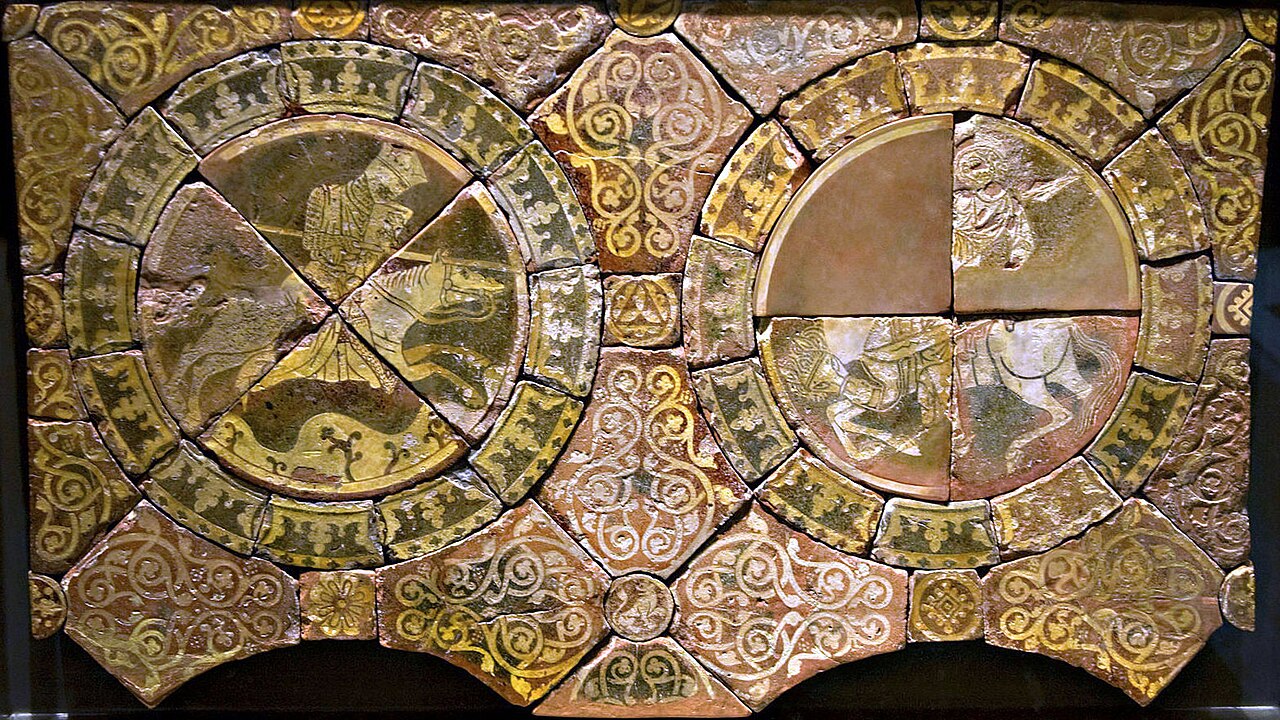
Chertsey Tiles of Richard and Saladin
c. 1250-1260
Ready when you are
Start chatting with Saladin now.
20 messages free · No credit card · Available in 50+ languages.