


Primary sourceArtifactca. 1412–30
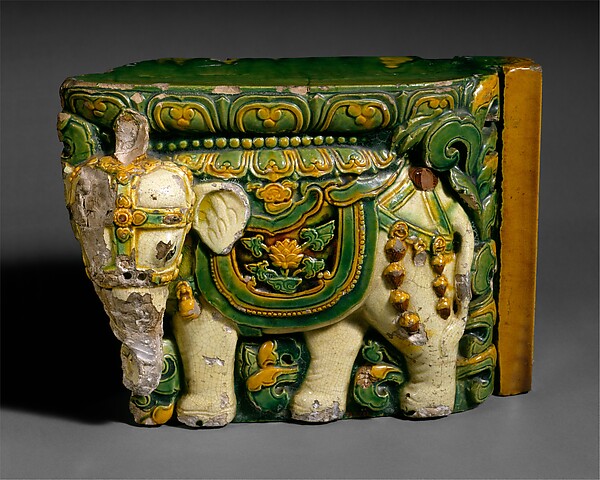
Door frame tile with elephant from the Porcelain Pagoda
ca. 1412–30
A glazed ceramic architectural tile carved with an elephant, from the Porcelain Pagoda of Nanjing. The curator's note says the tower was built in the Yongle reign, so this fragment connects directly to his era.
A surviving fragment of the Porcelain Pagoda, a monument built in the Yongle Emperor's reign, which is why it belongs in his archive.
About this source
What it is
This is a glazed ceramic tile from a door frame of the Porcelain Pagoda in Nanjing. It is carved in relief with an elephant wearing an ornate saddle cloth decorated with a lotus flower. The elephant sits in a bordered green and yellow frame with scrolling motifs. The tile is dated to about 1412 to 1430. The Metropolitan Museum of Art holds it; the museum record says it was acquired by purchase by subscription in 1879. The left end shows chipping and wear.
Why it matters
The Porcelain Pagoda was built in the reign of the Yongle Emperor, who ruled Ming China from 1402 to 1424. Only fragments such as this tile remain to show how the monument was decorated. The tile shows the skill of the craftspeople who worked in glazed ceramic on a large architectural scale in the early Ming period. It links the emperor's reign to the buildings and workers of his time.
Look closer
- What do the elephant, the lotus and the scrolling border suggest about how the tower was decorated?
- What can the chipping on the left end tell you about how the tile has survived?
- Because only a fragment survives, what else would you need to know to understand the whole pagoda?
This artifact is part of the curated material that grounds the AI version of Yongle Emperor on Humy.ai — when students ask about related events, the AI can quote it and cite it.
More Yongle Emperor sources
Meet the AI Yongle Emperor →

Ready when you are
Start chatting with Yongle Emperor now.
20 messages free · No credit card · Available in 50+ languages.