


Primary sourcePainting23 June 1612
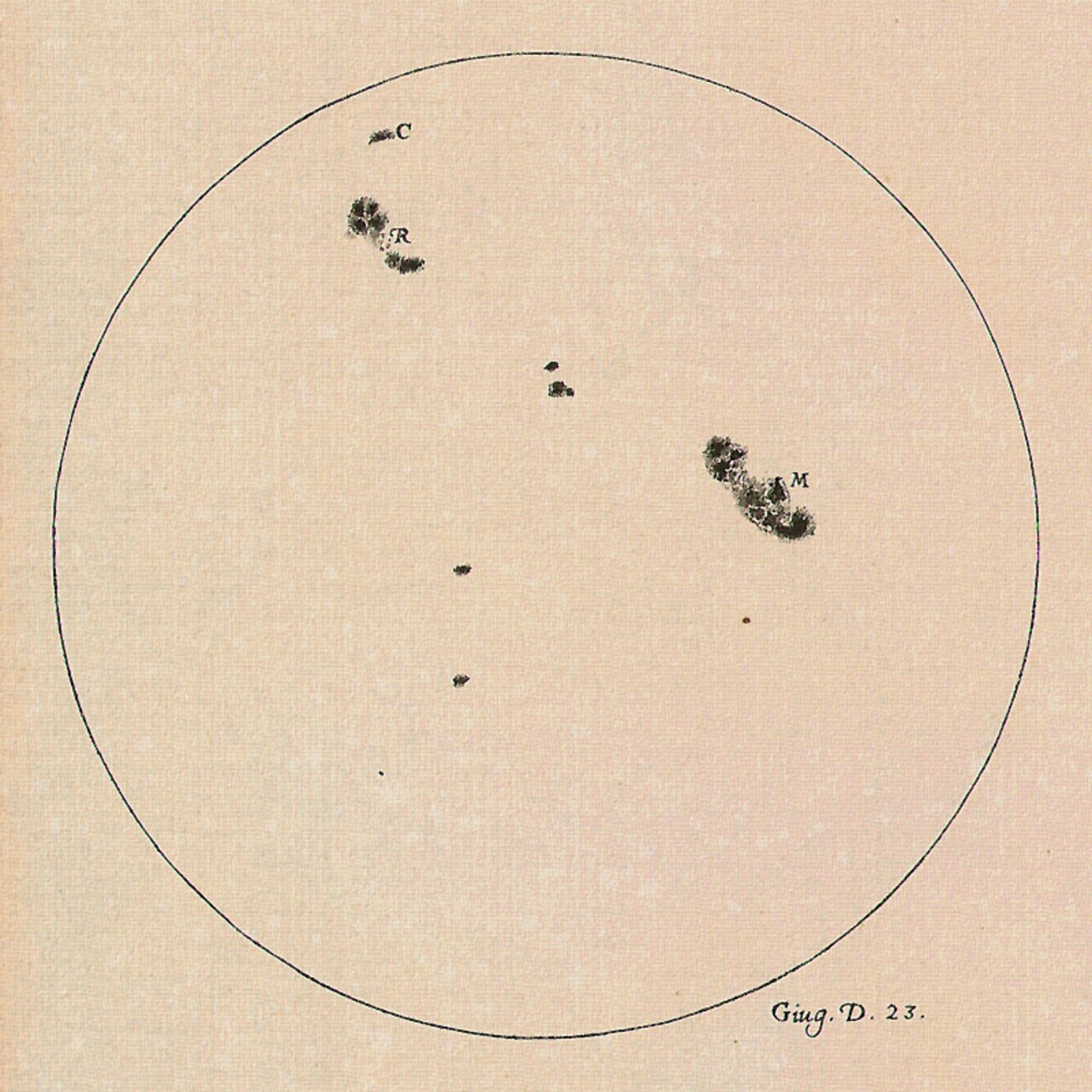
Drawing of Sunspots, 23 June 1612
Galileo Galilei · 23 June 1612
Galileo's ink drawing recording the positions and sizes of sunspots he observed on 23 June 1612, among the earliest documented solar observations.
This is one of Galileo's own sunspot drawings, documenting his pioneering telescopic observations of the Sun.
About this source
What it is
This drawing by Galileo Galilei shows the Sun with several sunspot groups, labeled C, M and R, observed on 23 June 1612 and marked 'Giug. D. 23.' It comes from his work Istoria e dimostrazioni intorno alle macchie solari, published in 1613.
Why it matters
Galileo was one of the first people to carefully observe and record sunspots using a telescope. This kind of detailed, dated drawing shows how he built scientific evidence through repeated observation, helping challenge older ideas that the Sun was a perfect, unchanging body.
Look closer
- Why might Galileo have labeled different sunspot groups with letters?
- What does the care taken in dating and recording this drawing tell you about his scientific method?
- Why would observations like this have been controversial in his time?
This painting is part of the curated material that grounds the AI version of Galileo Galilei on Humy.ai — when students ask about related events, the AI can quote it and cite it.
More Galileo Galilei sources
Meet the AI Galileo Galilei →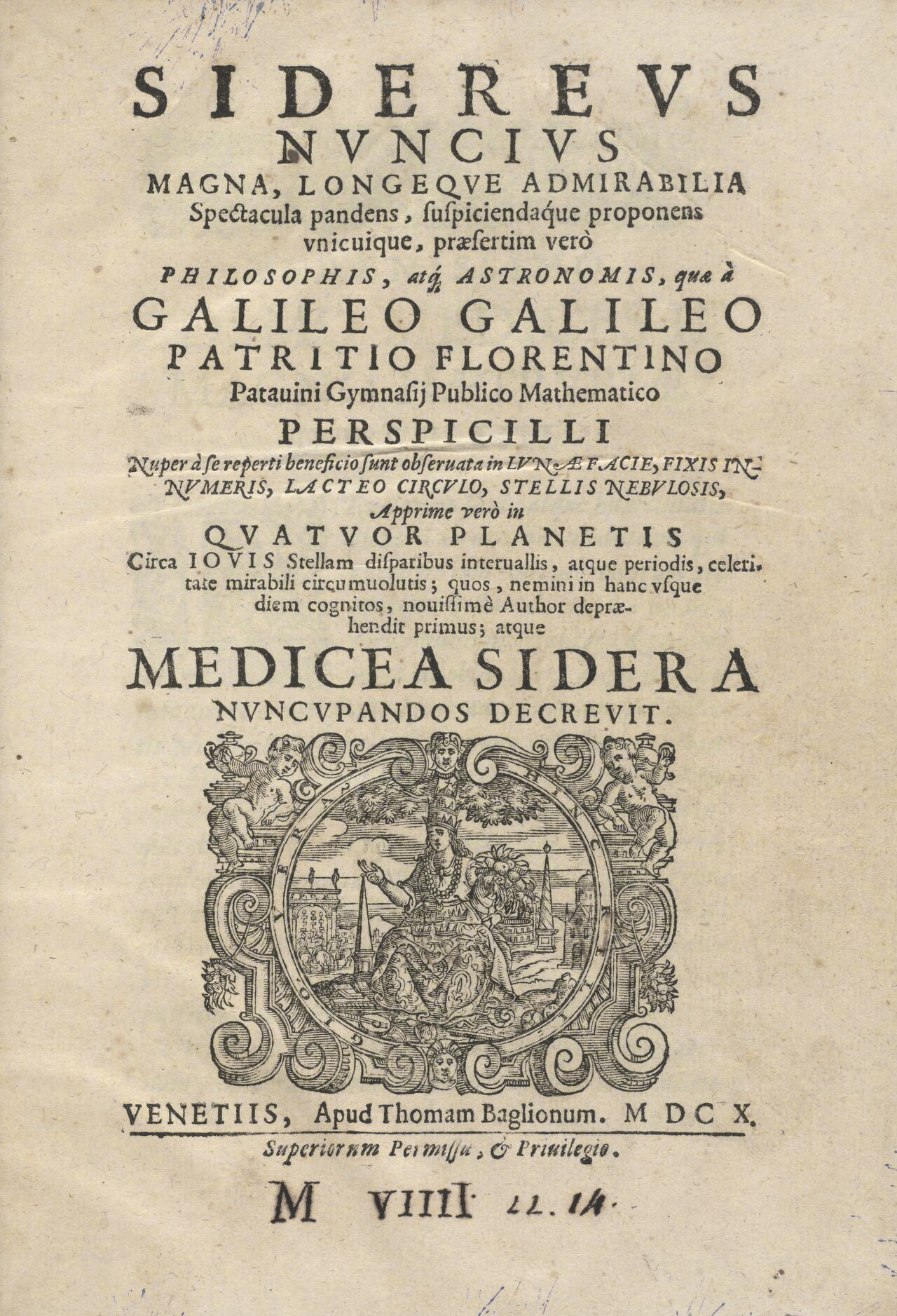 Book
Primary source
Sidereus Nuncius
Galileo Galilei · 1610
 Painting
Primary source
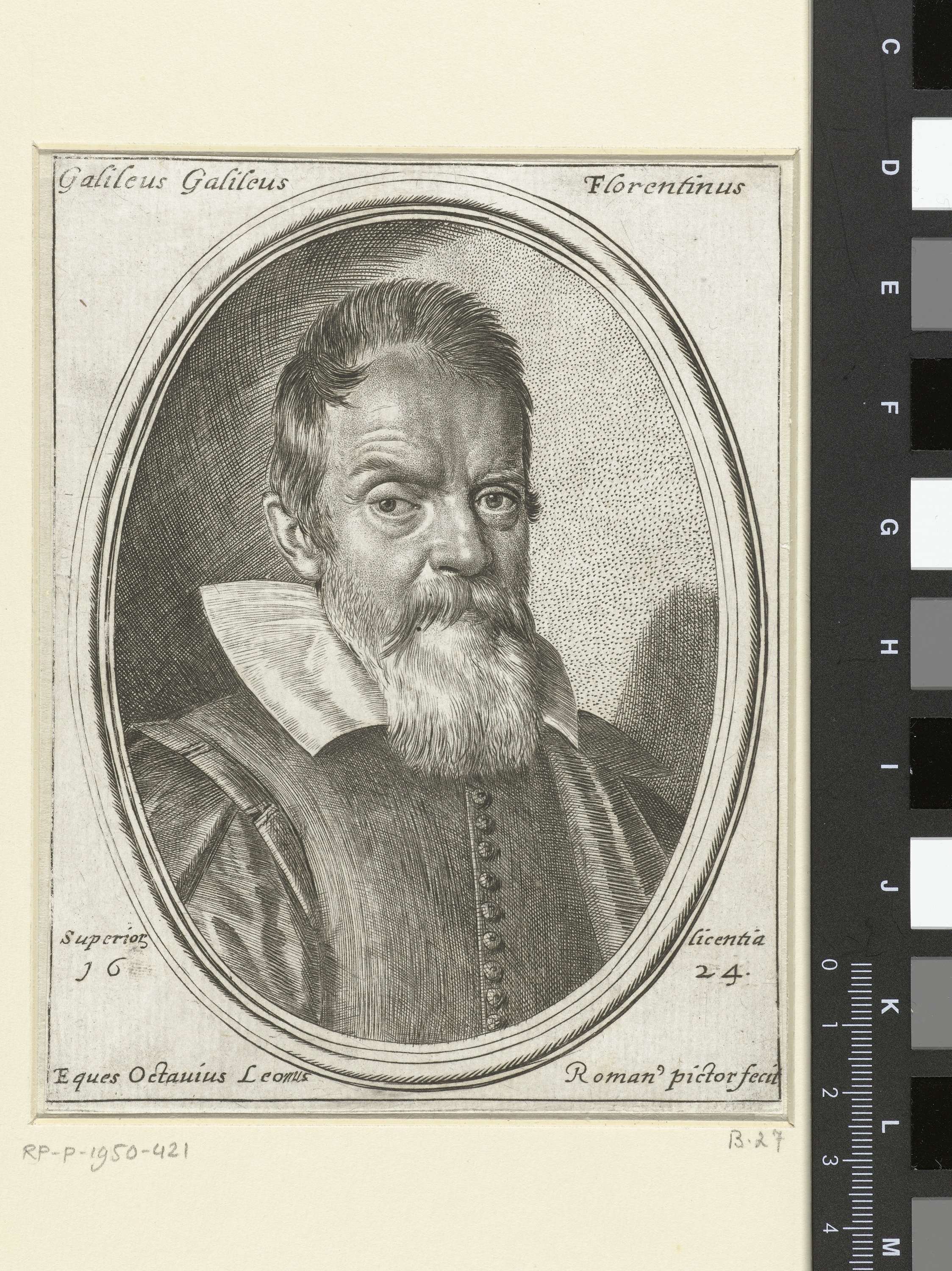
Portrait of Galileo Galilei (1624 print)
1624
 Painting
Primary source
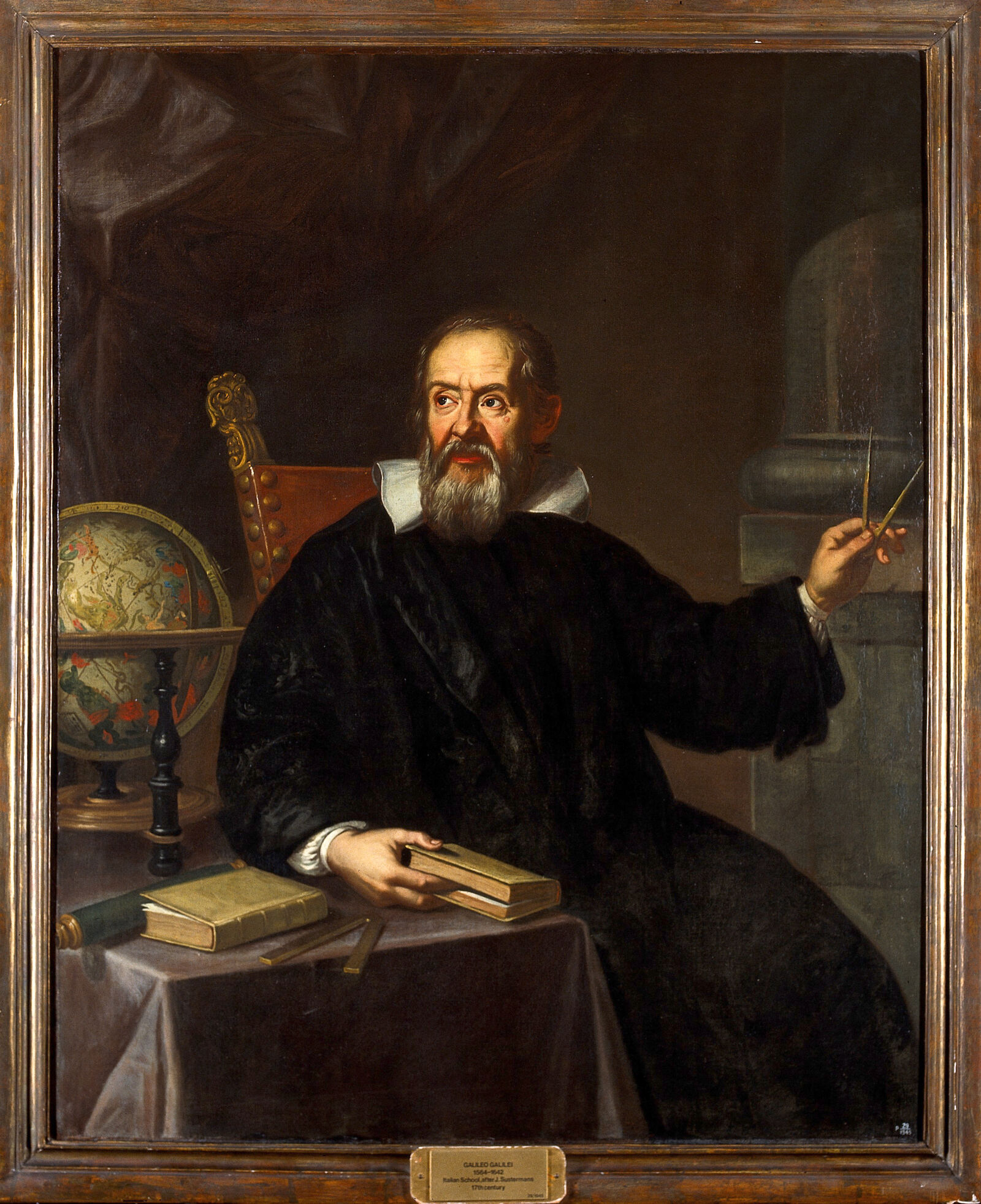
Oil Portrait of Galileo in His Study
Unknown Italian painter · 18th century (?)
 Painting
Primary source
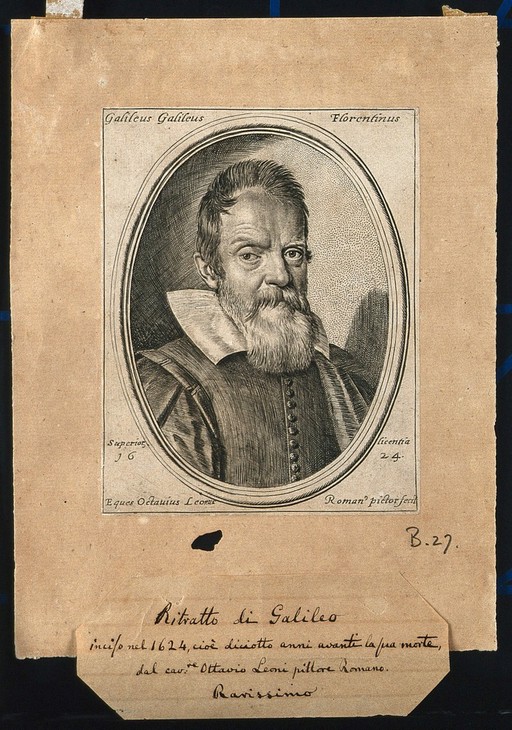
Galileo Galilei, line engraving by Ottavio Leoni
Ottavio Leoni · 1624
 Book
Primary source
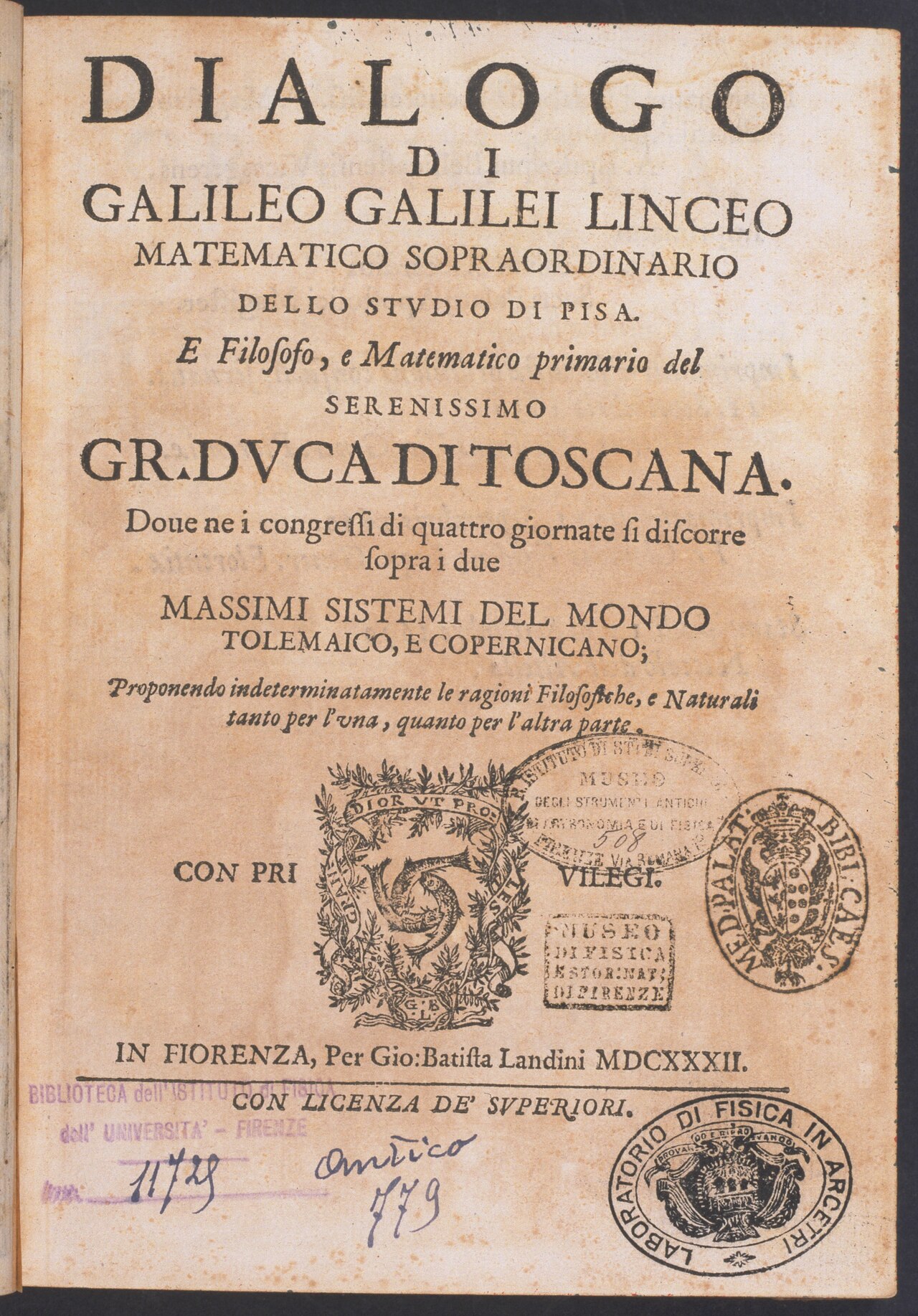
Dialogue Concerning the Two Chief World Systems
Galileo Galilei · 1632
Ready when you are
Start chatting with Galileo Galilei now.
20 messages free · No credit card · Available in 50+ languages.