


Primary sourceArtifactAD 177
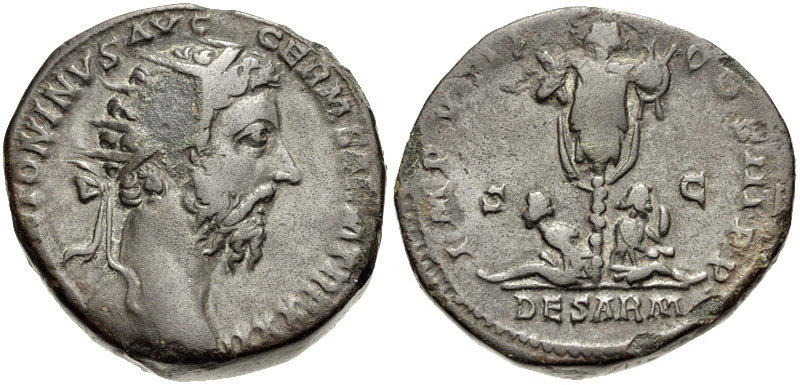
Dupondius of Marcus Aurelius with Sarmatian captives, 177 AD
AD 177
A bronze Roman dupondius of 177 AD celebrating victories over the Germans and Sarmatians. It shows seated captives beside a trophy.
A coin of his reign that celebrates his victories over enemies on the frontier and shows how war was presented publicly.
About this source
What it is
This is a bronze dupondius, a Roman coin, struck at the Rome mint in 177 AD. The obverse shows the radiate, bearded head of Marcus Aurelius facing right. The reverse shows a standard draped with spoils, flanked by two seated captives, and the inscription DE SARM(ATIS) with S C on either side of the field. The coin commemorates victories over the Germans and Sarmatians. The record notes that the seated female figure may represent the defeated Sarmatia. The description is taken from a coin dealer's listing and the Commons photograph.
Why it matters
The coin shows how the Roman state presented frontier wars to its people. Defeated peoples appear as seated captives beside a trophy, a pose used on other coins to stand for conquered lands. The emperor's reign was marked by long wars on the northern frontier, and this coin is one way the government turned those campaigns into a public message of triumph. It reminds students that official images often hid the human cost of conquest.
Look closer
- How are the captives shown, and what does their pose suggest about how Rome viewed the people it defeated?
- What does the coin choose to show about the war, and what does it leave out?
- Why might the government have wanted this message seen across the empire in 177?
This artifact is part of the curated material that grounds the AI version of Marcus Aurelius on Humy.ai — when students ask about related events, the AI can quote it and cite it.
More Marcus Aurelius sources
Meet the AI Marcus Aurelius →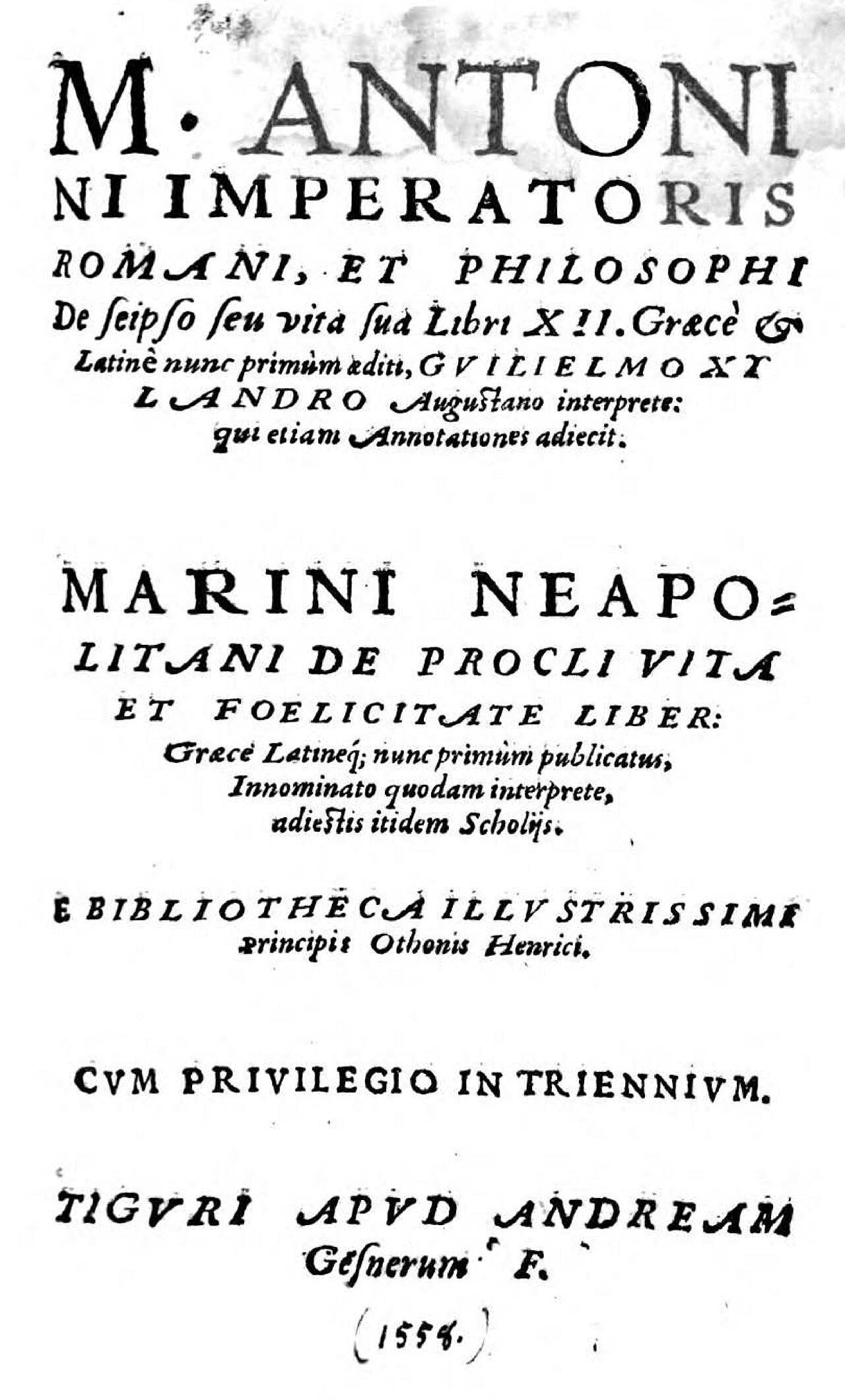 Book
Primary source
Meditations
Marcus Aurelius · c. 170-180 AD (this edition printed 1558)
 Sculpture
Primary source
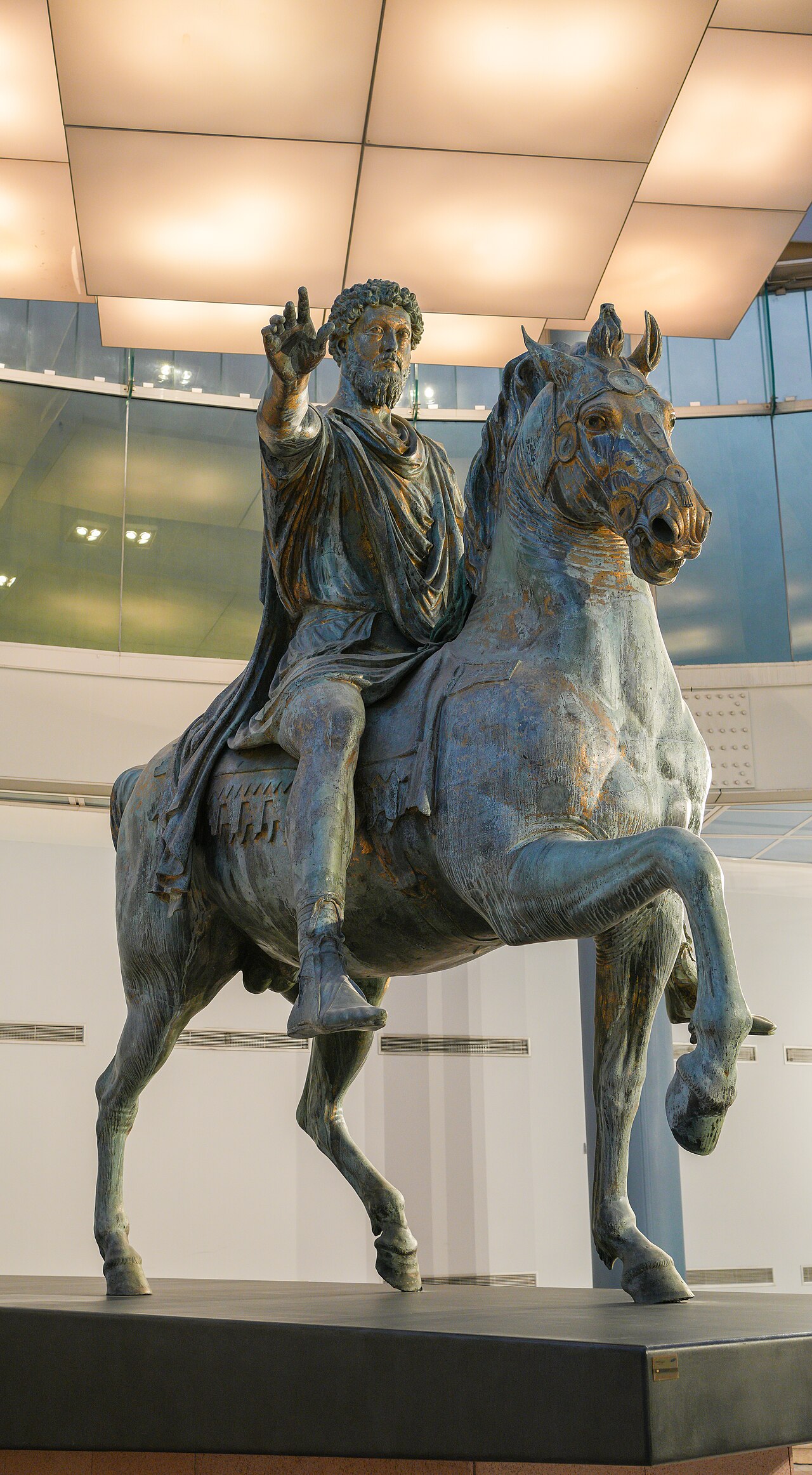
Equestrian Statue of Marcus Aurelius
c. 173 AD
 Artifact
Secondary source
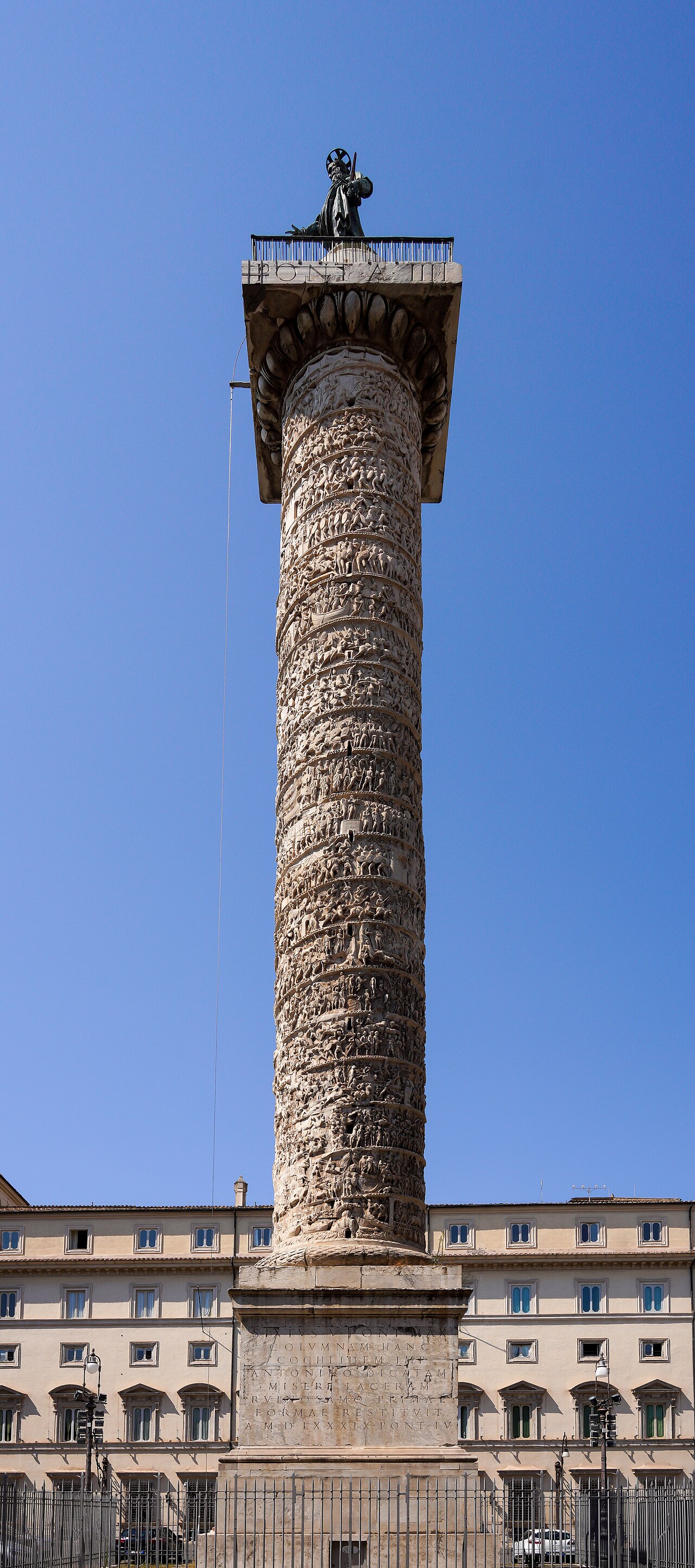
Column of Marcus Aurelius
completed c. 193 AD
Secondary source
Marcus Antoninus (Historia Augusta)
Scriptores Historiae Augustae · probably 4th century AD
 Sculpture
Primary source
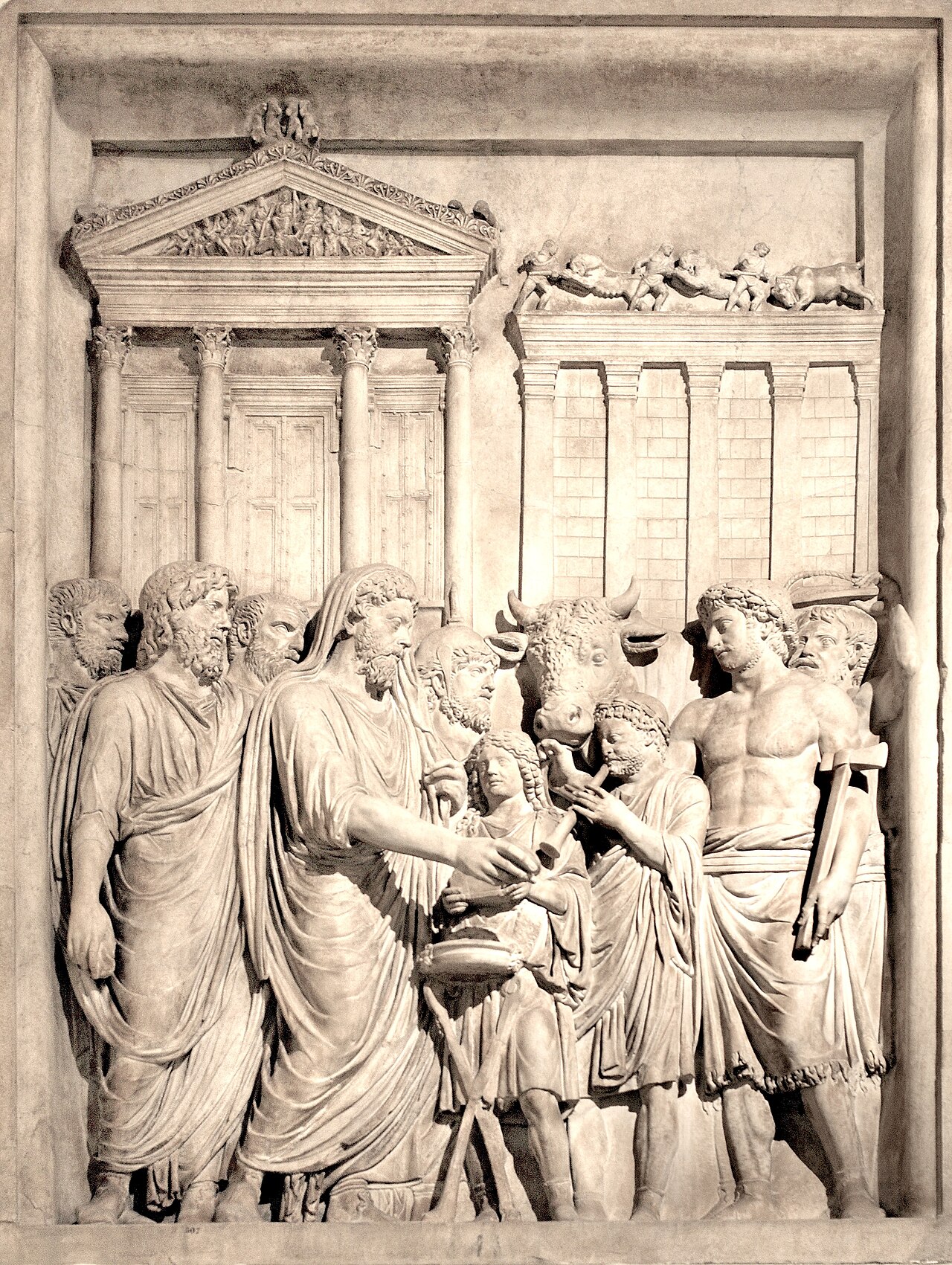
Panel Relief of Marcus Aurelius Sacrificing
Ready when you are
Start chatting with Marcus Aurelius now.
20 messages free · No credit card · Available in 50+ languages.