


Secondary sourcePainting1511
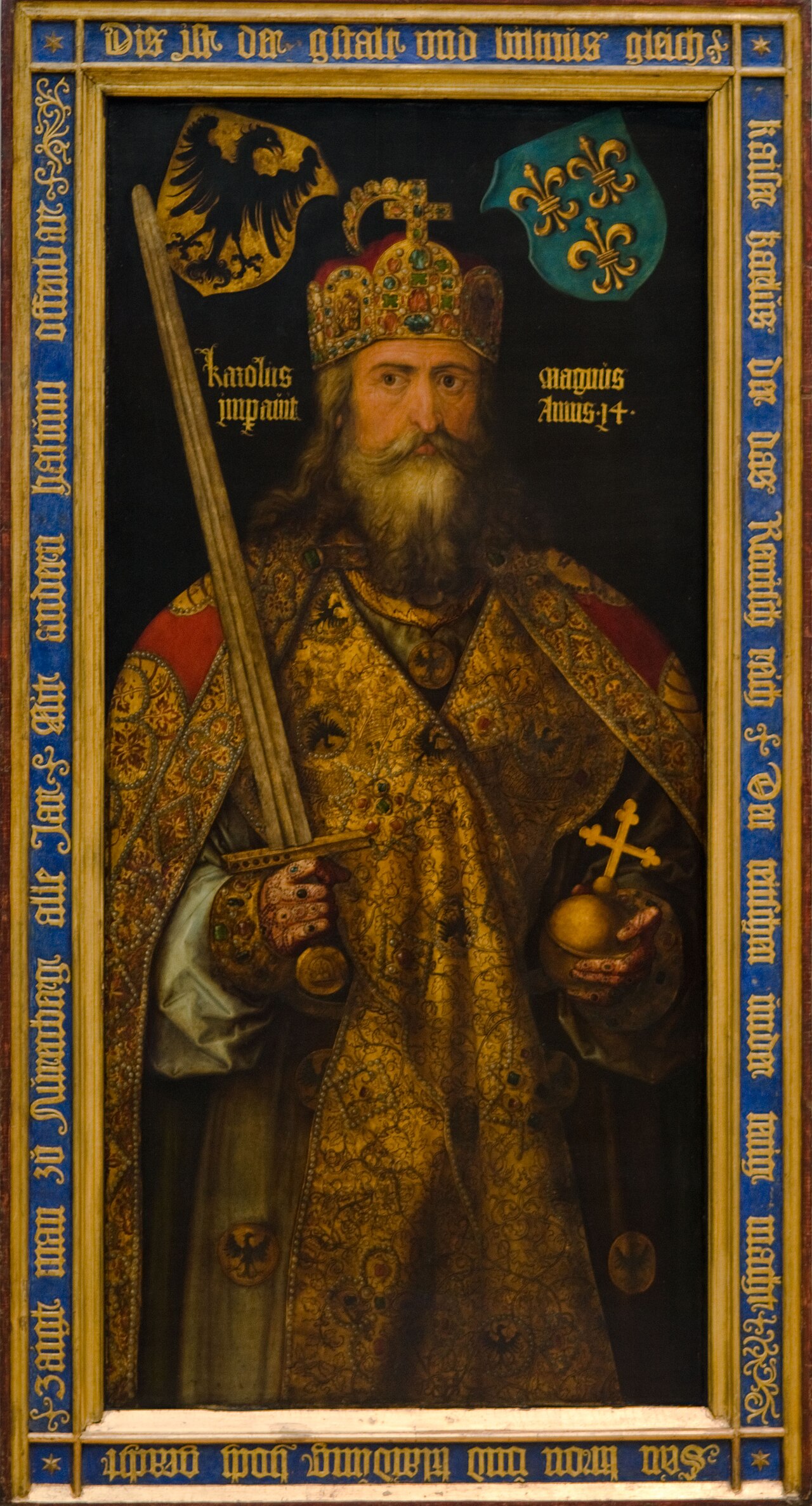
Emperor Charlemagne
Albrecht Dürer · 1511
A 1511 imagined portrait by Albrecht Dürer, painted for Nuremberg, which became the defining Renaissance image of Charlemagne.
Made by Albrecht Dürer.
About this source
What it is
This full-length painting of Charlemagne was made by Albrecht Dürer in 1511 for the city of Nuremberg, where the imperial regalia were kept. It shows a bearded crowned man in a jeweled crown and gold robe, holding a sword and an orb topped with a cross, flanked by heraldic shields. It is now held by the Germanisches Nationalmuseum.
Why it matters
Since Dürer painted this seven centuries after Charlemagne's death, it is an imagined portrait, not a true likeness. It shows how Renaissance Germans pictured Charlemagne as a German emperor, using the real imperial crown and regalia as models, and tells us more about how the Holy Roman Empire wanted to present its own history than about the real man.
Look closer
- What objects is Charlemagne shown holding, and what do they symbolize?
- Why do you think Dürer painted him wearing the actual imperial regalia kept in Nuremberg?
- How does this image differ from a portrait made from life?
This painting is part of the curated material that grounds the AI version of Albrecht Dürer and Charlemagne on Humy.ai — when students ask about related events, the AI can quote it and cite it.
More Albrecht Dürer sources
Meet the AI Albrecht Dürer →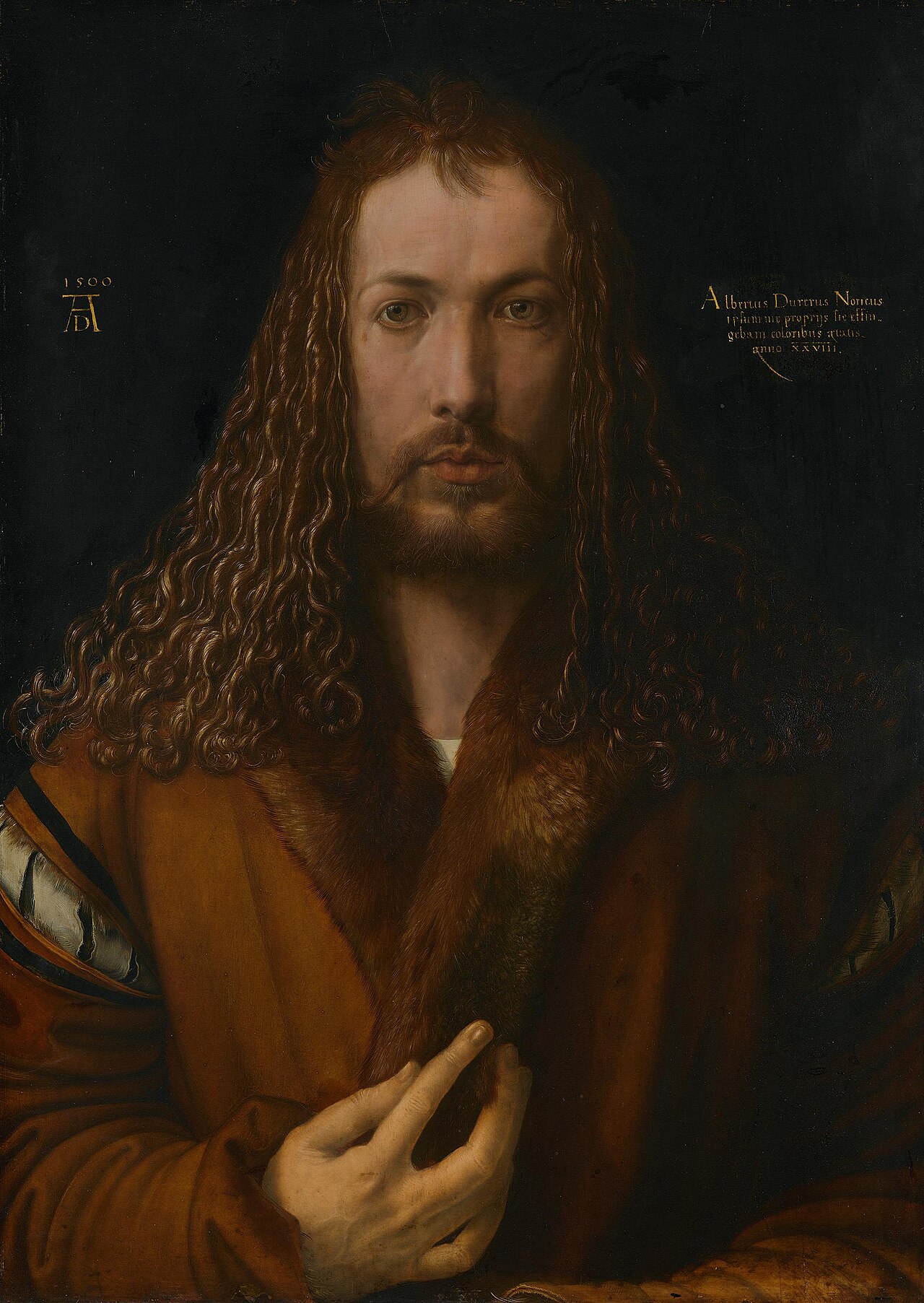 Painting
Primary source
Self-Portrait with Fur-Trimmed Robe
Albrecht Dürer · 1500
 Painting
Primary source
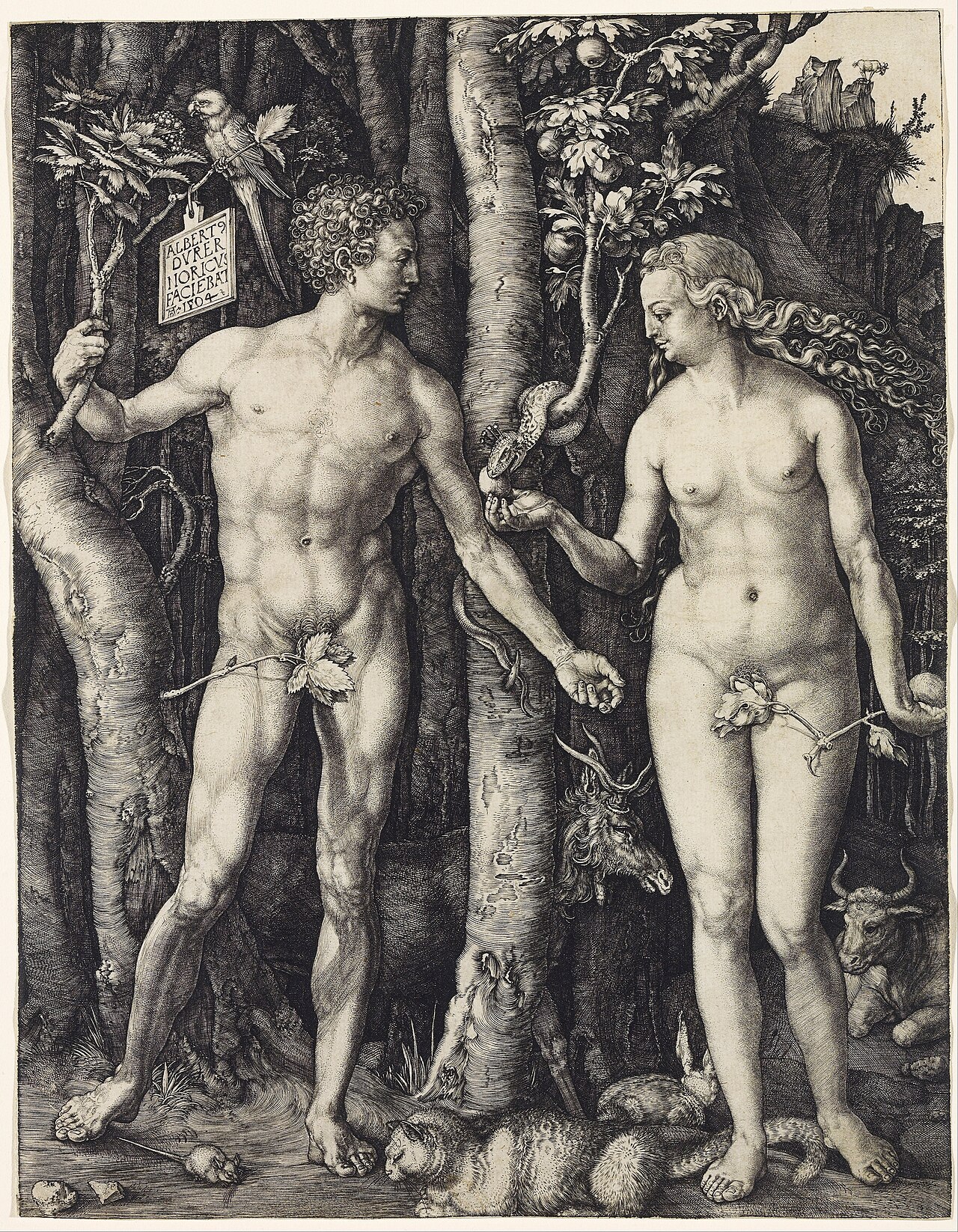
Adam and Eve
Albrecht Dürer · 1504
 Painting
Primary source
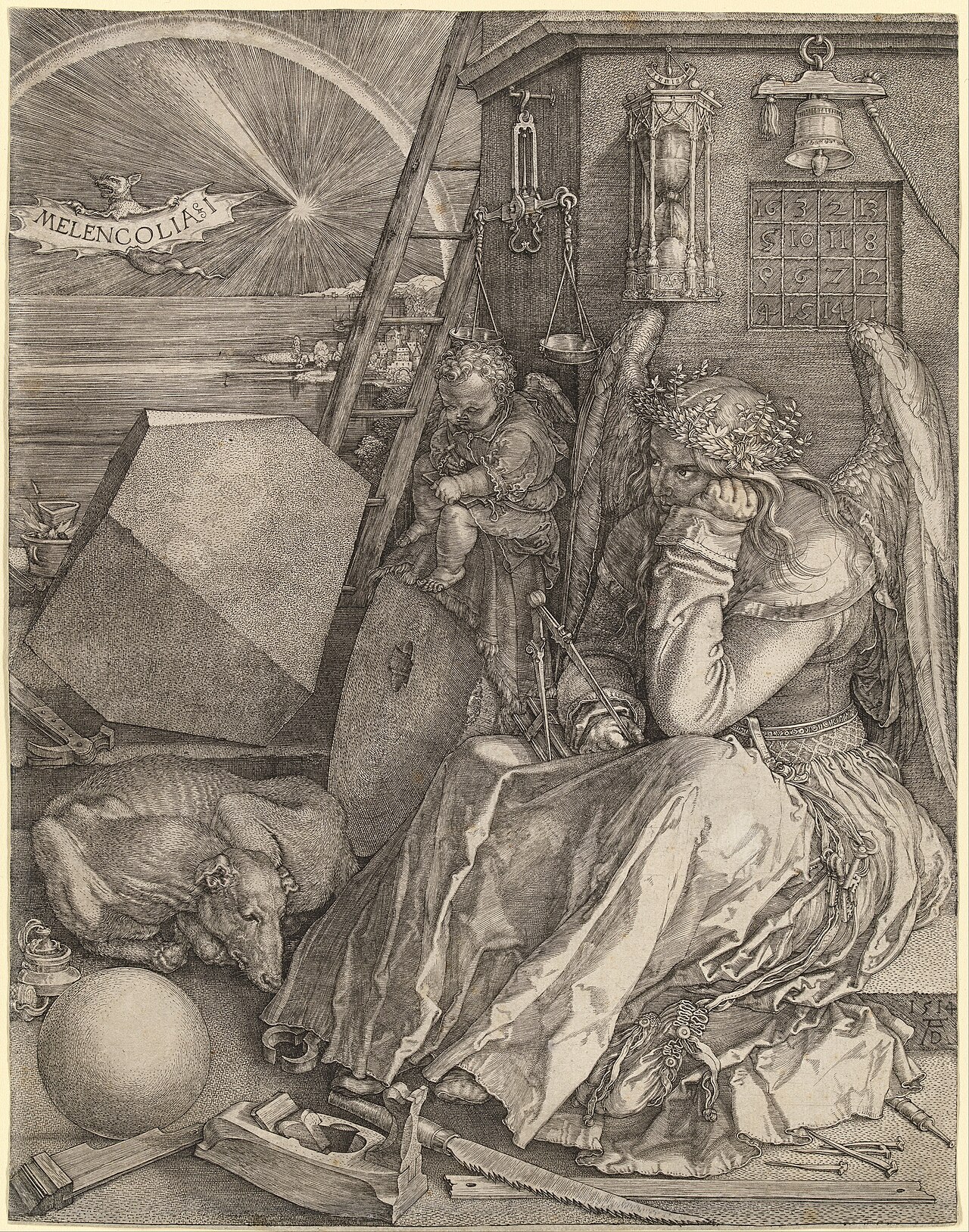
Melencolia I
Albrecht Dürer · 1514
 Painting
Primary source
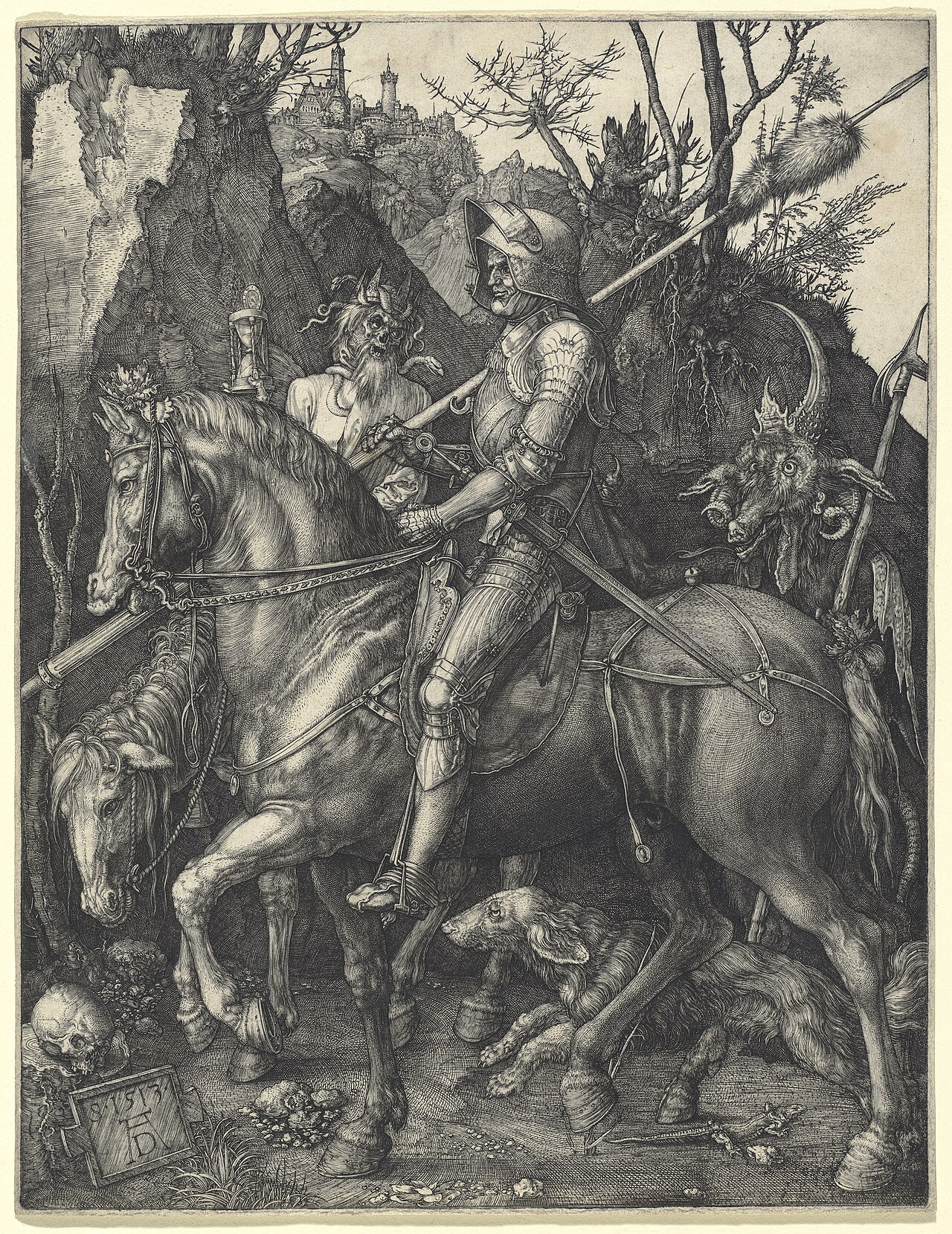
Knight, Death and the Devil
Albrecht Dürer · 1513
 Painting
Primary source
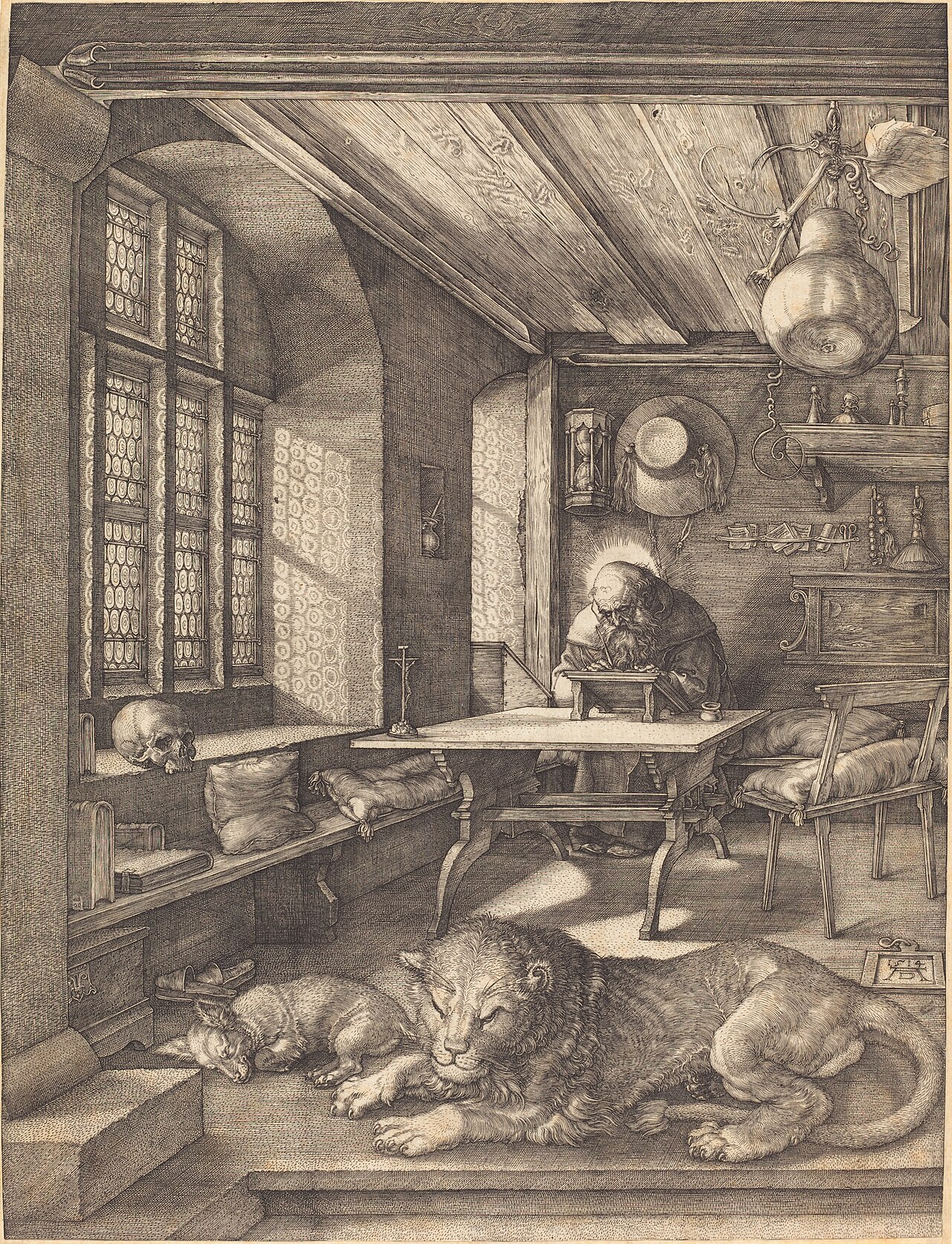
St. Jerome in His Study
Albrecht Dürer · 1514
Ready when you are
Start chatting with Albrecht Dürer now.
20 messages free · No credit card · Available in 50+ languages.