


Secondary sourcePaintingcirca 1871
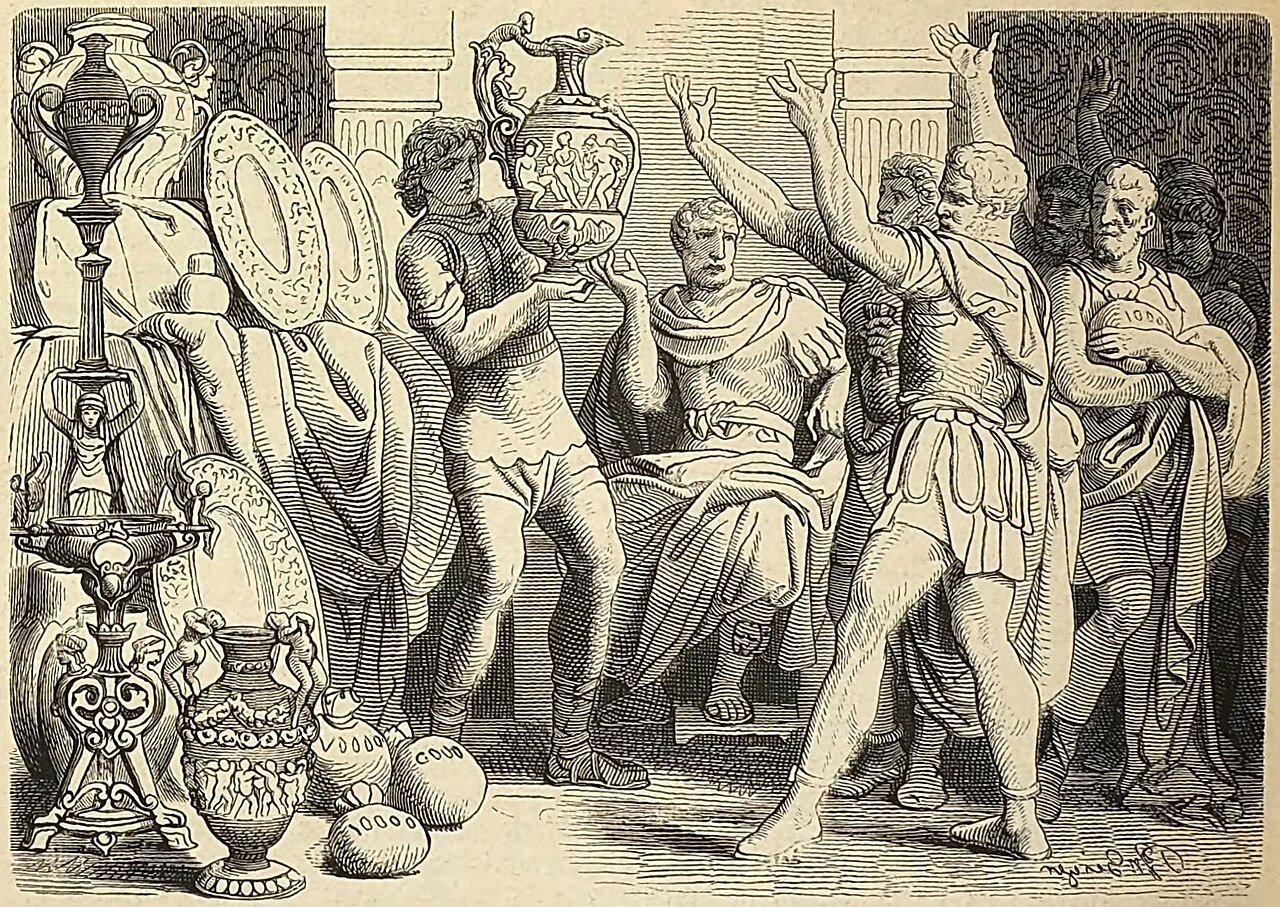
Emperor Marcus Aurelius auctioning imperial treasures
Peter Johann Nepomuk Geiger · circa 1871
A nineteenth-century painting that imagines Marcus Aurelius selling palace treasures to pay for war against the Marcomanni.
Shows how a nineteenth-century artist imagined Marcus Aurelius raising money for war by selling imperial treasures.
About this source
What it is
This is a painting by Peter Johann Nepomuk Geiger, made around 1871. It shows an ancient Roman auction scene. A bearded man sits on a draped chair at the center right, watching a standing man in a tunic who holds up an ornate two-handled vase with relief decoration. Other figures raise their arms, and decorated vases, a cauldron-like bowl and round objects labeled with numbers and the word COIN lie in the foreground. The picture is an imagined scene. It shows the emperor selling the treasures of the imperial palace in Rome to raise money for the fight against the Marcomanni.
Why it matters
Nineteenth-century European painters often illustrated scenes from ancient history, including stories about emperors. Geiger's painting shows how Marcus Aurelius was remembered in that period: as a ruler who made hard choices to defend the empire. The painting says more about the artist's time and the way people wanted the past to look than about a documented event. Students should compare it with ancient written sources before accepting its details.
Look closer
- Who is shown as the seller and who as the buyers, and how does the artist make the emperor look in charge?
- Which objects are shown in the foreground, and why would a painter include numbered labels and coins?
- What does the painting leave out about the war itself, and how would a written account change your understanding?
This painting is part of the curated material that grounds the AI version of Marcus Aurelius on Humy.ai — when students ask about related events, the AI can quote it and cite it.
More Marcus Aurelius sources
Meet the AI Marcus Aurelius →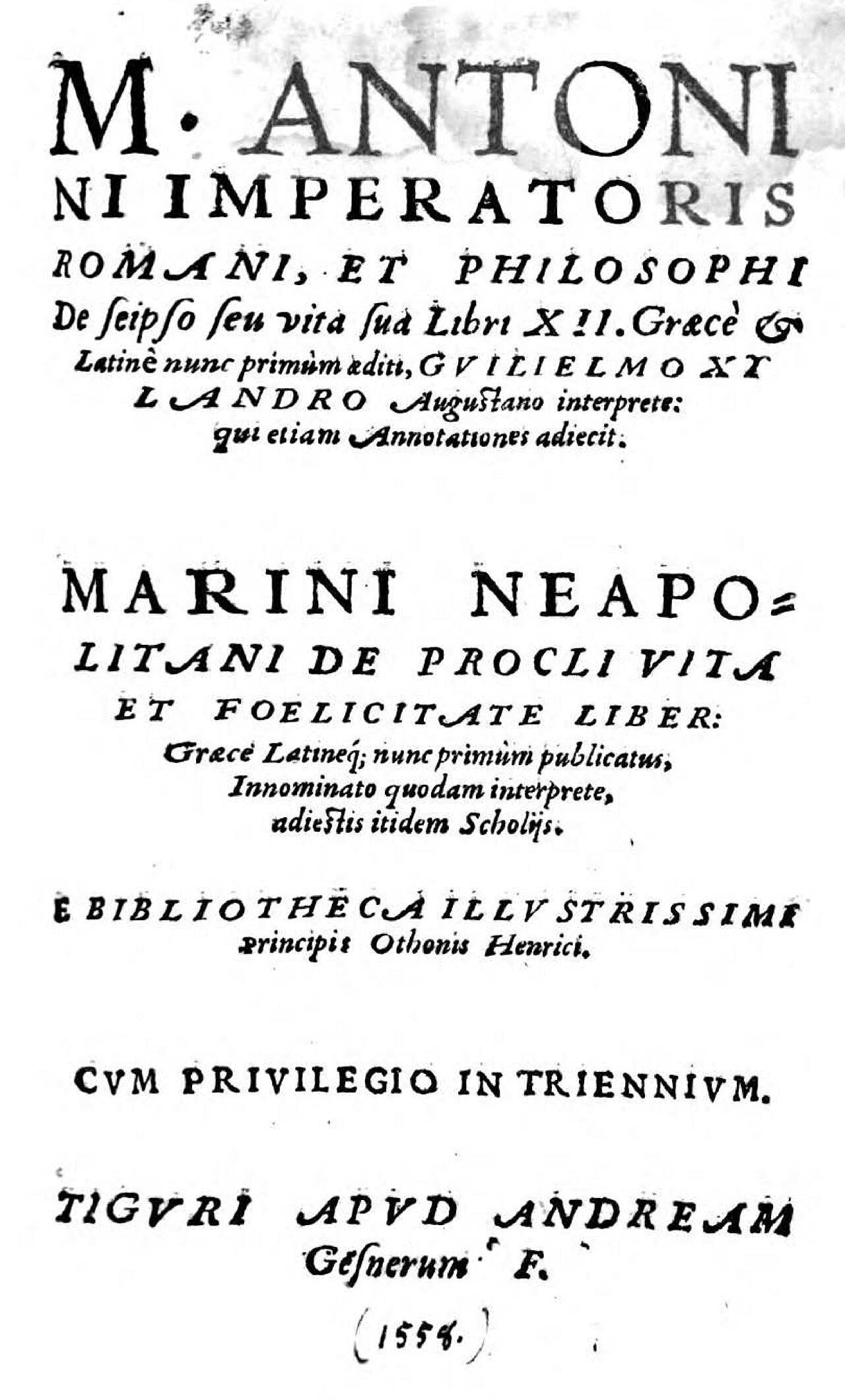 Book
Primary source
Meditations
Marcus Aurelius · c. 170-180 AD (this edition printed 1558)
 Sculpture
Primary source
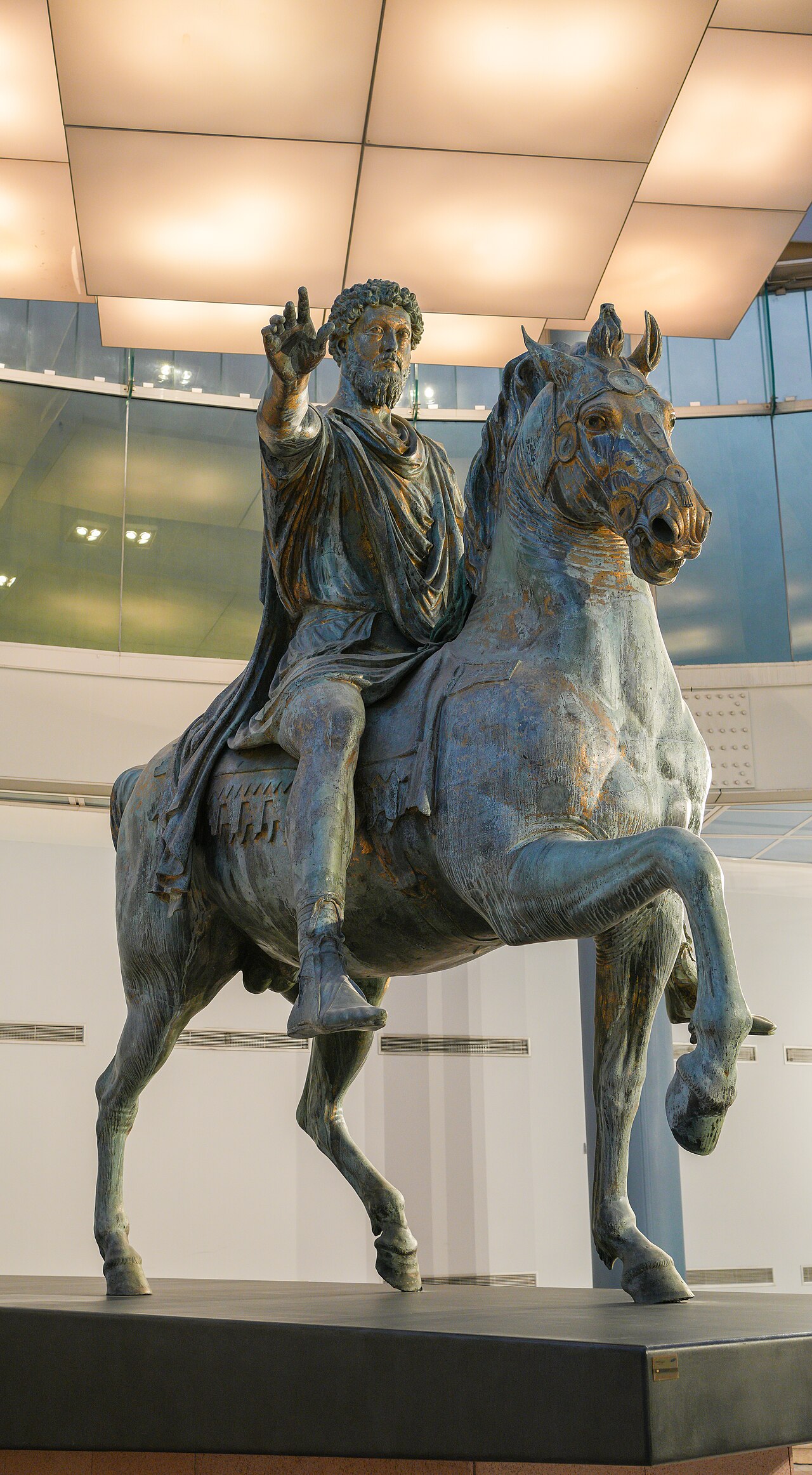
Equestrian Statue of Marcus Aurelius
c. 173 AD
 Artifact
Secondary source
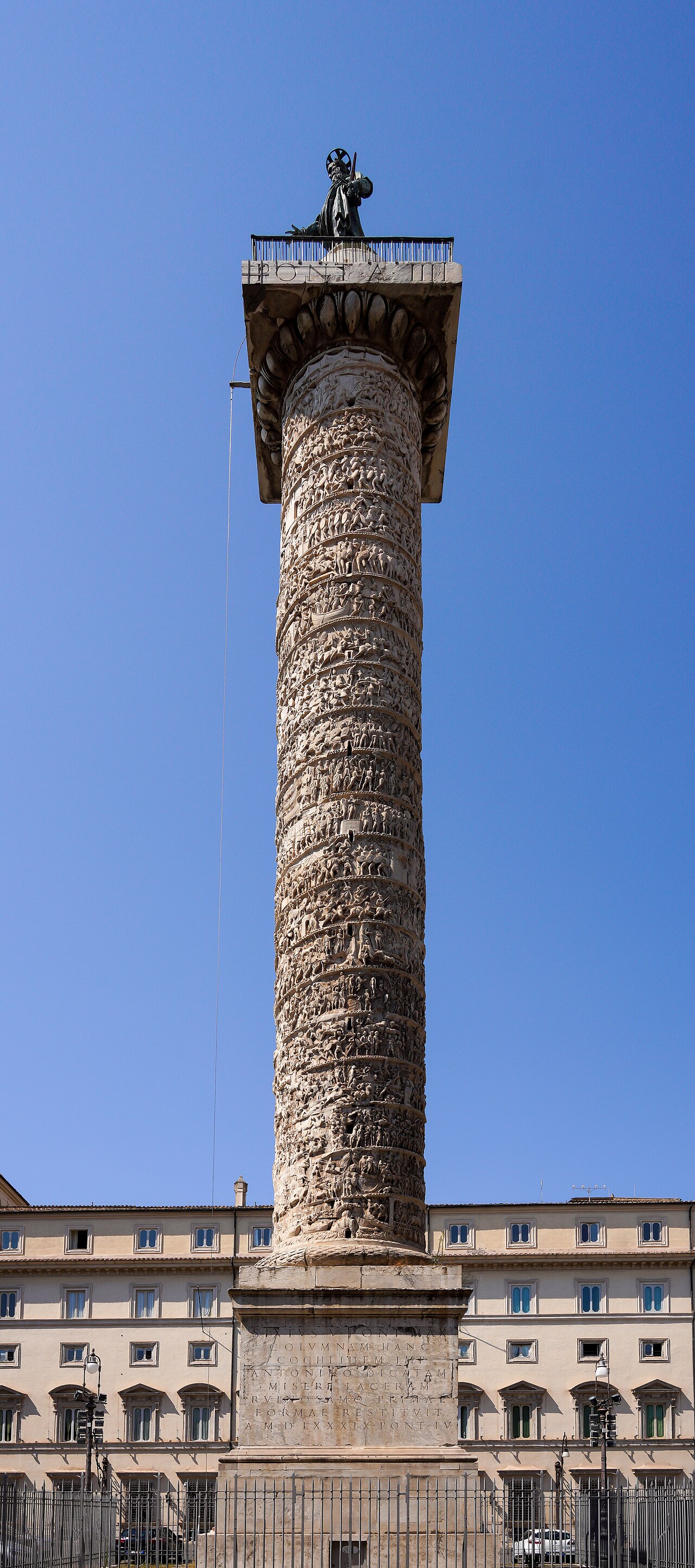
Column of Marcus Aurelius
completed c. 193 AD
Secondary source
Marcus Antoninus (Historia Augusta)
Scriptores Historiae Augustae · probably 4th century AD
 Sculpture
Primary source
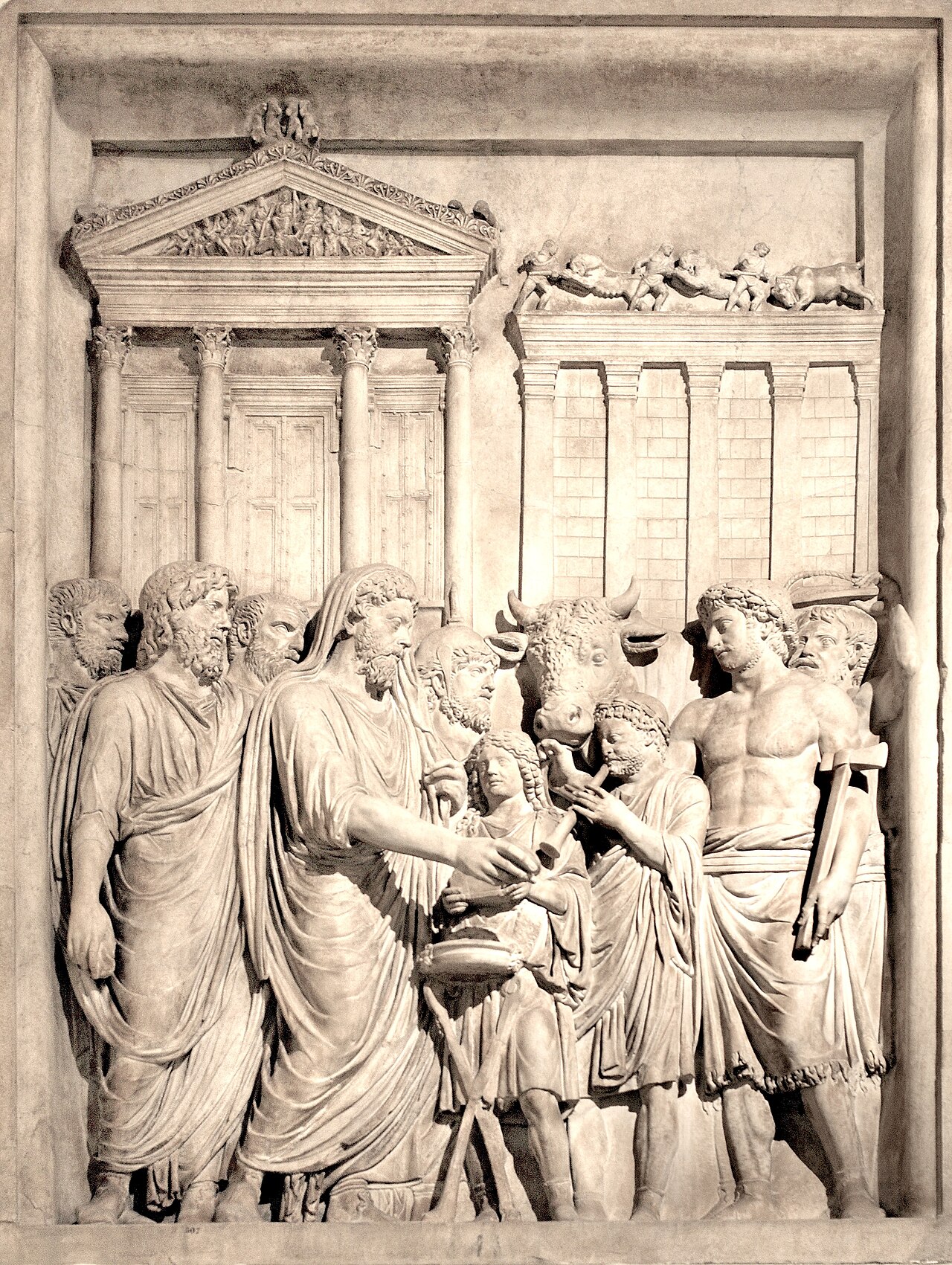
Panel Relief of Marcus Aurelius Sacrificing
Ready when you are
Start chatting with Marcus Aurelius now.
20 messages free · No credit card · Available in 50+ languages.