


Secondary sourceBookearly 2nd century AD (this edition 1683)
Enchiridion of Epictetus
Arrian · early 2nd century AD (this edition 1683)
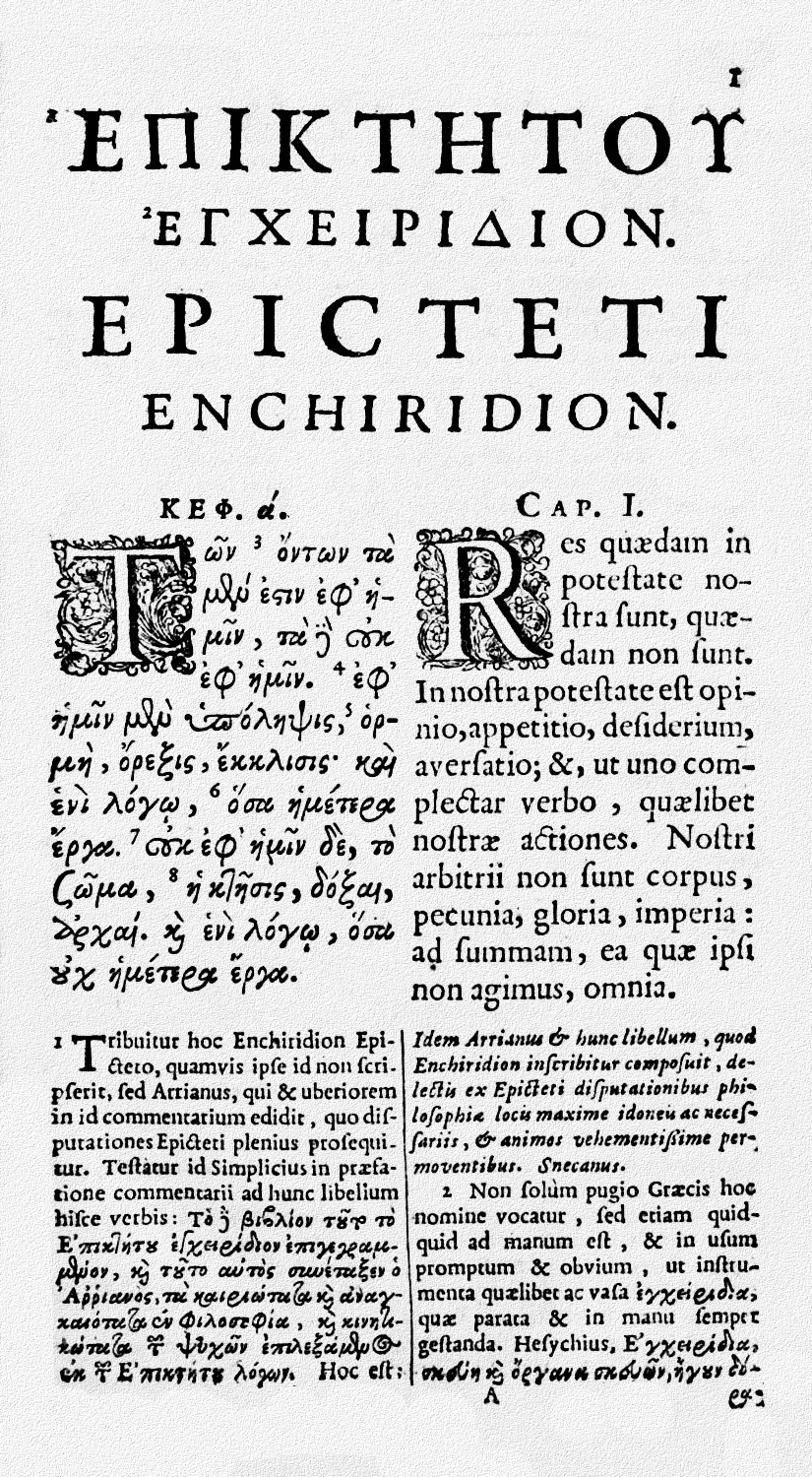
A short handbook of Stoic ethical advice compiled by Arrian from Epictetus's teaching, opening with the idea that some things are 'up to us' and others are not.
Records Epictetus's spoken teaching as compiled by his pupil Arrian, making it the most famous source for his philosophy.
About this source
What it is
The Enchiridion, or Handbook, is a short collection of Stoic precepts compiled by Arrian, a pupil of the philosopher Epictetus, in the early 2nd century AD. It condenses ideas from Epictetus's longer Discourses into practical rules for daily life. The image shown is from a 1683 printed edition in Greek and Latin.
Why it matters
This small book became one of the most widely read works of Stoic philosophy, studied in monasteries and later translated across Europe. It reveals how Epictetus's spoken teaching, remembered and arranged by a devoted student, could shape how people for centuries thought about freedom, control, and misfortune.
Look closer
- Why might a student like Arrian choose to preserve his teacher's words rather than write his own philosophy?
- What does the opening idea — that some things are 'up to us' and some are not — suggest about how Epictetus wanted people to live?
- Why do you think this short handbook became more popular than Epictetus's longer Discourses?
This book is part of the curated material that grounds the AI version of Epictetus on Humy.ai — when students ask about related events, the AI can quote it and cite it.
More Epictetus sources
Meet the AI Epictetus →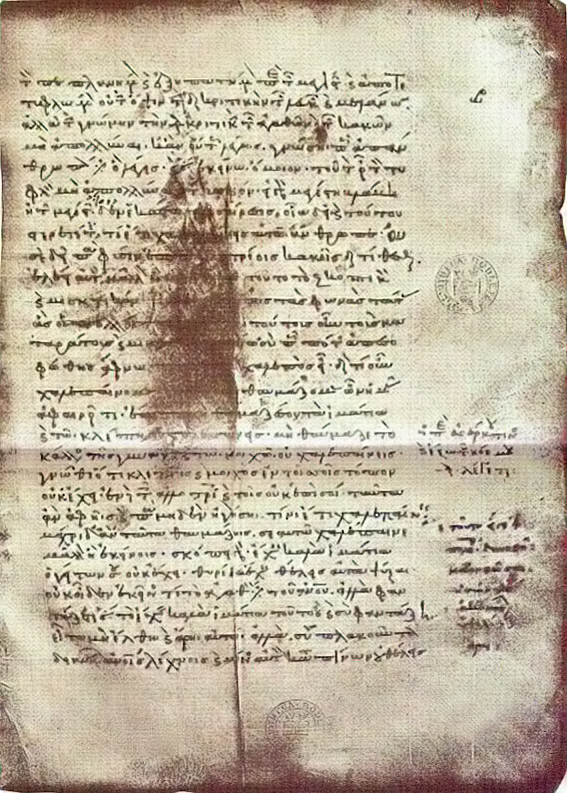 Book
Secondary source
Discourses of Epictetus
Arrian · c. 108 AD
DocumentSecondary source
Codex Bodleianus
c. 11th-12th century
 Book
Primary source
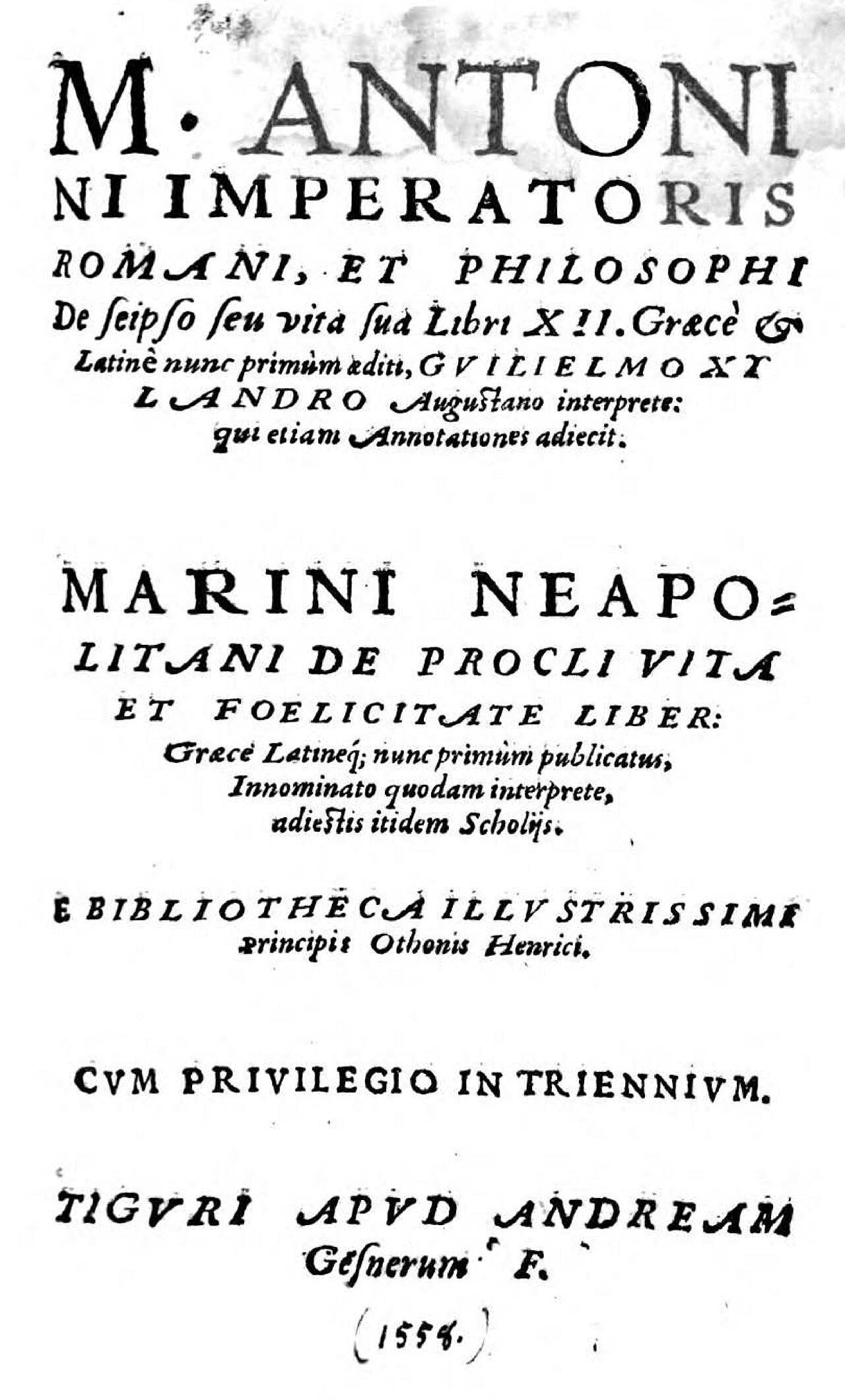
Meditations
Marcus Aurelius · c. 170-180 AD (this edition printed 1558)
 Book
Secondary source
Altercacion, dialogue de l'Empereur Adrian et du Philosophe Epictete
Jean de Coras (translator)
 Book
Secondary source
Commentary on the Enchiridion of Epictetus
Simplicius of Cilicia · c. 530s AD
Ready when you are
Start chatting with Epictetus now.
20 messages free · No credit card · Available in 50+ languages.