


Secondary sourcePainting1664
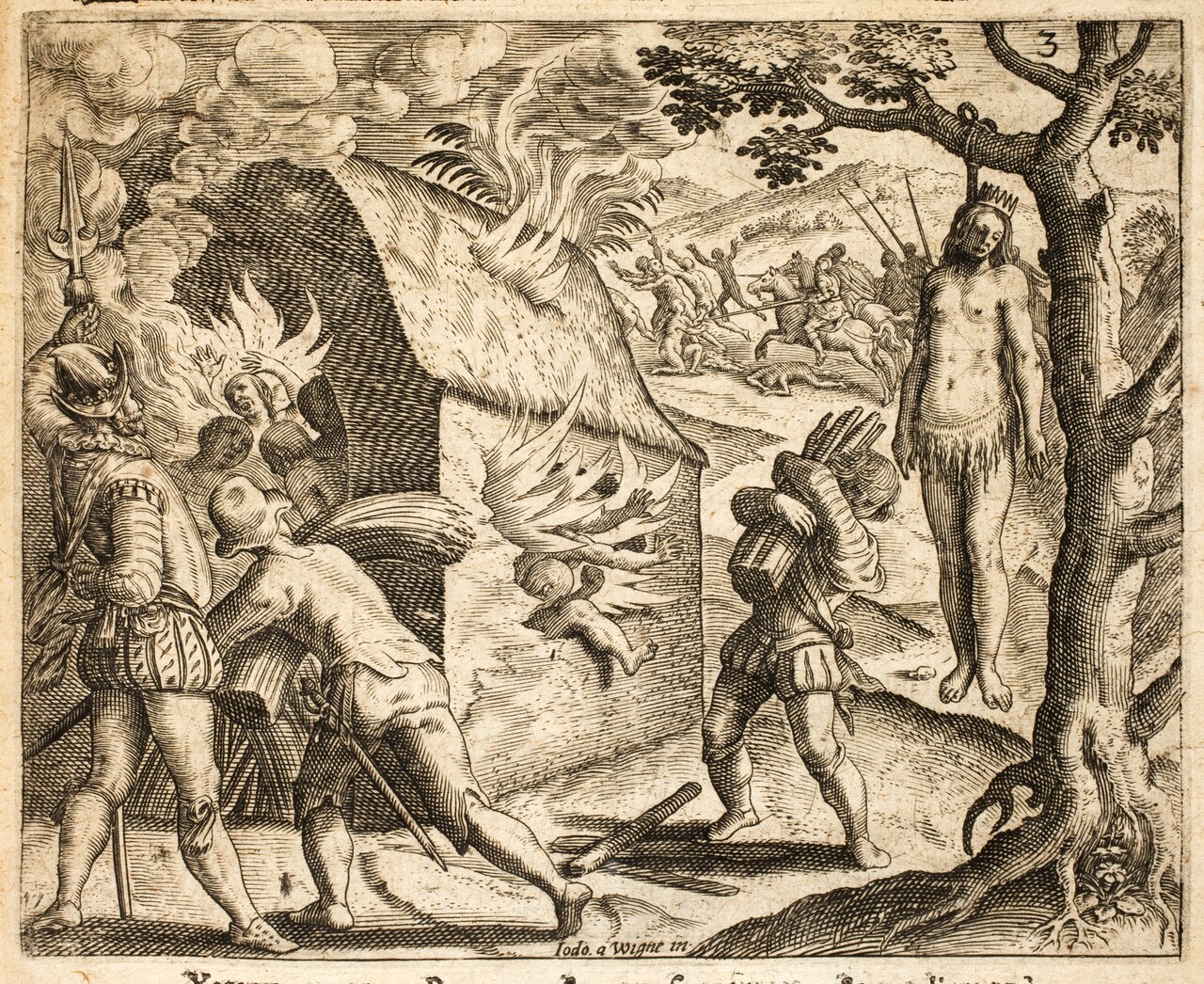
Engraving of Spanish Atrocities from Regionum Indicarum
Joos van Winghe · 1664
A 1664 engraving illustrating Las Casas's account of Spanish cruelty, depicting violence against Indigenous people.
This later illustration of Las Casas's own writings visualizes the atrocities he denounced in his work.
About this source
What it is
This engraving by Joos van Winghe was made in 1664 to illustrate an edition of Las Casas's writings about Spanish treatment of Indigenous Americans. It shows a hanging figure, a burning house, and people being pursued by soldiers on horseback.
Why it matters
Created decades after Las Casas's death, this image helped spread his written accounts of cruelty to new readers across Europe. It reflects how his testimony shaped later European views of Spanish colonization, even as the image itself is an artist's interpretation rather than an eyewitness record.
Look closer
- What details does the engraver use to make the violence feel dramatic?
- Why might this image have been created generations after the events it shows?
- What does the existence of such prints tell us about how Las Casas's writings were used?
This painting is part of the curated material that grounds the AI version of Bartolomé de las Casas on Humy.ai — when students ask about related events, the AI can quote it and cite it.
More Bartolomé de las Casas sources
Meet the AI Bartolomé de las Casas →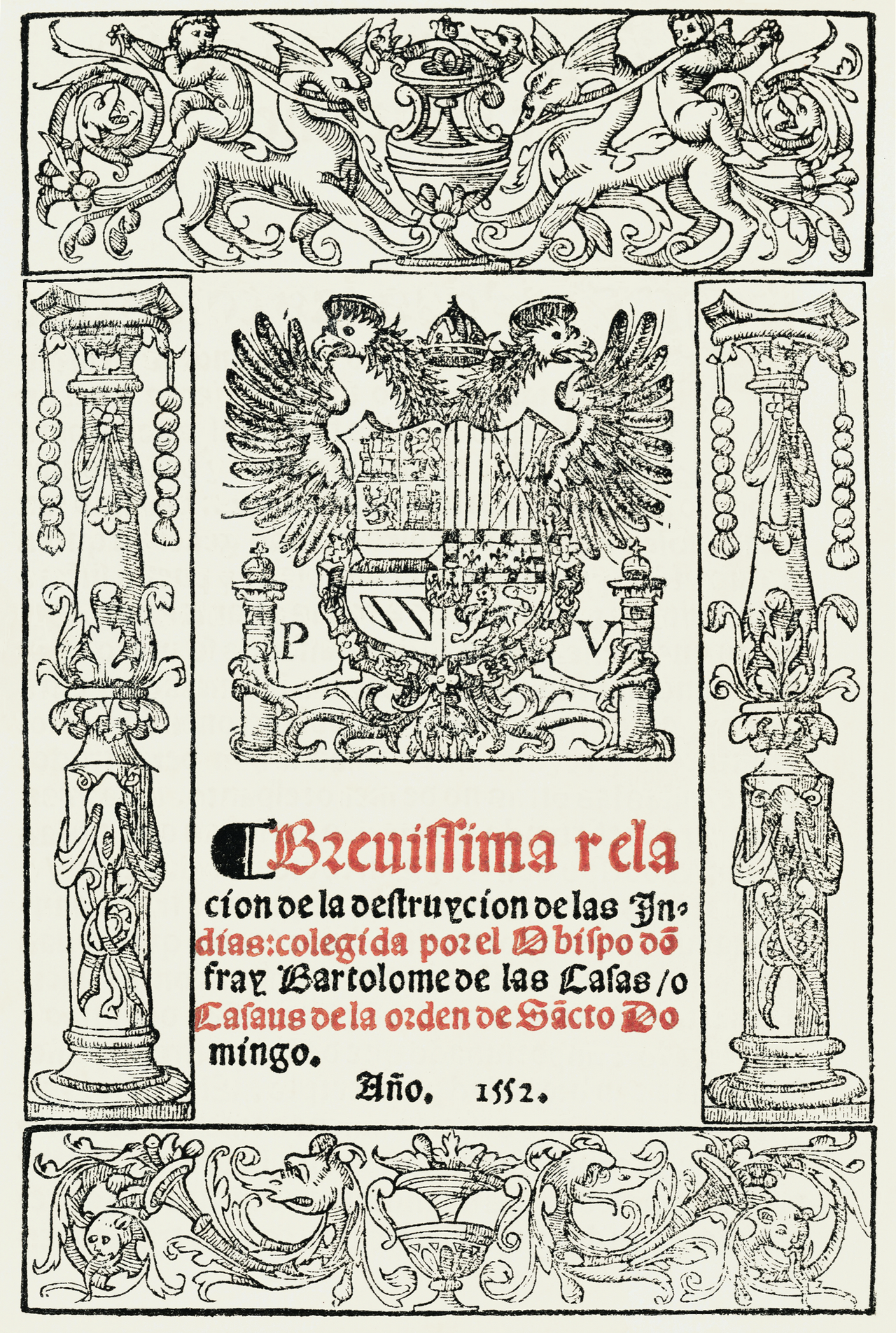 Book
Secondary source
A Short Account of the Destruction of the Indies
Bartolomé de las Casas · 1552
 Document
Primary source
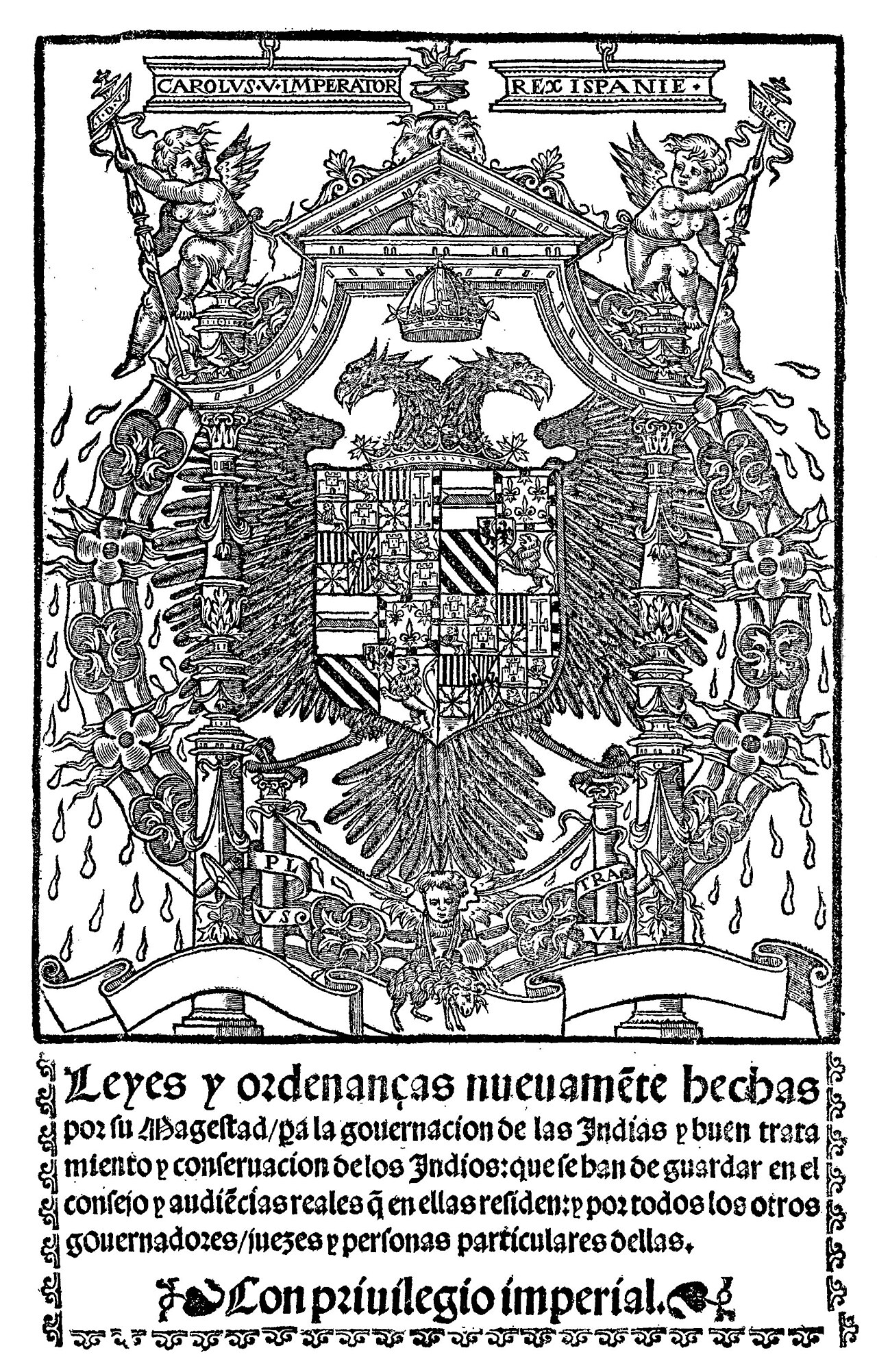
New Laws of 1542
Charles V, Holy Roman Emperor · 20 November 1542
 Painting
Secondary source
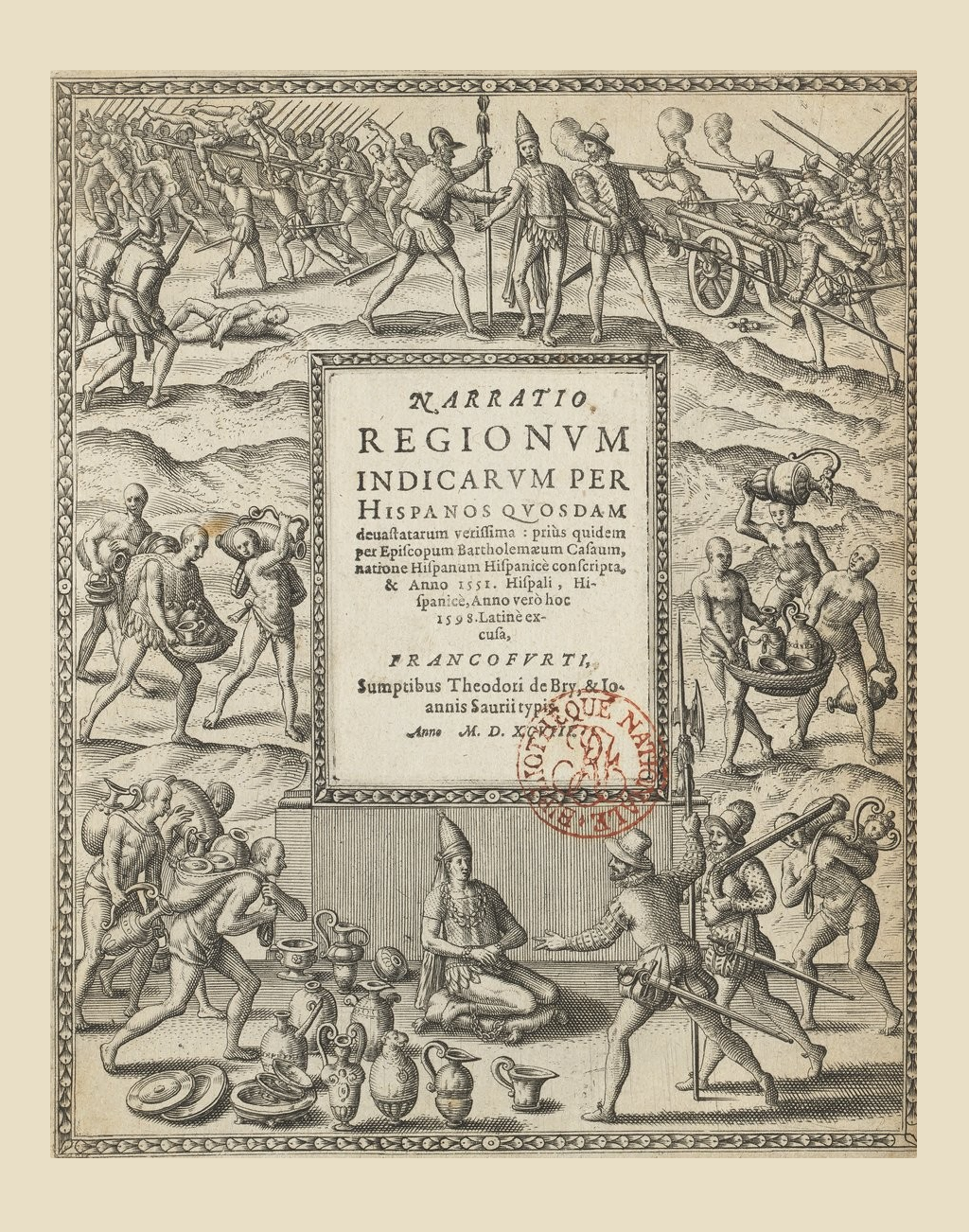
Narratio regionum Indicarum per Hispanos quosdam devastatarum verissima
Bartolomé de las Casas · 1598
 Book
Primary source
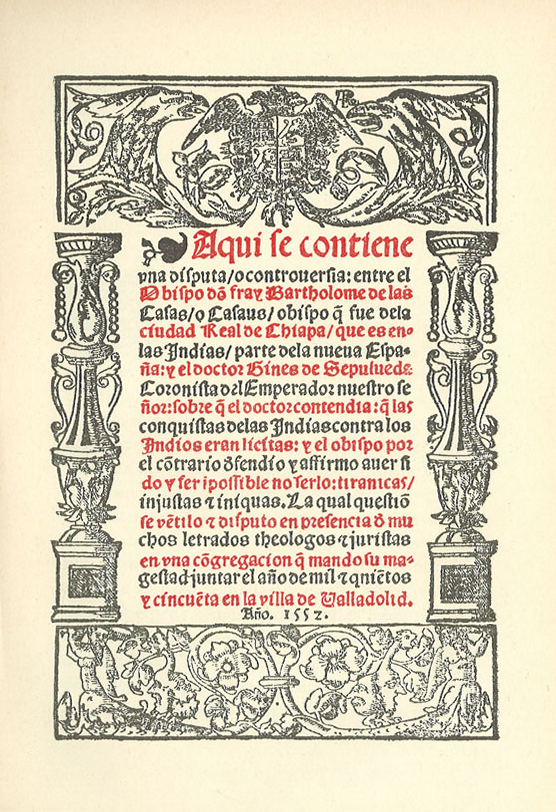
Disputa o controversia con Ginés de Sepúlveda
Bartolomé de las Casas · 1552
 Document
Primary source
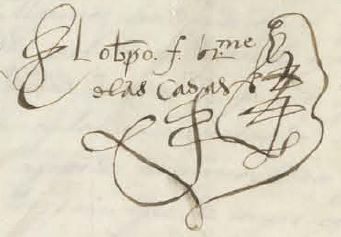
Signature of Bartolomé de las Casas
Bartolomé de las Casas · November 1559
Ready when you are
Start chatting with Bartolomé de las Casas now.
20 messages free · No credit card · Available in 50+ languages.